Solar panel installation in Kent
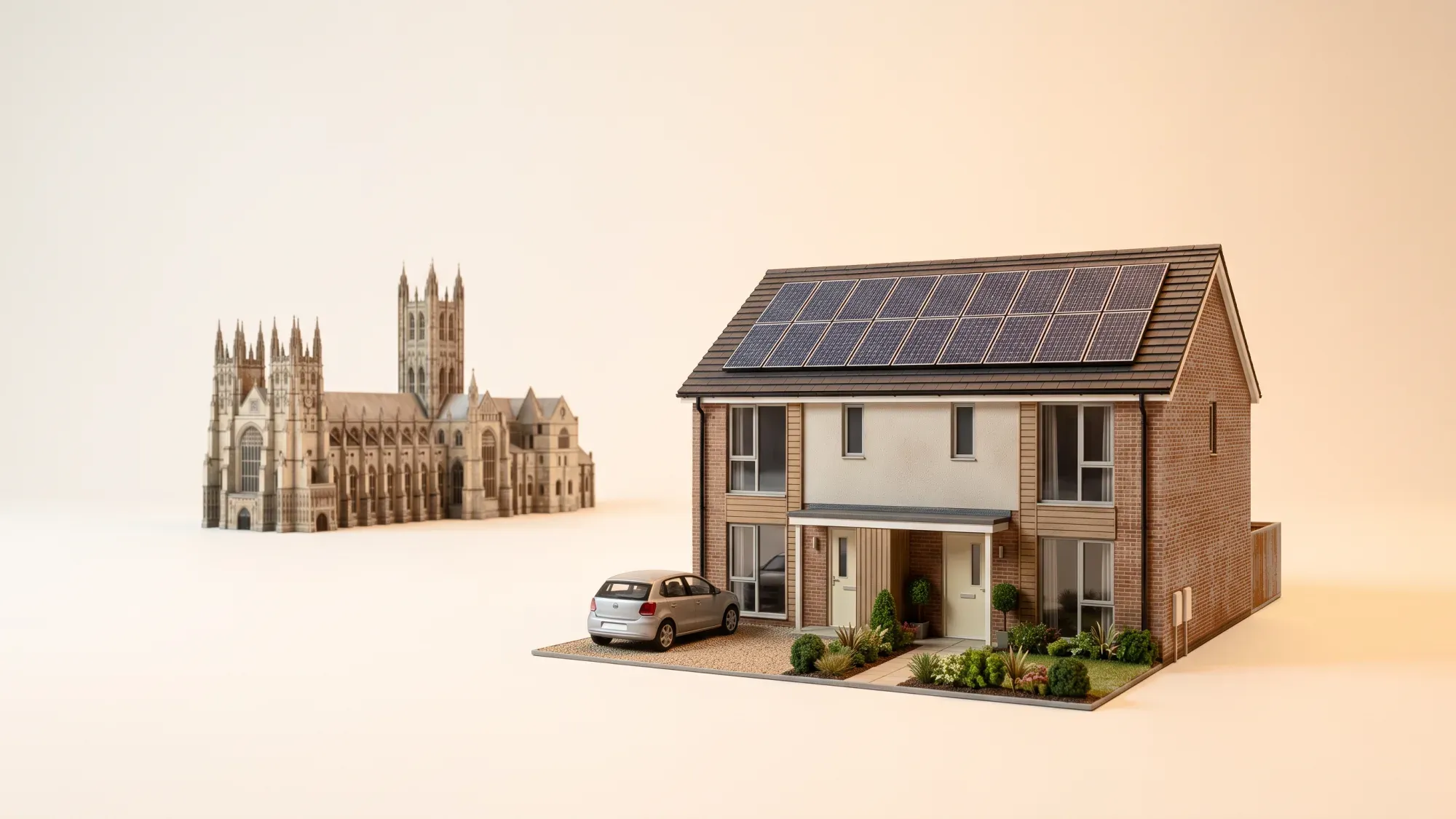
Kent, often called the 'Garden of England', offers diverse landscapes and a favourable climate for solar energy. Homeowners, whether in a Victorian terrace or a modern new-build, can significantly benefit from installing solar panels. The county's location in Southern England means it receives some of the UK's highest annual sunlight hours, making solar an attractive proposition for reducing bills and gaining energy independence. Installing solar panels in Kent is a strategic move for homeowners, offering control over their energy future.
Why Kent is ideal for solar panel installation
Kent's sunlight advantage
Southern England receives some of the UK's highest annual sunlight hours, making Kent an excellent location for solar panel efficiency and maximising energy generation. This abundance of daylight enhances the potential for solar panels to generate electricity, leading to better long-term savings and a quicker return on investment for homeowners. Even when the sun is not shining directly, modern solar panels are designed to generate electricity effectively from diffuse daylight, ensuring useful output throughout the year. If you're wondering about performance on less sunny days, you might find our article on do solar panels work on cloudy days helpful.
Diverse housing stock and solar suitability
Kent's housing stock is incredibly varied, ranging from historic properties in towns like Canterbury to modern developments across the county. This diversity means that while some homes might require careful planning for aesthetic integration, many are well-suited for solar panel installation. Whether your home is a detached family house, a semi-detached property, or even certain types of terraced homes, there are solar solutions that can be tailored to fit, helping you take control of your energy future.
The benefits of solar panels for Kent homeowners
Reducing energy bills
Installing solar panels significantly reduces your reliance on electricity from the National Grid, directly lowering your energy bills. By generating your own power, you become less susceptible to fluctuating energy prices, providing a stable and predictable energy cost. This move towards self-sufficiency is a key part of the "power play" for homeowners, shifting control from external suppliers to your own property. Understanding your average monthly electric bill with solar panels can help you see the potential savings.
Gaining energy independence
Energy independence means having greater control over your home's power supply and less vulnerability to grid outages or price hikes. With solar panels, especially when coupled with battery storage, you can store surplus energy generated during the day for use in the evenings or on cloudy days. This maximises self-consumption and reduces your dependence on external energy sources, aligning with a vision of energy so abundant it stops being a constant concern.
Environmental impact and property value
Beyond financial savings, solar panels contribute to a significant reduction in your home's carbon footprint, supporting environmental sustainability. Furthermore, properties with installed solar panels often see an increase in their market value, making it an attractive upgrade for potential buyers who are increasingly conscious of energy efficiency and running costs.
Understanding the solar panel installation process in Kent
Initial assessment and design
The journey to solar power begins with an initial assessment of your Kent home. A qualified installer will evaluate your roof's suitability, including its size, orientation, and shading, and analyse your household's energy consumption patterns. Based on this, they will design a bespoke solar photovoltaic (PV) system, detailing the number of panels, their placement, and the expected energy generation.
Installation and commissioning
Once the design is approved, the physical installation process typically involves mounting the solar panels on your roof, installing an inverter to convert direct current (DC) electricity to alternating current (AC), and connecting the system to your home's electrical supply. After installation, the system is commissioned, ensuring everything is working correctly and safely.
Grid connection: UK Power Networks and G98/G99
For Kent homeowners, connecting your new solar and battery storage system to the grid involves UK Power Networks, which is the local Distribution Network Operator (DNO) for Kent and the South East of England. Your Microgeneration Certification Scheme (MCS)-certified installer will typically handle the necessary G98/G99 grid connection notification process, informing UK Power Networks of your new generation system. This ensures your installation complies with local regulations and can safely export surplus electricity. Should you experience a power cut in Kent, you would dial the free national number 105, which routes directly to your DNO for assistance.
What is the G98/G99 process?
The G98/G99 process is a set of engineering recommendations governing how small-scale (G98) and larger (G99) electricity generators, like solar panels and battery storage, connect to the National Grid. It ensures safety and grid stability, with your installer typically managing the notification to your local DNO, UK Power Networks in Kent.
Key financial and regulatory considerations
0% VAT on solar and battery storage
A significant financial incentive for installing solar panels and battery storage in Great Britain is the 0% VAT rate, which applies until 31 March 20271. This measure substantially reduces the upfront cost of installation, making solar energy more accessible and affordable for Kent homeowners looking to invest in their energy future.
The Smart Export Guarantee (SEG)
The Smart Export Guarantee (SEG) is a UK-wide scheme that requires larger licensed electricity suppliers to pay homeowners for any surplus electricity they export back to the grid. To access SEG payments, your solar panel installation must be carried out by an MCS-certified installer, ensuring your system meets the necessary quality and safety standards. This scheme provides an additional revenue stream, further enhancing the financial viability of solar power.
Kent's regional price cap and DNO
Ofgem, the UK's energy regulator, defines geographical distribution areas for DNOs2, and these regions influence the unit rates and daily standing charges for electricity under the energy price cap3. Kent falls within the South East England electricity distribution region, which is managed by UK Power Networks. Understanding this regional context helps homeowners assess potential savings from generating their own electricity.
Choosing the right solar panel installer in Kent
The importance of MCS certification
Choosing an MCS-certified installer is paramount for any solar panel installation. MCS certification ensures that your installer meets rigorous quality standards for both product and installation, and it is a mandatory requirement for accessing the SEG payments for your exported electricity. Without MCS certification, you cannot register for the SEG, missing out on a valuable financial benefit.
Local expertise and reputation
Opting for a local installer with a strong reputation in Kent can provide several advantages. They will likely have a better understanding of local planning considerations, specific housing types, and the nuances of working with UK Power Networks. Look for installers with positive customer reviews and a proven track record of successful installations in the Kent area.
Questions to ask potential installers
When obtaining quotes, ask potential installers about their MCS certification, their experience with similar properties in Kent, and how they handle the G98/G99 grid connection process with UK Power Networks. Enquire about warranties, maintenance services, and their approach to system design tailored to your specific energy needs and property characteristics.
Maximising your solar investment
Integrating battery storage
To truly maximise your solar investment and achieve greater energy independence, consider integrating battery storage with your solar panel system. Batteries allow you to store excess electricity generated during the day, which can then be used during peak evening hours or when solar generation is low. This significantly increases your self-consumption, further reducing your reliance on grid electricity and optimising your savings. The 0% VAT on battery storage until March 2027 makes this upgrade even more appealing.
Monitoring your system's performance
Modern solar PV systems come with monitoring capabilities, often accessible via a smartphone app. Regularly checking your system's performance allows you to track energy generation, identify any potential issues, and understand your consumption patterns. This data empowers you to make informed decisions about your energy usage and ensure your system is operating at its optimal efficiency.
Future-proofing your home energy
Installing solar panels and battery storage is more than just an energy upgrade; it is a strategic move to future-proof your home. It aligns with a broader strategy for modern, efficient home energy management, giving you control over your energy future. This "power play" offers the abundance needed to live without energy scarcity concerns, providing a foundation for a home that is resilient, sustainable, and independent.
References
- Synergy PV. VAT on Solar Installations in the UK: What You Need to Know
- Wikipedia. Distribution Network Operator
- Ofgem. Electricity distribution
Disclaimer
For the avoidance of doubt, this article is provided for informational purposes only and is not intended to constitute legal or financial advice. The author and/or Fuse Energy shall not be responsible for any losses arising out of any reliance on the information contained herein.