Do solar panels work on cloudy days? Yes, 10-25% output
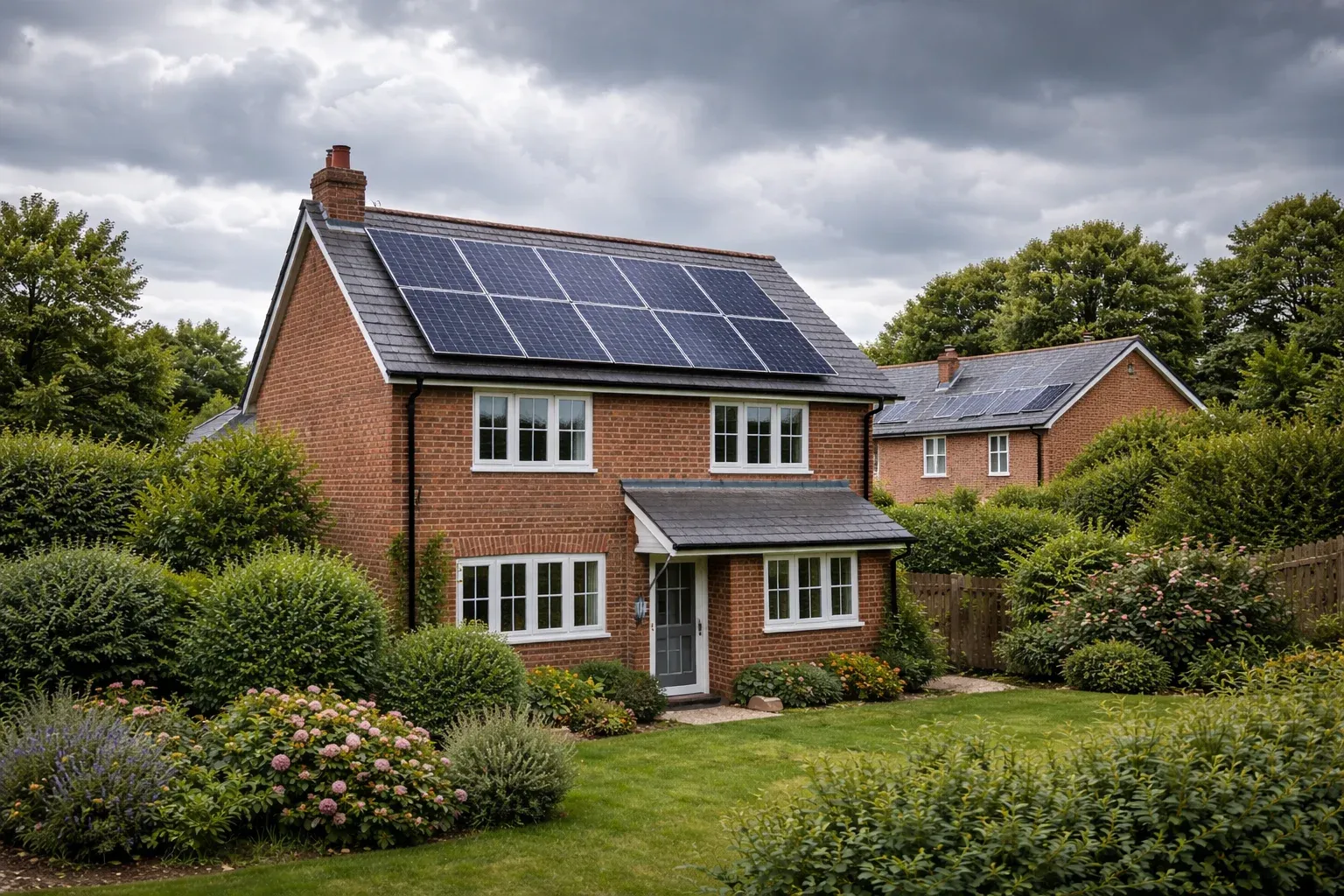
Solar panels are a fantastic investment for many UK homeowners, offering a greener way to power your home and potentially reduce your energy bills. However, a common question we hear is: "Do solar panels actually work on cloudy days in the UK?" Given our often overcast skies, it's a perfectly valid concern. The good news is, yes, they absolutely do! Let's dive into how your solar panels keep generating power, even when the sun isn't shining brightly.
Explore how solar panels can benefit your home. With Fuse Energy, you get clear pricing, real-time usage data, 24/7 human customer support, and a modern energy experience designed around you. Switching takes as little as 3 minutes, so you can take control of your bills from day one. Click here to switch to Fuse Energy today and start saving.
Understanding solar panel performance in UK weather
The science of diffuse light: how solar panels still generate power
Solar panels, or photovoltaic (PV) systems, don't just rely on direct sunshine. They convert light into electricity, and that includes diffuse light - the light that's scattered or reflected by clouds, atmospheric particles, or even surrounding buildings. Think of it like this: you can still see on a cloudy day, right? That's diffuse light at work.
Modern solar panel technology is remarkably efficient at capturing this scattered light. While direct sunlight provides the most intense energy, diffuse light still carries enough photons for your panels to generate a continuous, albeit reduced, electrical current. So, even when a thick blanket of clouds covers the sky, your solar panels are quietly working away, contributing to your home's energy supply.
Realistic output: how well do solar panels work on cloudy days?
It's true that your solar panels won't produce as much electricity on a heavily overcast day as they would on a bright, sunny one. On average, you can expect your panels to generate:
- Heavily overcast days: Around 10-25% of their peak output.
- Partially cloudy days: Typically around 65% of their peak output1.
While these figures might seem lower, it's crucial to remember that this generation is consistent. Over the course of a year, the cumulative effect of this diffuse light generation in the UK is significant. Organisations like the Energy Saving Trust confirm that solar panels are a worthwhile investment in the UK, capable of substantially offsetting household electricity consumption annually. This continuous output, even on less-than-sunny days, makes solar a viable and valuable energy source for British homes.
Maximising your solar generation in the UK
Key factors affecting solar panel efficiency
Even on cloudy days, several factors influence how much electricity your solar panels produce. Optimising these can help maximise your generation:
- Orientation and tilt: South-facing panels with an optimal tilt angle (around 30-40 degrees in the UK) are best for capturing both direct and diffuse light throughout the year.
- Shading: Even partial shading from trees, chimneys, or neighbouring buildings can significantly reduce output, as it can affect an entire string of panels.
- Panel quality and efficiency: Higher-quality panels are generally more efficient at converting light into electricity, especially in lower light conditions.
- Maintenance: Keeping your panels clean from dirt, leaves, or bird droppings ensures maximum light absorption.
- Temperature: Surprisingly, very hot temperatures can slightly decrease efficiency. Cooler, bright days are often ideal because solar panels actually work more efficiently in cooler temperatures.
Do portable solar panels work on cloudy days?
Yes, portable solar panels also work on cloudy days, following the same principles as their rooftop counterparts. Just like fixed installations, they convert diffuse light into electricity. However, their output will be reduced compared to sunny conditions. Their smaller size and often less-than-optimal positioning mean their overall generation will be lower, but they can still provide a trickle charge for devices or maintain battery levels during overcast weather.
Beyond the forecast: tracking your solar savings with Fuse Energy
Understanding that your solar panels work on cloudy days is one thing, but seeing their real-world impact on your energy bill is another. Fuse Energy can help you understand your energy usage. Fuse Energy also empower UK homeowners with existing solar systems to understand their energy consumption. Our detailed billing statements, accessible via your Fuse account, provide a comprehensive view of your energy usage. Our intuitive data analysis tools allow you to visualise your energy consumption patterns, helping you understand how your energy usage changes month-to-month. If you generate surplus electricity, Fuse also offers export tariffs, allowing you to get paid for the energy you send back to the grid.
Managing your energy bills should be clear and easy to understand. Fuse Energy focuses on straightforward pricing, so you can see exactly what you're paying without unnecessary complexity. If you have a smart meter, you can view detailed usage data through the app or website, helping you understand how you can lower your bills. Our 24/7 human support team is always on hand with fast response times whenever you need help. Click here to switch to Fuse Energy in as little as 3 minutes. Find out about our mission by clicking here.
References
Disclaimer
For the avoidance of doubt, this article is provided for informational purposes only and is not intended to constitute legal or financial advice. The author and/or Fuse Energy shall not be responsible for any losses arising out of any reliance on the information contained herein.