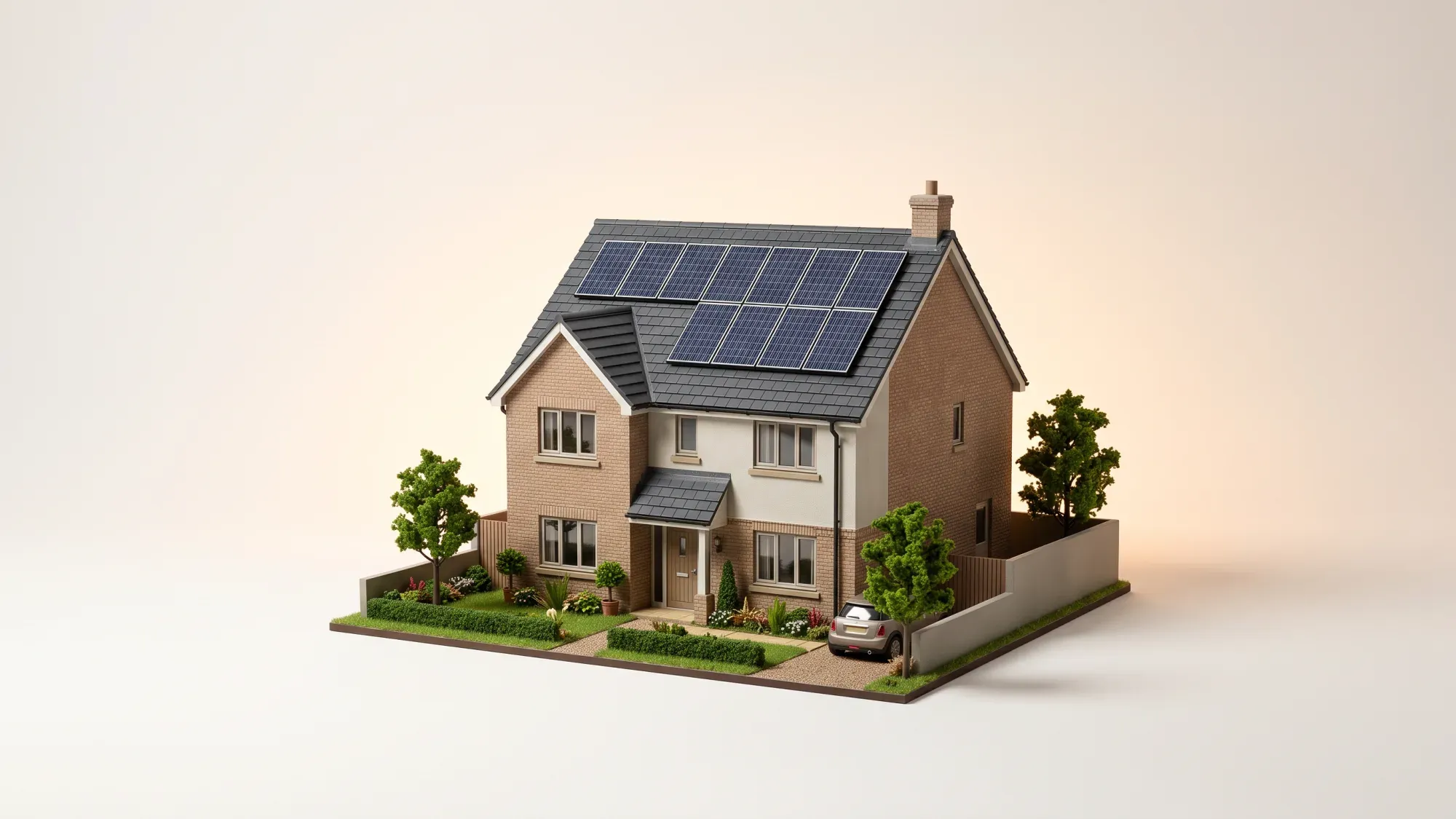
Solar panels: costs, export, and science explained
Solar is no longer niche. Across the UK, homeowners and businesses are turning to solar energy for one simple reason: control. After years of price volatility and rising energy bills, more people want predictable costs, cleaner electricity generation, and less reliance on the grid.
The advantages of solar power are clear. A well-designed solar panel system can reduce imported electricity, cut carbon emissions, and make better use of renewable energy generated right on your roof. Pair it with a battery, an EV, or heat pumps, and you start to unlock a more intelligent, flexible home energy setup. The big promise of solar isn't just "free electricity". It's cleaner energy. Generate your own power in the day. Store it for the evening. Export what you don't use. That's where your energy supplier still matters, even after the panels are installed.
How solar panels generate electricity
Solar panels convert sunlight into electricity via the photovoltaic (PV) effect.1 Photovoltaic simply means "light-energy". Solar panels contain silicon-based solar cells: photons from sunlight strike the semiconductor (usually made from silicon), freeing electrons to create direct current (DC) electricity. Your home uses alternating current (AC), but solar panels produce DC. An inverter converts that DC into usable AC for your lights and appliances.
A quick checklist
Fuse Energy's typical solar PV system includes:
Scaffolding and bird protection
PV panels (on your roof)
An inverter and a smart meter
Mounting hardware and cabling
When your system is generating power, your home uses solar energy first. If you produce more than you need, excess electricity generation can charge a battery, or be exported to the grid. Converting sunlight into usable energy is surprisingly simple in principle. The complexity is in design, sizing, and integration, especially if you want to maximise financial returns.
Types of solar panels and recommendations for UK homes
If you're buying solar, you'll quickly discover there are different types of panels. The three most common are:
Panel Type
Efficiency
Cost
Pros
Cons
Monocrystalline
High
High
Best performance in limited space
More expensive
Polycrystalline
Medium
Medium
Good balance of cost and energy output
Slightly lower efficiency
Thin-film
Low
Low
Lightweight
Requires more roof space
If you have limited roof space: high-efficiency, high-voltage, monocrystalline PV panels often make sense and are the best-in-market. Monocrystalline panels are the usual choice for this reason.
If budget matters more and space isn't tight, polycrystalline panels may be ideal.
Thin-film is less common in UK homes but can suit certain commercial or specialist installs such as on curved roofs or large commercial rooftops.
When buying solar panels, look for a high efficiency rating of at least 20%2 a long product warranty (at Fuse Energy, we offer 25 years), and installers with certifications (MCS, Trust mark, HEIS). The panel itself matters. But installation quality and system design matter just as much.
Roof type impacts energy generation
Your roof determines what you can install, and how much it will generate.
Key factors include:
Factor
Effect on energy generation
Orientation
South-facing roofs typically generate the most, but east–west setups can perform well too.3
Pitch
39° is the optimum tilt for panels to generate the most electricity.4
Shading
Chimneys, trees, neighbouring buildings, dormer windows, and velux reduce output.
Condition
An ageing roof may need attention before panels go on.
Can you install solar on a flat roof?
Yes. Flat roof installations use angled mounting frames or ballast systems. These tilt the panels at an optimal angle and prevent water pooling. Planning and structural assessment, especially in windy areas, is important to ensure the roof can safely support the system and withstand strong winds without causing damage.
What about wall-mounted panels?
Wall-mounted solar panels are uncommon in UK homes due to lower efficiency, but they can work in specific cases. Ground-mounted systems are another option if you have land. These are more common in commercial projects but sometimes suit rural homes.
If you want to check if you can install solar panels, make sure your roof is structurally sound, you have unshaded space, you own the property (or have permission), and your local planning restrictions allow it. An experienced installer will assess all of this during a survey. If you have heavy shading, then moving from hybrid systems to micro-inverters might be the way.
Installation costs, payback period, and expectations
A typical 8-panel solar PV system from Octopus with a 5 kWh battery costs around £8,1235 whereas an 8-panel system from Fuse Energy with a 6 kWh battery costs around £7,300. A quote usually includes panels, an inverter, a mounting system, cabling, installation labour, scaffolding, certification and registration. There are also ongoing considerations like replacing the inverter which is often recommended after 10-15 years, ongoing maintenance, and cleaning if debris reduces output.
What drives payback is how much solar energy you use directly as opposed to importing from the grid. If you export excess energy, that can lower your payback period as you can earn for exporting the energy you don't use. Your installation setup also matters. For panels alone, the payback period is typically 6-10 years, whereas, when paired with a battery, this can go up to 7-12 years.6
When does a battery make sense?
Despite increasing the payback period, a battery helps you save money long-term and rely less on the grid by letting you use more of your own solar power. It also gives you more control over when you use electricity, allowing you to shift electricity import away from peak times and charge during off-peak times, taking advantage of lower rates. It does this by storing excess solar energy generated during the day instead of exporting it straight to the grid. You can then use that stored energy after sunset or during peak rate periods. On tariffs like those at Fuse, where off-peak times run from 00:30am-07:30am GMT, you can also charge the battery at lower rates and use that cheaper electricity later, helping lower your bills while balancing the grid.
5 kWh batteries are common in UK homes but what can they power? Evening lighting, a fridge/freezer, TV and devices, and some kitchen appliances (usage-dependent). It won't run everything indefinitely as it's designed for daily cycling and energy storage.
Here's a comparison:
Factors
Solar without battery
Solar with battery
Upfront cost
Low
High
Export volume
High
Low
Best for
Daytime users
Evening users and EV owners
How solar pays off
Solar gives you control. It reduces reliance on the grid, supports the transition to renewable energy, and can lower long-term energy costs. But panels alone aren't the full story. The real advantages come when you combine solar panels, a battery, an export tariff, and planning energy usage ahead of time.
That's how you optimise consumption, export, and future-proof your home for EVs and heat pumps. If you already have solar, or you're planning a solar PV system, your next step isn't just installation. It's optimisation.
Switch to Fuse Energy to unlock smart tariffs, transparent billing, and modern solar installations.
FAQs
What is a PV system?
A PV system is the setup including solar panels, an inverter, mounting hardware and often a smart meter and optional battery.
How much do solar panels cost on average?
Average cost depends on system size, panel type and installation complexity. Most residential systems include panels, inverter, scaffolding and labour. Always compare detailed quotes rather than headline figures. In the UK, a 3.5 kW solar PV system costs on average around £6,100. At Fuse Energy, we match this average price in addition to including certain add-ons like bird protection and warranties. Please note that exact quotes can differ so we recommend requesting a quote for more information.
Do I need a battery?
Not always. A battery is best suited to households that use more electricity in the evening or want to reduce grid imports further. It increases upfront costs but paired with the off-peak tariff, they can lead to long-term savings if charged at off-peak times. Where batteries come into play is in the winter. Panels won't generate as much power in winter as they would in summer so importing energy from the grid at a cheap off-peak rate to charge your battery means you save even more.
For the avoidance of doubt, this article is provided for informational purposes only and is not intended to constitute legal or financial advice. The author and/or Fuse Energy shall not be responsible for any losses arising out of any reliance on the information contained herein.
Solar panels: costs, export, and science explained