Solar panel installation in Huddersfield
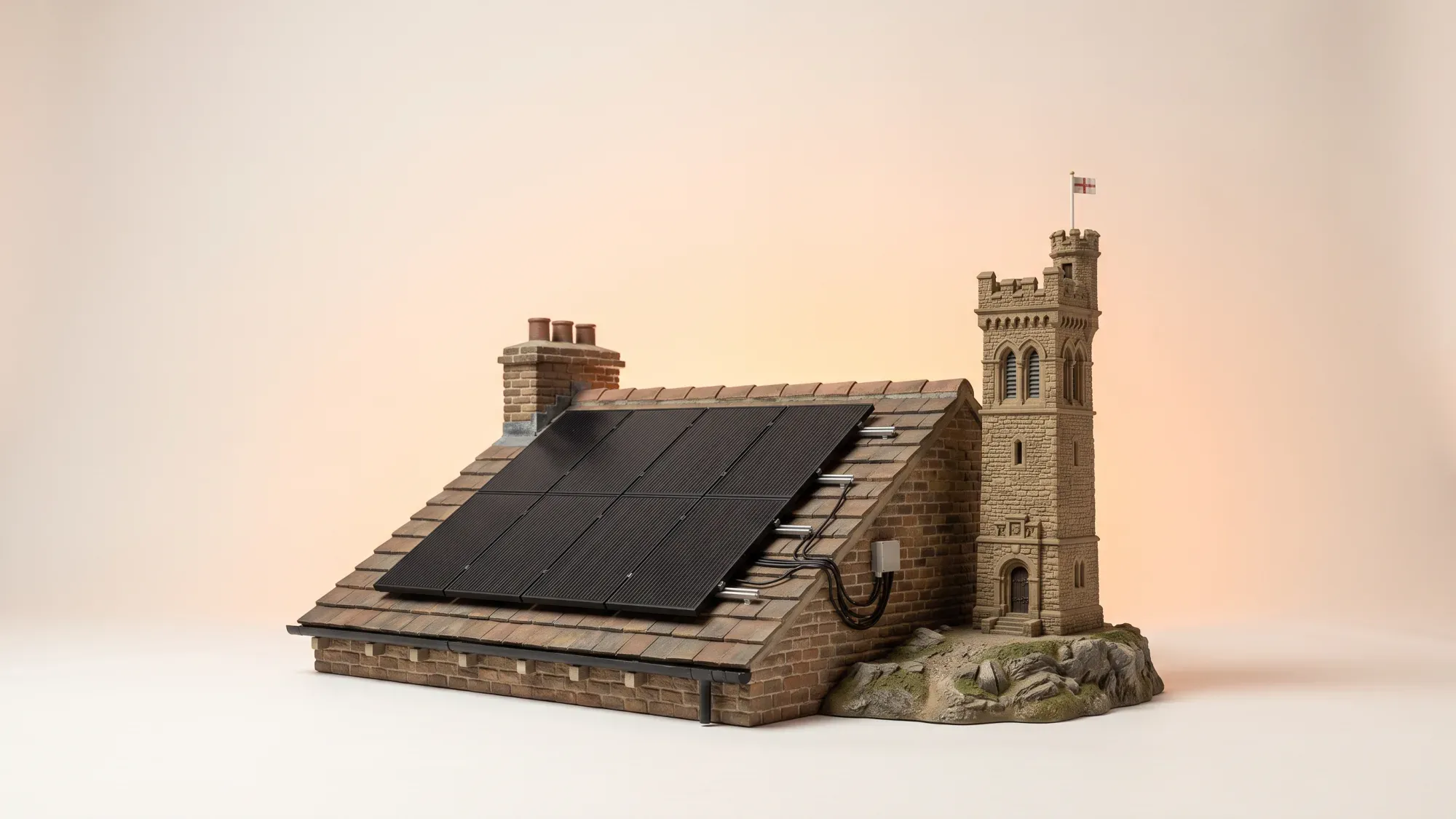
Huddersfield, nestled in the Pennine foothills, is known for its rich industrial heritage and distinctive Victorian and Edwardian architecture. For homeowners in this vibrant West Yorkshire town, installing solar panels offers a tangible path to energy independence, even with the UK's northern climate. This guide cuts through the noise, providing clear, localised information on how solar panels and battery storage can transform your home's energy consumption, reduce bills, and contribute to a more sustainable future.
Understanding solar power in Huddersfield
Why solar panels make sense for Huddersfield homes
Solar panels are a smart investment for Huddersfield homeowners looking to take control of their energy costs. With energy prices fluctuating, generating your own electricity provides a buffer against rising bills and offers long-term financial predictability. Beyond savings, installing solar panels enhances your home's energy efficiency, a valuable asset in the local property market. It is a proactive step towards a future where energy is abundant, not a constant worry.
Huddersfield's climate and solar efficiency
While Huddersfield, like other northern parts of the UK, receives fewer annual sunlight hours compared to the south, solar photovoltaic (PV) systems are still highly effective. Modern solar panels are designed to generate electricity even on cloudy or diffuse daylight, meaning they continue to work throughout the year. The key is not just direct sunshine, but also the overall light levels. This makes careful system design, including correct roof orientation and panel placement, particularly important to maximise energy capture in the local climate. If you are wondering how well solar panels perform in less-than-perfect conditions, you might be interested in learning more about whether do solar panels work on cloudy days.
The role of battery storage in northern UK
For Huddersfield homes, battery storage is not just an add-on; it is often a critical component for maximising your solar investment. In a northern climate where sunlight hours can be more limited, a battery allows you to store surplus electricity generated during the day and use it during the evening or on less sunny days. This significantly increases your self-consumption, reducing reliance on grid electricity and further cutting your energy bills. Without a battery, much of your excess solar generation might be exported to the grid at a lower rate than you would pay to import it later.
Benefits of solar panels for Huddersfield homeowners
Reducing energy bills and increasing independence
One of the most compelling reasons for Huddersfield homeowners to go solar is the potential for substantial savings on electricity bills. By generating your own power, you reduce the amount you need to buy from the grid. This move towards energy independence means you are less exposed to market volatility and price increases. Huddersfield falls within the "Yorkshire" electricity distribution region for Ofgem's price cap, meaning its unit rates and daily standing charges are specific to this region and are updated quarterly. Generating your own power helps mitigate the impact of these regional variations. To understand the potential financial impact, you can analyse your average monthly electric bill with solar panels.
Environmental impact and carbon footprint
Installing solar panels is a direct way to reduce your household's carbon footprint. By harnessing clean, renewable energy from the sun, you decrease your reliance on fossil fuels and contribute to a healthier planet. This environmental benefit aligns with a growing desire among Huddersfield residents to live more sustainably and play their part in combating climate change.
Increasing property value
Homes equipped with solar panels and battery storage systems are increasingly attractive to potential buyers. Energy efficiency is a key consideration in today's housing market, and a well-installed Solar PV system can significantly boost your property's appeal and value. It signals a modern, forward-thinking home with lower running costs, a clear advantage in Huddersfield's competitive property landscape.
The solar panel installation process in Huddersfield
Initial assessment and system design
The journey to solar power begins with a thorough assessment of your home. A qualified installer will evaluate your roof's suitability, considering its size, orientation, pitch, and any shading from nearby trees or buildings. They will also analyse your household's energy consumption patterns to design a system that meets your specific needs, recommending the optimal number of panels and battery storage capacity. For more details on the process, explore our guide to solar panel installation.
Permits and grid connection with Northern Powergrid
Before installation, certain administrative steps are necessary. Your chosen installer will typically handle the required notifications and permits. For Huddersfield residents, this includes the grid connection process (known as G98 or G99) with Northern Powergrid, the local Distribution Network Operator (DNO). This ensures your solar system can safely and legally connect to the electricity grid. In the event of a power cut, Huddersfield residents can dial the free national number 105, which routes directly to their DNO for assistance.
Installation and commissioning
Once all approvals are in place, the physical installation can begin. This involves mounting the solar panels on your roof, installing the inverter (which converts direct current (DC) electricity from the panels to alternating current (AC) electricity for your home), and connecting the battery storage system. After installation, the system is commissioned, tested, and certified to ensure it operates safely and efficiently. Your installer will then guide you through how to monitor your new energy system.
Choosing a solar panel installer in Huddersfield
Importance of MCS certification
When selecting a solar installer in Huddersfield, Microgeneration Certification Scheme (MCS) certification is paramount. This scheme ensures that installers meet rigorous quality standards for both products and installation. Crucially, MCS certification is a mandatory requirement for homeowners to qualify for the Smart Export Guarantee (SEG), which allows you to earn money for surplus electricity you export back to the grid. Without it, you will not be able to benefit from SEG payments.
Local expertise and reputation
Opting for an installer with a strong local presence and reputation in Huddersfield can offer significant advantages. Local companies often have a better understanding of regional planning requirements, typical housing styles, and the specific challenges or opportunities presented by the local climate. Look for installers with positive customer reviews and a proven track record of successful installations in the area.
Questions to ask potential installers
Before committing, ask potential installers about their MCS certification, their experience with similar homes in Huddersfield, and the warranties they offer on both equipment and workmanship. Inquire about their process for handling grid connection applications with Northern Powergrid and how they support customers post-installation. A reputable installer will be transparent and happy to answer all your questions.
Financial considerations and incentives for Huddersfield
0% VAT on solar and battery storage
A significant financial incentive for installing solar panels and battery storage in Great Britain is the 0% VAT rate, which applies until 31 March 2027. This tax relief makes the upfront cost of these systems considerably more affordable, providing a direct saving on your investment.
The Smart Export Guarantee (SEG)
The SEG is a UK-wide scheme that requires larger licensed electricity suppliers to pay homeowners for any surplus renewable electricity they export to the grid. Once your MCS-certified solar system is installed, you can choose an SEG tariff from a participating supplier, turning your excess generation into a source of income. This scheme adds another layer of financial benefit to your solar investment.
Understanding the 'Yorkshire' price cap region
Huddersfield sits within the "Yorkshire" electricity distribution region, which is relevant for understanding your energy bills. Ofgem's energy price cap is set per region and updated quarterly, influencing the unit rates and daily standing charges you pay for electricity. While solar generation directly reduces the amount of electricity you import, understanding your regional cap helps you calculate potential savings and the overall financial impact of your solar installation.
Maximising your solar investment in Huddersfield
Optimising panel placement and orientation
To get the most out of your solar panels in Huddersfield's climate, optimising their placement and orientation is key. While south-facing roofs are ideal, east and West-facing installations can also be highly effective, especially when paired with battery storage to capture morning and afternoon generation. Your installer will use specialist software to model the optimal array for your home, considering factors like roof pitch and potential shading to maximise energy yield throughout the year.
Integrating smart home energy management
A truly abundant energy future is not just about generating power; it is about managing it intelligently. Integrating your solar and battery system with smart home energy management tools allows you to monitor your generation and consumption in real-time. This capability empowers you to make informed decisions, such as running high-energy appliances when your panels are generating the most electricity or when grid prices are lowest. This level of control ensures you are always making the most of your self-generated power and protecting yourself from surprises and shocks on your energy bill.
What is the G98/G99 process for solar installations?
The G98/G99 process is how new home EV chargers or solar/battery grid connections in Huddersfield are notified to Northern Powergrid, the local DNO. This notification ensures the safe and compliant connection of your system to the electricity grid, and it is typically handled by your solar installer as part of the installation process.
Long-term maintenance and monitoring
Solar PV systems are robust and require minimal maintenance. However, regular monitoring of your system's performance, often through a dedicated app, can help identify any issues early. Occasional cleaning of panels, especially after periods of heavy dust or pollen, can also help maintain optimal efficiency. Your installer should provide guidance on maintenance, ensuring your system continues to deliver clean energy and savings for decades to come.
Making the switch to solar panels can feel like a big decision, but with the right information and support, it is a straightforward path to a more sustainable and cost-effective home. Fuse Energy is committed to making energy simple and transparent, helping you understand your usage and find tariffs that work for you. Our 24/7 human customer support team is always on hand to assist you.
Disclaimer
For the avoidance of doubt, this article is provided for informational purposes only and is not intended to constitute legal or financial advice. The author and/or Fuse Energy shall not be responsible for any losses arising out of any reliance on the information contained herein.