Sustainable technology choice: your home's power play
Choosing sustainable technology for your home can feel like navigating a maze of jargon and conflicting claims1. However, it is a strategic move that puts more energy, control, and potential savings directly into your hands. For UK homeowners, making genuinely eco-friendly choices means looking beyond superficial "green" labels to understand a technology's true impact and practical benefits. This guide cuts through the noise, offering a clear framework to evaluate and select sustainable home technologies that align with your needs, budget, and long-term goals.
Making informed decisions about sustainable technology can empower you to take control of your home's energy future. Fuse Energy offers smart meter upgrades, EV charger installations, and solar and battery solutions, making the adoption of sustainable technology accessible and rewarding. Click here to get started.
Enter your address to get a quote and see how much you could save
What is sustainable technology for your home?
Beyond the buzzwords: practical definitions
Sustainable technology for your home is not just about being "green"; it is about making choices that deliver long-term environmental benefits alongside tangible practical advantages. This means selecting systems and devices that reduce your carbon footprint, minimise waste, and use resources efficiently throughout their entire lifecycle. Crucially, for homeowners, it also means technologies that offer real-world benefits like lower running costs, improved comfort, and greater energy independence. It is a shift from the abstract concept of environmentalism to concrete, beneficial upgrades for your property.
Why sustainable choices matter for UK homeowners
For UK homeowners, embracing sustainable technology is a smart move that pays dividends. It allows you to take control of your energy consumption, moving away from a passive "use less" mindset to an empowering vision of "power to play with". By investing in technologies that generate, store, or manage energy more efficiently, you can significantly reduce your energy bills, gain greater independence from fluctuating market prices, and even contribute to a more resilient National Grid. It is a strategic "power play" that enhances your home's value and future-proofs your lifestyle against rising costs and environmental concerns.
Key considerations for your sustainable technology choice
Understanding lifecycle assessment and environmental impact
Making a truly sustainable technology choice requires looking beyond the point of purchase. A lifecycle assessment (LCA) considers a product's environmental impact from raw material extraction, through manufacturing, transport, use, and eventual disposal or recycling. This helps you avoid "greenwashing" - where a product might seem eco-friendly but has hidden environmental costs. Understanding the full picture ensures your investment genuinely contributes to sustainability.
Balancing cost, performance, and longevity
The ideal sustainable technology strikes a balance between upfront cost, ongoing performance, and expected lifespan. It is a common pitfall to focus solely on the initial installation price without considering the long-term operational savings and benefits. A cheaper system might save money initially but could be less efficient, require more maintenance, or have a shorter lifespan, costing more in the long run. Conversely, a higher-performing, more durable option might have a greater upfront cost but offer superior savings and reliability over decades. Evaluate the total cost of ownership, including energy savings, maintenance, and potential resale value.
Assessing your home's needs and potential
Every home is unique, and what works for one property might not suit another. Before committing to a sustainable technology, assess your current energy usage patterns, property characteristics, and lifestyle needs. Do you have a south-facing roof suitable for solar panels? Is your home well-insulated enough to benefit fully from a heat pump? Do you own an electric vehicle, making a home charger a priority? Understanding these factors ensures you choose technologies that are well-suited to your specific circumstances, maximising their effectiveness and your return on investment.
How much electricity does a typical UK home use?
The average UK home uses around 2,500 kWh of electricity and 9,500 kWh of gas per year. These figures, from Ofgem, provide a useful baseline for homeowners to compare their own consumption against when evaluating potential savings from sustainable technologies.
Top sustainable technologies for UK homes
Solar panels and home battery storage
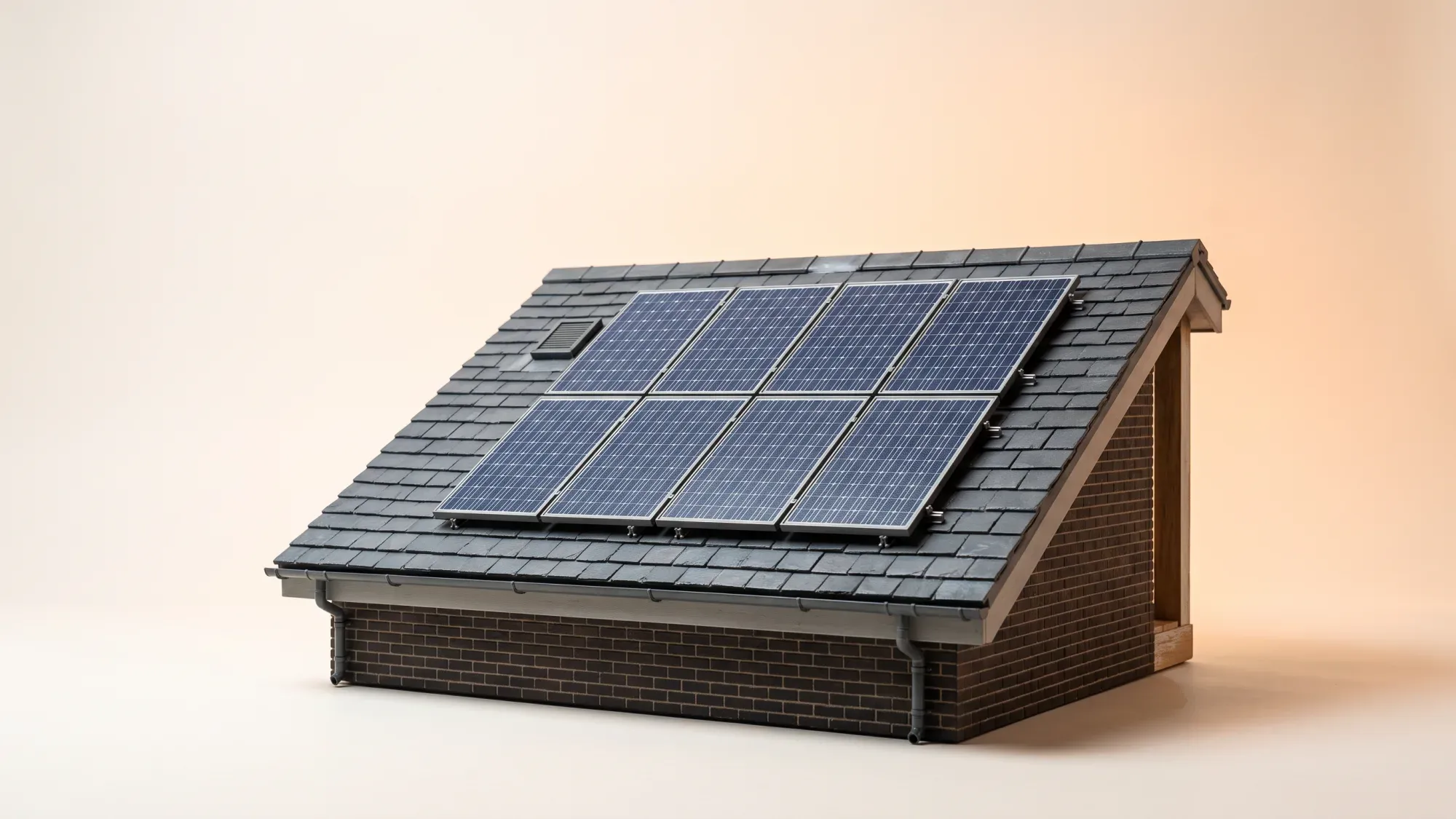
Solar photovoltaic (PV) panels convert sunlight into electricity, directly reducing your reliance on grid power. When paired with home battery storage, you can store excess solar energy generated during the day for use in the evenings or when the sun is not shining. This significantly boosts your energy independence and allows you to maximise self-consumption, further cutting bills. You can learn more about the benefits of installing solar panels for your home here.
For example, a modern 2 MW onshore wind turbine can generate enough electricity to power approximately 1,900 average UK homes annually. While this is a utility-scale example, it illustrates the power of renewable generation. Onshore wind farms in the UK operate at an average capacity factor of around 27%, while offshore wind farms average around 41%. These figures highlight the efficiency of renewable sources in the UK's energy mix.
Smart meters and energy management systems
Smart meters are a foundational step towards a more sustainable home. They provide real-time data on your energy consumption, allowing you to identify inefficiencies and make informed decisions. The Radio Teleswitch Service (RTS), a legacy system for managing multi-rate electricity tariffs, is being phased out, requiring affected homes to upgrade to smart meters. Once installed, smart meters can integrate with home energy management systems, which automate energy use, optimise appliance scheduling, and even manage your solar and battery systems for peak efficiency and cost savings. Find out more about smart meter installation.
Electric vehicle charging at home
With the rise of electric vehicles (EVs), home charging solutions are becoming an increasingly important sustainable technology. Installing a dedicated EV charger at home offers convenience and can be integrated with smart energy tariffs to charge your vehicle when electricity is cheapest or when renewable generation is high. This not only reduces your transport carbon footprint but also allows you to manage your home's overall energy demand more effectively. You can explore options for EV charger installation to support your sustainable lifestyle.
Other eco-friendly upgrades for your property
Beyond the major technologies, several other eco-friendly upgrades can contribute to a sustainable home. These include:
- Improved insulation: Reducing heat loss through walls, roofs, and floors is often the most cost-effective way to cut energy consumption.
- Heat pumps: These systems extract heat from the air, ground, or water to provide efficient heating and hot water, significantly reducing reliance on fossil fuels.
- Smart thermostats: These devices learn your preferences and optimise heating schedules, preventing wasted energy.
- LED lighting: Swapping traditional bulbs for LEDs drastically cuts electricity use for lighting.
- Water-saving devices: Low-flow showerheads and efficient appliances reduce water consumption and the energy needed to heat it.
Making your sustainable technology choice: a step-by-step guide
Researching UK incentives and regulations
The UK government and local authorities often provide incentives and grants to encourage the adoption of sustainable home technologies. These can include grants for heat pump installations, smart meter upgrades, or even schemes for energy efficiency improvements. Regulations, such as building codes or planning permissions for certain installations, also need consideration. Always check official, up-to-date sources like the UK Government's website or Ofgem for the latest information, as schemes and eligibility criteria can change.
Finding reputable installers and suppliers
Once you have identified suitable technologies, finding reputable installers and suppliers is crucial. Look for certified professionals with a proven track record and positive customer reviews. Obtain multiple quotes and ensure they cover all aspects of the installation, including equipment, labour, and any necessary electrical or plumbing work. A good installer will also be able to advise on maintenance and warranty details.
Monitoring and optimising your sustainable home
Installing sustainable technology is just the first step. To maximise its benefits, you need to monitor its performance and optimise its operation. Smart meters and energy management apps provide valuable data, allowing you to track consumption, identify areas for further improvement, and ensure your systems are running efficiently. Regular maintenance, as recommended by manufacturers, will also extend the lifespan of your investments and keep them performing at their best.
Empowering your sustainable home
The future of energy: more control, more capability
The future of home energy is not about sacrifice; it is about empowerment. Sustainable technology choices are transforming homes into active participants in the energy system, giving you unprecedented control and capability. Imagine a home that intelligently manages its own energy generation, storage, and consumption, adapting to your needs and the grid's demands. This vision of "power to play with" means energy becomes an abundant resource that works for you, freeing you from constant worry about bills and consumption.
Making your power play with confidence
Choosing sustainable home technologies is a strategic "power play" that shifts control into your hands. Fuse Energy offers smart meter upgrades, EV charger installations, and solar and battery solutions, making the adoption of sustainable technology accessible and rewarding. We provide 24/7 human customer support and can assist with installing EV chargers and solar and battery solutions, helping you adopt sustainable technology. This rigorous yet optimistic approach ensures you can make your power play with confidence, knowing you are building a more resilient and cost-effective future for your home. Click here to switch to Fuse Energy today. Find out more about our mission to make energy abundant by clicking here.
References
- AV Interactive. Why sustainable technology choices are hard to make
Disclaimer
For the avoidance of doubt, this article is provided for informational purposes only and is not intended to constitute legal or financial advice. The author and/or Fuse Energy shall not be responsible for any losses arising out of any reliance on the information contained herein.