Smart meter installation process
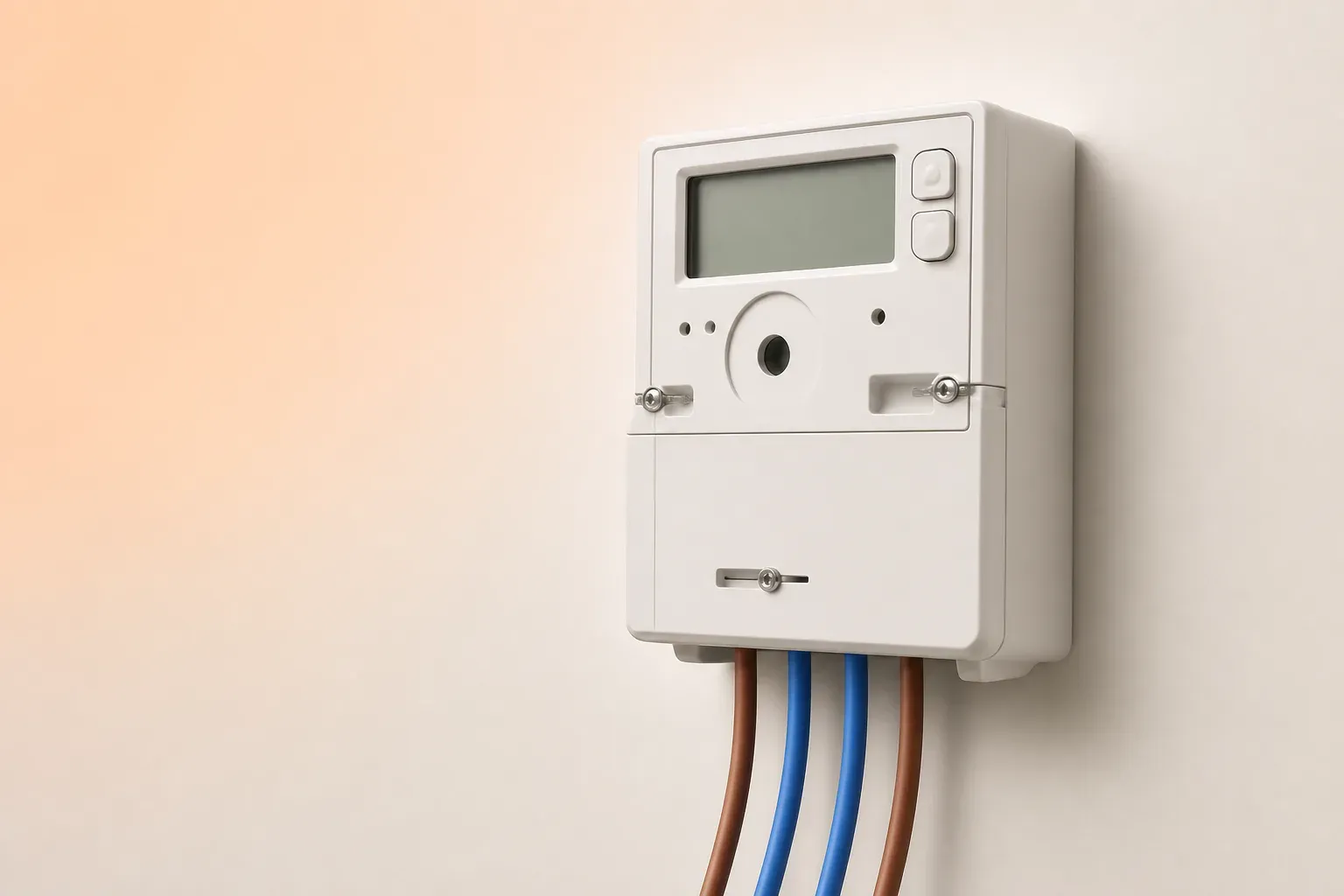
Getting a smart meter installed can seem complex, but it's a straightforward process designed to give you more control over your energy use. These modern devices are being rolled out across Great Britain to update the energy grid, replacing older, traditional meters. They offer accurate billing, detailed insights into your energy consumption, and open the door to smart tariffs that can help you manage your costs more effectively. The national rollout programme aims for every home in Great Britain to be offered a smart meter by 2025, with suppliers taking all reasonable steps to achieve this goal.
Understanding your energy usage is the first step towards managing your bills effectively. Fuse Energy makes this simple with clear pricing and real-time usage data available through the app. If you're ready to take control of your home's energy, click here to switch to Fuse Energy today.
Enter your address to get a quote and see how much you could save
What is a smart meter and how does it work?
A smart meter is a new generation of gas and electricity meter that digitally measures your energy use and sends readings directly to your energy supplier. This means an end to estimated bills and manual meter readings. Instead, you get accurate bills based on exactly what you've used. They also come with an in-home display (IHD) that shows your energy consumption in near real-time, helping you understand where your energy goes.
The difference between SMETS1 and SMETS2
Great Britain has seen two main generations of smart meters: SMETS1 and SMETS2. SMETS stands for Smart Metering Equipment Technical Specifications.
SMETS1 meters were the initial rollout, starting in 2013. While they offered many benefits, a common issue was that they often lost their "smart" functionality when customers switched energy suppliers, reverting to acting like traditional meters. This meant manual readings were sometimes needed again.
SMETS2 meters are the latest generation, designed to overcome these limitations. They connect to a secure national network operated by the Data Communications Company (DCC), ensuring they remain smart even if you change suppliers. This improved connectivity and interoperability make SMETS2 meters more reliable and future-proof, supporting advanced features and smart tariffs.
Understanding your in-home display
Your in-home display (IHD) is a simple device that connects to your smart meter's home area network (HAN) to show energy usage information. It shows how much energy you're using in real-time, often in pounds and pence. This immediate feedback can be incredibly helpful for identifying energy-intensive appliances and understanding your consumption habits. You can see your daily, weekly, and monthly usage, empowering you to make informed decisions about when and how you use energy. The Fuse app can also act as a remote IHD, showing hourly, daily, monthly, and annual usage.
Key benefits of smart meter installation
Installing a smart meter offers several advantages beyond simply replacing an old device. It's a step towards more informed energy management and potentially lower bills.
Accurate billing and no more estimates
One of the most immediate benefits of a smart meter is accurate billing. Because your meter automatically sends readings to your supplier, you'll only pay for the energy you've actually used. This eliminates estimated bills, which can sometimes be too high or too low, leading to unexpected adjustments.
Gaining control over your energy usage
The in-home display provides a clear, real-time picture of your energy consumption. Seeing how much electricity or gas you're using as you use it can highlight areas where you might be able to cut back. This visibility empowers you to understand your habits and take proactive steps to manage your usage. You can also learn more about how to read your meter for traditional meters.
Unlocking smart tariffs
Smart meters are essential for accessing smart tariffs. These tariffs can offer different prices for electricity at different times of the day, often with cheaper rates during off-peak hours. By shifting some of your energy use to these cheaper periods - for example, charging an electric vehicle overnight or running a washing machine - you can potentially reduce your energy costs.
The smart meter installation process
Getting a smart meter is typically a straightforward process. Energy suppliers are responsible for offering and installing these meters for eligible homes.
Checking eligibility and booking your appointment
To get a smart meter, you first need to check your eligibility with your current energy supplier. Most homes in Great Britain are eligible for a free smart meter upgrade. Once confirmed, you can book an installation appointment at a time that suits you.
Preparing for the engineer's visit
Before the engineer arrives, ensure the area around your existing gas and electricity meters is clear and easily accessible. This helps the installation go smoothly and safely. You'll also need to be present during the appointment to allow the engineer access.
What happens during installation
A qualified engineer will visit your home to replace your old meters with new smart ones. The process usually takes around two hours for both gas and electricity meters, or about an hour for a single meter. Your power will be temporarily switched off during the installation, but only for a short period. Once the new meters are installed, the engineer will ensure they are working correctly and show you how to use your in-home display.
How long does a smart meter installation typically take?
A typical smart meter installation for both gas and electricity meters usually takes around two hours to complete. If you're only having one meter replaced, the process will generally take about an hour. The exact duration can vary depending on your property's specific setup.
Addressing common smart meter concerns
It's natural to have questions about new technology in your home. Smart meters have been the subject of various discussions, and addressing common concerns can help demystify the process.
Are smart meters compulsory?
No, smart meters are not compulsory for all households in Great Britain. While energy suppliers are rolling out smart meters, you have the right to decline the installation. However, it's worth considering the benefits they offer for managing your energy.
Data privacy and security
Concerns about data privacy are understandable. Smart meters are designed with security in mind. The data they collect is encrypted and sent via a secure national network (the DCC) directly to your energy supplier. Your energy consumption data is used for billing and to help you understand your usage. Energy suppliers must comply with strict data protection regulations, including the General Data Protection Regulation (GDPR), when handling your information.
Resolving connectivity issues
Occasionally, smart meters can experience connectivity issues, meaning they might temporarily stop sending automatic readings. This can happen for various reasons, such as signal strength or network problems. If your smart meter goes offline, your supplier will typically be able to identify the issue. Many SMETS1 meters that previously went "dumb" when switching suppliers have been remotely migrated to the DCC network to improve their connectivity. If you experience persistent connectivity problems, your energy supplier should be your first point of contact for support and resolution. Fuse allows up to 42 days from when a connectivity issue started for automated reconnection attempts to succeed before escalating to a meter exchange or specialist investigation.
Getting your free smart meter upgrade
Smart meters are a key tool for understanding and optimising your energy use, allowing you to have more control over your consumption. You can find out more about a smart meter upgrade and how it works.
How Fuse Energy supports your smart meter journey
Fuse Energy offers free SMETS2 smart meter installations for eligible homes. This ensures you have the latest technology to manage your energy effectively. The Fuse app integrates directly with your smart meter data, providing actionable insights for managing consumption and enabling access to smart tariffs. Should you have any queries or issues, Fuse provides dedicated 24/7 human customer support, ensuring a smooth and reassuring experience.
What to expect after installation
Once your smart meter is installed, it may take a short period for it to fully connect and for your supplier to begin receiving automatic readings. During this time, your in-home display might not immediately show real-time data. Your supplier will typically inform you when your smart meter is fully operational. The average UK home uses around 2,500 kWh of electricity per year, and with your new smart meter, you'll be able to track your usage against this benchmark.
The future of energy with smart meters
Smart meters are more than just a billing tool; they are foundational to a modern, efficient energy system.
Beyond basic monitoring: advanced energy management
Smart meters enable a shift from passive energy consumption to active energy management. By providing detailed, real-time data, they empower you to make informed decisions about your energy use. This data can be integrated with energy management apps, allowing you to track consumption, set budgets, and even automate certain appliances to run during off-peak times, optimising both your usage and your costs.
Contributing to a smarter energy grid
The widespread adoption of smart meters is crucial for developing a smarter, more resilient energy grid. By providing accurate, up-to-date information on energy demand, smart meters help network operators balance supply and demand more effectively. This can lead to a more efficient use of renewable energy sources and contribute to a lower-carbon energy system, moving us closer to a future with abundant, clean energy.
Ready to experience the benefits of a smart meter and take control of your home's energy? Fuse Energy offers clear pricing, real-time usage data through our app, and 24/7 human customer support to help you every step of the way. Switching is quick and easy. Click here to switch to Fuse Energy today and discover a smarter way to manage your energy. You can also learn more about our mission to provide abundant, clean energy by clicking here.
Disclaimer
For the avoidance of doubt, this article is provided for informational purposes only and is not intended to constitute legal or financial advice. The author and/or Fuse Energy shall not be responsible for any losses arising out of any reliance on the information contained herein.