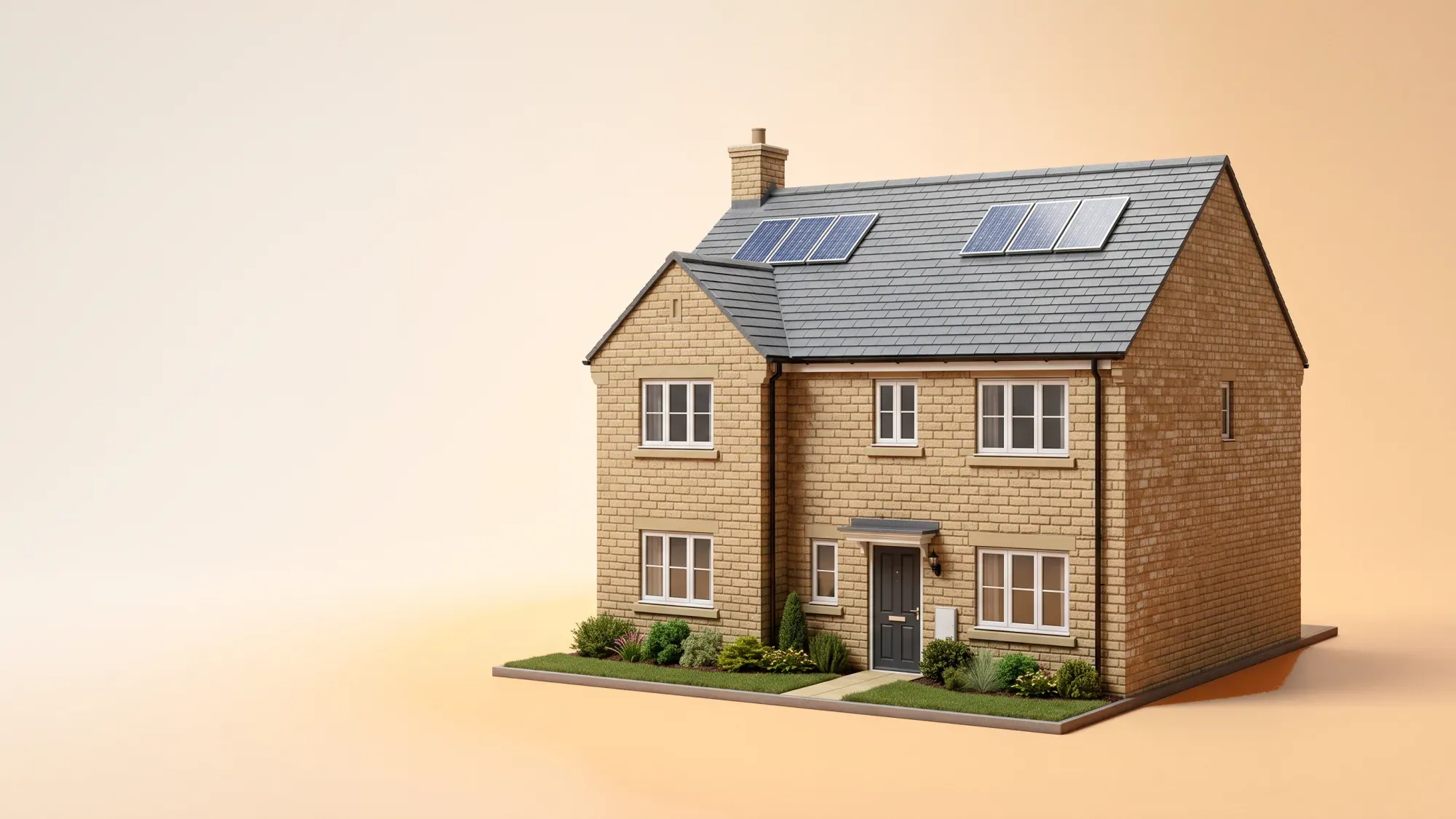
Installing solar panels in Yorkshire is a strategic move, transforming homes across the region from the Dales to the coast. Whether your property is a Victorian terrace in Leeds, a new-build in York, or an off-gas-grid farmhouse, modern solar photovoltaic (PV) systems, especially when paired with battery storage, offer a powerful way to take control of your energy. This guide provides precise, locally-relevant information to help Yorkshire homeowners make an informed "power play" with their energy.
Why solar panels in Yorkshire make sense
Embracing Yorkshire's unique energy landscape
Yorkshire's diverse housing stock and distinct energy landscape make solar an increasingly attractive option. With energy costs a constant concern, generating your own electricity offers a tangible path to greater independence. Choosing solar and battery storage is a strategic "power play" for Yorkshire residents to gain energy independence and reduce bills, aligning with a vision of abundant energy.
Debunking the 'northern climate' myth
It is a common misconception that solar panels are not effective in northern UK climates. While Yorkshire does experience fewer annual sunlight hours than the south, modern solar PV systems are highly efficient and work effectively on diffuse daylight, not just direct sunshine. This means they continue to generate power even on cloudy days. Pairing solar panels with battery storage significantly enhances their value, allowing you to store surplus energy generated during the day for use in the evenings or overnight, maximising self-consumption and reducing reliance on grid electricity.
Long-term savings and property value
Investing in solar panels can lead to substantial long-term savings on electricity bills. By generating your own power, you reduce the amount you need to buy from the grid, shielding you from future price rises. Understanding how solar panels can impact your average monthly electric bill is key to assessing your potential savings. Furthermore, homes with solar installations often see an increase in property value, appealing to buyers looking for energy-efficient properties.
Navigating Yorkshire's local solar ecosystem
Your electricity distribution region: 'Yorkshire'
The UK is divided into 14 electricity distribution regions, each managed by a Distribution Network Operator (DNO). Yorkshire sits in its own "Yorkshire" electricity distribution region. This means its unit rates and daily standing charges for Ofgem's price cap can differ from other regions across Great Britain. The price cap is updated quarterly on 1 January, 1 April, 1 July, and 1 October, directly impacting your energy costs and the value of self-generated electricity.
Connecting to Northern Powergrid: the G98/G99 process
The DNO for Yorkshire is Northern Powergrid. They are responsible for the local electricity grid, including managing connections and responding to power cuts. If you experience a power cut in Yorkshire, you can dial the free national number 105, which routes directly to Northern Powergrid.
New home EV charger or solar/battery grid connections in Yorkshire require notification to Northern Powergrid (chargers via the ENA connect-and-notify route; solar systems or battery systems under G98/G99). This process ensures your system is safely and legally connected to the local grid. For most domestic systems, your installer handles this notification to the DNO.
The role of MCS certification for local installers
Selecting an MCS-certified installer is crucial for homeowners in Yorkshire. The Microgeneration Certification Scheme (MCS) is a quality assurance scheme that certifies microgeneration products and installers. MCS certification ensures your installation meets industry standards and is carried out by competent professionals. Without MCS certification, you will not qualify for financial incentives like the Smart Export Guarantee (SEG).
Financial incentives for Yorkshire homeowners
0% VAT relief on solar and battery storage
A significant financial incentive for solar panel installation in Yorkshire is the 0% VAT relief. This applies to solar panel and battery storage installations for residential properties across Great Britain until 31 March 2027. From 1 April 2027, the VAT rate is set to revert to 5% for qualifying installations. This relief significantly reduces the upfront cost of your system.
Earning with the Smart Export Guarantee (SEG)
The SEG requires larger licensed energy suppliers to pay homeowners for any surplus solar electricity exported back to the grid. To qualify for SEG payments, your solar PV system must be installed by an MCS-certified installer. This allows you to earn money from the energy you do not use, further improving the financial return on your investment.
What is the SEG?
The SEG is a UK-wide scheme that requires licensed electricity suppliers to pay small-scale generators for the low-carbon electricity they export to the grid. To be eligible, your solar panel system must be MCS-certified, ensuring it meets specific quality and safety standards. This allows homeowners to earn money from surplus energy.
Understanding your potential savings
Your potential savings from solar panels in Yorkshire depend on several factors, including the size and efficiency of your system, your household's energy consumption patterns, and the amount of electricity you export to the grid. For a deeper dive into the financial aspects, you can explore the solar panel installation cost in the UK. By reducing your reliance on grid electricity and earning through the SEG, you can significantly lower your annual energy bills.
The solar panel installation process in Yorkshire
Initial assessment and system design
The process begins with an initial assessment of your home's suitability for solar panels and battery storage. A reputable installer will evaluate your roof's orientation, pitch, shading, and structural integrity. They will then design a bespoke system tailored to your energy needs and budget, providing a detailed quote.
Installation and grid connection
Once the design is finalised, the installation team will mount the solar panels on your roof and connect them to an inverter, which converts the direct current (DC) electricity generated by the panels into alternating current (AC) electricity usable in your home. If you opt for battery storage, this will also be integrated into the system. The installer will then handle the necessary notification to Northern Powergrid under the G98/G99 process to ensure your system is properly connected to the local grid.
Post-installation: monitoring and maintenance
After installation, you will typically have access to an app or online portal to monitor your system's performance, track energy generation, and manage your battery storage. Modern solar PV systems require minimal maintenance, usually just an annual check-up and occasional cleaning of the panels to ensure optimal efficiency.
Choosing the right solar installer in Yorkshire
Key qualities of a reputable local installer
When choosing a solar panel installer in Yorkshire, prioritise those with a strong local reputation and a proven track record. Crucially, ensure they are MCS-certified, as this is essential for accessing financial incentives like the SEG. Look for installers who offer comprehensive services, from initial assessment and design to installation and aftercare.
Questions to ask before committing
Before committing to an installer, ask about their MCS certification, their experience with similar installations in Yorkshire, and the warranties they offer on both the equipment and their workmanship. Inquire about their process for handling the Northern Powergrid G98/G99 notification and how they support customers with SEG applications.
Maximising your investment with battery storage
To truly maximise your solar investment in Yorkshire, consider integrating battery storage. This allows you to store excess energy generated during the day, reducing your reliance on expensive grid electricity during peak hours and increasing your energy independence. It is a key component of a modern, abundant energy system for Yorkshire homes.
For the avoidance of doubt, this article is provided for informational purposes only and is not intended to constitute legal or financial advice. The author and/or Fuse Energy shall not be responsible for any losses arising out of any reliance on the information contained herein.