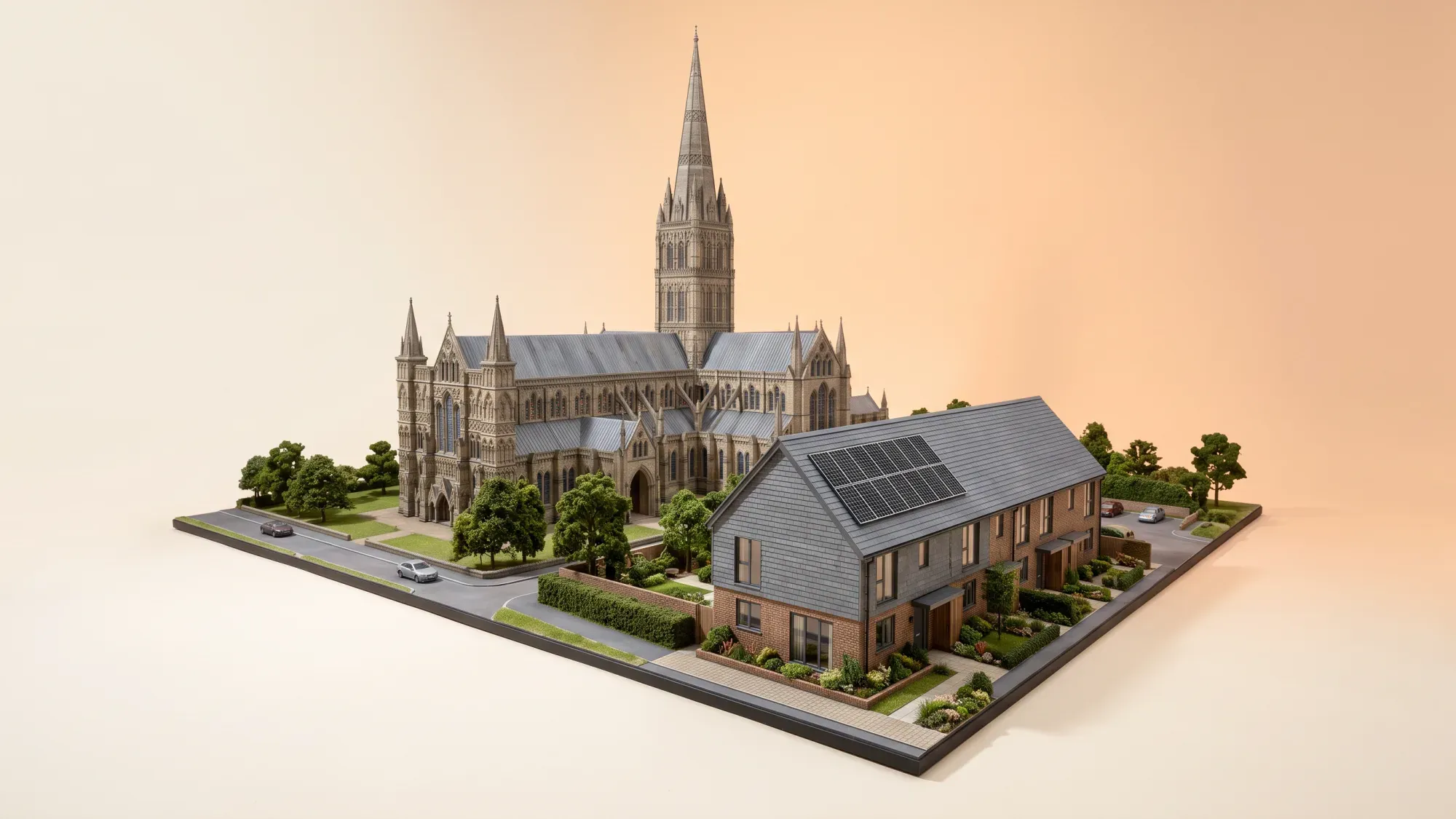
Wiltshire's mix of rural landscapes and historic market towns, such as Salisbury and Chippenham, makes it an excellent location for solar panel installation. Homeowners across the county are increasingly choosing solar panels as a strategic way to manage their energy costs, reduce their carbon footprint, and embrace a future with more power. This guide explores the benefits, local considerations, and practical steps for installing solar panels in your Wiltshire home.
Why solar panels are a smart move for Wiltshire homes
Investing in solar panels is a strategic decision that transforms your home into a hub of clean energy generation. It offers long-term financial and environmental benefits, particularly enhanced by Wiltshire's advantageous location.
Harnessing Wiltshire's sunlight advantage
Southern England receives some of the UK's highest annual sunlight hours, which directly optimises solar panel efficiency and contributes to faster payback periods for Wiltshire homeowners. Even on cloudy days, modern solar panels generate useful electricity from diffuse daylight, ensuring consistent energy production throughout the year. This geographical benefit means your investment works harder, sooner. If you're wondering how effective solar panels are in less-than-perfect weather, you might be surprised to learn that solar panels still work on cloudy days.
Reducing your energy bills and carbon footprint
Generating your own electricity significantly reduces reliance on grid suppliers, leading to lower energy bills. Every kilowatt-hour produced by your solar panels is a kilowatt-hour you do not have to buy, offering a buffer against fluctuating energy prices. Beyond the financial savings, installing solar panels dramatically cuts your home's carbon emissions, contributing to a more sustainable future. Understanding your average monthly electric bill with solar panels can help you see the potential savings.
Boosting your home's value
Homes equipped with solar panels are often more attractive to potential buyers, increasing property value. As energy efficiency becomes a key consideration for homeowners, a ready-installed solar system can be a significant selling point, demonstrating a commitment to lower running costs and environmental responsibility.
Wiltshire's local energy landscape: what you need to know
Understanding the local energy infrastructure is crucial for any solar panel installation in Wiltshire. This ensures a smooth process, from grid connection to understanding your energy tariffs.
Understanding your distribution network operator (SSEN)
For Wiltshire residents, Scottish and Southern Electricity Networks (SSEN) is the Distribution Network Operator (DNO). The DNO is responsible for maintaining the local electricity grid, including power lines and substations. If you experience a power cut in Wiltshire, you would dial the free national number 105, which routes directly to SSEN.
Wiltshire and the Southern England price cap region
Wiltshire is located within the "Southern England" electricity distribution region for Ofgem's price cap. This means the unit rates and daily standing charges for electricity in Wiltshire are set according to this regional cap, which is updated quarterly by Ofgem. Generating your own power can help mitigate the impact of these regulated costs.
Connecting to the grid: the G98/G99 process
New solar or battery grid connections in Wiltshire are notified to SSEN under the G98/G99 process. This regulatory framework ensures the safe and compliant connection of microgeneration systems to the local electricity network. G98 applies to smaller systems, typically those exporting up to 3.68kW per phase, while G99 is for larger installations. Typically, your chosen solar installer will handle this notification process on your behalf, ensuring all technical and administrative requirements are met.
Planning permission and permitted development in Wiltshire
While many solar panel installations fall under permitted development rights, it is essential for Wiltshire homeowners to understand when local planning consent might be required.
General rules for solar panels
Most solar panel installations on residential properties in the UK do not require planning permission, as they are covered by permitted development rights. This generally applies if the panels do not protrude significantly from the roof plane and are not installed on a protected area.
When you might need planning consent
Local planning consent may be required in specific circumstances. This includes installations on properties within conservation areas, Areas of Outstanding Natural Beauty, or on listed buildings. If your property falls into one of these categories, it is crucial to check with Wiltshire Council's planning department before proceeding.
Navigating conservation areas and listed buildings
For homes in conservation areas or listed buildings, the visual impact of solar panels is a key consideration. Planning authorities will assess whether the installation preserves or enhances the character and appearance of the area or building. This might involve choosing specific panel types, colours, or locations that are less visually intrusive. Your installer should be able to advise on these specific requirements.
Financial incentives and savings for Wiltshire homeowners
Several financial incentives make installing solar panels in Wiltshire an even more attractive proposition, significantly reducing upfront costs and offering opportunities to earn from your generated energy.
The 0% VAT advantage
A significant incentive for homeowners in Great Britain is the 0% VAT rate on solar panel and battery storage installations, which applies until 31 March 2027. This reduction in Value Added Tax directly lowers the upfront cost of your system, making solar energy more accessible and affordable for Wiltshire residents.
Smart Export Guarantee (SEG): earning from your surplus energy
The Smart Export Guarantee (SEG) mandates larger licensed electricity suppliers to pay homeowners for any surplus solar electricity they export back to the grid. Once your solar panels are installed and connected, you can choose an SEG tariff from a licensed supplier, turning your excess generation into a source of income. This further enhances the financial viability of solar power.
The importance of MCS certification for grants
For homeowners to qualify for financial incentives like the SEG, installation must be carried out by an MCS-certified installer. MCS (Microgeneration Certification Scheme) certification ensures that installers meet rigorous quality and safety standards. Always verify your chosen installer's MCS certification to ensure eligibility for these crucial benefits.
What is MCS certification for solar panels?
MCS certification is a quality assurance scheme for microgeneration technologies like solar panels. It ensures that installers and products meet high standards of quality and safety. For homeowners, MCS certification is essential to qualify for government-backed financial incentives such as the SEG.
Choosing the right solar installer in Wiltshire
Selecting a reputable and experienced solar installer is paramount for a successful and long-lasting solar panel system. Focus on local expertise and verified credentials.
Key questions to ask potential installers
When researching solar installers in Wiltshire, ask about their MCS certification, their experience with similar properties (especially if yours is in a conservation area or is a listed building), and the warranties they offer on both the panels and the installation work. Request detailed quotes that break down costs, equipment, and expected energy generation. A good installer will be transparent and willing to answer all your questions. You can also research typical solar panel installation costs to help inform your decision.
The installation process explained
The typical solar panel installation process involves several stages: an initial site survey to assess your home's suitability, system design tailored to your energy needs, handling of planning permissions (if required), the physical installation of panels and inverter, electrical connection to your home and the grid, and finally, commissioning and testing the system. Your installer will guide you through each step, including the G98/G99 notification to SSEN.
Maintaining your solar panels for longevity
Solar panels require minimal maintenance, typically just an annual check-up to ensure optimal performance. Keeping them clean and free from debris will maximise their efficiency. Most modern panels come with long performance warranties, often guaranteeing a certain output for 20-25 years, so regular servicing helps protect your investment and ensures your system continues to generate power effectively for decades.
For the avoidance of doubt, this article is provided for informational purposes only and is not intended to constitute legal or financial advice. The author and/or Fuse Energy shall not be responsible for any losses arising out of any reliance on the information contained herein.