Solar panel installation in Salford: costs, grants, and benefits
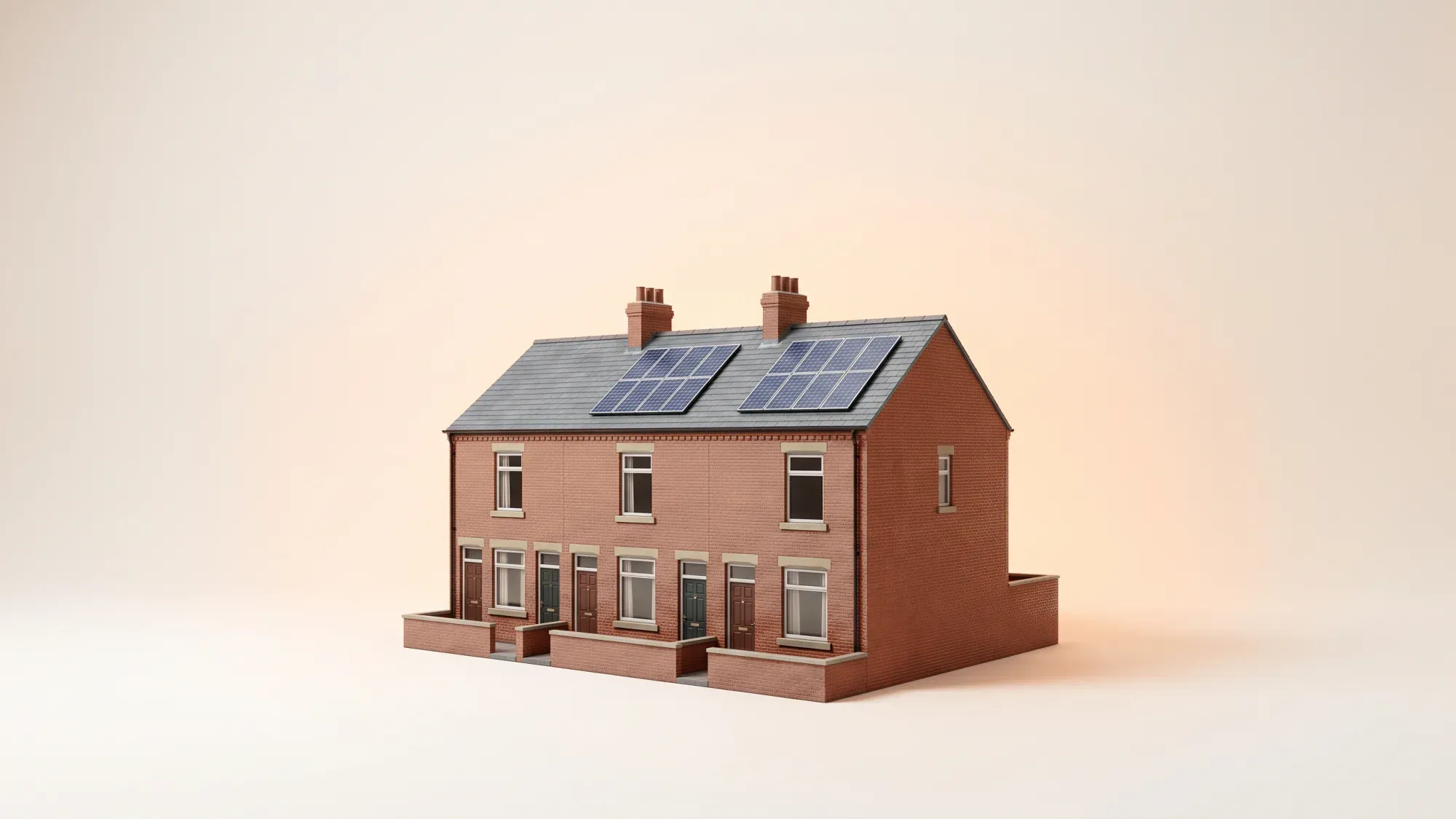
Salford, a vibrant city in the North West of England, offers a practical opportunity for homeowners looking to embrace solar energy. With its mix of traditional terraced houses and modern developments, many properties in Salford are well-suited for solar panel installation, especially when considering the benefits of modern photovoltaic (PV) technology and battery storage.
Why consider solar panels for your Salford home?
Installing solar panels can significantly reduce your household's reliance on grid electricity, offering a pathway to greater energy independence and potentially lower bills.
Benefits of solar energy in the North West
For homeowners in the North West, including Salford, solar panels provide a tangible way to take control of energy consumption. Generating your own electricity means less dependence on fluctuating energy prices. With battery storage, you can maximise self-consumption, using the energy you generate even when the sun is not shining. This move towards self-sufficiency can lead to substantial long-term savings and a reduced carbon footprint.
Addressing the 'worthwhile in the UK' question
A common misconception is that solar panels are not worthwhile in northern UK regions due to perceived lower sunlight hours. However, modern solar PV systems are highly efficient and can generate electricity even on overcast days, utilising diffuse daylight. For Salford homes, strategic roof orientation and the integration of battery storage are key to optimising performance and ensuring solar remains a beneficial investment. Battery storage allows you to store surplus energy generated during the day for use in the evenings or on less sunny days, significantly enhancing energy independence and savings. If you are wondering if solar panels work on cloudy days, the answer is yes.
Local considerations for solar panel installation in Salford
Understanding the local energy landscape is crucial for a smooth solar panel installation process in Salford.
Salford's electricity Network: Electricity North West
Salford falls within the operational area of Electricity North West1, which is the Distribution Network Operator (DNO) responsible for managing the local electricity grid. They maintain the power lines and cables that deliver electricity to your home. If you experience a power cut, Salford residents should dial the free national number 105, which will connect you to your local DNO, Electricity North West. For new solar and battery installations, your chosen installer will handle the necessary notification process with Electricity North West under G98/G99 regulations.
Understanding the North West England price cap
Salford is located within the North West England electricity price-cap region. This means that the maximum unit rates and standing charges for electricity and gas, as set by Ofgem's energy price cap, are specific to this region. These regional variations can influence the financial benefits of generating your own electricity, making local analysis important for potential savings.
Roof orientation and battery storage for optimal performance
While south-facing roofs generally offer the highest solar generation, modern panels are flexible. For homes in Salford, optimising your system means considering your roof's orientation and pitch, and crucially, integrating battery storage. A battery system allows you to capture excess solar energy produced during peak sunlight hours and use it later, reducing your reliance on grid electricity during more expensive times. This is particularly valuable in northern regions where maximising every unit of generated power is beneficial.
The solar panel installation process in Salford
Installing solar panels involves several steps, from choosing the right installer to connecting to the grid.
Finding an MCS-certified installer
To ensure a quality installation and to qualify for government incentives like the Smart Export Guarantee (SEG), it is essential to choose an MCS-certified solar panel installer. MCS certification demonstrates that an installer meets recognised industry standards for competency and compliance. Fuse Energy is an MCS and TrustMark certified installer, handling planning approvals, paperwork, installation, and final checks for home solar installations.
Grid connection and DNO notification (G98/G99)
Any new solar PV system that connects to the grid requires notification to your local DNO, Electricity North West, under either G98 or G99 regulations. G98 applies to systems with an inverter output of up to 3.68kW per phase (for single-phase supplies) or 11.04kW (for three-phase supplies). This is a post-installation notification, meaning your installer can connect the system and then notify the DNO within 28 days.
Larger systems, or those with an inverter output exceeding 3.68kW per phase, require a G99 application. This involves a more detailed technical assessment and requires DNO approval before installation can begin. Your MCS-certified installer will typically manage this entire process, ensuring your system is compliant and safely connected. Understanding the solar panel installation cost often includes these regulatory steps.
Typical installation timeline
The timeline for solar panel installation can vary. After an initial survey and system design, the process includes obtaining necessary permits, DNO notification, and the physical installation. While the physical installation itself can often be completed in 1-3 days, the overall process, including DNO approvals, can take several weeks. G98 notifications are generally processed quickly, often within 24-48 hours, though the DNO has 28 days to object. G99 applications can take longer, typically between 4 and 12 weeks, or up to 45-65 working days for standard applications.
Costs, grants, and funding for Salford homeowners
Several financial incentives make solar panel installation more accessible for Salford homeowners.
0% VAT on solar and battery storage
The UK government has implemented a 0% VAT rate on the installation of solar panels and battery storage systems in Great Britain. This significant reduction from the previous 5% or 20% rate applies until 31 March 2027, making it a prime time to invest. This relief covers both the supply of materials and the cost of installation when carried out by a VAT-registered installer. Battery storage, whether installed alongside solar or as a standalone retrofit, also qualifies for this 0% VAT rate.
When does the 0% VAT rate on solar panels end?
The 0% VAT rate on solar panel and battery storage installations in Great Britain is scheduled to end on 31 March 2027. From 1 April 2027, the VAT rate is due to rise to 5%. This incentive significantly reduces the upfront cost for homeowners looking to install renewable energy systems.
The Smart Export Guarantee (SEG)
The SEG is a government-backed scheme that requires larger licensed energy suppliers to pay homeowners for any surplus electricity they export to the National Grid. This provides an additional revenue stream and enhances the financial viability of solar panels. To qualify for an SEG tariff, your solar PV system and installer must be certified under the Microgeneration Certification Scheme (MCS) or an equivalent standard, and you will typically need a smart meter capable of providing half-hourly export readings. This can significantly impact your average monthly electric bill with solar panels.
Financing your solar investment
Beyond the VAT relief and SEG payments, various financing options are available to help homeowners fund their solar panel installation. These can include green loans, home improvement loans, or specific financing packages offered by installers. Discussing these options with your chosen installer can help you find a solution that fits your budget and maximises your return on investment.
Making the power play with solar in Salford
Installing solar panels with battery storage is more than just an energy upgrade; it is a strategic move towards a more resilient and independent home energy future.
Taking control of your home energy
Embracing solar energy empowers Salford homeowners to gain greater control over their energy supply. By generating your own electricity and storing it with a battery, you reduce your reliance on the grid and external energy suppliers. This "power play" allows you to mitigate the impact of rising energy costs and contributes to a more sustainable lifestyle, giving you energy abundance and peace of mind.
References
- Energy Networks. Find my Network Operator
Disclaimer
For the avoidance of doubt, this article is provided for informational purposes only and is not intended to constitute legal or financial advice. The author and/or Fuse Energy shall not be responsible for any losses arising out of any reliance on the information contained herein.