Solar panel installation Sale: your local guide
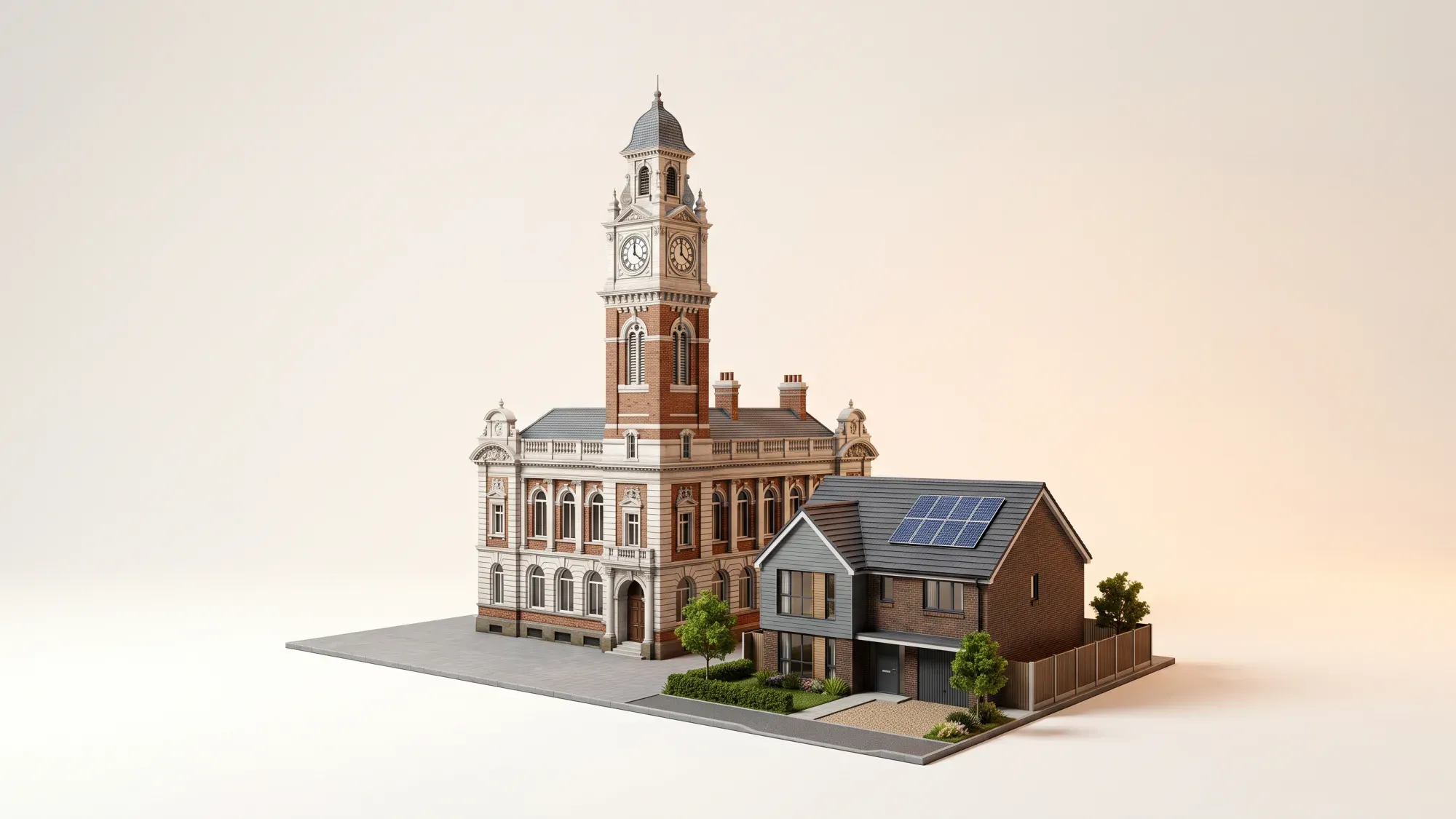
Sale, a vibrant town in Greater Manchester, is characterised by its diverse housing stock, from Victorian terraces to modern developments, and sits firmly within the North West England electricity distribution region. For homeowners here, installing solar panels offers a real "power play" against rising energy costs, providing a pathway to energy independence regardless of the local climate.
Solar power in Sale: a local perspective
Addressing Northern UK solar viability
A common misconception is that solar panels are less effective in Northern UK regions due to fewer direct sunlight hours. However, modern photovoltaic (PV) technology is highly efficient at converting diffuse daylight into electricity, making solar systems a viable option even in Sale's climate. Cooler temperatures, typical of the UK, can actually enhance panel efficiency, as excessive heat reduces performance. While cloud cover reduces total annual generation, it does not stop production, with panels still generating usable electricity throughout the day. If you're wondering about performance on less sunny days, you might find our article on do solar panels work on cloudy days helpful.
Sale's energy landscape: price caps and DNOs
Sale falls within the North West England electricity distribution region, which directly influences the unit rates and standing charges set by Ofgem's price cap. This cap is updated quarterly, on 1 January, 1 April, 1 July, and 1 October. The local Distribution Network Operator (DNO) for Sale is Electricity North West. In the event of a power cut, residents can dial the free national number 105, which will connect them to their local DNO. For Sale, this is Electricity North West.
Financial advantages of solar in Sale
0% VAT and the Smart Export Guarantee
Investing in solar panel and battery storage installations in Great Britain is currently more financially attractive due to a 0% VAT rate, which applies until 31 March 20271. This temporary relief significantly reduces the upfront cost for homeowners. From 1 April 2027, the VAT rate is due to rise to 5% for qualifying installations.
Beyond the initial savings, the Smart Export Guarantee (SEG) allows you to earn money by selling any surplus electricity generated by your solar panels back to the grid2. To be eligible for SEG payments, your system must be MCS-certified and have a smart meter that can record export readings. Licensed energy suppliers with 150,000 or more customers are mandated to offer SEG tariffs, ensuring homeowners are paid for their exported power at a rate above zero.
Insulating your home from the North West price cap
By generating your own electricity, you can significantly reduce your reliance on grid power, thereby insulating your home from the fluctuations of the North West England electricity price cap. Integrating battery storage further enhances this benefit, allowing you to store excess energy generated during the day for use during peak times or after sunset, maximising self-consumption and savings. This strategic move provides greater control over your energy costs and contributes to long-term financial stability. For more details on how solar panels can impact your bills, read our guide on the average monthly electric bill with solar panels.
Designing your solar system for Sale's climate
The role of battery storage for optimal performance
For homes in Sale, battery storage is not merely an optional extra but a crucial component for optimising solar energy use. Given the variable daylight conditions in Northern UK, batteries allow you to store excess energy generated during sunnier periods - even on cloudy days - for use when your panels aren't producing, such as in the evenings or overnight. This maximises your self-consumption, reduces your dependence on grid electricity, and enhances your eligibility for certain SEG tariffs by enabling you to export power strategically.
Roof orientation and panel efficiency
Assessing your home's suitability for solar involves considering factors like roof orientation and shading. While a south-facing roof is ideal for maximum energy capture, east or West-facing panels can still be effective, especially when paired with battery storage to capture energy throughout the day. Minimising shading from trees or neighbouring buildings is also important for optimal performance. Your installer will conduct a detailed assessment to design a system tailored to your property's specific conditions.
Choosing an installer and the installation process
Why MCS certification matters
When selecting a solar installer in Sale, ensuring they are MCS-certified is paramount. MCS (Microgeneration Certification Scheme) certification signifies that an installer meets rigorous industry standards for quality and competence. Crucially, MCS certification is a mandatory requirement for homeowners to qualify for government schemes like the SEG, allowing you to earn money for exported electricity. Without it, you may miss out on significant financial benefits. You can learn more about the process in our article on solar panel installation.
Navigating grid connections with Electricity North West
New solar and battery grid connections in Sale require notification to Electricity North West, the local DNO, under the G98/G99 process3. This regulatory framework ensures that your new energy system can safely connect to the local electricity network without causing disruptions. For most domestic installations, your MCS-certified installer will handle this process on your behalf, submitting the necessary forms and ensuring compliance with all requirements. This typically involves either a G98 notification for smaller systems (up to 3.68kW per phase for single-phase supplies) or a G99 application for larger systems, which requires DNO approval before installation can begin.
What is the G98/G99 process for solar panels?
The G98/G99 process refers to UK engineering recommendations that govern how solar PV and battery installations connect to the grid. G98 applies to smaller systems (up to 3.68kW per phase for single-phase connections), requiring notification to the DNO after installation. G99 covers larger systems, needing DNO approval before work begins. Your installer typically manages this for you.
Maximising your solar investment in Sale
Long-term savings and energy independence
Installing solar panels and battery storage in your Sale home is a long-term investment that offers substantial savings and moves you towards genuine energy independence. By generating your own power and storing it for later use, you reduce your reliance on fluctuating grid prices and protect yourself from future energy cost increases. This strategic shift empowers you to take control of your household's energy consumption and expenditure.
Future-proofing your home's energy
Beyond immediate savings, investing in home solar and battery storage in Sale contributes to a more resilient, decentralised energy system. It reduces reliance on outdated infrastructure and positions your home at the forefront of sustainable living. With the ability to generate, store, and even sell your own electricity, you gain "power to play with," allowing you to use more energy without fear and actively participate in shaping a cleaner, more abundant energy future.
References
- Futureproof Solar. 0% VAT Solar Panels 2026: Save 20% Until 2027
- Ofgem. Smart Export Guarantee (SEG)
- UK Government. How to register energy devices in homes or small businesses
Disclaimer
For the avoidance of doubt, this article is provided for informational purposes only and is not intended to constitute legal or financial advice. The author and/or Fuse Energy shall not be responsible for any losses arising out of any reliance on the information contained herein.