Solar panel installation Lancashire: powering local homes
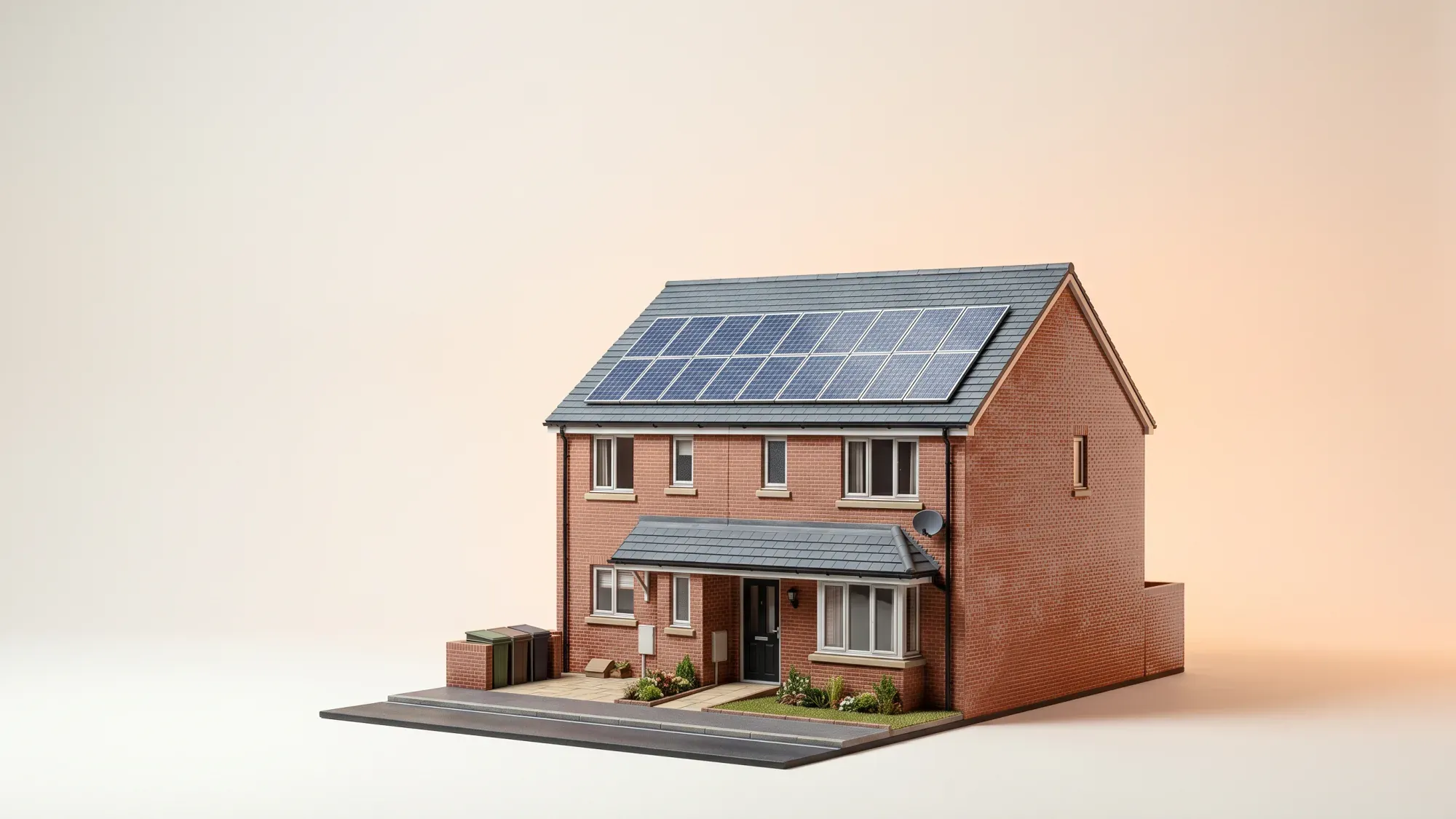
For homeowners in Lancashire, installing solar panels is a smart move against rising energy costs and a step towards energy independence. While the North West of England receives fewer direct sunlight hours annually than the south, modern solar PV technology works well with diffuse daylight. This means careful roof orientation and integrating battery storage are key to maximising savings. Fuse Energy simplifies the process of upgrading homes with solar panels and battery storage, making it accessible for Lancashire residents to achieve energy independence.
Why consider solar panels for your Lancashire home?
Installing solar panels offers a clear path to greater energy control and financial benefits, tailored to the unique conditions of Lancashire. It's about moving beyond a 'use less' mentality towards a future with 'power to play with', generating and storing your own abundant energy.
Reducing energy bills and gaining control
One of the most compelling reasons to install solar panels is the potential for significant savings on your electricity bills. By generating your own power, you reduce reliance on grid electricity, whose prices can fluctuate. This gives you more control over your household budget and less exposure to market volatility. Understanding your average monthly electric bill with solar panels can help you see the potential savings.
Increasing property value in Lancashire
Homes with solar panel installations often see an increase in property value. As energy efficiency becomes a more significant factor for homebuyers, a solar PV system can make your Lancashire property more attractive and command a higher price.
Contributing to a sustainable future
Beyond personal financial gains, choosing solar power means reducing your carbon footprint. Generating clean, renewable energy at home contributes directly to a more sustainable environment, lessening demand on fossil fuels and supporting the UK's climate goals.
Lancashire's unique energy landscape
Understanding the local energy context is crucial for any Lancashire homeowner considering solar panels. This includes regional pricing, grid operators, and how the local climate impacts solar performance.
Understanding the North West England price cap
Lancashire falls within the 'North West England' electricity distribution region. This means its unit rates and daily standing charges for electricity are subject to a specific Ofgem Price Cap, which differs from other regions across the UK. This cap is updated quarterly, on 1 January, 1 April, 1 July, and 1 October.
Electricity North West: your local DNO
Electricity North West is the Distribution Network Operator (DNO) responsible for the electricity grid in Lancashire. They manage the infrastructure that delivers power to your home. Any new solar or battery grid connection in Lancashire requires notification to Electricity North West under the G98/G99 process^[1,2], which your installer typically manages.
What is a DNO?
A DNO is the company responsible for operating and maintaining the electricity distribution network in a specific geographical area. For Lancashire, this is Electricity North West. They ensure power reaches your home safely and reliably, and they manage connections for new energy generation systems like solar panels.
Solar performance in the North West climate
While northern parts of the UK, including Lancashire, receive fewer annual direct sunlight hours compared to the south, modern solar PV systems still generate power effectively from diffuse daylight. This makes solar a viable option, even on cloudier days. If you're wondering do solar panels work on cloudy days, the answer is yes. In this climate, battery storage becomes particularly beneficial, allowing you to store surplus energy generated during daylight hours for use when the sun isn't shining.
The solar panel installation process in Lancashire
Installing solar panels involves several key stages, from initial assessment to final grid connection. Your chosen installer will guide you through each step. For a comprehensive guide, you can refer to our article on solar panel installation.
Initial assessment and design
The process begins with a detailed assessment of your property. An installer will evaluate your roof's suitability, orientation, shading, and structural integrity. They will also consider your household's energy consumption patterns to design a solar PV system that meets your needs.
Navigating planning permissions
In most cases, installing solar panels on residential properties in the UK falls under 'permitted development rights', meaning you won't need full planning permission. However, there are exceptions, particularly for listed buildings, conservation areas, or properties with specific local restrictions. Your installer should advise you on any necessary permissions.
Installation and grid connection (G98/G99)
Once the design is finalised and any permissions secured, the physical installation of the panels and associated equipment takes place. Following installation, your system will be connected to the National Grid. This connection requires notification to Electricity North West under the G98 or G99 process, which are Engineering Recommendations from the Energy Networks Association (ENA) that govern grid connections for micro-generators. For smaller domestic systems (up to 3.68kW per phase), the G98 process involves notifying the DNO after installation. For larger systems, the G99 process requires DNO approval before installation. Your MCS-certified installer will handle this regulatory requirement on your behalf.
Costs, grants, and financial incentives for Lancashire homeowners
Several financial incentives can make solar panel installation more affordable and improve your return on investment.
The 0% VAT relief on solar and battery storage
To encourage the adoption of renewable energy, the UK government introduced a 0% VAT rate on the installation of solar panels and battery storage systems in residential properties in Great Britain from 1 April 2022. This relief applies to the supply and installation of these systems and is currently in effect until 31 March 2027, after which it is due to return to 5%. This makes now an opportune time to invest.
Smart Export Guarantee (SEG): earning from your surplus energy
The Smart Export Guarantee (SEG) is a UK-wide scheme that requires larger licensed energy suppliers to pay homeowners for surplus solar electricity exported to the grid. If your solar panels generate more electricity than you use, you can sell the excess back, earning credit on your energy bill. To qualify for SEG payments, your solar installation must be MCS-certified.
Calculating your return on investment
The return on investment for solar panels in Lancashire depends on factors like system size, electricity consumption, export rates, and the initial installation cost. With reduced energy bills, potential SEG payments, and the 0% VAT relief, many homeowners find that solar panels pay for themselves over time, leading to long-term savings.
Choosing the right solar panel installer in Lancashire
Selecting a reputable and qualified installer is paramount for a successful solar panel installation.
The importance of MCS certification
MCS certification for installers is essential for several reasons. It signifies that an installer meets high industry standards for quality and competence. Crucially, it is a prerequisite for homeowners to qualify for government incentives like the SEG. Always ensure your chosen installer holds valid MCS certification. Fuse Energy is an MCS and TrustMark certified installer.
Local expertise and customer reviews
Opting for a local installer in Lancashire can offer advantages, including a better understanding of local planning requirements, weather conditions, and housing types. Check customer reviews and testimonials to gauge their reputation and service quality within the community.
Comprehensive service and support
A good installer provides end-to-end service, from initial consultation and design to installation and after-care. Fuse Energy offers easy home energy upgrades, including solar panel and battery installation, to help homeowners gain control over their energy. They also provide 24/7 human customer support to assist customers with their energy needs, ensuring you have help when you need it.
Maximising your solar investment with battery storage
Integrating battery storage with your solar PV system is a strategic move, especially in regions like Lancashire where sunlight can be variable.
Storing surplus energy for later use
Battery storage allows you to capture and store any excess electricity your solar panels generate during the day. Instead of exporting it immediately to the grid for SEG payments, you can save it to power your home during the evening or on cloudy days, further reducing your reliance on grid electricity.
Enhancing energy independence
With a solar and battery system, you become more self-sufficient, less dependent on external energy suppliers and fluctuating prices. This enhances your energy independence, giving you greater control over your power supply and costs.
Optimising for variable sunlight
Given Lancashire's climate, where diffuse daylight is common, battery storage is particularly effective. It ensures that the energy generated, even if intermittent, is captured and available when you need it most, optimising the efficiency and value of your solar investment.
Your next steps towards a solar-powered home
Making the switch to solar is a significant decision, but with the right information and support, it can be a rewarding one for your Lancashire home.
Getting a personalised quote
Start by obtaining personalised quotes from MCS-certified solar panel installers in Lancashire. This will give you a clear understanding of the costs involved and the potential savings for your specific property.
Understanding your energy needs
Review your household's energy consumption patterns to ensure your proposed solar and battery system is appropriately sized. A well-matched system will maximise your savings and energy independence.
Making an informed decision
Armed with local knowledge about Lancashire's energy landscape, financial incentives, and the benefits of MCS-certified installation and battery storage, you can make an informed decision to power your home with clean, abundant solar energy.
Ready to take control of your energy bills and make a positive impact on the environment? Fuse Energy makes switching to solar and battery storage simple and transparent. Our MCS-certified team handles everything from design to installation, and our 24/7 human support is always there to help.
References
- UK Government. How to register energy devices in homes or small businesses
- Energy Networks Association. Who is my network operator?
Disclaimer
For the avoidance of doubt, this article is provided for informational purposes only and is not intended to constitute legal or financial advice. The author and/or Fuse Energy shall not be responsible for any losses arising out of any reliance on the information contained herein.