Installing solar panels in Lambeth
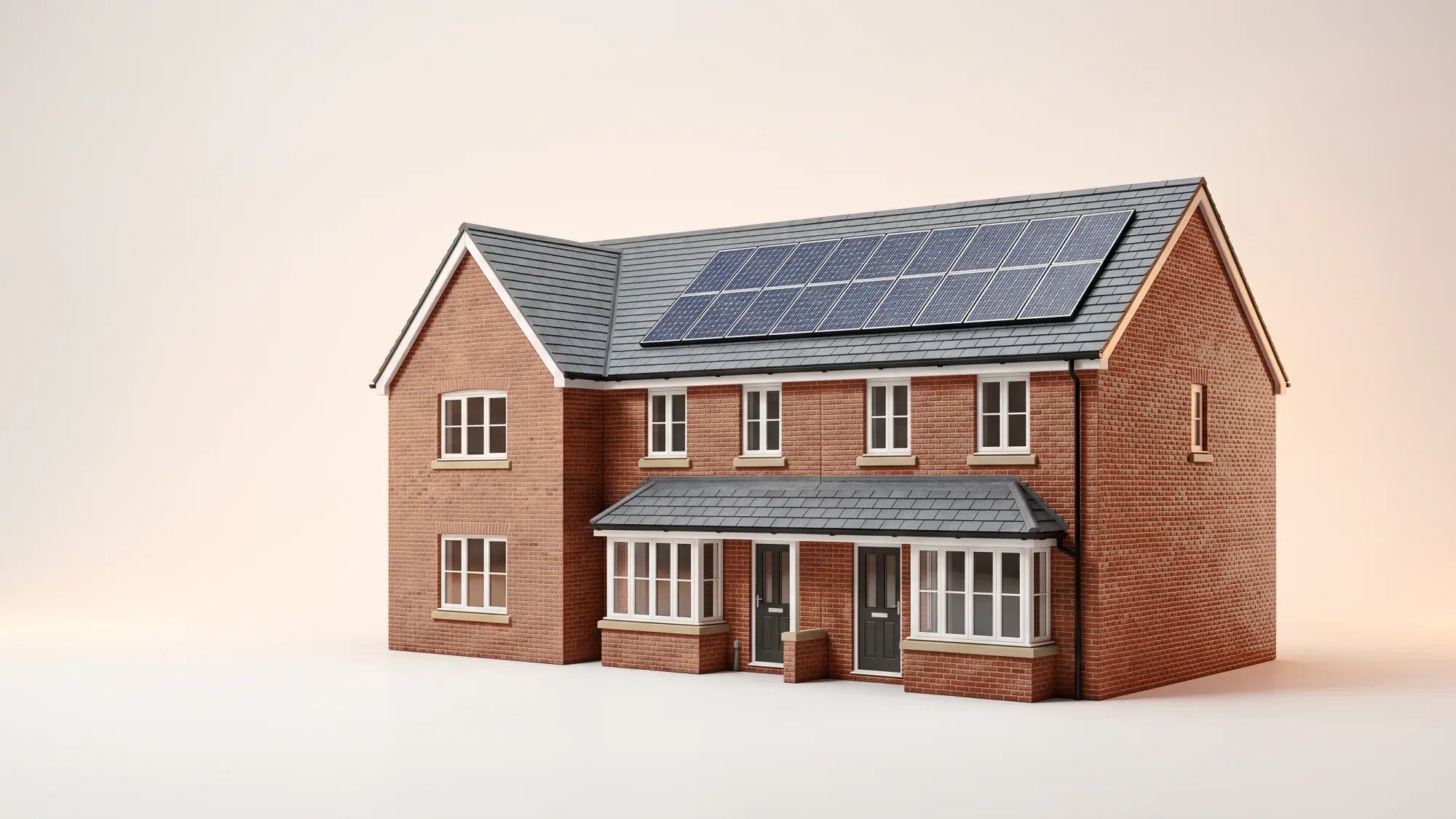
Lambeth, with its distinctive architecture and vibrant urban environment, offers significant opportunities for homeowners looking to install solar panels. Located in Southern England, the borough benefits from ample sunlight, which can maximise solar panel efficiency and help residents reduce their energy bills. This guide provides clear, localised information to help you understand the process of installing solar panels and battery storage in Lambeth.
Lambeth's unique solar potential
Harnessing solar power in Lambeth involves understanding both geographical advantages and how solar integrates with the borough's distinctive architecture.
Leveraging Southern England's sunlight
Southern England, including Lambeth, generally experiences more annual sunshine hours than northern regions of the UK, making it a favourable location for solar panel installations. While the UK is often perceived as cloudy, solar panels are effective at converting diffused light - the light present even on overcast days - into electricity. This means your panels will still generate power even outside of direct sunlight. A typical 4kWp home system in the South East can generate between 3,400 and 4,200 kWh annually1, potentially covering a significant portion of a household's usage.
Typical Lambeth housing stock and solar suitability
Lambeth's housing stock is predominantly characterised by pre-1900 terraced houses, particularly Victorian terraces. Many of these properties have rear-facing roof slopes that are often ideal for solar panel installation. Modern solar solutions are versatile, with options ranging from traditional rooftop panels to integrated solar tiles that can blend with your home's aesthetics. While north-facing roofs are generally the least effective, south, east, and west-facing roofs can still yield significant energy. You can also explore how solar panels work on cloudy days to understand their year-round performance.
Understanding solar panel installation in Lambeth
Installing solar panels involves several key steps, from understanding local regulations to ensuring proper grid connection.
Planning permission for solar panels in Lambeth
For most homeowners in England, installing solar panels on residential buildings falls under "permitted development," meaning you typically do not need to apply for planning permission from Lambeth Council. However, certain conditions must be met. For instance, panels should not protrude more than 200mm from the roof or wall surface on pitched roofs and must not extend above the highest part of the roof (excluding the chimney).
Specific local conditions or conservation area rules in Lambeth may apply. Around 17-20% of London falls within a conservation area, where street-visible front-of-house panels might require prior approval, though rear-roof installations are often still permitted development. If your property is a listed building, planning permission and listed building consent will almost certainly be required. It is always advisable to check with Lambeth Council or a trusted solar installer to confirm specific requirements for your property.
Connecting to the grid: UK Power Networks and G98/G99
Your solar panel system needs to connect to the National Grid. In Lambeth, UK Power Networks serves as the local Distribution Network Operator (DNO), managing grid connections and power cuts. The process for connecting new generation, such as solar panels, to the grid is governed by engineering recommendations known as G98 and G99.
Most domestic installations typically fall under G98, which applies to systems up to 3.68kW (single-phase). For these smaller systems, your installer can connect and notify UK Power Networks after the installation is complete. Larger systems, or those exceeding 3.68kW per phase, require a G99 application, which needs approval from UK Power Networks before installation can begin. Your chosen installer will typically handle this entire grid connection process, including the G98/G99 notification, on your behalf.
The importance of MCS certified installers
Choosing an MCS-certified installer is crucial for several reasons. The Microgeneration Certification Scheme (MCS) is a quality assurance scheme that certifies microgeneration technologies and installers in the UK.
Why is MCS certification important for solar installers?
MCS certification ensures that your solar panel installation meets strict UK technical, safety, and quality standards. It is also a mandatory requirement for homeowners to qualify for government-backed incentives such as the Smart Export Guarantee (SEG), which pays you for surplus electricity exported to the grid.
Without MCS certification, you will not be eligible to receive payments for the electricity your solar panels export. You can find more information on solar panel installation and the certification process.
Financial incentives and support for Lambeth homeowners
Several financial incentives are available to make solar panel installation more affordable for Lambeth residents.
0% VAT on solar and battery storage
A significant incentive for homeowners is the 0% VAT rate2 applied to the installation of solar panels and battery storage systems across Great Britain. This measure was introduced in April 2022 and is set to run until 31 March 2027. This means you could save a substantial amount on the total cost of your installation. From 1 April 2027, the VAT rate is currently scheduled to revert to 5%. When obtaining quotes, ensure your installer clearly states that 0% VAT has been applied.
The Smart Export Guarantee (SEG)
The SEG is a UK-wide government scheme that requires larger licensed energy suppliers to pay you for any surplus electricity your solar panels export back to the grid. To qualify for SEG payments, your solar panel installation must be MCS certified, and you will typically need a smart meter to measure your exported electricity. The rates offered by energy suppliers can vary, so it is worth comparing tariffs to find the best deal. Understanding your average monthly electric bill with solar panels can help you assess the full financial benefits.
Understanding energy price caps in the London region
Lambeth falls within the "London" electricity distribution region, which influences the unit rates and standing charges set by Ofgem's quarterly energy price cap. The price cap sets a maximum amount suppliers can charge for each unit of gas and electricity, as well as a maximum daily standing charge. While the headline price cap figure is a national average, your actual rates depend on your specific region. Understanding these regional variations can help Lambeth homeowners assess the potential savings from generating their own electricity.
Choosing the right solar installer in Lambeth
Selecting a reputable and qualified installer is paramount for a successful solar panel installation.
Key questions to ask potential installers
When obtaining quotes, ask installers about their MCS certification, their experience with similar properties in Lambeth (e.g., Victorian terraces), and how they handle the DNO connection process. Enquire about the type of panels and inverters they recommend, their warranty periods, and what after-sales support they offer.
Getting multiple quotes and comparing offers
Always aim to get detailed quotes from at least three MCS-certified solar installers operating in Lambeth. Compare not just the price, but also the proposed system size, estimated energy generation, warranty terms, and the scope of work included (e.g., scaffolding, DNO paperwork). This thorough approach helps ensure you get a competitive price and a system that meets your needs. For more details on what influences the solar panel installation cost, you can refer to our guide.
Integrating solar with battery storage for enhanced savings
Combining solar panels with battery storage can significantly boost your energy independence and savings.
Benefits of solar battery storage in Lambeth
Battery storage allows you to store excess electricity generated by your solar panels during the day and use it later, such as in the evenings or on cloudy days. This maximises your self-consumption, reducing your reliance on grid electricity and further lowering your energy bills. From 1 February 2024, battery storage also qualifies for 0% VAT, whether installed as a standalone unit or alongside solar panels.
Maximising your energy independence
By integrating battery storage, Lambeth homeowners can shift from a mindset of energy scarcity to one of energy abundance. You can reduce your exposure to fluctuating energy prices and increase your energy resilience. While you might export less to the grid and therefore receive fewer SEG payments, the increased self-consumption often leads to greater overall savings on your energy bills.
Fuse empowers Lambeth residents to make a 'power play' by taking control of their energy future. We offer easy home energy upgrades like solar and battery storage to help you generate and manage your own power. With Fuse, you can monitor and optimise your solar energy usage through our app, and our 24/7 human customer support is always on hand to assist you.
References
- Renewable Energy Hub. How much Electricity does a Solar Panel produce, UK?
- UK Government. VAT on energy-saving materials and heating equipment (Notice 708/6)
Disclaimer
For the avoidance of doubt, this article is provided for informational purposes only and is not intended to constitute legal or financial advice. The author and/or Fuse Energy shall not be responsible for any losses arising out of any reliance on the information contained herein.