Solar panel installation in Herefordshire
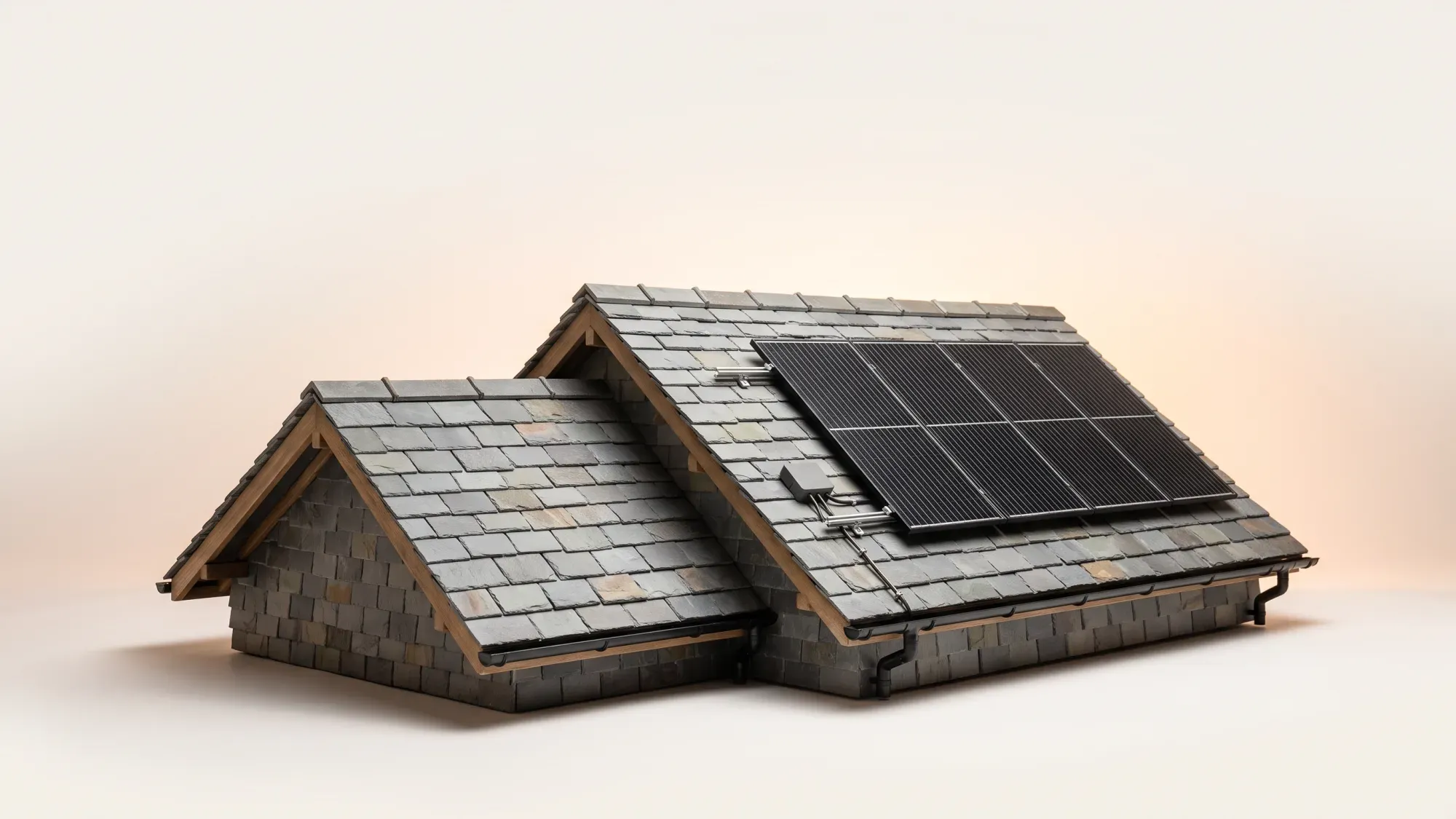
For homeowners in Herefordshire, the appeal of energy independence extends beyond mere cost savings. It aligns with a lifestyle that values self-sufficiency, resilience, and control over their home's future. This guide covers solar panel installation with the unique considerations of the West Midlands region in mind.
Solar panels in Herefordshire: a local perspective
Herefordshire's unique character and solar potential
Herefordshire, known for its rolling hills, orchards, and historic market towns, boasts a diverse range of housing, from traditional rural cottages to modern new-builds. Many properties, particularly in more remote areas, may not be connected to the gas grid, making electricity a primary energy source for heating and other needs. This provides a strong incentive for homeowners to explore alternative, self-generated power. The county's blend of rural charm and a growing focus on sustainable living makes it an ideal location for solar panel adoption, offering a path to greater energy autonomy.
Understanding your local energy infrastructure
Understanding how your home connects to the wider energy network is crucial for solar panel installation. Herefordshire falls within the West Midlands electricity distribution region. Your electricity unit rates and daily standing charges are subject to Ofgem's price cap, which is updated quarterly. The local distribution network operator (DNO) for Herefordshire is National Grid Electricity Distribution. In the event of a power cut, residents can dial the free national number 105, which routes directly to their local DNO1.
When you install a new home electric vehicle (EV) charger or a solar/battery system that connects to the grid, the process involves notifying your DNO. In Herefordshire, this means informing National Grid Electricity Distribution under the G98/G99 process. Your solar installer typically handles this notification on your behalf, ensuring your system complies with local grid requirements. The G98 process applies to smaller systems, typically up to 3.68 kW per phase for single-phase supplies, allowing installation before notification. Larger systems exceeding this threshold require G99 approval from the DNO before installation to ensure grid stability.
Solar generation in the UK: beyond direct sunlight
Many homeowners mistakenly believe that solar panels are only effective on bright, sunny days. However, UK solar panels generate electricity year-round, primarily from diffuse daylight. This means they continue to produce power even on cloudy days, which are common in the UK. Factors such as roof orientation, potential shading from trees or neighbouring buildings, and the inclusion of battery storage significantly influence the system's overall energy generation and financial payback. Optimising these elements ensures your solar panels deliver consistent performance and maximise your savings throughout the year. If you're wondering how well solar panels perform in less-than-ideal conditions, you might be surprised to learn that do solar panels work on cloudy days is a common question with a positive answer.
Benefits of solar panel installation for Herefordshire homes
Reducing energy bills and achieving independence
Installing solar panels is a direct way to take control of your home's energy consumption and reduce reliance on grid electricity. By generating your own power, you can significantly lower your monthly energy bills. Any surplus electricity your panels produce can be stored in a battery for later use, further increasing your self-sufficiency, or exported to the grid for payment through schemes like the Smart Export Guarantee (SEG). This 'power play' transforms your relationship with energy, moving beyond mere cost savings to genuine energy abundance and control. Understanding the potential impact on your average monthly electric bill with solar panels can help you plan your investment.
Increasing property value
Homes equipped with solar panels are increasingly attractive to potential buyers. A solar energy system can enhance your property's appeal by demonstrating lower running costs and a commitment to sustainability, potentially increasing its market value in Herefordshire.
Environmental impact
Choosing solar power contributes directly to reducing your carbon footprint. By harnessing clean, renewable energy from the sun, you decrease your reliance on fossil fuels and help combat climate change. This aligns with a broader vision of rebuilding the energy system towards a more sustainable future.
The solar panel installation process in Herefordshire
Initial assessment and design
The first step in going solar involves a thorough assessment of your home's suitability. This includes evaluating your roof space, its orientation towards the sun, and any potential shading issues. A qualified installer will then design a system tailored to your energy needs, considering panel type, inverter specifications, and whether battery storage is a viable option for you.
Permitting and DNO notification (G98/G99)
Once the design is finalised, your installer will handle the necessary paperwork. This includes obtaining any local planning permissions, particularly if your property is listed or in a conservation area, and notifying National Grid Electricity Distribution, your local DNO, under the G98/G99 process. This ensures your system can safely connect to the grid and that all regulatory requirements are met.
Installation and commissioning
After approvals are in place, the physical installation of your solar energy system can begin. This typically involves mounting the panels on your roof, installing the inverter, and connecting any battery storage. Once the hardware is in place, the system is commissioned and tested to ensure it operates efficiently and safely, ready to start generating clean electricity for your home.
Financial incentives and regulations for Herefordshire homeowners
0% VAT on solar and battery storage
To make renewable energy more accessible, the UK government has implemented a 0% VAT relief on the installation of solar panels and battery storage systems across Great Britain. This significant saving is currently available until 31 March 2027, after which the rate is set to rise to 5%. This makes it an opportune time for Herefordshire homeowners to invest in solar technology.
The Smart Export Guarantee (SEG)
The SEG is a UK-wide government-backed scheme that requires larger licensed electricity suppliers to pay homeowners for any surplus renewable electricity they export to the grid. This means that when your solar panels generate more electricity than your home consumes, you can earn money by selling that excess power back to your supplier. To be eligible for SEG payments, your solar panel installation must be certified under the Microgeneration Certification Scheme (MCS). For more details on how to ensure you're paid correctly, you can refer to an export meter reading guide.
What is the SEG?
The SEG is a UK government scheme that requires large energy suppliers to pay homeowners for excess renewable electricity exported to the National Grid. It replaced the Feed-in Tariff (FiT) and ensures you receive payments for the clean energy your solar panels generate but your home doesn't use. Eligibility typically requires an MCS-certified system and a smart meter.
MCS certification: why it matters
MCS certification is a critical UK industry standard for installers of renewable energy technologies. It ensures that your solar energy system is installed to a high quality, meets stringent technical and safety standards, and is eligible for government incentives like the SEG. Choosing an MCS-certified installer provides peace of mind and safeguards your investment.
Choosing a solar panel installer in Herefordshire
Key considerations for local providers
When selecting a solar panel installer in Herefordshire, prioritise companies with a strong local reputation and demonstrable experience in the region. Look for installers who are MCS-certified, as this is essential for quality assurance and eligibility for the SEG. A local installer will also have a better understanding of Herefordshire's specific housing types, planning considerations, and the nuances of working with National Grid Electricity Distribution.
Questions to ask your installer
Before committing to an installer, ask detailed questions to ensure you're making an informed decision. Enquire about their MCS certification, their experience with DNO notifications (G98/G99), the types of panels and inverters they recommend, and their approach to battery storage options. Discuss estimated energy generation, financial projections, and warranty details for both the equipment and the installation itself.
Long-term support and maintenance
A solar energy system is a long-term investment, so consider the ongoing support and maintenance offered by your chosen installer. Fuse Energy provides an integrated approach where solar solutions can be managed through a transparent digital experience, giving you unparalleled control over energy generation, consumption, and export. Should you need assistance, homeowners in Herefordshire can access 24/7 human customer support for their solar and energy needs, ensuring peace of mind throughout their energy journey.
References
- Energy Networks Association. Who is my DNO
Disclaimer
For the avoidance of doubt, this article is provided for informational purposes only and is not intended to constitute legal or financial advice. The author and/or Fuse Energy shall not be responsible for any losses arising out of any reliance on the information contained herein.