Solar panel installation for English homes
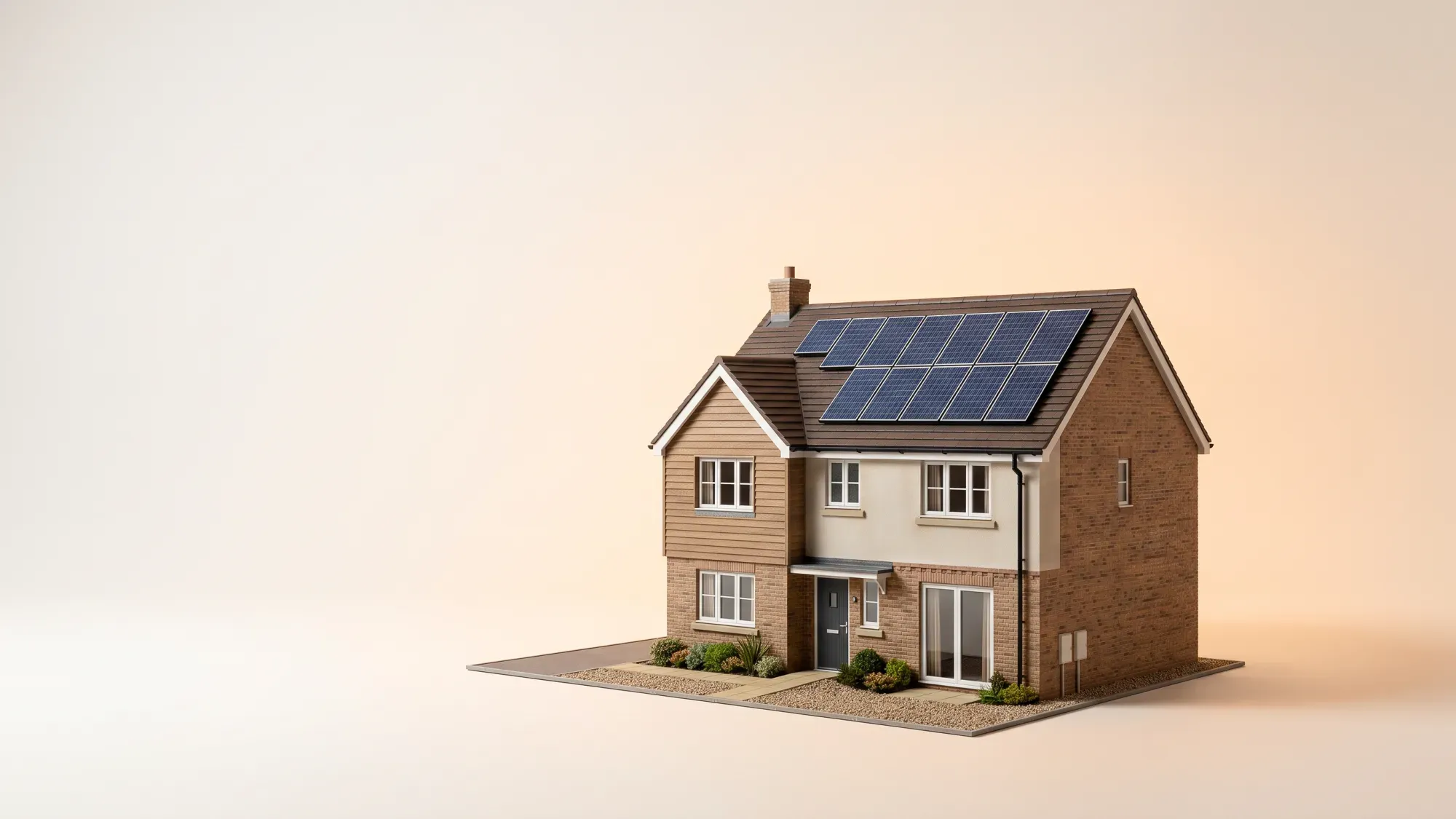
Homeowners in England face a unique energy landscape, with electricity unit rates and standing charges varying across the 14 distribution regions under Ofgem's price cap. Installing solar panels offers a tangible way to gain control over these regionally-influenced bills and generate your own power, moving from a scarcity mindset to one of abundance and control over your electricity supply. This guide provides a clear, localised roadmap for English homeowners considering solar panel installation, addressing regional specifics and financial incentives.
Why solar panels in England?
Understanding England's regional energy costs
England's energy bills are not uniform; they are shaped by the 14 electricity distribution regions across Great Britain, each with distinct unit rates and standing charges set by Ofgem's price cap. These regional variations mean that the cost of transporting energy to your home can differ significantly depending on your postcode. For instance, customers in North Wales and Merseyside often pay more for electricity than those in London. Generating your own electricity with solar panels can help mitigate these regional cost differences, offering a buffer against fluctuating grid prices.
The environmental and financial benefits
Beyond gaining control over regional energy costs, solar panels offer substantial environmental and financial advantages. You reduce your carbon footprint by using clean, renewable energy, contributing to a greener future. Financially, solar panels can significantly lower your electricity bills, and any surplus energy you generate can even earn you money through schemes like the Smart Export Guarantee (SEG). You can learn more about how this impacts your average monthly electric bill with solar panels. Furthermore, a solar installation can enhance your property's value, making your home more attractive to potential buyers.
Solar performance in the UK climate
A common misconception is that solar panels are only effective in consistently sunny climates. The reality for England is far more encouraging: UK solar panels generate effectively on diffuse daylight year-round, not just direct sun. Even on overcast days, modern photovoltaic (PV) panels can capture a broad spectrum of light, continuing to produce electricity. For more details, you can read our article on do solar panels work on cloudy days. While output naturally dips in winter due to shorter daylight hours, solar panels remain active and contribute to your home's energy needs throughout the year.
Key financial incentives for English homeowners
Several financial incentives make solar panel installation in England more accessible and cost-effective.
0% VAT relief on solar and battery storage
A significant incentive for homeowners in England is the 0% VAT relief on solar panel and battery storage installation across Great Britain. This relief applies until 31 March 20271, making it an opportune time to invest in renewable energy for your home. This means no Value Added Tax (VAT) is added to the labour and materials cost of a qualifying installation, potentially saving you a substantial amount on the overall project.
The Smart Export Guarantee (SEG) explained
The SEG is a UK-wide scheme that requires larger licensed electricity suppliers to pay you for any surplus solar electricity you export to the grid. This means you can earn money from the energy your panels generate but your home does not immediately use. To qualify for SEG payments, your solar panel installation must be certified under the Microgeneration Certification Scheme (MCS). You will also typically need a smart meter capable of providing half-hourly export readings.
Choosing the right solar installer in England
Selecting a reputable and qualified solar panel installer is crucial for a successful and beneficial installation.
The importance of MCS certification
MCS certification is not just a badge of quality; it is a requirement for accessing key financial benefits. For homeowners to qualify for the SEG, their installer and the installed technology must be MCS certified. This certification ensures that your solar panel installation meets industry standards, giving you peace of mind about the quality and performance of your system.
Finding local and reputable installers
When searching for a solar panel installer in England, prioritise those with MCS certification. Look for installers with a strong local presence, particularly in regions like the South West, North, South East, or North East England, as they will have a better understanding of local regulations and conditions. Check reviews and ask for references to ensure their reliability and customer satisfaction.
The solar panel installation process step-by-step
Installing solar panels involves several stages, from initial assessment to final commissioning.
Initial assessment and system design
The process begins with an assessment of your home's suitability for solar panels. This includes evaluating your roof's orientation, pitch, shading, and structural integrity. Your energy consumption patterns will also be analysed to design a system that meets your needs, potentially including battery storage for optimal self-consumption.
Planning permission and building regulations
Most domestic solar panel installations in England are considered "permitted development" and do not require full planning permission, especially if they do not significantly alter the appearance of your property. However, installations in conservation areas or on listed buildings may have specific requirements. Your chosen installer should guide you through any necessary planning permissions or building regulations.
Installation and commissioning
Once the design is finalised and any permissions secured, the physical installation takes place. This involves mounting the panels on your roof, installing the inverter, and connecting the system to your home's electrical supply and potentially a battery storage unit. After installation, the system is commissioned, tested, and registered with your electricity network operator.
Maximising your solar investment
To get the most out of your solar panels, consider integrating battery storage and actively monitoring your energy generation.
Integrating battery storage
Pairing solar panels with battery storage allows you to store excess electricity generated during the day and use it later, such as in the evenings or during periods of low solar generation. This increases your energy independence, reduces reliance on grid electricity, and can further lower your bills by minimising the amount of electricity you need to import.
Monitoring your energy generation
Monitoring your solar panel system's performance is key to maximising your investment. Many modern systems come with apps or online portals that allow you to track your energy generation and consumption in real-time. This data helps you understand your energy usage patterns, identify opportunities for optimisation, and ensure your system is performing as expected.
Frequently asked questions about solar in England
How long does solar panel installation take?
The physical installation of solar panels on a typical residential property usually takes 1 to 3 days, depending on the system size and complexity. The entire process, from initial quote to final commissioning, can take several weeks, allowing for surveys, design, and administrative tasks.
What happens during a power cut?
For safety reasons, most solar panel systems are designed to shut down automatically during a power cut. This prevents your panels from feeding electricity back into a damaged grid, which could endanger engineers working to restore power. If you have battery storage, some systems can be configured with a "blackout mode" to provide power to essential circuits during an outage. If you experience a power cut, you should report it on the free national number 105.
How do I report a power cut in England?
If you experience a power cut in England, you can report it by dialling the free national number 1052. This service connects you directly to your local electricity network operator, who is responsible for maintaining the power lines and restoring supply, regardless of who your energy supplier is.
Is solar right for every home?
Solar panels are suitable for many homes in England, but not all. Key factors include sufficient unshaded roof space, the direction and pitch of your roof, and your household's energy consumption. An initial assessment by an MCS-certified installer can determine your home's suitability and provide a tailored system design.
Power your home with Fuse Energy
Fuse Energy empowers homeowners in England to take control of their energy future. We believe in a future with "power to play with," where energy is abundant and stops being a constant worry. Our approach challenges the old "use less" narrative, instead focusing on how solar in England offers energy independence and surplus.
Easy home energy upgrades
Fuse simplifies the process of installing solar panels and battery storage in England. We offer easy home energy upgrades to make these investments accessible, helping you generate your own energy and optimise your consumption.
Support and control at your fingertips
With Fuse, you gain the capability to monitor your solar generation and consumption through our app, allowing you to optimise your energy use and maximise savings. Should you need assistance, Fuse provides 24/7 human customer support to assist English homeowners throughout their solar installation journey and beyond.
References
- UK Government. Energy-saving materials and heating equipment (VAT Notice 708/6)
- Powercut 105. Power Cut 105
Disclaimer
For the avoidance of doubt, this article is provided for informational purposes only and is not intended to constitute legal or financial advice. The author and/or Fuse Energy shall not be responsible for any losses arising out of any reliance on the information contained herein.