Solar panel installation for Ealing homes
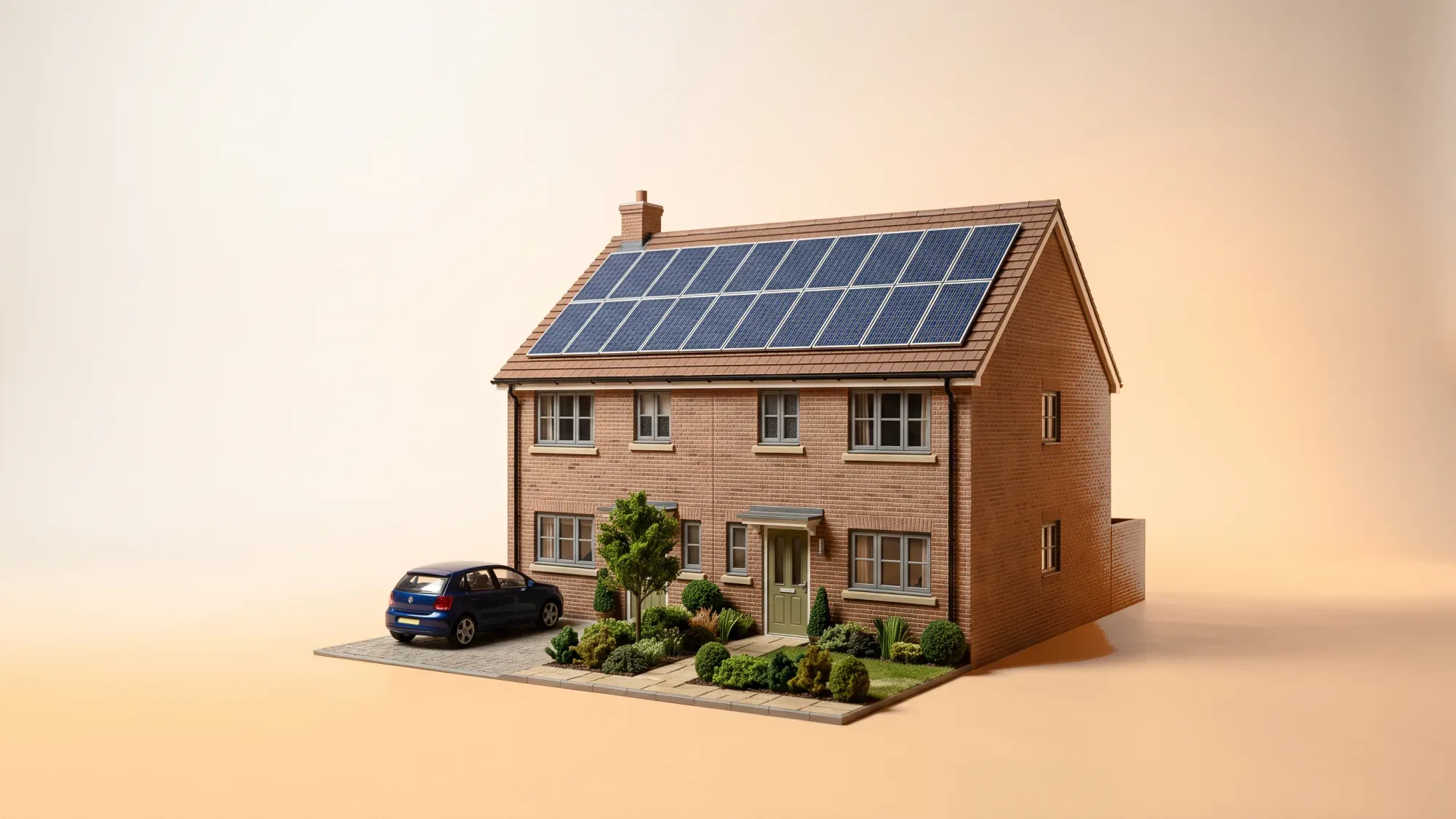
Installing solar panels in Ealing offers a clear path to energy independence and significant savings. West London's favourable conditions, combined with Ealing's varied property types - from Victorian and Edwardian terraces to newer developments - mean most homes can benefit. Homeowners are well-placed to capitalise on abundant sunlight and government incentives, reducing reliance on the grid and taking control of their energy future.
Considering solar panels for your Ealing home? Fuse Energy can help you navigate the process, from initial assessment to final installation, ensuring a seamless transition to generating your own clean energy.
Why solar panels in Ealing make sense
Ealing's unique solar advantage
Ealing's location in Southern England means it benefits from some of the UK's highest annual sunlight hours, optimising solar panel efficiency and payback periods. While panels generate electricity from daylight, not just direct sun, the higher irradiance levels in the South East contribute to greater potential output for Ealing homes. This makes solar a particularly viable investment for residents looking to reduce their carbon footprint and energy bills.
The local distribution network operator (DNO) for Ealing is UK Power Networks, which is responsible for maintaining the electricity network across London, the South East, and East of England. Understanding this local infrastructure is key to a smooth solar installation process. You can find your specific DNO using the Energy Networks Association (ENA) postcode tool if you are unsure.
Energy independence and savings for Ealing homes
Generating your own electricity with solar panels significantly reduces your reliance on energy suppliers and fluctuating prices. Any surplus electricity your system produces can be exported to the grid, earning you money through the Smart Export Guarantee (SEG)^[1,2]. This dual benefit of reduced imports and payments for exports accelerates the return on investment for Ealing homeowners. Battery storage further enhances this independence, allowing you to store excess solar energy for use during the evenings or on cloudy days, maximising self-consumption and minimising grid reliance. You can also explore how installing solar panels can change your average monthly electric bill with solar panels.
Understanding solar panel suitability for Ealing properties
Roof types and orientation
Most Ealing homes can be suitable for solar panel installation. The ideal roof for solar panels is South-facing, with a pitch between 30 and 40 degrees, free from obstructions. However, east and west-facing roofs can also generate substantial electricity, particularly when combined with battery storage to capture morning and afternoon sun. A professional assessment will determine the best placement and system size for your specific property.
Shading and performance considerations
Shading from trees, neighbouring buildings, or other roof structures can impact solar panel performance. While modern solar technology, such as optimisers and micro-inverters, can mitigate the effects of partial shading, it is crucial to consider these factors during the initial assessment. An experienced installer will evaluate your property's unique shading profile throughout the year to design a system that maximises energy generation. Even on cloudy days, solar panels can still produce electricity.
The solar panel installation process in Ealing
Navigating UK Power Networks (DNO) connections
For Ealing residents, any new home EV charger or solar/battery grid connection must be notified to UK Power Networks, the local DNO (chargers via the ENA connect-and-notify route; solar or battery systems under G98/G99). This regulatory step ensures the stability and safety of the local electricity grid. For smaller systems with an inverter capacity of up to 3.68kW per phase, a G98 notification is typically submitted by your installer after installation. Larger systems require a G99 application and approval from UK Power Networks before installation can proceed. Fuse handles these DNO notifications as part of the solar panel installation process, ensuring a seamless transition to generating your own clean energy.
What to expect during installation
The solar panel installation process typically involves several key stages:
- Site survey and design: An installer assesses your roof, energy needs, and shading to design a bespoke system.
- Permitting and approvals: This includes planning permission (rarely needed for residential solar unless in a conservation area or listed building) and DNO notifications.
- Installation: Panels are mounted on your roof, inverters are installed, and the system is wired into your home's electrical supply and any battery storage.
- Commissioning: The system is tested, and all necessary documentation, including the Microgeneration Certification Scheme (MCS) certificate, is provided.
- grid connection: Once commissioned, your system is connected to the grid, allowing you to start generating and potentially exporting electricity.
Financial incentives for Ealing homeowners
0% VAT on solar and battery storage
Homeowners in Ealing, like all across Great Britain, benefit from a 0% VAT rate on the installation of solar panels and battery storage. This significant incentive, introduced in April 2022, is set to run until 31 March 2027. This makes it a prime time to invest in renewable energy for your home. This relief applies to both the materials and the installation costs, offering substantial upfront savings.
The Smart Export Guarantee (SEG)
The SEG is a UK-wide scheme that requires larger licensed electricity suppliers to pay homeowners for any surplus electricity they export to the National Grid. Launched on 1 January 2020, the SEG replaced the previous Feed-in Tariff scheme. To qualify for SEG payments, your solar panel system must be installed by an MCS-certified installer. This ensures your installation meets rigorous technical and safety standards. The SEG allows Ealing homeowners to turn their excess generation into a valuable income stream, further improving the financial viability of solar. You will also need a smart meter that can record half-hourly export readings.
What is the SEG?
The SEG is a UK government scheme that pays homeowners for the excess electricity their solar panels send back to the grid. Launched on 1 January 2020, it requires larger energy suppliers to offer a payment (export tariff) for every unit of renewable electricity exported, turning surplus generation into a valuable income stream.
Local grants and support
While specific Ealing Council grants for individual homeowners installing solar panels are not widely available, the council does offer community climate grants for non-profit organisations to support energy efficiency improvements, including solar panels on community buildings. Homeowners can also explore broader government schemes like the Energy Company Obligation (ECO4) if they meet specific eligibility criteria, which can include solar panel installation. Ealing Council also highlights the nationwide Energy Smart scheme, which aims to provide homeowners with access to discounted energy-saving measures through chosen installers.
Choosing the right solar installer in Ealing
The importance of MCS certification
Choosing an MCS-certified installer is paramount for Ealing homeowners. MCS is the UK's national quality assurance scheme for small-scale renewable energy technologies, including solar PV and battery storage. Without MCS certification for your installer and system, you will not be eligible for SEG payments, missing out on a key financial benefit. MCS certification ensures that your installation meets high technical, safety, and quality standards, providing peace of mind and protecting your investment.
Questions to ask your installer
When selecting a solar installer in Ealing, ask these key questions:
- Are you MCS certified, and can you provide proof?
- Do you have experience with properties similar to mine in Ealing?
- What warranties do you offer on both the equipment and the installation?
- How do you handle the DNO notification process with UK Power Networks?
- Can you provide a clear breakdown of all costs, including equipment, installation, and any associated fees?
- What aftercare and maintenance services do you provide?
Fuse Energy is committed to helping Ealing homeowners achieve energy independence through solar panel installation. We handle the entire process, including DNO notifications to UK Power Networks, ensuring a seamless transition to a modern energy system. With Fuse, you gain the 'power to play with' abundant clean energy, backed by transparent app control and 24/7 human customer support.
References
- Ofgem. Smart Export Guarantee (SEG).
- Greentech Renewables. Smart Export Guarantee Explained 2026 | Get Paid for Solar.
Disclaimer
For the avoidance of doubt, this article is provided for informational purposes only and is not intended to constitute legal or financial advice. The author and/or Fuse Energy shall not be responsible for any losses arising out of any reliance on the information contained herein.