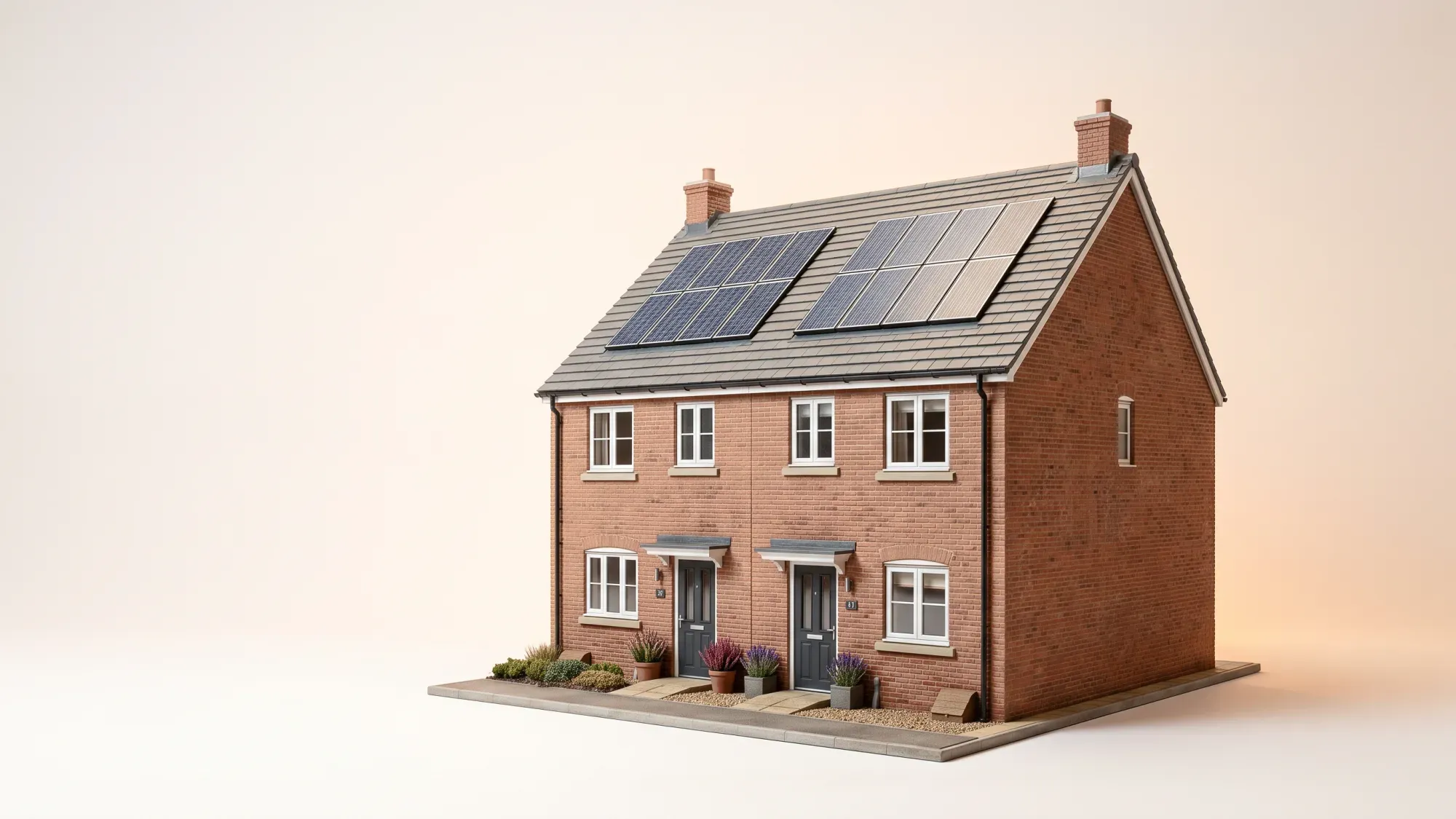
Installing solar panels on your Dorchester home is a smart move for reducing energy bills and gaining greater energy independence. Nestled in the heart of Dorset, Dorchester benefits significantly from its location in Southern England, which receives some of the UK's highest annual sunlight hours. This makes solar energy particularly effective here, offering a strong return on investment for homeowners looking to harness clean power.
Why consider solar panels for your Dorchester home?
Solar panels offer a compelling proposition for Dorchester residents, combining financial savings with environmental benefits and increased autonomy over your home's energy supply.
Reducing energy bills in Southern England
With energy prices a constant concern, generating your own electricity can significantly cut down on what you pay. Dorchester falls within the 'Southern England' electricity distribution region for Ofgem's price cap, meaning local unit rates and daily standing charges are influenced by this regional cap, which is updated quarterly. By producing your own power, you reduce reliance on grid electricity, directly lowering your bills. You can also significantly change your average monthly electric bill with solar panels. Any surplus electricity you generate can even be sold back to the grid through the Smart Export Guarantee (SEG), turning your roof into a revenue stream.
Increasing home energy independence
Beyond cost savings, solar panels offer a pathway to greater energy independence. By generating your own power, you become less susceptible to fluctuations in the energy market and potential grid disruptions. Adding battery storage to your solar system further enhances this independence, allowing you to store excess energy generated during the day for use in the evenings or during periods of low sunlight. This maximises self-consumption and reduces your reliance on external energy suppliers.
Environmental benefits and property value
Choosing solar power contributes directly to a greener future by reducing your household's carbon footprint. It is a tangible step towards combating climate change, aligning with broader national efforts to transition to renewable energy sources. Furthermore, installing solar panels can increase your property's value, making your home more attractive to potential buyers who are increasingly prioritising energy efficiency and lower running costs.
Dorchester's local solar advantage
Dorchester's unique geographical and infrastructural characteristics make it an ideal location for solar panel adoption.
High sunlight hours in Southern England
Southern England consistently receives some of the UK's highest annual sunlight hours, making it one of the best regions for solar payback in the country. While direct sun is optimal, modern solar panels are efficient even in diffuse daylight, meaning they generate power effectively throughout the year, not just on bright, clear days. If you are wondering do solar panels work on cloudy days, the answer is yes. This consistent exposure ensures that solar installations in Dorchester can provide substantial energy generation and savings. For example, Weymouth, a nearby Dorset town, sees an average of 1,904 hours of sunshine each year.
Understanding Dorchester's energy price cap region
As part of the 'Southern England' electricity distribution region, Dorchester's energy prices are subject to specific unit rates and daily standing charges set by Ofgem's price cap. This regional variation means that the financial benefits of reducing grid consumption through solar can be particularly impactful, as you offset costs specific to your local market.
Navigating the local grid: Scottish and Southern electricity Networks (SSEN)
The local Distribution Network Operator (DNO) for Dorchester is Scottish and Southern Electricity Networks (SSEN)1. Any new home EV charger or solar/battery grid connection in Dorchester requires notification to SSEN (chargers via the ENA connect-and-notify route; solar or battery systems under G98/G99). This process, usually handled by your installer, ensures your system can safely connect to the local electricity grid without causing issues. For smaller domestic systems (typically up to 3.68 kW per phase), a G98 notification is usually sufficient, while larger systems require a more detailed G99 application.
The solar panel installation process in Dorchester
Solar panel installation involves several key stages, from initial assessment to final commissioning.
Initial assessment and design
The first step is a thorough assessment of your property. A qualified installer will evaluate your roof's suitability, considering factors like orientation, pitch, shading, and structural integrity. They will then design a system tailored to your energy consumption needs and the specific characteristics of your home, including panel type, inverter, and potential battery storage options.
Planning permissions and DNO notification (G98/G99)
Most domestic solar panel installations in England do not require planning permission, as they fall under "permitted development rights." However, this can vary if your property is listed, in a conservation area, or if the panels significantly alter the building's appearance. Your installer will advise on any necessary planning considerations. Crucially, they will also manage the required notification to your DNO under the G98 or G99 process, depending on your system's size.
Installation and commissioning
Once approvals are in place, the installation team will mount the solar panels on your roof, install the inverter, and connect the system to your home's electrical supply. If you are including battery storage, this will also be integrated. After installation, the system is commissioned, tested to ensure it is operating safely and efficiently, and connected to the grid.
Grants and incentives for Dorchester homeowners
Several government-backed incentives are available to make solar panel installation more affordable for Dorchester homeowners.
The 0% VAT rate on solar and battery storage
Until 31 March 2027, a 0% VAT rate applies to the supply and installation of solar panels and battery storage across Great Britain. This significantly reduces the upfront cost of your system, offering a direct saving at the point of purchase. After this date, the VAT rate is expected to revert to 5%.
Smart Export Guarantee (SEG) for surplus energy
The SEG mandates larger licensed energy suppliers to pay you for any surplus electricity your solar panels export back to the grid. This means you can earn money from the clean energy you generate but do not use, further improving the financial returns of your solar investment. Each supplier sets its own SEG tariff, so it is worth comparing options.
The importance of MCS-certified installers
To qualify for government incentives like the SEG, your solar panel installation must be carried out by an MCS-certified installer. MCS (Microgeneration Certification Scheme) is a quality assurance scheme for renewable energy technologies and installers in the UK, ensuring high standards of product quality, installation, and consumer protection.
What is MCS certification for solar panels?
MCS certification is a UK quality assurance scheme for small-scale renewable energy systems, including domestic solar PV. It ensures that both the products and the installers meet recognised standards for design, workmanship, and consumer protection. This certification is crucial for homeowners to qualify for government incentives like the SEG.
Choosing the right solar installer in Dorchester
Selecting a reputable and qualified installer is paramount for a successful solar panel installation.
Key questions to ask potential installers
When obtaining quotes, ask about their experience with similar properties in Dorchester, their approach to system design, the brands of equipment they use, and their after-sales support. Inquire about their process for DNO notification and any guarantees or warranties they offer on both equipment and workmanship.
Verifying MCS certification and local experience
Always verify that your chosen installer is MCS-certified. You can typically check this through the MCS website. Prioritising installers with local experience in the Dorchester area can also be beneficial, as they will be familiar with local planning considerations and the specific requirements of SSEN.
Understanding warranties and aftercare
A good installer will provide comprehensive warranties covering the performance of your solar panels, inverter, and battery (if applicable), as well as the installation itself. Understand what aftercare services are included, such as monitoring, maintenance, and troubleshooting, to ensure long-term peace of mind.
Maximising your solar investment with smart energy management
Installing solar panels is just the beginning; smart energy management can significantly enhance your returns.
Integrating battery storage for optimal self-consumption
Battery storage is a game-changer for solar owners. It allows you to store excess solar energy generated during the day, rather than exporting it immediately, and use it when electricity prices are higher or when the sun is not shining. This maximises your self-consumption, reducing the amount of electricity you need to buy from the grid and increasing your energy independence.
Smart tariffs and energy optimisation
Pairing your solar and battery system with a smart energy tariff can unlock further savings. These tariffs often offer cheaper electricity during off-peak hours, allowing you to charge your battery from the grid when rates are low and discharge it when rates are high. This dynamic approach, combined with smart energy management, ensures you are always using or selling your electricity at the most advantageous times.
Monitoring your solar performance with the Fuse app
The Fuse app empowers Dorchester homeowners to maximise their solar investment through smart tariffs and real-time energy management. It provides transparent control over your energy, allowing you to monitor your generation, optimise consumption, and understand your savings. This gives you the "power to play with" your energy, supporting the transition to a decentralised energy system by helping solar owners integrate their generation effectively and contribute to a more abundant energy future.
For the avoidance of doubt, this article is provided for informational purposes only and is not intended to constitute legal or financial advice. The author and/or Fuse Energy shall not be responsible for any losses arising out of any reliance on the information contained herein.