Solar panel installation in Canterbury
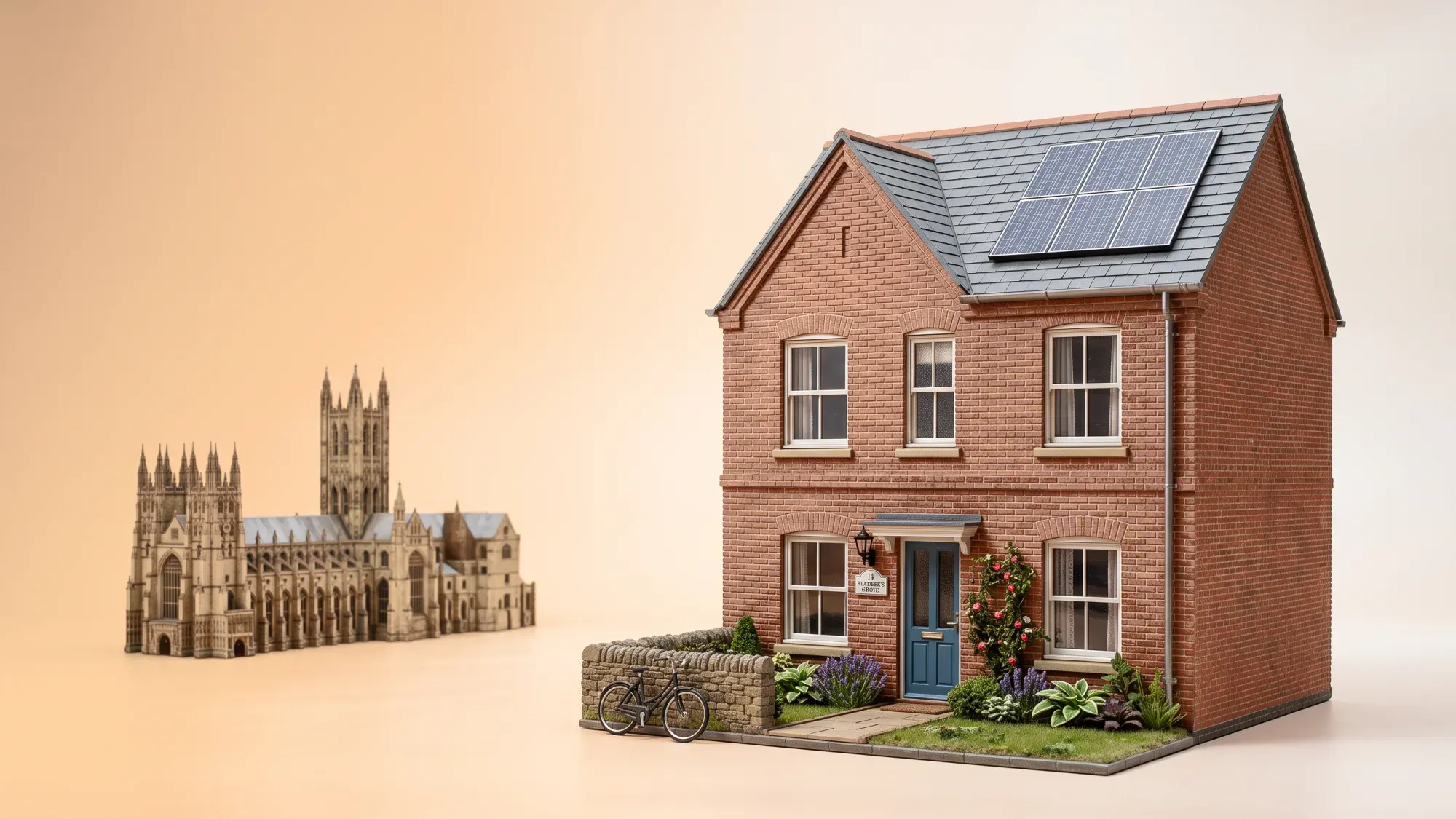
Installing solar panels in Canterbury offers homeowners a practical way to reduce energy bills and enhance energy independence. With its blend of historic architecture and modern homes, Canterbury's diverse housing stock can often accommodate solar technology. Its advantageous position in Southern England means the region benefits from some of the highest annual sunlight hours in the UK, optimising solar panel efficiency and payback periods for local residents.
Why consider solar panels in Canterbury?
Harnessing Canterbury's sunlight
Southern England, where Canterbury is situated, receives some of the highest annual sunlight hours in the UK. This means solar panels installed in the area can generate a significant amount of electricity, contributing to quicker payback periods and greater energy savings. Even on cloudy days, modern solar panels generate electricity from diffuse daylight, making them a viable option year-round.
Reducing energy bills in the South East England region
Canterbury is located within the "South East England" electricity distribution region. Ofgem sets regional price caps for electricity, meaning unit rates and standing charges can differ from other parts of the country. By generating your own electricity, you can significantly reduce your reliance on grid power, directly impacting your energy bills. The more electricity your solar panels produce, the less you need to buy from your supplier, offering a buffer against fluctuating energy prices. Understanding your average monthly electric bill with solar panels can help you see the potential savings.
How does Canterbury's location affect energy bills?
Canterbury falls under the "South East England" electricity distribution region, which influences the unit rates and standing charges set by Ofgem's price cap. Generating your own solar electricity reduces dependence on these grid prices, offering homeowners a direct way to lower their energy costs and gain greater control over their household budget.
Achieving energy independence
Generating your own electricity with solar panels and potentially storing it in a battery system provides a tangible step towards energy independence. This means less reliance on external energy suppliers and a greater ability to control your household's energy consumption and costs. For Canterbury homeowners, this translates into more predictable energy outgoings and the satisfaction of powering your home with clean, renewable energy.
Understanding the local solar landscape
Your local distribution network operator (DNO)
Your Distribution Network Operator (DNO) is responsible for maintaining and upgrading the local electricity grid infrastructure. If you need to find your local DNO, you can use the Energy Networks Association's (ENA) "Find my network operator" tool by entering your postcode. In the event of a power cut, you can dial the free national number 105, which routes directly to your DNO for assistance. Understanding your DNO is crucial for any grid-connected energy system.
Navigating grid connection (G98/G99)
New solar panel and battery storage grid connections in the UK require notification to your DNO via the G98 or G99 process. This is a standard procedure to ensure your new energy system can safely connect to and interact with the local grid. G98 applies to smaller systems (up to 3.68kW per phase) and typically involves notifying the DNO after installation, while G99 is for larger systems and requires DNO approval before installation. Typically, your chosen solar installer will handle this application process on your behalf, ensuring all regulatory requirements are met before and after installation.
Canterbury's housing stock and solar suitability
Canterbury's housing stock is varied, ranging from historic properties to newer developments. Many homes, particularly those with South-facing roofs, are well-suited for solar panel installation. Factors like roof size, angle, and shading from nearby trees or buildings will influence the optimal system design. A professional site survey will assess these specifics to determine the best solar solution for your property.
Financial incentives for Canterbury homeowners
0% VAT on solar and battery storage
A significant financial incentive for homeowners across Great Britain is the 0% VAT rate that applies to the installation of solar panels and battery storage systems. This relief is currently available until 31 March 2027, after which it is due to rise to 5%. This reduction directly lowers the upfront cost of your installation.
The Smart Export Guarantee (SEG)
The Smart Export Guarantee (SEG) is a UK-wide scheme that allows homeowners to be paid for any surplus solar electricity they export to the National Grid. Larger energy suppliers are mandated to offer SEG tariffs. To qualify for the SEG, your solar panel installer and the technology must be certified under the Microgeneration Certification Scheme (MCS) or an equivalent scheme. This certification ensures the quality of your installation and confirms your eligibility for the scheme. You will also need a smart meter capable of providing half-hourly export readings.
Maximising your return on investment
Combining the 0% VAT relief with earnings from the SEG significantly enhances the financial return on your solar panel investment. The high annual sunlight hours in Southern England further contribute to a favourable payback period. By reducing your electricity purchases and earning from exported energy, you can see substantial long-term savings and even generate a passive income from your system. Understanding the solar panel installation cost and these incentives can help you plan your investment.
The solar panel installation process explained
Finding MCS-certified installers
The first critical step is to find an MCS-certified solar panel installer. MCS certification is a government-backed quality assurance scheme that is essential for ensuring your installation meets high standards and, crucially, for making you eligible for schemes like the SEG. Without MCS certification, you cannot receive SEG payments for your exported electricity.
Getting quotes and site surveys
Once you have identified potential MCS-certified installers, obtain detailed quotes. A reputable installer will conduct a thorough site survey of your property. This survey will assess your roof's suitability, consider any shading issues, evaluate your current energy consumption, and recommend a system size and configuration tailored to your needs. Compare quotes not just on price, but also on the quality of components, warranty, and estimated energy generation.
Installation and post-installation steps
After selecting an installer, they will manage the installation, including scaffolding, mounting the in roof solar panels, and connecting the electrical components. Post-installation, your system will be commissioned, and your installer will provide you with the necessary MCS certificate. They will also handle the G98/G99 notification to your DNO. Once these steps are complete, you can apply for a SEG tariff with an energy supplier to start earning from your surplus energy.
Choosing the right solar installer in Canterbury
Importance of certifications (MCS)
When selecting a solar installer in Canterbury, MCS certification should be a non-negotiable requirement. It provides assurance that your system will be installed to a high standard and allows you to access financial incentives like the SEG. Always verify an installer's MCS accreditation before committing to any work.
Local expertise and reputation
Choosing an installer with local expertise in the Canterbury area can be highly beneficial. They will be familiar with local planning considerations, specific housing types, and potentially have established relationships with your DNO. Checking local reviews and asking for references can provide insight into an installer's reputation and customer service.
Disclaimer
For the avoidance of doubt, this article is provided for informational purposes only and is not intended to constitute legal or financial advice. The author and/or Fuse Energy shall not be responsible for any losses arising out of any reliance on the information contained herein.