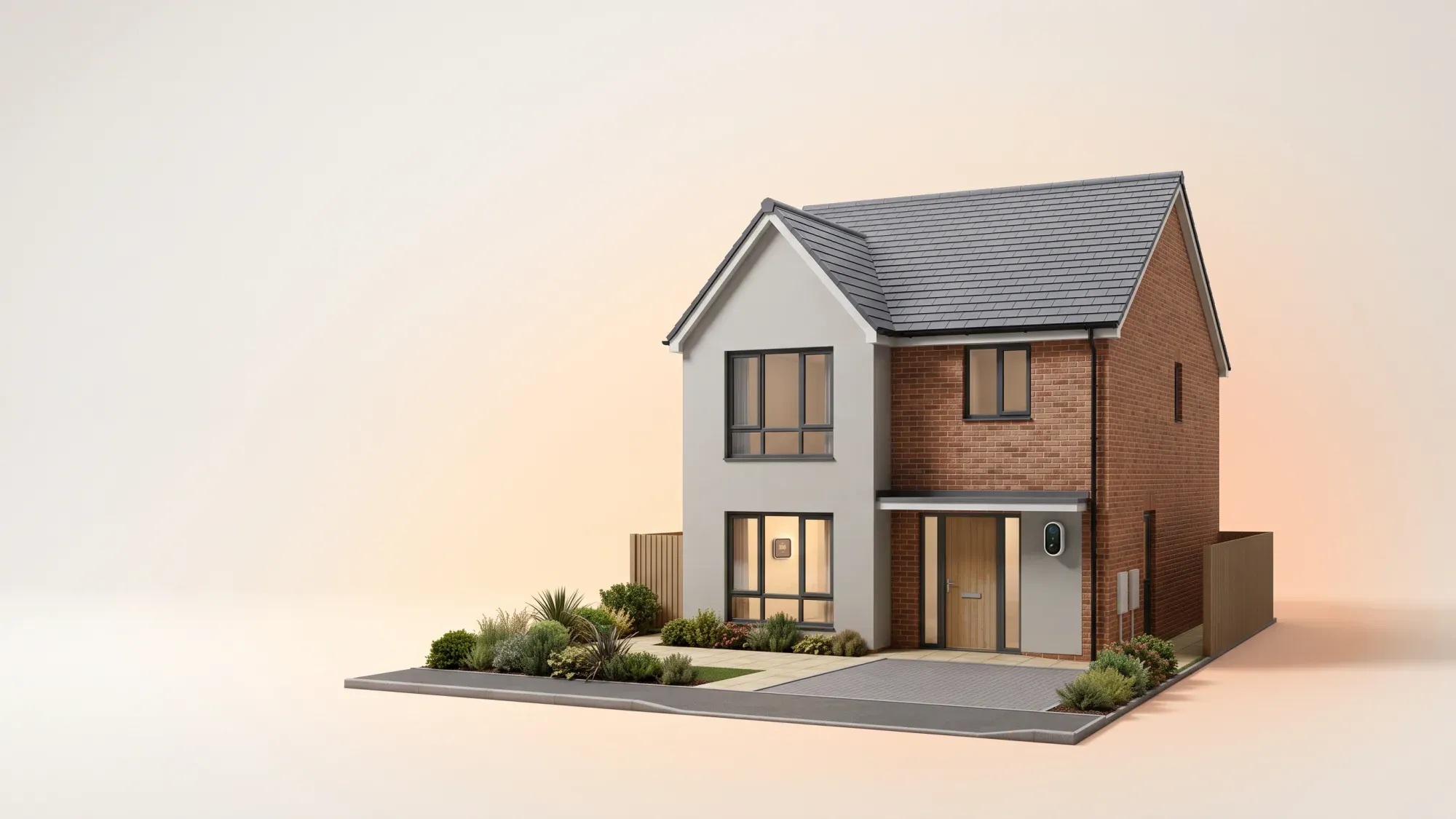
The UK smart home market is undergoing a significant transformation, moving from a luxury niche to a household standard. This shift is driven by advancements in energy management, interoperability, and artificial intelligence (AI), promising homeowners greater control and efficiency. The market is projected to reach between £5.2 and £5.8 billion by the end of 2026, with household penetration climbing to 53-65%1.
As smart home technology helps you manage your energy, consider how Fuse Energy can empower you with clear pricing and real-time usage data. Click here to switch to Fuse Energy today.
Market size and growth projections
The UK smart home market is projected to reach between £5.2 and £5.8 billion by the end of 2026. This growth reflects a robust expansion, driven by a desire for greater control over home environments, enhanced security, and the promise of substantial energy savings.
From luxury niche to household standard
Household penetration of smart homes in the UK is expected to climb to 53-65% by 2026. This indicates a clear shift, as smart home technology is no longer just for early adopters but is becoming an integral part of modern living for many.
Driving factors behind adoption
Several factors are fuelling this rapid adoption. Persistent energy cost concerns have made smart energy solutions essential, while the maturation of interoperability standards and AI-powered automation are enhancing functionality and user experience. Growing awareness of energy efficiency and the desire for home automation also play significant roles.
The rise of AI and predictive automation
AI is increasingly influencing smart home devices, moving beyond simple remote control to predictive, proactive systems. Advanced sensors, for instance, can detect micro-movements and even count occupants, ensuring optimal climate control and lighting based on real-time occupancy. This allows homes to anticipate needs rather than merely react to commands.
Enhanced automation with advanced sensors
Automation in smart homes is becoming more sophisticated. Devices are now capable of learning routines and making precise adjustments to maximise efficiency and comfort. This enhanced automation means less manual intervention and a more seamless living experience.
Focus on sustainability and net zero goals
Sustainability is a core driver for smart home adoption in the UK, particularly with the nation's net zero targets. Smart home technologies contribute significantly to these goals by optimising energy usage and reducing carbon footprints. This focus is also driven by consumer interest in energy-efficient home automation systems.
Addressing consumer cost concerns
Energy management has become the leading category in the UK smart home market, surpassing entertainment. This shift is largely driven by consumer concerns over energy costs and tightening regulatory requirements. Homeowners are prioritising devices that offer measurable returns through reduced utility bills.
The role of smart thermostats and appliances
Smart thermostats are at the forefront of energy saving. Many smart thermostats can integrate with dynamic energy tariffs, allowing for automatic heating during off-peak hours when electricity is cheaper. ENERGY STAR-certified smart thermostats can deliver at least 8% HVAC energy savings. This is achieved through features like occupancy awareness and schedule-aware geofencing, which prevent wasted energy in unoccupied homes. Many homeowners often pair this with a smart meter installation to track usage more effectively.
Home energy optimisation and time-of-use tariffs
Smart homes offer tangible pathways to energy efficiency through home energy optimisation. This dynamic approach to energy consumption aligns with a future where energy is managed intelligently, rather than simply conserved.
Advanced smart home security systems
Security remains a primary driver for smart home investment. Security systems held a significant market share in 2025. Modern systems offer advanced features such as 4K resolution cameras and AI detection, integrating seamlessly with voice assistants. The Product Security and Telecommunications Infrastructure Act 2022 (PSTI Act) bolsters smart home security.
Improving interoperability with Matter standard
Interoperability has historically been a challenge in the smart home market, with devices from different brands often struggling to communicate. However, standards like Matter 1.6 have reached significant maturity, largely resolving these fragmentation issues. Cross-brand device ownership is now becoming the norm, simplifying device management and accelerating adoption by reducing the perceived risk of technology investment.
Navigating data privacy in connected homes
With the increasing number of connected devices, data privacy is a growing concern. The PSTI Act 2022 aims to protect consumers from cyberattacks and privacy breaches.
Grid-interactive appliances and smart electrical panels
The future of energy involves grid-interactive appliances and smart electrical panels. These technologies allow for dynamic energy management, where devices can shift energy usage to support the grid and take advantage of cheaper, off-peak electricity. This capability is crucial for a more resilient and efficient energy system.
The impact of smart meter installation
Smart meters provide the foundational data infrastructure for advanced energy management systems. They enable real-time monitoring of energy consumption, which is essential for optimising usage and integrating with smart home devices. This data empowers homeowners to make informed decisions about their energy use. For a deeper dive into what defines these connected living spaces, explore what is a smart home.
Achieving 'power to play with' through smart technology
Smart home technology, particularly in energy management, aligns with a vision of energy abundance. By optimising usage and providing greater control, smart homes empower homeowners to manage their energy effectively. This shifts the focus from simply "using less" to having the "power to play with" - where energy is abundant and less of a constant concern. It's about enabling efficient and empowered energy use, putting the balance of power into the customer's hands.
Evaluating devices for energy efficiency
When selecting smart home devices, prioritising energy efficiency is key. Look for products that offer clear data on potential savings and integrate with energy management systems. Devices that automatically adjust to your schedule and preferences can significantly reduce wasted energy. For more ways to cut down on your energy use, check out our energy efficiency tips.
Considering Product security and regulatory compliance
Given the importance of security and privacy, choose devices that comply with the latest regulations, such as the Product Security and Telecommunications Infrastructure Act 2022. This ensures your smart home ecosystem is protected against vulnerabilities and that your data is handled responsibly.
Integrating with modern energy solutions
For a truly optimised home, consider how smart home devices can integrate with modern energy solutions. This includes smart meters, solar panels, batteries, and EV charging. A cohesive energy ecosystem allows for greater control, enabling you to manage your home's energy consumption dynamically and efficiently.
Managing your energy bills should be clear and easy to understand. Fuse Energy focuses on straightforward pricing, so you can see exactly what you're paying without unnecessary complexity. If you have a smart meter, you can view detailed usage data through the app or website, helping you understand how you can lower your bills. Our 24/7 human support team is always on hand with fast response times whenever you need help. Click here to switch to Fuse Energy today. Find out about our mission by clicking here.
References
- Fuse Energy. UK smart home market set to reach £5.8 billion