Solar water heaters for homes pros and cons
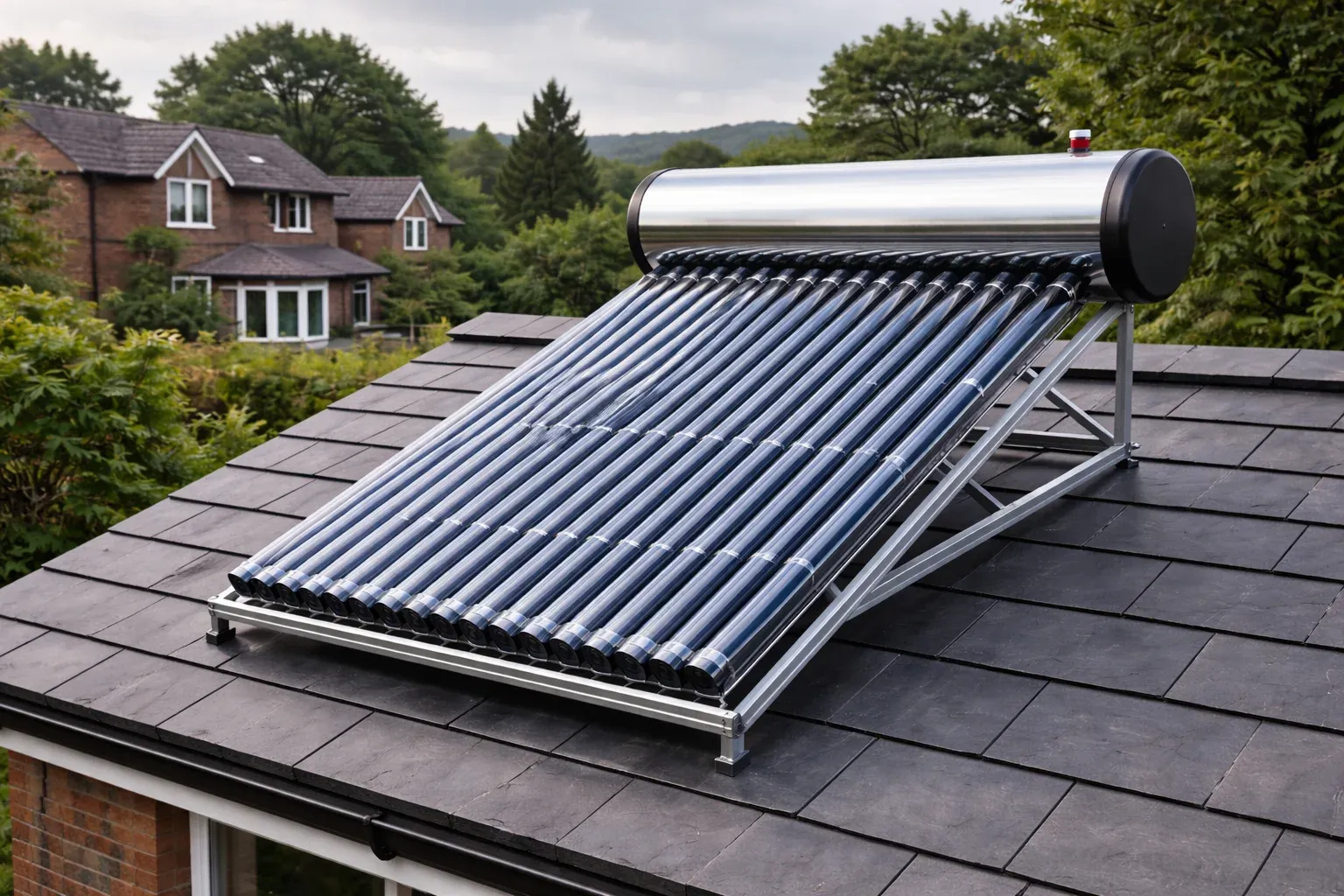
Considering a solar water heater for your UK home? These systems can significantly reduce your energy bills and carbon footprint, even in our climate. This guide explores the benefits, costs, and practicalities of solar hot water heater systems, offering a clear path to sustainable hot water.
Thinking about how a solar water heater could impact your energy usage? With Fuse Energy, you get clear pricing, real-time usage data, 24/7 human customer support, and a modern energy experience designed around you. Switching takes as little as 3 minutes, so you can take control of your bills from day one. Click here to switch to Fuse Energy today and start saving.
Understanding solar water heating in the UK
How solar thermal systems work
A solar water heater, often called a solar thermal system, captures energy from the sun to heat your home's water supply. It typically uses solar collectors, which are panels mounted on your roof that absorb solar radiation. These collectors contain a fluid, usually a mix of water and antifreeze, that heats up as it circulates. This heated fluid then flows through a coil in your hot water cylinder, transferring its warmth to the stored water.
There are two main types of solar collectors: flat plate collectors and evacuated tube collectors. Both are designed to efficiently convert sunlight into heat, providing a reliable source of hot water for your home.
Key benefits: energy savings and environmental impact
Installing a solar water heater system offers compelling advantages for UK homeowners. The most immediate benefit is a noticeable reduction in your energy bills, as you'll rely less on your boiler to heat water. A well-sized system can provide 60% to 70% of your household's annual hot water needs, with up to 80% to 90% in summer and 20% to 30% in winter. This means significant savings, especially during sunnier months.
Beyond your wallet, a solar powered water heater dramatically lowers your home's carbon emissions, contributing to a greener planet. A typical domestic solar water heating system in the UK can cut carbon dioxide (CO2) emissions by 230kg to 510kg per year. It's a smart investment for anyone looking to boost their home's sustainability and reduce their environmental impact.
Costs, grants, and real-world savings for UK homeowners
Navigating installation costs and government support
The upfront cost of a solar water heater can vary, depending on the system size, type of collectors, and installation complexity. While past government schemes like the Renewable Heat Incentive (RHI) offered payments for solar thermal systems, this scheme has now closed. It's always worth checking for any current government grants or local funding schemes that might be available to help offset these expenses.
For any available incentives, Microgeneration Certification Scheme (MCS) certification is crucial for both your chosen installer and the products to ensure quality and to qualify for support. MCS is the main UK quality assurance scheme for low-carbon and renewable energy technologies, including solar thermal.
Analysing your energy bills: a Fuse Energy perspective
Understanding the real-world savings from a solar water heater starts with knowing your current hot water usage. At Fuse Energy, we empower you with the data to help you understand your energy consumption patterns. Our platform provides granular insights into your overall energy usage. By using our app, you can visualise your energy usage patterns to help inform your decision about a solar water heater system. This data-driven approach helps you make an informed decision about your investment.
Suitability, performance, and maintenance
Is a solar water heater right for your home?
While a solar water heater offers great benefits, it's not a one-size-fits-all solution. Several factors determine if a solar water heater UK system is right for you:
- Roof space and orientation: You'll need sufficient, unshaded roof space, ideally south-facing, for optimal sunlight exposure.
- Hot water demand: Consider your household's hot water needs. A larger family might require a bigger system or more supplementary heating.
- Existing system: Solar thermal systems integrate with your current hot water cylinder and boiler, so compatibility is key.
- Planning permission: Generally, solar panels don't require planning permission for most domestic houses, as they are considered "permitted development". However, exceptions exist for listed buildings, properties in conservation areas, or if the panels protrude more than 200mm from the roof or are higher than the highest part of the roof (excluding the chimney). Always check with your local authority if you are unsure.
Maximising performance in the UK climate
Many homeowners wonder, "Does a solar water heater work in winter in the UK?" The answer is yes, but its output will be lower than in summer. Solar hot water heater systems are designed to provide a significant portion of your hot water needs year-round, even on cloudy days, as they use diffused energy from the atmosphere. During colder or very overcast periods, your conventional boiler will kick in to top up the water temperature1.
A solar thermal system is expected to last 20 to 25 years, and potentially up to 30 years with proper care. Regular, minimal maintenance is key to its efficiency and longevity. This includes annual checks by the householder and professional servicing every 2 to 5 years. Maintenance tasks typically involve checking fluid pressure, replacing antifreeze every 5 to 7 years, cleaning the panels, and inspecting for leaks or damage.
Managing your energy bills should be clear and easy to understand. Fuse Energy focuses on straightforward pricing, so you can see exactly what you're paying without unnecessary complexity. If you have a smart meter, you can view detailed usage data through the app or website, helping you understand how you can lower your bills. Our 24/7 human support team is always on hand with fast response times of under 5 minutes whenever you need help. Click here to switch to Fuse Energy in as little as 3 minutes. Find out about our mission by clicking here.
References
- Energy Saving Trust. Solar water heating
Disclaimer
For the avoidance of doubt, this article is provided for informational purposes only and is not intended to constitute legal or financial advice. The author and/or Fuse Energy shall not be responsible for any losses arising out of any reliance on the information contained herein.