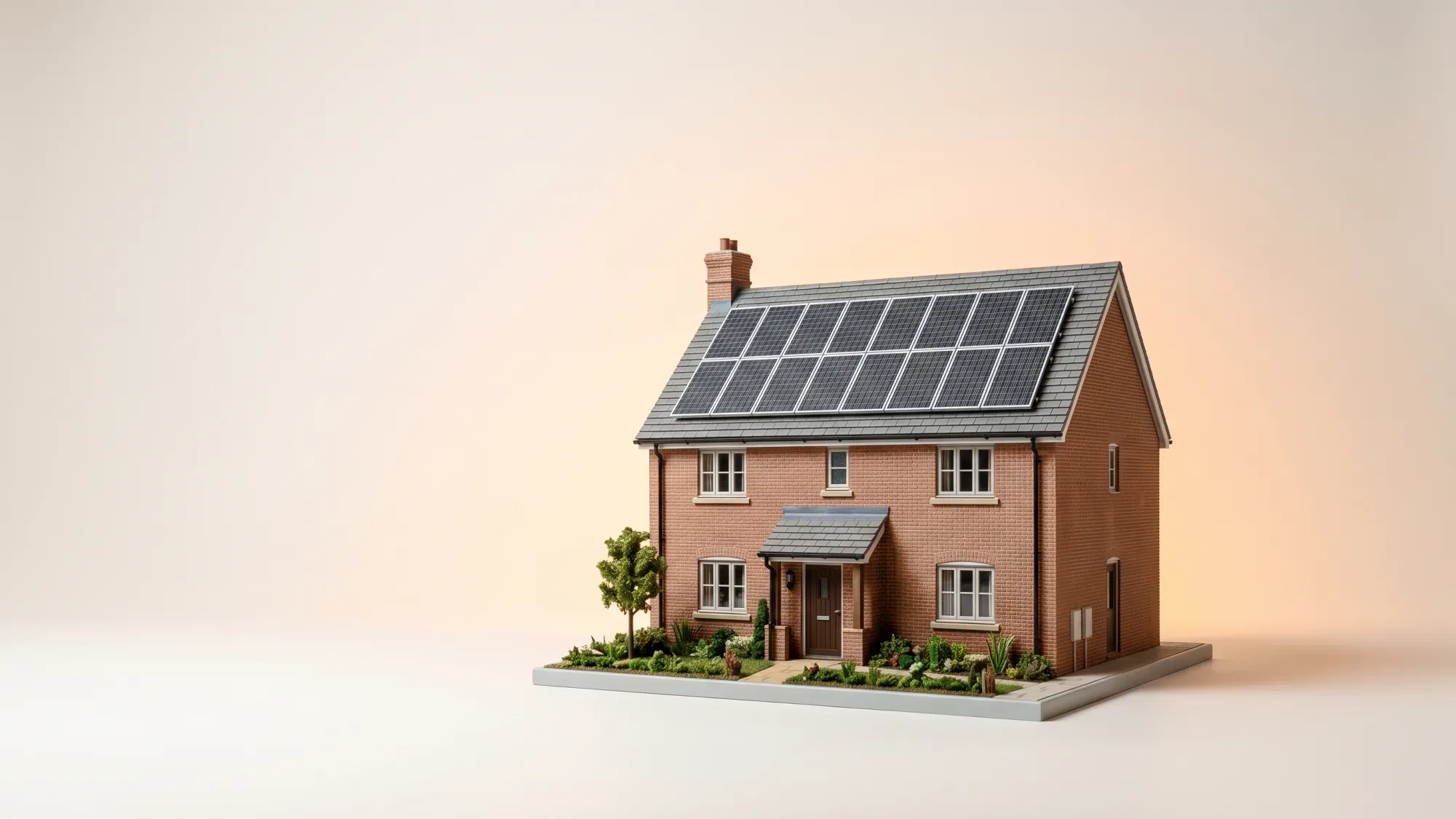
For homeowners across Norfolk - from its historic market towns to the tranquil Broads and expansive coastline - the promise of energy independence has never been more tangible. With its unique blend of rural charm and forward-looking communities, Norfolk is perfectly positioned to harness the power of the sun. Forget the old story of 'use less'; with solar panel installation in Norfolk, you are making a power play, taking control of your energy future and unlocking a new era of abundance, right here in Eastern England.
Why solar panels in Norfolk are a smart investment
Unlocking energy independence for your home
Installing solar panels means generating your own electricity, reducing your reliance on the National Grid and fluctuating energy prices. Even in the UK, solar panels generate electricity effectively from daylight, not just direct sunlight, making them a viable year-round investment. This means your Norfolk home can produce power even on cloudy days, contributing to your energy needs throughout the seasons. To learn more about how solar panels perform in varied weather, you can read our article on do solar panels work on cloudy days.
Reducing your energy bills in Eastern England
Norfolk sits within the "Eastern England" electricity distribution region, meaning its unit rates and daily standing charges are subject to Ofgem's regional price cap. By generating your own electricity, you directly offset the amount you need to buy from the grid, leading to significant savings on your energy bills. The more electricity your solar panels produce and you consume, the less you pay your supplier, providing a buffer against future price increases. Understanding the solar panel installation cost is key to calculating your potential savings.
Contributing to a greener Norfolk
Choosing solar panels for your home is a direct step towards a more sustainable future. By using clean, renewable energy, you reduce your carbon footprint and contribute to Norfolk's environmental goals. This not only benefits your household but also supports the wider community in fostering a greener, more eco-conscious region.
Understanding solar panel costs and savings in Norfolk
The 0% VAT advantage for solar installations
A significant financial incentive for homeowners considering solar panels is the 0% VAT rate applied to the installation of solar panels and battery storage systems across Great Britain. This relief is a temporary measure in place until 31 March 2027, making it an opportune time to invest and save thousands of pounds on the upfront cost of your system. From 1 April 2027, the VAT rate is set to rise to 5%.
Maximising income with the Smart Export Guarantee (SEG)
The Smart Export Guarantee (SEG) is a UK-wide scheme that mandates larger licensed energy suppliers to pay for any surplus solar electricity you export back to the grid. This means you can earn money for the electricity your panels generate but your home does not immediately use. To qualify for SEG payments, your solar panel system must be installed by an MCS-certified installer.
What is the SEG?
The SEG is a UK government scheme requiring larger energy suppliers to pay homeowners for excess renewable electricity exported to the National Grid. It provides an income stream for solar panel owners, complementing their bill savings. To qualify, your system needs MCS certification and a smart meter capable of half-hourly export readings.
Norfolk's regional energy pricing and the Ofgem cap
As part of the Eastern England electricity distribution region, Norfolk's energy prices are influenced by Ofgem's regional price cap. This cap sets maximum unit rates and standing charges, which are updated quarterly. Understanding your local pricing structure helps in accurately calculating the potential savings and payback period for your solar investment. Generating your own power helps insulate you from these regional variations and quarterly adjustments.
The solar panel installation process for Norfolk homes
Initial assessment and system design
The first step in going solar involves a thorough assessment of your home's suitability. This includes evaluating your roof's orientation, pitch, and any potential shading from trees or neighbouring buildings. A professional installer will design a system tailored to your energy consumption and property characteristics, ensuring optimal performance and efficiency. For a comprehensive guide, see our article on solar panel installation.
Navigating UK power Networks (DNO) and G98/G99
When installing solar panels, your installer will need to notify your local Distribution Network Operator (DNO). You can find your DNO by using the Energy Networks Association (ENA) "Find my network operator" tool. Any new solar panel and battery storage grid connection requires notification to the DNO under the G98/G99 process. This is typically managed by your installer, who will ensure all regulatory requirements are met before and after installation. Should you experience a power cut, you would dial the free national number 105, which connects you to your local DNO.
What is the G98/G99 process for solar installations?
The G98/G99 process refers to the UK engineering recommendations for connecting small-scale generation systems, like solar panels, to the electricity grid. G98 applies to smaller systems with an inverter output of up to 3.68kW per phase, often allowing for installation before notification. G99 is for larger systems, requiring DNO approval before installation. Your installer typically handles this notification to the DNO.
Installation and final grid connection
Once the design is approved and DNO notifications are handled, your chosen installer will proceed with the physical installation of the solar panels and any battery storage. This involves mounting the panels, wiring the system, installing the inverter, and connecting it to your home's electrical supply and the grid. The installer will also ensure your system is commissioned correctly and safely.
Choosing the right solar PV installer in Norfolk
The importance of MCS certification
When selecting a solar PV installer in Norfolk, MCS certification is paramount. The Microgeneration Certification Scheme (MCS) is a crucial standard that ensures the quality of both the products and the installation. Without MCS certification, you will not be eligible to receive payments through the SEG, significantly impacting your potential return on investment.
Local expertise and reputation
Opting for an installer with a strong local presence and reputation in Norfolk can provide additional peace of mind. Local companies often have a better understanding of regional planning considerations, typical housing styles, and specific weather patterns. Look for installers with positive customer reviews and a proven track record of successful installations in the area.
Key questions to ask potential installers
Before committing to an installer, ask about their MCS certification, their experience with similar properties in Norfolk, and what warranties they offer on both equipment and workmanship. Inquire about their process for handling DNO notifications and how they support you in applying for the SEG. A reputable installer will be transparent and able to answer all your questions clearly.
Maximising your solar energy with battery storage
Why battery storage matters for self-consumption
While solar panels generate electricity during the day, your energy consumption often peaks in the evenings. Battery storage allows you to store excess electricity generated by your solar panels for use later, significantly increasing your self-consumption of generated energy. This enhances your energy independence, further reduces your reliance on grid electricity, and maximises your savings.
Year-round generation in Norfolk's climate
Despite common misconceptions, UK solar panels generate electricity effectively on diffuse daylight, ensuring year-round production. In Norfolk's climate, system orientation, shading, and battery integration are key to optimising your system's payback. Even on overcast days, your panels will be contributing to your home's power supply, and with battery storage, that energy can be saved for when you need it most.
Integrating with smart home energy systems
Modern solar and battery systems can integrate seamlessly with smart home energy management systems. This allows for intelligent control over when to charge your battery, when to use stored energy, and when to export to the grid, based on energy prices and your consumption patterns. This level of transparency and control empowers you to make the most of your solar investment.
Your next steps towards a solar-powered Norfolk home
Getting tailored quotes from local providers
Ready to make your power play? The next step is to obtain multiple quotes from MCS-certified solar installers operating in Norfolk. Compare proposals carefully, looking at system size, estimated generation, overall costs, and projected payback periods. Don't forget to factor in the 0% VAT saving, which applies until March 2027.
Planning for your energy future with solar
Installing solar panels in Norfolk is more than just a home improvement; it is a strategic move towards energy independence and a future with abundant power. By choosing solar, you are not just reducing bills; you are taking control, contributing to a greener community, and ensuring your home is powered for years to come.
For the avoidance of doubt, this article is provided for informational purposes only and is not intended to constitute legal or financial advice. The author and/or Fuse Energy shall not be responsible for any losses arising out of any reliance on the information contained herein.