Solar panel installation in Hertfordshire
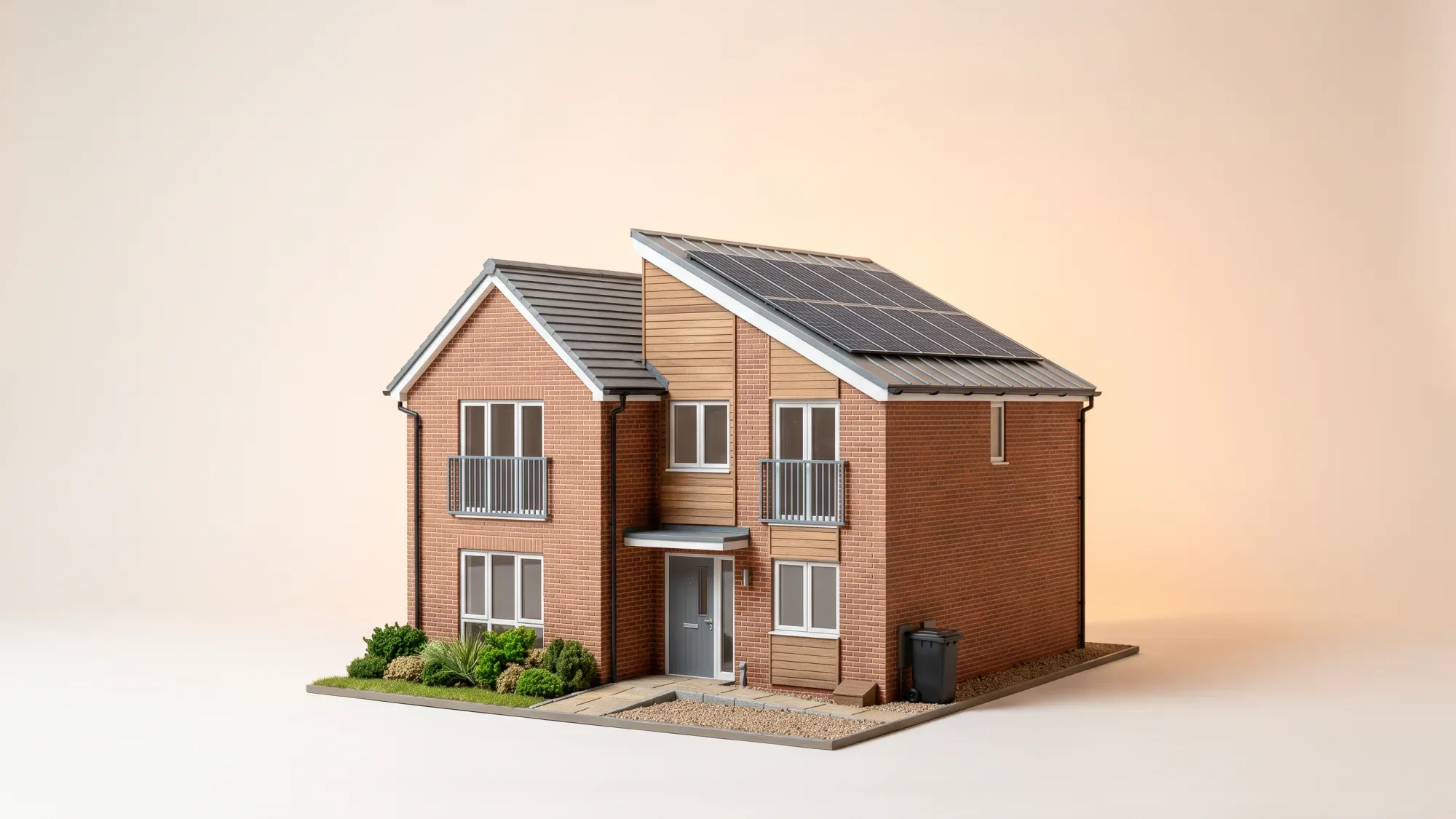
Installing solar panels in Hertfordshire is a smart move for homeowners looking to take control of their energy use and solar panel installation cost. The county, with its diverse housing stock, offers ample opportunity for solar energy generation. Hertfordshire receives a good amount of sunshine annually, indicating strong potential for solar energy generation. This guide will walk you through everything you need to know about solar panel installation in Hertfordshire, from understanding local regulations to maximising financial incentives.
Hertfordshire's energy landscape: what you need to know
Understanding the local energy context is crucial when considering solar panel installation in Hertfordshire. This includes knowing how your region's electricity supply is managed and the specific conditions that affect solar energy generation locally.
Hertfordshire's price cap region: Eastern England
Hertfordshire falls within the "Eastern England" electricity distribution region for Ofgem's price cap. This means that the unit rates and daily standing charges for electricity can differ from other regions in Great Britain, making local energy decisions particularly impactful for your household budget.
Understanding your distribution network operator (DNO)
Your Distribution Network Operator (DNO) manages the local electricity grid infrastructure, including the cables and substations that deliver power to your home. Any new solar or battery grid connection requires a G98/G99 notification to your local DNO, a process typically handled by your installer to ensure your system can safely connect to the grid. If you are unsure who your DNO is, you can use the Energy Networks Association (ENA) "Find my network operator" tool by postcode. Should you experience a power cut, Hertfordshire residents can dial the free national number 105, which routes directly to their local DNO.
Solar potential in Hertfordshire: beyond direct sunlight
Despite common misconceptions about the UK's weather, solar panels generate electricity year-round on diffuse daylight, not solely direct sunlight. This means that even on cloudy days, your panels will still be producing energy. In fact, cooler UK temperatures can sometimes enhance panel efficiency, as excessive heat can reduce performance. The UK's annual insolation is typically in the range of 750–1,100 kilowatt-hours per square metre (kWh/m²). To understand more about how solar panels perform in varying weather conditions, you can read our guide on do solar panels work on cloudy days.
The benefits of solar panels and battery storage for Hertfordshire homes
Installing solar panels and battery storage offers more than just solar energy advantages and disadvantages; it's a strategic move for greater energy independence and financial control.
Achieving energy independence and lower bills
Generating your own electricity reduces reliance on energy suppliers and protects you from fluctuating energy prices. Homeowners can see annual electricity savings of between £700 and £1,400 per year with a typical solar panel installation1. Combining solar panels with battery storage allows you to store surplus energy generated during the day for use in the evenings or on less sunny days, further maximising self-consumption and reducing your electricity bills. To understand how this impacts your monthly outgoings, explore our guide on your average monthly electric bill with solar panels.
Environmental impact and property value
Beyond the financial savings, solar panels contribute to a significant reduction in your household's carbon footprint, supporting Hertfordshire's ambitious climate targets to achieve net zero greenhouse gas emissions by 2050. Furthermore, installing solar panels can increase your property's value. Research suggests that properties with a higher Energy Performance Certificate (EPC) rating, often improved by solar installations, can see a premium of between 1.6% and 6% compared to equivalent homes with lower ratings2.
Maximising your solar investment with battery storage
Battery storage is a key component for truly unlocking energy independence. By storing excess solar energy, you can power your home even when the sun is not shining, reducing the amount of electricity you need to import from the grid. This helps to maximise your self-consumption and further reduce your energy bills.
Navigating planning permission and regulations in Hertfordshire
Understanding the local planning and grid connection requirements is a critical step in your solar journey.
Permitted development rights for solar
For most domestic solar panel installations in Hertfordshire, planning permission is not required, as they fall under "permitted development rights". However, these rights are subject to specific conditions, such as panels not protruding more than 20cm from the roof surface or being higher than the main roof ridge.
Considerations for conservation areas and listed buildings
If your property is a listed building or located within a conservation area, additional regulations apply. Listed buildings generally require Listed Building Consent before any solar installation, and in some cases, may not be suitable for solar panels. In conservation areas, solar panels are usually permitted development if they are not visible from a public highway and meet specific installation limits. However, some areas, such as parts of St Albans, have Article 4 Directions, which remove certain permitted development rights and necessitate planning permission for even minor changes3. It is always advisable to check with your local council's planning department.
The G98/G99 process: connecting to your DNO
Connecting your solar and battery system to the National Grid requires a formal notification process with your local DNO. This involves either a G98 notification or a G99 application, depending on the size of your system.
What is the difference between G98 and G99 for solar installations?
G98 and G99 are UK grid connection standards published by the ENA. G98 applies to smaller systems, specifically inverters rated at 3.68kW or below for single-phase connections4. For these, your installer notifies the DNO after installation. G99 applies to larger systems, where inverters are rated above 3.68kW. These require an application and approval from the DNO before installation can begin. Your installer typically handles this entire process.
For most domestic solar installations, a G98 notification is sufficient and simpler, allowing your installer to connect the system and then notify the DNO within 28 days. For larger systems, a G99 application is required, which involves a more detailed assessment and pre-approval from your local DNO.
Financial incentives for solar panel installation in Hertfordshire
Several financial incentives make investing in solar panels and battery storage more attractive for Hertfordshire homeowners.
0% VAT on solar and battery installations
A significant incentive is the 0% VAT rate that applies to solar panel and battery storage installations across Great Britain. This relief is in place until 31 March 2027, after which the VAT rate is scheduled to rise to 5%. This temporary zero rate can lead to substantial savings on the overall cost of your installation.
The Smart Export Guarantee (SEG)
The Smart Export Guarantee (SEG) is a UK-wide scheme that requires larger energy suppliers to pay you for any surplus electricity your solar panels export back to the National Grid. To qualify for SEG payments, your solar installation must be certified under the Microgeneration Certification Scheme (MCS). This ensures your system meets industry standards for quality and performance.
Other potential grants and schemes
While national grants like the SEG are universally applicable, local grants specific to Hertfordshire may also be available. For example, East Herts Council has offered funding for solar panels and battery storage, and schemes like Solar Together Hertfordshire facilitate group-buying for installations. Additionally, the Energy Company Obligation (ECO4) scheme, which targets low-income and vulnerable households, is accessible through various Hertfordshire councils via Local Authority Flexible (LA Flex) schemes.
Choosing the right solar panel installer in Hertfordshire
Selecting a qualified and reputable installer is paramount for a successful solar panel installation.
The importance of MCS certification
Always choose an installer with MCS certification. MCS certification is not only a mark of quality and adherence to industry standards, but it is also a mandatory requirement for accessing government incentives like the SEG. An MCS-certified installer will ensure your system is designed and installed correctly, and they will provide the necessary documentation for you to claim SEG payments. Fuse Energy is MCS certified for home solar installation.
Questions to ask your installer
When obtaining quotes, ask about their experience with similar properties in Hertfordshire, their MCS certification, the warranties they offer on equipment and workmanship, and how they handle the DNO notification process. A transparent installer will be able to provide clear answers and detailed quotations. For more details on what to expect, refer to our guide on solar panel installation.
Understanding installation timelines and warranties
Installation timelines can vary depending on the complexity of your system and the installer's schedule. Ensure you understand the expected duration from initial survey to system commissioning. Also, clarify the warranties provided for the solar panels, inverter, battery storage, and the installation work itself.
The solar installation process: step-by-step for Hertfordshire homeowners
The journey to energy independence with solar panels typically follows a structured process.
Initial consultation and site survey
The first step involves an initial consultation where an installer assesses your energy needs and conducts a detailed site survey of your Hertfordshire property. This includes evaluating your roof's suitability, orientation, shading, and structural integrity.
Design, quotation, and contract
Based on the survey, the installer will design a bespoke solar and battery storage system tailored to your home. You will receive a comprehensive quotation outlining all costs, including equipment, installation, and any associated fees. Once you are satisfied, you will sign a contract.
Installation day and system commissioning
The physical installation involves mounting the panels on your roof, installing the inverter and battery storage, and connecting the system to your home's electrical supply. After installation, the system will be commissioned, tested, and certified. Your installer will also manage the mandatory G98/G99 notification to your local DNO.
Post-installation: monitoring and maintenance
Once your system is operational, you can begin monitoring your energy generation and consumption. Modern solar systems often come with apps that allow you to track performance in real-time. While solar panels require minimal maintenance, occasional cleaning and routine checks can ensure optimal performance for years to come.
Installing solar panels and battery storage in your Hertfordshire home gives you control over your energy consumption and costs. Fuse Energy supports homeowners in Hertfordshire with the integration of solar and battery storage as part of a comprehensive home energy upgrade. Our 24/7 human customer support is always on hand to help with your energy needs.
References
- Greentech Renewables. Solar Panel Savings UK 2026 - Greentech Renewables
- Oxford Economics. The growing importance of energy efficiency in home buying decisions
- Sola. Solar Panels in St Albans 2026 | Complete Installation Guide
- UK Government. How to register energy devices in homes or small businesses
Disclaimer
For the avoidance of doubt, this article is provided for informational purposes only and is not intended to constitute legal or financial advice. The author and/or Fuse Energy shall not be responsible for any losses arising out of any reliance on the information contained herein.