Solar panel installation for Hastings homes
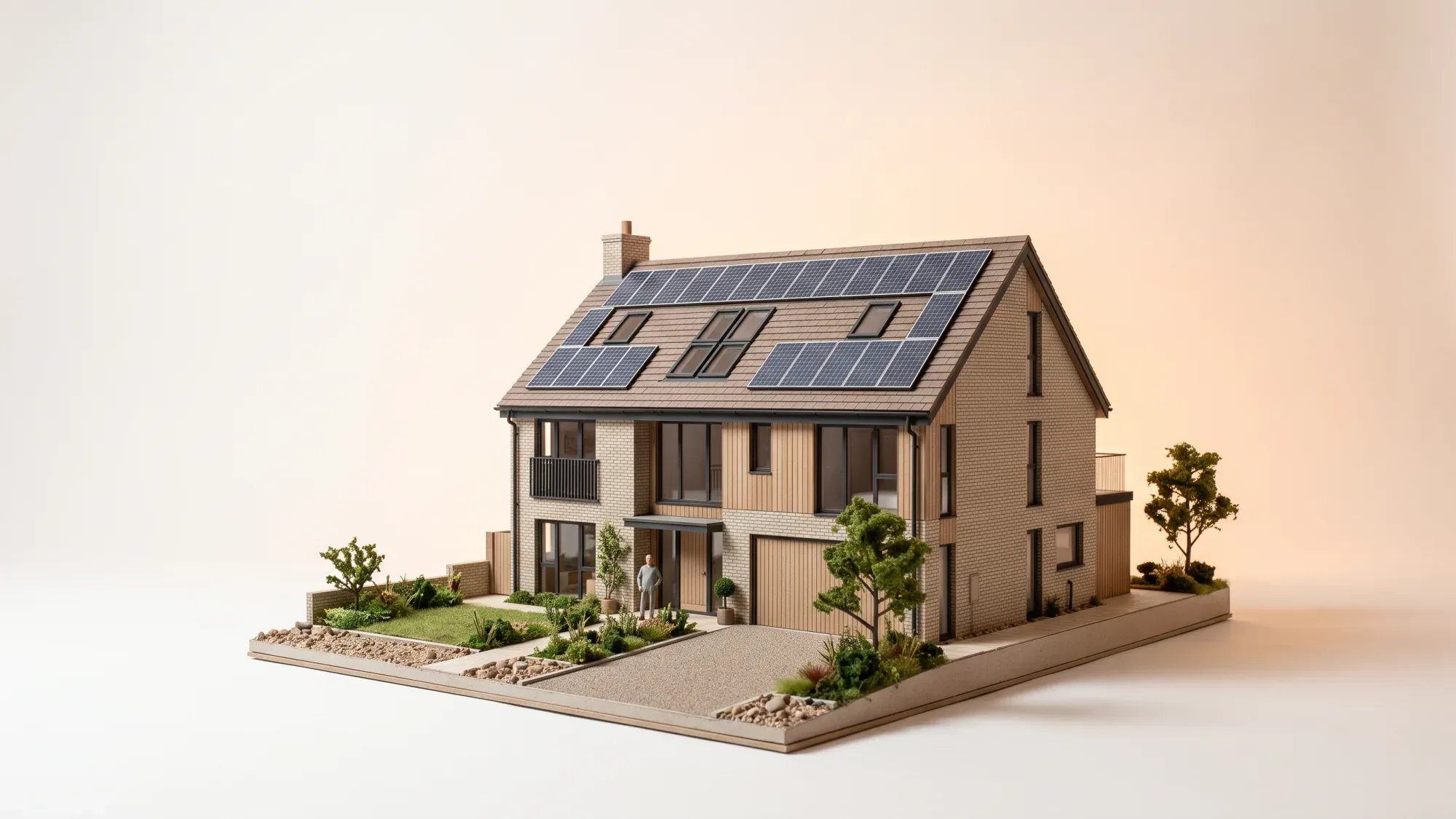
Hastings, with its iconic fishing boats and historic Old Town, offers a compelling vision of energy independence for homeowners. This guide provides clear, localised information on installing solar panels and battery storage, helping you make an informed decision to reduce energy bills and contribute to a more sustainable future.
Why solar panels make sense for Hastings homes
Installing solar panels is a strategic move for Hastings homeowners, offering a blend of financial, environmental, and practical advantages.
Harnessing Hastings's sunlight hours
Southern England enjoys some of the highest annual sunlight hours in the UK1, making solar power a strong investment. East Sussex, including Hastings, typically receives around 1,700 to 1,800 hours of sunshine per year2. Solar panels generate electricity from daylight, not just direct sun, meaning they still produce power on cloudy days. This consistent daylight, combined with moderate temperatures, creates ideal conditions for solar PV systems in the South East. If you're wondering how effective they are when the sun isn't shining brightly, you can learn more about whether solar panels work on cloudy days.
Reducing energy bills and carbon footprint
One of the most immediate benefits of solar panels is the significant reduction in electricity bills. By generating your own power, you rely less on your energy supplier, leading to substantial long-term savings. Beyond the financial aspect, solar energy is a clean, renewable source that helps cut your household's carbon emissions. A typical rooftop solar system can save around one tonne of CO2 per year, contributing to the UK's net-zero goals. Understanding your average monthly electric bill with solar panels can help you plan your savings.
Increasing home value
Research consistently shows that homes with solar panels tend to achieve higher sale prices and can sell more quickly. Studies suggest solar panels can increase a home's value by an average of 1.8% to 3%. Buyers are increasingly interested in energy-efficient properties with lower running costs, making solar an attractive upgrade.
The solar panel installation process in Hastings
The journey to solar power involves several key stages, from initial assessment to final commissioning.
Initial assessment and design
Before any installation begins, a professional assessor will evaluate your home's suitability for solar panels. This includes checking your roof's direction and angle (South-facing is ideal in the UK, but east or west can also work well), assessing for any shading from trees or nearby buildings, and confirming the roof's size and condition. They will then design a system tailored to your energy needs and property layout.
Planning permission and local regulations
For most domestic rooftop solar panel installations in England, planning permission is not required, as they fall under "permitted development rights". However, there are exceptions. You may need permission if your home is a listed building, located in a conservation area, or if you plan to install ground-mounted panels exceeding certain size limits. It is always advisable to check with your local planning authority if you have any doubts.
Installation and commissioning
Once the design is approved, the physical installation typically takes one to two days for most domestic systems. This involves setting up scaffolding, fixing mounting brackets to your roof, and then securing the solar panels onto these mounts. The panels are wired together and connected to an inverter, which converts the direct current (DC) electricity from the panels into alternating current (AC) for use in your home. Finally, the system undergoes safety checks and testing before commissioning.
Local considerations for Hastings homeowners
Understanding the local energy landscape is crucial for Hastings residents considering solar.
Understanding UK Power Networks and G98/G99
The local Distribution Network Operator (DNO) for Hastings is UK Power Networks. They manage the electricity cables and infrastructure that deliver power to your home. Any new solar or battery grid connection in Hastings requires notification to UK Power Networks under the G98/G99 process. This is typically handled by your installer to ensure your system does not cause stability or safety issues for the grid. For smaller domestic systems (up to 16A per phase), a G98 notification is usually sufficient, which is a simpler "fit and inform" process. In the event of a power cut, Hastings residents should dial the free national number 105, which routes directly to UK Power Networks.
Hastings in the South East England price cap region
Ofgem, the energy regulator, sets a price cap that limits the maximum price energy suppliers can charge for each unit of energy and daily standing charges. This cap is reviewed quarterly and varies by region. Hastings falls within the "South East England" electricity distribution region. This means your unit rates and standing charges are influenced by the specific regional cap set for this area, which can differ from other parts of Great Britain. Generating your own electricity with solar panels can help mitigate the impact of these regional price variations.
Connecting to the grid
After your solar system is installed, your installer will manage the official connection to the grid by notifying UK Power Networks. This ensures that any surplus electricity you generate can be safely exported back to the National Grid.
Financial incentives and savings for solar in Hastings
Several financial incentives make solar panel installation an even more attractive prospect for Hastings homeowners. You can also explore the overall solar panel installation cost to get a clearer picture of your investment.
0% VAT on solar and battery storage
A significant incentive is the 0% VAT rate on solar panel and battery storage installations across Great Britain. This relief is in place until 31 March 2027, after which it is scheduled to revert to a 5% reduced rate. This means substantial upfront savings on the cost of both the materials and installation, making it an opportune time to invest.
The Smart Export Guarantee (SEG)
The Smart Export Guarantee (SEG) is a UK-wide scheme that requires licensed electricity suppliers to pay you for any surplus solar electricity you export to the grid. To be eligible for SEG payments, your solar panel system and installer must be certified under the Microgeneration Certification Scheme (MCS) or an equivalent scheme. You will also typically need a smart meter capable of providing half-hourly export readings. This allows you to earn an income from the clean energy your home generates but doesn't immediately use.
What is the SEG?
The SEG is a UK government scheme that requires licensed energy suppliers to pay homeowners for any surplus electricity generated by their solar panels and exported back to the National Grid. To qualify, your system and installer must be MCS certified, and you typically need a smart meter capable of half-hourly export readings.
Long-term return on investment
Beyond immediate savings and incentives, solar panels offer a strong long-term return on investment. By reducing your reliance on grid electricity, you protect yourself from fluctuating energy prices and contribute to a more stable household budget. The lifespan of solar panels is typically 25 years or more, providing decades of clean energy generation and savings.
Choosing a reputable solar installer in Hastings
Selecting the right installer is crucial for a successful and beneficial solar panel installation.
The importance of MCS certification
MCS certification is not just a badge; it's a mark of quality and a requirement for accessing key financial incentives like the SEG. An MCS-certified installer ensures that your system meets strict UK technical, safety, and quality standards. Without this certification, you may miss out on payments for your exported energy.
Questions to ask potential installers
When choosing a solar installer in Hastings, ask about their MCS certification, their experience with similar properties in the area, and what warranties they offer on both the equipment and their workmanship. Enquire about their process for DNO notification (G98/G99) and how they will support you in applying for the SEG. A reputable installer will provide clear answers and transparent quotes.
Local expertise and support
An installer with local expertise in Hastings will be familiar with the types of housing stock, local planning considerations, and the specific requirements of UK Power Networks. This local knowledge can streamline the installation process and ensure your system is optimised for the area's conditions.
Maximising your solar investment with battery storage
To truly unlock the potential of your solar panels, consider integrating battery storage.
Benefits of solar battery storage
Solar panels generate electricity during daylight hours. Without battery storage, any excess electricity you don't immediately use is exported to the grid, for which you receive SEG payments. However, a battery allows you to store this surplus energy and use it later, for example, in the evenings or on cloudy days. This maximises your "self-consumption," further reducing your reliance on grid electricity and increasing your savings.
Integrating batteries with your solar panels
Battery storage systems can be installed alongside new solar panels or retrofitted to existing systems. The inverter manages the flow of electricity, directing excess solar power to the battery for storage, or drawing from the battery when your panels aren't generating enough. This seamless integration ensures you make the most of every unit of electricity your panels produce.
Achieving greater energy independence
Combining solar panels with battery storage is a significant step towards achieving greater energy independence. It gives you more control over your energy usage and protects you from unpredictable price increases and potential grid disruptions. With a battery, your home becomes a more self-sufficient energy hub, aligning with the idea of having "power to play with" - generating your own electricity and gaining control over your energy future.
Your next steps towards solar in Hastings
Making the switch to solar is a significant decision, but one that offers substantial rewards for Hastings homeowners.
Getting started with a quote
The best way to begin is by obtaining quotes from MCS-certified solar installers in Hastings. They can provide a detailed assessment of your property, design a system that meets your needs, and offer a clear breakdown of costs and projected savings.
Empowering your home with clean energy
Adopting solar and battery storage empowers you to generate your own electricity, giving you greater control and independence from fluctuating energy prices. It's a "power play" that contributes to a more decentralised and resilient energy system, simplifying the path to energy independence for Hastings residents.
References
- UK Government. UK climate averages.
- Visit South East England. South East England Weather.
Disclaimer
For the avoidance of doubt, this article is provided for informational purposes only and is not intended to constitute legal or financial advice. The author and/or Fuse Energy shall not be responsible for any losses arising out of any reliance on the information contained herein.