Solar panel installation in Cheshire
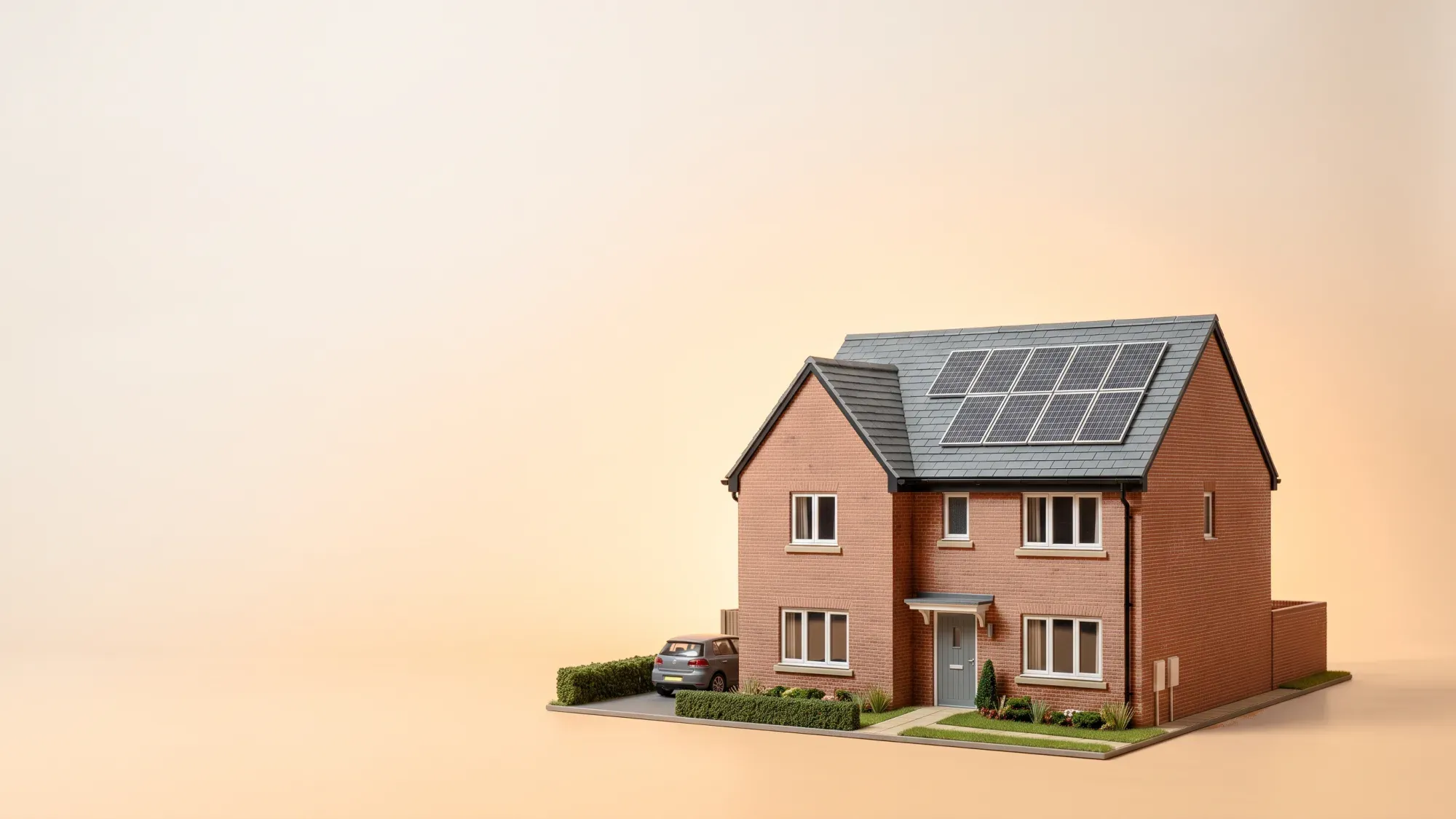
Installing solar panels on your Cheshire home offers a tangible way to take control of your energy, reduce bills, and potentially increase property value. With its blend of historic towns, rural landscapes, and modern developments, Cheshire presents varied opportunities for homeowners to embrace solar power. While northern parts of the UK might experience fewer annual sunlight hours, modern solar photovoltaic (PV) systems are highly effective even on diffuse daylight, making them a worthwhile investment in areas like Cheshire.
Why consider solar panels for your Cheshire home?
Embracing solar energy means more than just reducing your carbon footprint; it is a strategic move towards energy independence and long-term financial stability. For homeowners in Cheshire, the benefits extend from immediate savings to enhancing property appeal.
Cheshire's energy landscape
Cheshire sits within the "Merseyside & North Wales" electricity distribution region, which influences the unit rates and standing charges set by Ofgem's price cap. This regional variation means that local energy costs can differ from other parts of Great Britain. Generating your own electricity with solar panels can help insulate you from these fluctuating grid prices, offering a consistent and predictable energy supply.
Long-term savings and property value
Solar panels significantly reduce your reliance on grid electricity, leading to noticeable savings on your energy bills. Any surplus electricity your system generates can be exported back to the grid through schemes like the Smart Export Guarantee (SEG), providing an additional income stream. Homes with solar panels often see an increase in their market value, appealing to a growing number of buyers prioritising energy efficiency.
Energy independence and sustainability
Generating your own power fosters a sense of energy independence, giving you more control over your household's energy consumption. This shift fosters a sense of energy abundance, allowing you to power your home and potentially an electric vehicle (EV) from your own rooftop. This provides a robust hedge against future energy price rises and supply uncertainties.
Local considerations for solar in Cheshire
Understanding the specific local context is crucial for a successful solar panel installation in Cheshire. From climate viability to navigating local grid connections, these factors ensure your investment is optimised for the region.
Cheshire's climate and solar viability
Despite Cheshire's location in Northern England, where annual direct sunlight hours are fewer than in the south, solar PV technology still performs effectively. Modern solar panels are designed to capture diffuse daylight, meaning they generate electricity even on cloudy days. For Cheshire homeowners, this makes solar PV a viable and valuable investment, especially when paired with battery storage to maximise self-consumption. You can learn more about how solar panels work on cloudy days.
Understanding your local grid: SP Energy Networks
The local Distribution Network Operator (DNO) for Cheshire is SP Energy Networks. Any new home EV charger or solar/battery grid connection in the area must be notified to SP Energy Networks (chargers via the ENA connect-and-notify route; solar or battery systems under G98/G99). This regulatory step ensures your system safely integrates with the local electricity network.
Navigating planning permission and G98/G99
Most domestic solar panel installations in England are considered "permitted development" and do not require full planning permission, provided certain conditions are met. These conditions typically include panels not protruding significantly from the roof and not being installed on listed buildings or in conservation areas where restrictions may apply. However, the G98/G99 notification process is a separate, mandatory requirement for grid connection. G98 applies to smaller systems (up to 3.68kW single-phase) and involves notifying the DNO after installation, while G99 applies to larger systems and requires DNO approval before installation. Your installer typically handles this process.
Financial incentives for Cheshire solar installations
Several financial incentives can significantly reduce the upfront cost of installing solar panels and battery storage, making the investment more accessible for Cheshire homeowners.
0% VAT relief explained
Until 31 March 2027, the installation of solar panels and battery storage systems across Great Britain benefits from a 0% VAT rate. This government incentive reduces the overall cost of your installation, making solar power more affordable. From 1 April 2027, the VAT rate is due to increase to 5%.
The Smart Export Guarantee (SEG)
The SEG requires larger licensed energy suppliers to pay homeowners for any surplus solar electricity they export back to the grid. To qualify for SEG payments, your solar installation must be carried out by an MCS-certified installer. This ensures your system meets industry standards for quality and performance. You will also need a smart meter that records your exported electricity. You can find out how to take an export meter reading guide.
Cheshire-specific cost factors
While specific cost figures for solar panel installation cost can vary widely, a 4.5kWp solar and battery system for a typical two or three-bedroom property costs an average of £11,307, including installation. This estimate can vary based on factors such as system size, panel efficiency, battery capacity, roof complexity, and any necessary electrical upgrades.
Cheshire homeowners may also be eligible for local grants. The Warm Homes Grant, funded by the Department of Energy Security and Net Zero, is available in West Cheshire and Cheshire East until 31 March 2028. This grant supports home insulation and renewables, including solar panels, for eligible households with an Energy Performance Certificate (EPC) of Band D, E, F, or G, and who meet low-income criteria. Homeowners typically pay nothing unless building repairs are needed.
Additionally, the ECO4 scheme offers free energy improvements, including solar panels, for low-income and vulnerable households receiving qualifying benefits and with an EPC rating of D, E, F, or G. This scheme is set to conclude on 31 December 2026. Solar panels are available through ECO4 if they will reduce heating costs and the heating system is electric.
What is Solar Together Cheshire?
Solar Together Cheshire is a group-buying initiative that partners local authorities like Cheshire West and Chester Council, Cheshire East Council, and Warrington Borough Council with Dutch company iChoosr. It offers homeowners and small businesses discounted solar panel installations through collective purchasing. While not a government grant, it aims to make solar more affordable and accessible by securing competitive prices from pre-approved installers.
The solar panel installation process
Installing solar panels is a multi-step process, designed to ensure your system is efficient, safe, and compliant with all regulations.
Assessing your home's suitability
The first step involves a thorough assessment of your home's suitability for solar panels and battery storage. This includes evaluating your roof's orientation, pitch, size, and any potential shading from trees or neighbouring buildings. A comprehensive installer will also consider your current energy consumption to design a system that meets your household's needs.
Choosing an MCS-certified installer
Selecting an MCS-certified installer is paramount. This certification ensures that your installation adheres to high industry standards for quality and safety. Crucially, MCS certification is a requirement for accessing financial incentives such as the SEG. Always verify an installer's MCS accreditation before proceeding.
What to expect during installation
Once you have chosen an installer and the system design is finalised, the installation process typically involves:
- Scaffolding erection: For safe access to your roof.
- Mounting system installation: Framework for the solar panels.
- Panel installation: Securing the solar panels to the mounting system.
- Electrical wiring: Connecting the panels to an inverter and your home's electrical system.
- Battery storage integration: If opted for, the battery system is installed and connected.
- grid connection: Your installer handles the G98/G99 notification or application to SP Energy Networks.
- Commissioning and testing: Ensuring the system is fully operational and safe.
Maximising your solar investment with battery storage
To truly unlock the potential of your solar panels, integrating battery storage is a smart move, especially in a region like Cheshire.
The role of battery storage
Battery storage allows you to store surplus electricity generated by your solar panels during the day, rather than exporting it all to the grid immediately. You can then use this stored energy during the evening or on cloudy days, significantly increasing your self-consumption and further reducing your reliance on grid electricity. This is particularly beneficial in northern climates where maximising every unit of generated power is key. Battery storage also enables you to take full advantage of flexible export tariffs and time-of-use import tariffs, optimising when you buy and sell energy.
Integrating with home energy upgrades
Solar panels and battery storage work best as part of a holistic home energy system. Integrating these with smart meters and EV chargers creates a comprehensive solution for managing your energy consumption and generation. This approach simplifies the upgrade process for a future with ample energy, allowing you to power your home and transport from a single, efficient system.
Monitoring your solar performance
Once installed, monitoring your energy generation and consumption is key to maximising savings and efficiency. Smart systems and dedicated apps provide clear insights into your solar performance, allowing you to track how much energy you are generating, consuming, and exporting. This transparency empowers you to optimise your energy usage and ensure your solar investment is working hard for you.
Frequently asked questions about solar in Cheshire
How much do solar panels cost in Cheshire?
The cost of solar panels in Cheshire varies depending on the system's size, the type of panels, and whether battery storage is included. For example, a 4.5kWp solar and battery system for a typical two or three-bedroom property costs an average of £11,307, including installation. Factors like roof complexity and any necessary electrical upgrades can also influence the final price.
Is solar worth it in northern England?
Yes, solar panels are worth it in Northern England, including Cheshire. While the region receives fewer direct sunlight hours than the south, modern solar PV technology efficiently captures diffuse daylight, making it viable. Pairing solar panels with battery storage is particularly effective, as it allows you to store and use more of the energy you generate, maximising your savings and energy independence.
What grants are available for solar panels in Cheshire?
Cheshire homeowners can access several grants and schemes for solar panels. Nationally, there is 0% VAT relief on solar panel and battery storage installations until 31 March 2027, and the SEG pays for surplus electricity exported to the grid. Locally, the Warm Homes Grant is available in West Cheshire and Cheshire East for eligible low-income households with lower EPC ratings, offering support for renewables like solar panels. The ECO4 scheme also provides free solar panel installations for qualifying low-income and vulnerable households. Additionally, the Solar Together Cheshire scheme offers discounted installations through group buying.
Ready to explore solar for your home? Fuse Energy is committed to making clean, affordable energy accessible. Our expert team can guide you through the process, from initial assessment to installation, ensuring a seamless transition to solar power. With clear pricing and dedicated support, we help you take control of your energy bills and contribute to a greener future.
Disclaimer
For the avoidance of doubt, this article is provided for informational purposes only and is not intended to constitute legal or financial advice. The author and/or Fuse Energy shall not be responsible for any losses arising out of any reliance on the information contained herein.