Plug and play solar: solar without the rooftop
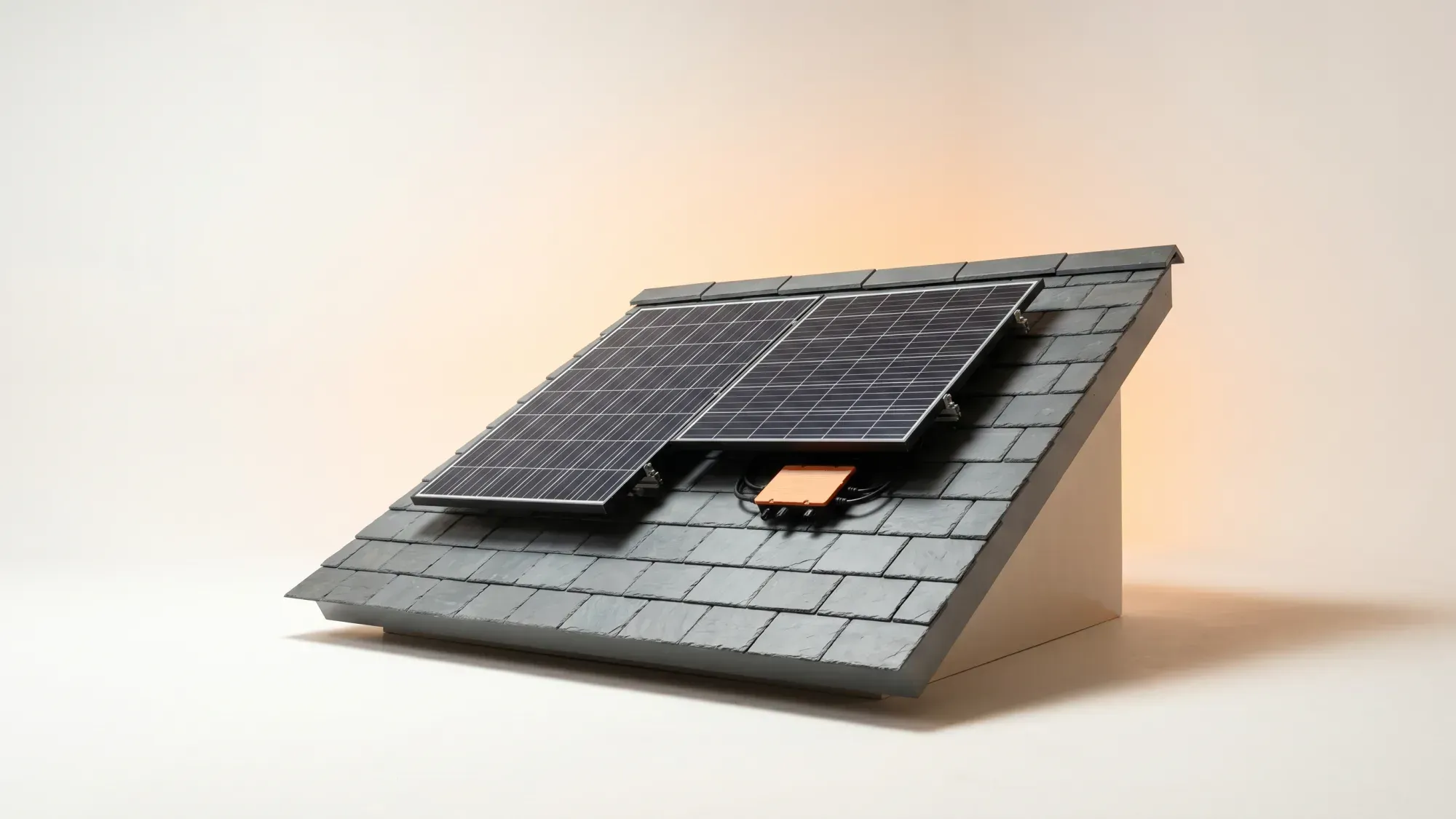
Plug and play solar panels offer a straightforward way for homeowners to generate their own electricity and reduce energy bills. The idea is simple: one or two panels connect to a microinverter, and the whole system feeds power into your home through a standard plug socket, like any other appliance. From 27 August 2026, the approach will become fully legal under updated government rules. We explain exactly where the rules stand below.
Enter your address to get a quote and see how much you could save
What are plug and play solar panels?
Plug and play solar panels are compact, self-contained units that generate power from the sun and feed it into your home through a standard wall socket. They are often called balcony solar systems or mini solar kits due to their size and ease of deployment.
The basics of DIY solar
These systems differ from traditional rooftop solar installations, which involve scaffolding, professional hardwiring, and several days of work. A plug and play kit is designed so that you mount the panels, connect the microinverter, and plug the cable into a standard wall socket. That's the entire installation.
The legal position matters here, though, so let's be precise. Plug-in solar becomes lawful from 27 August 2026 under SI 2026/848, with an 800W AC output cap. Kits must meet the government's Plug-in Solar Device Interim Product Specification and be listed on the ENA G98 Type Test Register. Until 27 August 2026, the compliant route is to have a CPS-registered electrician make the final connection. From that date, fully DIY plug-into-the-socket installation becomes compliant for listed kits. Either way, you also need to submit a G98 notification to your Distribution Network Operator within 28 days of connecting, which is a short online form rather than an approval process.
Key components of a kit
A typical plug and play solar panel kit includes one or two solar panels, a microinverter, and a cable. Some kits may also come with mounting systems for balconies or gardens, and smart monitoring apps to track energy production and savings.
How do plug and play solar panels work?
Understanding how these systems convert sunlight into usable electricity helps demystify the technology. For a broader look at how solar works, you can read our guide on how do solar panels work on a house.
Generating electricity
Solar panels contain photovoltaic (PV) cells that convert sunlight into direct current (DC) electricity. This is the initial form of energy produced by the panels.
Connecting to your home's power
Most homes and electrical grids operate on alternating current (AC) electricity. Therefore, the DC electricity generated by the solar panels needs to be converted into AC before it can be used in your home or fed into the grid. This conversion is handled by a microinverter. Once converted, the AC power enters your home's electrical system through the socket the system is plugged into, offsetting a portion of your household's base electricity load.
Microinverters and grid synchronisation
A microinverter is a small device attached to individual solar panels. Its primary function is to convert the DC electricity from a single solar panel into AC electricity. Unlike traditional string inverters that manage multiple panels, microinverters allow each panel to operate independently, optimising output even if one panel is shaded or underperforming. For grid connection in the UK, microinverters must be G98 or G99 compliant to ensure they safely synchronise with the National Grid.
Benefits for UK homeowners
Plug and play solar panels offer several compelling advantages for UK homeowners.
Reducing electricity bills
By generating a portion of your own electricity, you can reduce reliance on grid power and lower your monthly electricity bills by helping cover the base load electricity cost. With electricity costs in the UK experiencing significant fluctuations, self-generation has become an increasingly appealing option. Understanding your average monthly electric bill with solar panels can help you see the potential savings.
Ease of installation and portability
Setting up a plug and play system is a far smaller job than a rooftop installation. In practice it involves four steps: fix the panels to a balcony rail, garden frame, or wall mount; connect the microinverter; plug the cable into a standard wall socket; and submit the G98 notification to your DNO within 28 days. There's no scaffolding and no roof work. Until 27 August 2026, the one step that needs a professional is the final connection, which must be made by a CPS-registered electrician. The systems are also portable, allowing them to be placed on balconies, in gardens, or on roof decks, making them suitable for various property types, including flats or rented homes where traditional rooftop installations might not be feasible. And because nothing is permanently wired in, you can unplug the system and take it with you when you move.
Stepping towards energy independence
These systems offer an accessible way for homeowners to take control of their energy consumption. It's a tangible first step towards greater energy independence, aligning with the philosophy of empowering individuals with their home energy.
UK regulations and safety considerations
While plug and play systems are designed for simplicity, understanding UK regulations and safety is crucial.
DNO notification requirements
In the UK, systems that connect to the grid and have an inverter capacity of 3.68kW or less per phase (which covers most plug and play systems) require notification to your Distribution Network Operator (DNO) after installation. This is known as a G98 application. Systems with inverters larger than 3.68kW require prior approval through a G99 application.2 The DNO needs to be aware of any system that can export electricity to ensure grid stability and safety.
What is the DNO notification limit for plug and play solar panels in the UK?
In the UK, solar panel systems with an inverter capacity of 3.68kW or less per phase require notification to your DNO after installation, under a G98 application. Systems exceeding this inverter capacity need prior approval via a G99 application.
Electrical safety and wiring regulations
All electrical work, even for DIY systems, must comply with BS 7671 (IET Wiring Regulations). While plug and play systems are designed to be safe, it's important to follow manufacturer instructions meticulously and ensure any connections are secure and appropriate for your home's electrical system. Remember that until 27 August 2026, the compliant route for an 800W plug-in solar kit is to have a CPS-registered electrician make the final connection rather than plugging it in yourself. Avoid plugging into overloaded circuits, as this can trip breakers.
Placement and mounting guidelines
Proper placement is key for both safety and performance. Panels should be securely mounted to prevent dislodgement by wind, especially for balcony or garden setups. Consider potential shading, as even small patches can significantly reduce a panel's output. You might also be interested in whether solar panels work on cloudy days in the UK.
Are plug and play solar panels worth it in the UK?
The decision to invest in plug and play solar panels often comes down to their potential financial and practical benefits.
Assessing potential savings and roi
UK households use an average of 2,700 kWh of electricity per year1. Plug and play solar panels typically range from 300W to 800W in output per system. A well-sited 800W system could produce around 680-800 kWh annually, offsetting a significant portion of a typical household's electricity usage. With electricity prices seeing volatility, the appeal of generating your own power to reduce bills is clear.
Factors affecting performance
The actual performance of a plug and play system depends on several factors, including the amount of sunlight received, the orientation and tilt of the panels, and local weather conditions. Optimising these factors can maximise energy generation and, consequently, savings.
Integrating with battery storage
Some plug and play solar panel kits can be integrated with battery storage systems. This allows you to store excess electricity generated during the day for use during the evening or on cloudy days, further increasing your energy independence and reducing reliance on the grid.
Choosing the best plug and play solar panel
Selecting the right system involves considering your specific needs and circumstances.
System size and output
Plug and play systems generally offer outputs between 300W and 800W. Consider your home's energy consumption and how much of that you aim to offset. While multiple panels can sit behind a single inverter (within the 800W AC plug-in cap), installations above 3.68kW inverter capacity require DNO permission.
Balcony and garden options
Many plug and play systems are designed for easy installation on balconies or in gardens, offering flexibility for those without suitable roof space. These options are often lightweight and come with simple mounting solutions.
What to look for in a kit
When choosing a kit, look for certified products that meet safety standards. Consider the warranty offered on both panels and microinverters. Features like smart monitoring apps can help you track performance and optimise usage.
References
- UK Government. Subnational electricity and gas consumption summary report 2021
- UK Government. How to register energy devices in homes or small businesses
Disclaimer
For the avoidance of doubt, this article is provided for informational purposes only and is not intended to constitute legal or financial advice. The author and/or Fuse Energy shall not be responsible for any losses arising out of any reliance on the information contained herein.