Investing in home green energy
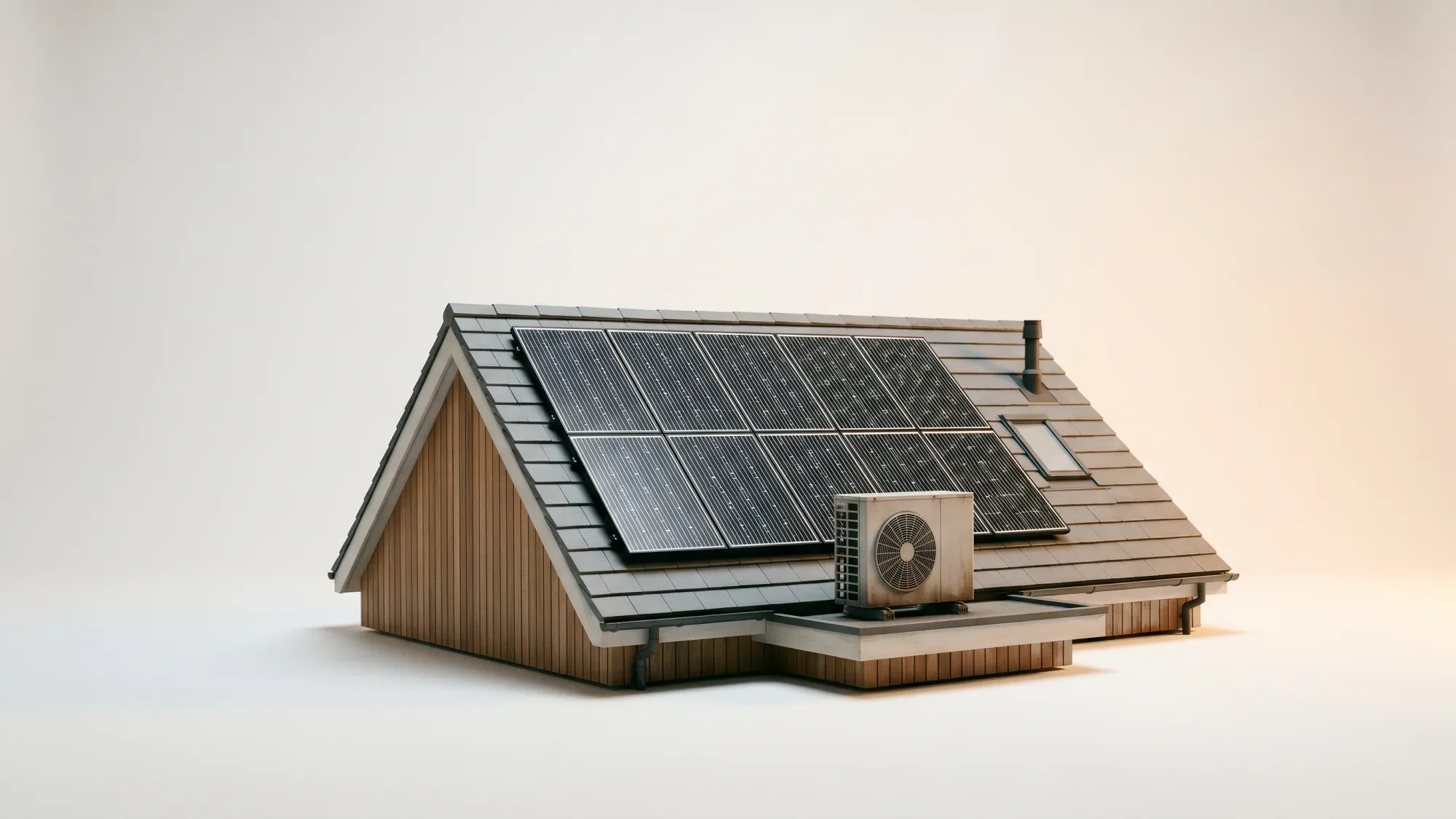
Investing in green energy offers a tangible way to contribute to a sustainable future and potentially reduce household expenses. This goes beyond traditional financial products, encompassing practical home energy solutions that provide direct control over your energy use. Fuse champions a vision of energy abundance, challenging the historical 'use less' scarcity mindset by empowering individuals to generate and manage their own energy.
Ready to take control of your energy bills and make a positive impact on the environment? Fuse Energy empowers homeowners to achieve energy abundance through smart, sustainable solutions. Click here to switch to Fuse Energy today and start your journey towards a greener home.
Enter your address to get a quote and see how much you could save
Why invest in green energy at home?
Investing in green energy at home provides both financial and environmental benefits, offering a direct way for homeowners to gain control over their energy consumption and contribute to a greener future.
Financial benefits and energy independence
Installing home green energy solutions can significantly reduce your energy bills. According to Ofgem, the electricity unit rate for a Direct Debit household on the default tariff is 26.11p per kWh from 1 July to 30 September 2026. Generating your own electricity means drawing less from the grid, directly impacting your outgoings. Over time, this can lead to substantial savings and greater energy independence, protecting you from future price volatility.
Environmental impact and sustainability
By generating your own clean energy, you reduce your household's carbon footprint and contribute to the UK's transition away from fossil fuels. This direct action supports environmental sustainability and helps combat climate change, aligning personal investment with global ecological goals.
Direct home green energy investments
For homeowners, investing in green energy often means installing tangible solutions that integrate directly with their property. These options offer immediate benefits and long-term returns.
Solar panels and home batteries
Traditional rooftop solar panels convert sunlight into electricity, significantly reducing reliance on grid power. Pairing these with home batteries allows you to store excess electricity generated during the day for use in the evening or during peak demand, maximising self-consumption and further cutting bills. The average UK home uses around 2,500 kWh of electricity per year, according to Ofgem's Typical Domestic Consumption Values (TDCVs). A well-sized solar and battery system can cover a substantial portion of this demand.
Electric vehicle chargers
Installing an electric vehicle (EV) charger at home is another practical green energy investment. It provides convenience and can be more cost-effective than public charging, especially when paired with an EV-friendly tariff. The EV Chargepoint Grant for renters and flat owners, and the EV Chargepoint Grant for households with on-street parking, both offer up to £500 towards installation costs for eligible individuals.
Plug-in solar systems
Plug-in solar systems offer a more accessible entry point into home energy generation. These small, self-installable solar panels plug directly into a standard wall socket, making them suitable for flats, renters, and homes with limited roof space. Statutory Instrument (SI) 2026/848 has applied to compliant plug-in solar since 27 August 2026, allowing self-installation of up to 800W alternating current (AC) export per device. This legislation has made it easier for homeowners to generate their own power without complex installations. Without a battery, any unused generation from plug-in solar that is not immediately consumed by the home will be exported to the grid. While self-installed plug-in solar does not qualify for the Smart Export Guarantee (SEG) due to the requirement for Microgeneration Certification Scheme (MCS) certification, some suppliers may offer their own export tariffs outside the SEG scheme.
Navigating UK regulations and support
Understanding the regulatory landscape and available support is crucial for any home green energy investment in the UK.
Understanding microgeneration regulations (G98)
For microgeneration systems, such as solar panel installations, the consumer or their supplier must notify the Distribution Network Operator (DNO) under G98 within 28 days of installation. This ensures the local grid operator is aware of energy generation connected to their network.
Plug-in solar legislation (SI 2026/848)
The Plugs and Sockets etc. (Safety) Regulations 1994 (PSSR) were amended by SI 2026/848, which legalises compliant standalone plug-in solar systems up to 800W AC export per device. This change has been in effect since 27 August 2026. It is important to note that this legislation specifically covers standalone plug-in solar and does not extend to plug-in batteries or hybrid solar-battery kits.
Government grants for home energy upgrades
Several government grants are available to support home energy upgrades. For EV chargepoints, the EV Chargepoint Grant for renters and flat owners, and the EV Chargepoint Grant for households with on-street parking, both provide up to £500 for eligible individuals. The Boiler Upgrade Scheme (BUS) also provides grants for heat pump installations, with the MCS-certified installer applying on the homeowner's behalf. You can find more information on the air source heat pump grant and its eligibility.
Getting started with home green energy
Embarking on your home green energy journey involves a few practical steps to ensure you choose the right solutions for your property.
Assessing your home's potential
Start by evaluating your home's suitability for different green energy installations. Consider factors like roof orientation and shading for solar panels, available space for EV chargers, or balcony access for plug-in solar. An energy audit can help identify the most impactful upgrades for your specific property.
Choosing the right solutions
Compare the financial returns and environmental impact of various home-based green energy technologies. Research different products, their efficiency, and their long-term cost-effectiveness. For example, understanding air source heat pump efficiency can help you decide if it's the right heating solution for your home. Consider your energy consumption patterns to determine which solutions will provide the greatest benefit.
Working with energy suppliers
Selecting an energy supplier that supports home energy upgrades and autonomy is key. Fuse, for example, supports home energy upgrades as part of rebuilding a more efficient, decentralised energy system. Homeowners investing in green energy receive dedicated 24/7 human customer support for their energy needs and for supported installations, such as EV chargers.
The future of home green energy investment
The landscape of home green energy is continuously evolving, promising greater independence and technological advancements.
Advancements in technology
Ongoing research and development are leading to more efficient, affordable, and integrated green energy technologies. This includes improvements in solar panel efficiency, battery storage capacity, and smart home energy management systems, making home generation increasingly viable and attractive.
Increased energy independence
As technology advances and regulations adapt, homeowners will have even greater opportunities to achieve energy independence. The ability to generate, store, and manage your own energy reduces reliance on external grids and fossil fuels, fostering a future where energy is abundant and readily available.
Fuse empowers homeowners to achieve energy abundance through direct investment in home green energy solutions. We support home energy upgrades as part of rebuilding a more efficient, decentralised energy system, offering dedicated 24/7 human customer support for your energy needs and for supported installations, such as EV chargers. Ready to make a smart move for your home and the planet? Fuse makes switching simple and offers clear pricing. Find out more about our mission to create a future with power to play with here, or click here to switch to Fuse Energy today.
Disclaimer
For the avoidance of doubt, this article is provided for informational purposes only and is not intended to constitute legal or financial advice. The author and/or Fuse Energy shall not be responsible for any losses arising out of any reliance on the information contained herein.