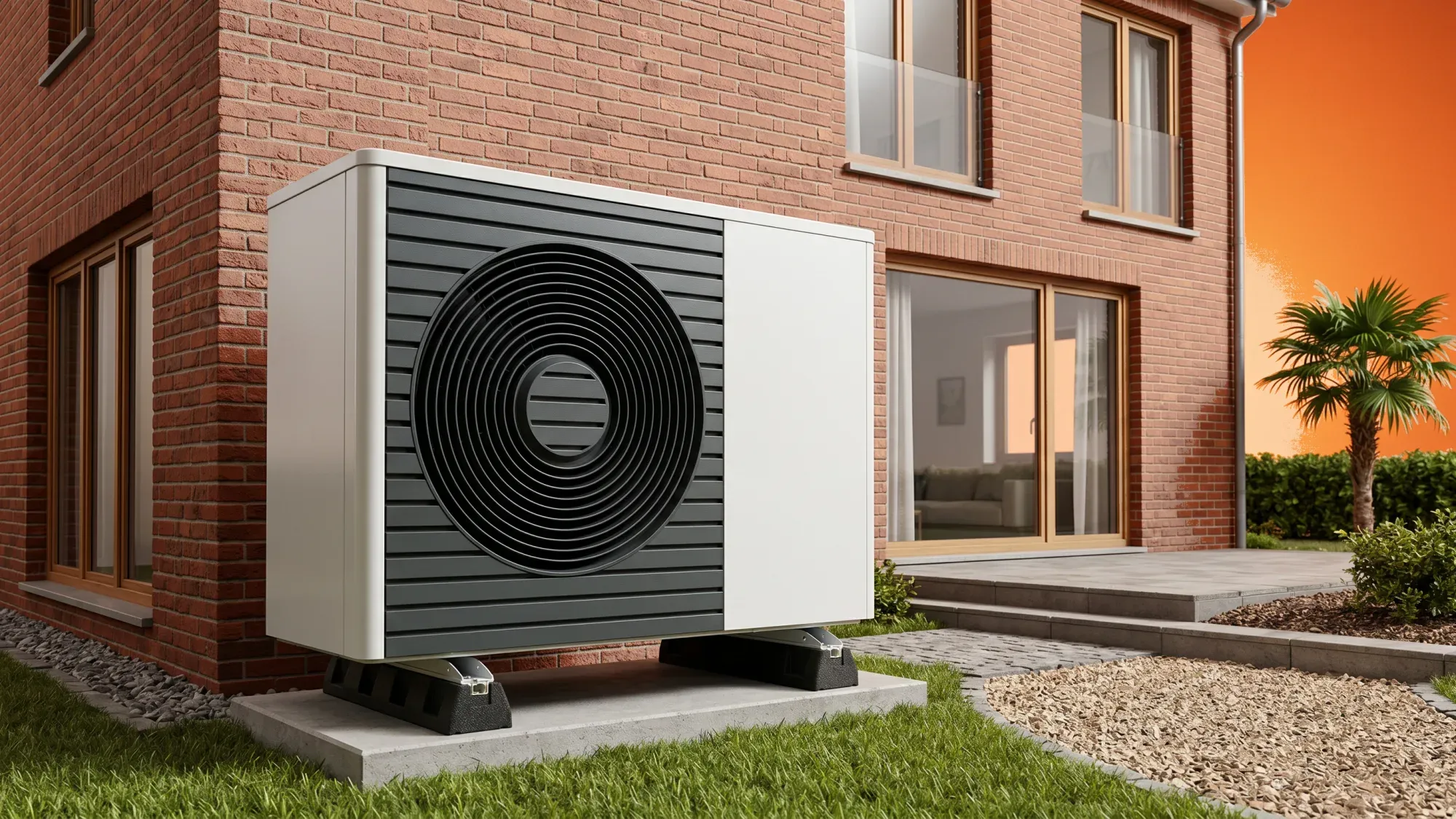
The UK government's Boiler Upgrade Scheme (BUS) offers a grant of £7,500 to help homeowners in England and Wales install air source heat pumps1, making greener heating solutions more affordable. This initiative significantly reduces the upfront cost of transitioning to a low-carbon heating system.
Why air source heat pump grants matter
Government grants are crucial for encouraging the adoption of greener heating technologies. These schemes are designed to offset the initial outlay, making energy-efficient solutions like air source heat pumps accessible to more households. Air source heat pumps can achieve efficiencies of 300% or more, converting 1 kWh of electricity into 3 kWh or more of heat, significantly reducing energy consumption and costs.
The Boiler Upgrade Scheme (BUS): what you need to know
The BUS is a government initiative in England and Wales that provides grants towards the cost of installing low-carbon heating systems, including air source heat pumps. Ofgem administers the scheme on behalf of the Department for Energy Security and Net Zero.
Grant amounts for air source heat pumps
For most air source heat pump installations, the BUS offers a grant of £7,500. This amount is deducted directly from the installation cost. Households in England and Wales currently using heating oil can claim an uplifted £9,000 to move off the oil grid. Typical air source heat pump installation costs range from £7,000 to £15,000 before grants, making the BUS grant a substantial reduction in the overall expense.
How much is the BUS grant for air source heat pumps?
The BUS offers a grant of £7,500 for air source heat pump installations in England and Wales. This amount is applied directly to your installation cost, significantly lowering your upfront expense. Households moving off heating oil can receive £9,000.
Eligibility for the Boiler Upgrade Scheme
To be eligible for the BUS, you must be a homeowner in England or Wales. The grant supports the installation of air source heat pumps in existing properties, as well as self-builds. The scheme does not apply to new-build properties, except for self-builds.
Your property must also have a valid Energy Performance Certificate (EPC) with no outstanding recommendations for loft or cavity wall insulation, unless you have an insulation exemption. Installers must be certified under the Microgeneration Certification Scheme (MCS) for the installation to be eligible for the BUS grant.
Applying for the Boiler Upgrade Scheme: your installer's role
The application process for the BUS is handled by your chosen MCS-certified installer, not by the homeowner directly. This streamlines the process and ensures that all technical requirements are met for the grant. Ofgem will email you to confirm your consent to the installer's application.
The application process step-by-step
The process for securing your air source heat pump grant through the BUS involves several key steps:
Understand eligibility: First, confirm your property and planned installation meet the BUS eligibility criteria.
Obtain quotes: Contact MCS-certified heat pump installers to get quotes for your air source heat pump installation.
Select an installer: Choose an installer and agree on the installation details and costs.
Installer applies for grant: Your selected MCS-certified installer will apply for the BUS grant on your behalf. The grant value will be deducted from your installation quote.
Confirm consent: Ofgem will contact you to confirm your consent for the grant application. This is a crucial step to authorise the installer's application.
Receive reduced bill: Once the application is approved, you will receive a reduced installation bill, with the grant already deducted.
Finding an MCS-certified installer
Finding a certified installer is paramount for grant eligibility. The MCS is an industry-led quality assurance scheme that certifies low-carbon products and installers. You can find MCS-certified installers through the MCS website. Always obtain multiple quotes to compare costs and services.
Maximising your heat pump's efficiency with Fuse Energy
Beyond the initial installation, optimising your heat pump's operation can lead to further savings and environmental benefits. Heat pumps, particularly air source models, work most efficiently when paired with smart energy management.
Fuse Energy supports homeowners in making informed decisions about greener heating solutions. While Fuse Energy does not install heat pumps or apply for the BUS, we offer smart tariffs designed to help heat pump owners optimise their energy use. By providing transparent app control, you can manage your energy consumption more effectively, aligning with a future of abundant energy.
For the avoidance of doubt, this article is provided for informational purposes only and is not intended to constitute legal or financial advice. The author and/or Fuse Energy shall not be responsible for any losses arising out of any reliance on the information contained herein.