Home EV charger installation in Yorkshire
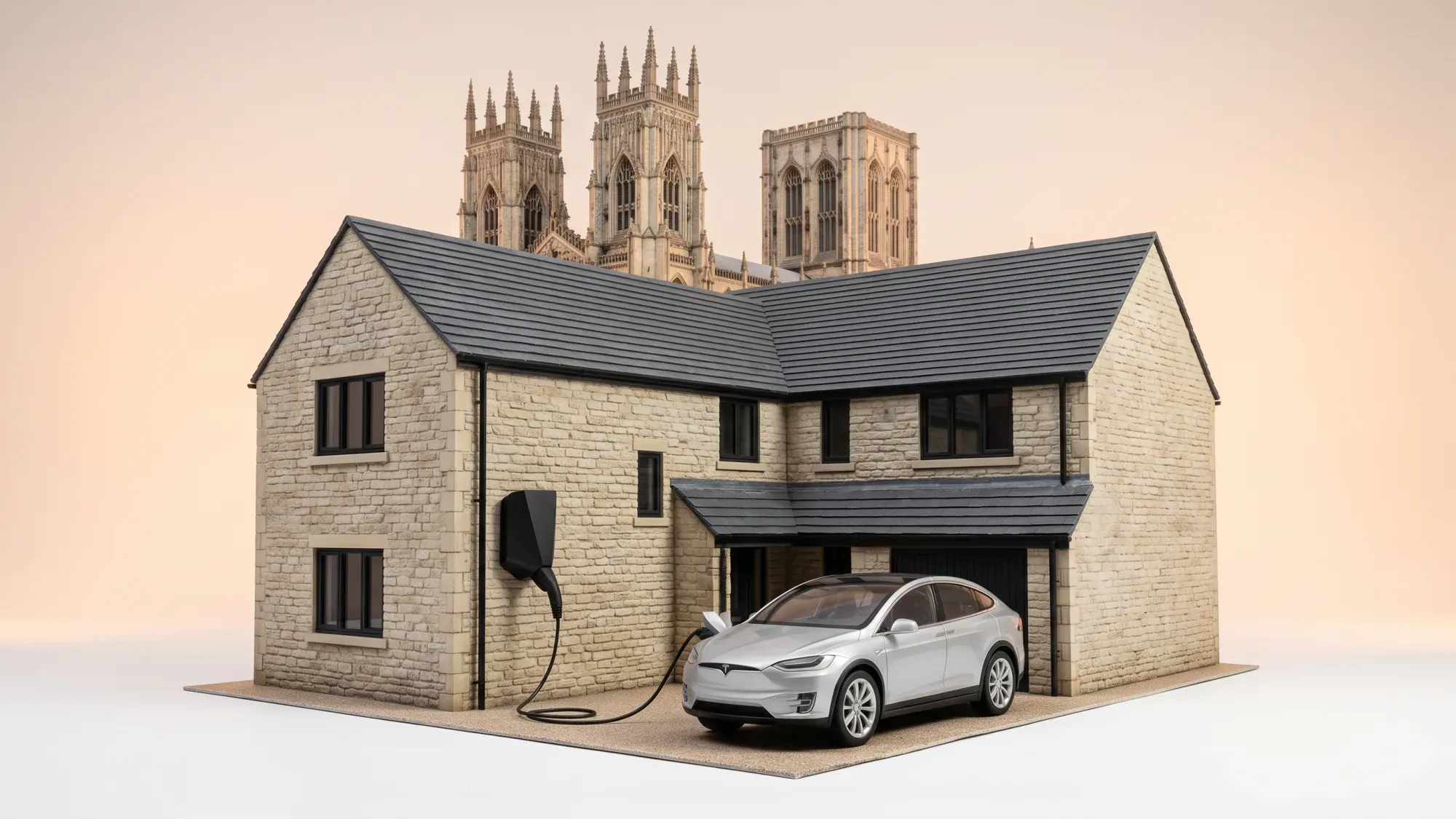
Installing an EV charger at home in Yorkshire requires understanding local considerations, from property type to the regional electricity network. This guide focuses on what homeowners in Yorkshire need to know for a safe, cost-effective, and convenient home charging solution, whether they live in a Victorian terrace in Leeds or a new-build in York.
Why install an EV charger at home in Yorkshire?
Bringing EV charging home offers more than just convenience; it's a strategic move towards greater energy independence and significant savings. Understanding the options for a Home EV charger can help you make an informed decision.
The convenience of home charging
Waking up to a fully charged electric vehicle is a game-changer for many Yorkshire drivers. Home charging eliminates the need to seek out public charge points, often saving time and reducing range anxiety, especially for those living in more rural parts of the county. It means your car is always ready for the morning commute or a weekend trip across the Pennines.
Cost savings compared to public chargers
While public charging infrastructure is growing, home charging typically offers substantial cost savings. You can take advantage of cheaper off-peak electricity tariffs, which are often unavailable at public stations. Over time, these savings add up, making your EV ownership even more economical.
Boosting your home's energy independence
Installing an EV charger is a foundational step towards a more integrated home energy system. It aligns with a vision of abundant energy, allowing you to manage your vehicle's power needs alongside your household consumption. This control can lead to greater energy independence and reduced reliance on external energy fluctuations.
Understanding EV charger grants in Yorkshire
Government grants can significantly reduce the upfront cost of installing a home EV charger. Knowing what's available and who's eligible is crucial for Yorkshire residents.
EV chargepoint grants
The EV Chargepoint Grant for renters and flat owners provides up to £500^[1,2] towards the cost of purchasing and installing a home charge point in the UK. This grant is specifically aimed at flat owner-occupiers and people living in rental accommodation, helping to make home charging more accessible for those without traditional driveways or in multi-dwelling units. There is also the EV Chargepoint Grant for households with on-street parking, which provides up to £500 for those installing a cross-pavement solution.
Local council support: On-Street charging
For Yorkshire residents without off-street parking, local councils can play a vital role. The Local Electric Vehicle Infrastructure (LEVI) fund supports local authorities in England to deploy public charging infrastructure, particularly for residents without off-street parking. This means more on-street residential charge points could become available in Yorkshire towns and cities, providing a solution for those who cannot install a private charger. This fund builds on the existing On-Street Residential Chargepoint Scheme (ORCS).
Eligibility for homeowners and renters
Eligibility for the EV Chargepoint Grant for renters and flat owners depends on your property type and residency status. It's primarily for those living in flats or rental properties with private off-street parking, or for households with on-street parking installing a cross-pavement solution. Homeowners who own and live in a house with private off-street parking typically do not qualify for any current domestic chargepoint grant.
The EV charger installation process in Yorkshire
Installing an EV charger involves several steps, from initial assessment to final connection, with specific considerations for Yorkshire's energy infrastructure.
Initial assessment and site survey
The process begins with an assessment of your home's electrical system to ensure it can support an EV charger. An accredited installer will conduct a site survey to check your property's suitability, identify the best location for the charge point, and confirm your electrical capacity. This is particularly important in Yorkshire, where housing stock ranges from historic properties to modern builds, each with different electrical configurations.
Navigating Northern Powergrid and DNO notifications
A critical local detail for Yorkshire residents is the involvement of Northern Powergrid, your local Distribution Network Operator (DNO). Any new home EV charger or solar/battery grid connection must be notified to your DNO (chargers via the ENA connect-and-notify route; solar or battery systems under G98/G99). This notification is typically handled by your chosen installer, ensuring adherence to electrical safety standards and proper integration with the local grid. Should you experience a power cut, Yorkshire residents can dial the free national number 105, which routes directly to their DNO for assistance.
What is a DNO?
A DNO is responsible for maintaining and upgrading the local electricity network that delivers power to homes and businesses. For Yorkshire, Northern Powergrid manages this infrastructure, ensuring the safe and reliable distribution of electricity and handling connections for new energy installations like EV chargers.
What to expect on installation day
On installation day, your accredited installer will carry out the work, which typically involves mounting the charge point, running cables, and connecting it to your home's electricity supply. They will test the system and provide a demonstration of how to use your new charger safely and efficiently. The entire process is designed to be as seamless as possible, with minimal disruption to your daily routine.
Choosing the right EV charger and installer in Yorkshire
Selecting the right EV charger and a reputable installer is paramount for a reliable and safe home charging experience.
Types of home EV chargers
Home EV chargers primarily come in two types of home EV chargers: 'untethered' (where you use your car's charging cable) and 'tethered' (with a cable permanently attached to the unit). Chargers also vary in power output, with 7kW being a common choice for home use, offering a good balance of charging speed and compatibility with typical domestic electricity supplies. Some advanced chargers offer smart features like scheduled charging and energy monitoring.
Key features to consider
When choosing a charger, consider features such as smart charging capabilities (to take advantage of off-peak tariffs), compatibility with your vehicle, weather resistance, and built-in safety features. For a deeper dive into selecting the right home EV charger, consider exploring detailed guides. Future-proofing your choice by considering potential integration with other home energy technologies, like solar panels or battery storage, can also be beneficial.
Finding an accredited local installer
It is essential to choose an accredited installer with specific local expertise for Yorkshire's unique grid and housing types. Look for installers who are approved by OZEV (if you're applying for a grant) and who have a strong track record in the region. A reliable installer will handle all necessary DNO notifications to Northern Powergrid and ensure your installation complies with the latest IET Wiring Regulations (BS 7671). You can also learn more about the overall EV charger installation process.
Optimising your home energy with EV charging in Yorkshire
Integrating your EV charger into your broader home energy strategy can unlock further savings and enhance your energy management.
Understanding regional electricity pricing
Electricity unit rates and daily standing charges can vary across different regions of the UK3, including within Yorkshire, due to factors like distribution network costs. Understanding this local pricing context is crucial for optimising your EV charging times, particularly if you're on a flexible tariff that offers cheaper rates during off-peak hours. The Fuse app can provide clear insights into energy usage, helping homeowners optimise their EV charging costs in line with these regional prices.
Integrating with smart meters and renewable energy
Pairing your EV charger with a smart meter allows for precise monitoring of your energy consumption and can enable smart charging features that automatically charge your vehicle when electricity is cheapest or when your home solar panels are generating surplus power. For Yorkshire homeowners considering solar panels or battery storage, integrating these with your EV charger can further optimise energy consumption, reduce reliance on the grid, and lower running costs.
Future-proofing your home energy setup
Considering the long-term energy needs of your household and how your EV charger fits into that picture is a smart move. As electric vehicles become more prevalent and home energy technologies evolve, having a flexible and integrated system will allow you to adapt to future changes, maximise savings, and contribute to a more sustainable energy future.
Ready for your home EV charger installation?
Installing a home EV charger in Yorkshire is a straightforward process when you have the right support. It's a key step towards a more convenient, cost-effective, and energy-independent lifestyle.
Get a personalised quote
The next step is to get a personalised quote from an accredited installer. This will give you a clear understanding of the costs involved, taking into account your specific property and charging needs.
Fuse Energy's integrated approach
References
- UK Government. Electric vehicle chargepoint grants
- UK Government. Electric vehicle chargepoint grant for renters or flat owners
- Ofgem. Energy price cap
Disclaimer
For the avoidance of doubt, this article is provided for informational purposes only and is not intended to constitute legal or financial advice. The author and/or Fuse Energy shall not be responsible for any losses arising out of any reliance on the information contained herein.