EV charger installation North Wales explained
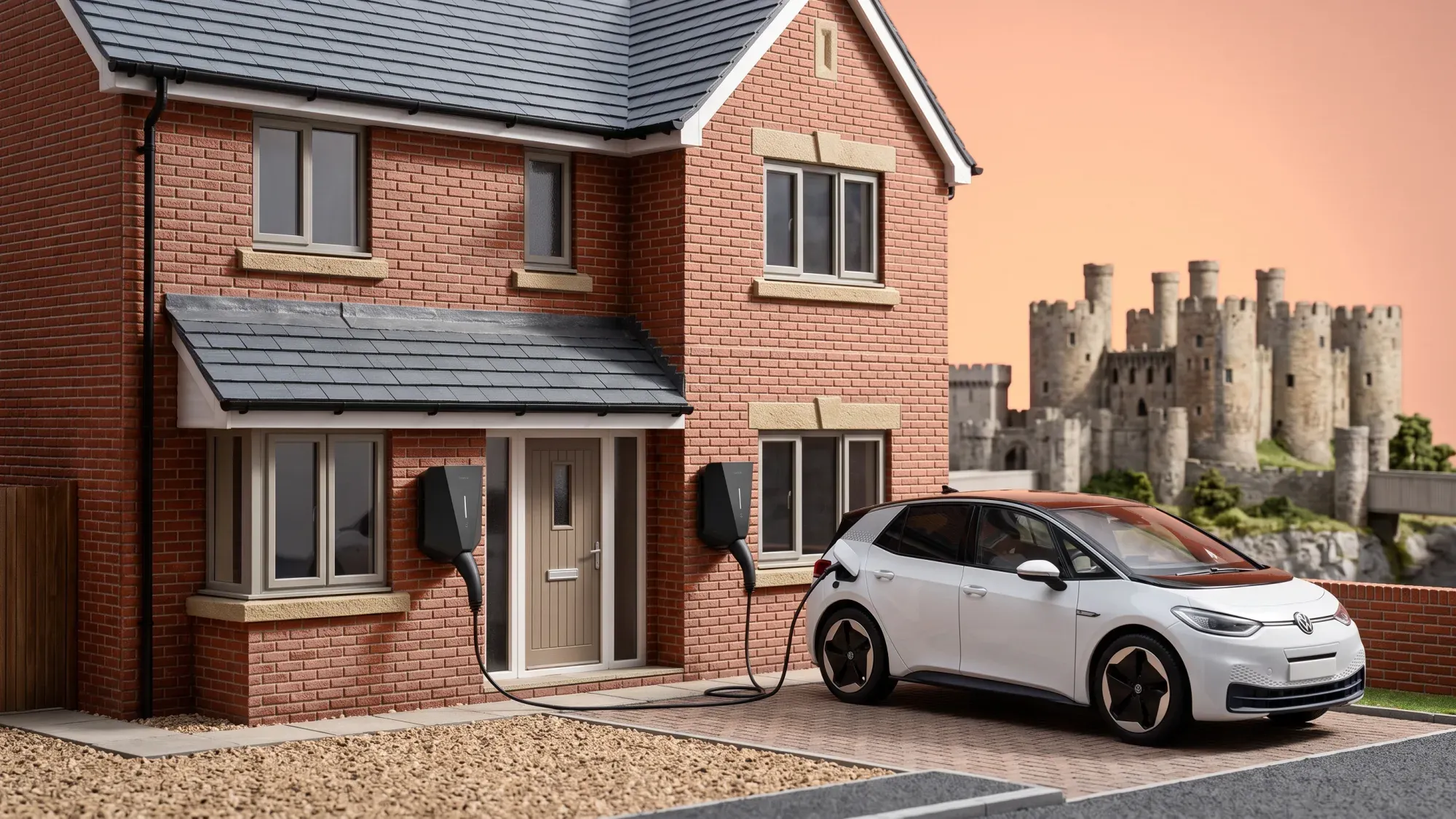
Installing an electric vehicle (EV) charger at home in North Wales involves understanding local energy infrastructure and available support. Whether you live in a Victorian terrace in Llandudno, a modern new-build in Flintshire, or a remote cottage in Snowdonia, this guide provides clear, localised information to help you make informed decisions about powering your EV.
Why install an EV charger at home in North Wales?
Convenience and cost savings for local drivers
Charging your EV at home offers unparalleled convenience, removing the need to search for public charging stations. For North Wales drivers, this means waking up to a fully charged car, ready for commutes across the A55 or adventures into the national park. Beyond convenience, home charging, especially when paired with smart tariffs, can significantly reduce your running costs compared to public charging, making EV ownership more economical.
Future-proofing your North Wales home
As electric vehicles become increasingly common, a home EV charger is becoming a sought-after feature for properties across North Wales. Installing one now can enhance your home's appeal and value, demonstrating a commitment to modern living and sustainable technology. It is an investment in your property's future, aligning with the growing demand for EV infrastructure.
Supporting the region's EV infrastructure
Every home EV charger installed contributes to the broader electric vehicle ecosystem in North Wales. By reducing reliance on public charging points, you help alleviate pressure on shared infrastructure, making it more accessible for those who truly depend on it. This collective effort supports the region's transition to greener transport and cleaner air.
North Wales specifics: grants, DNOs, and regional costs
Understanding the local landscape is crucial for EV charger installation in North Wales. This includes knowing which grants apply, who manages the local electricity grid, and how regional pricing affects your bills.
OZEV grant eligibility for Welsh residents
The UK Government offers several EV chargepoint grants1. The EV Chargepoint Grant for renters and flat owners can provide up to £500 towards installing a chargepoint at your property if you own and live in a flat, or rent any residential property, and have private off-street parking. Similarly, the EV Chargepoint Grant for households with on-street parking offers up to £500 for those installing a cross-pavement solution and who only have on-street parking. Homeowners in single-unit properties, such as houses with private off-street parking, are generally no longer eligible for domestic grants. To qualify for an available grant, you must own or lease a plug-in vehicle. The customer applies for these grants themselves via the GOV.UK website; the installer's role begins after the application is approved.
Understanding SP Energy Networks in North Wales
North Wales falls under the operational area of SP Energy Networks, which is the Distribution Network Operator (DNO) responsible for the local electricity grid. Any new home EV charger installation, or a solar or battery grid connection, requires notification to SP Energy Networks (chargers via the ENA connect-and-notify route; solar or battery systems under G98/G99). This is typically handled by your chosen installer, ensuring your new charger is safely and correctly integrated with the local network. The connect-and-notify route applies where the property's total demand stays at or below 60amps, with the DNO notified after installation. Larger or more complex installations need DNO approval before work starts. In the event of a power cut, North Wales residents can dial the free national number 105, which routes directly to their DNO. You can also find your network operator using the Energy Networks Association (ENA) "Find my network operator" tool.
Regional electricity price caps: Merseyside & North Wales
The cost of electricity in North Wales is influenced by Ofgem's regional price cap. North Wales sits within the 'Merseyside & North Wales' electricity distribution region. This means that the unit rates and standing charges you pay for electricity can differ from other parts of Great Britain. These regional variations are primarily due to the differing costs of maintaining and operating the local electricity networks.
Why do electricity prices vary by region?
Electricity unit rates and standing charges differ across the UK's 14 distribution regions because the cost of maintaining and operating the local network infrastructure varies. Regions with longer networks and sparser populations, like Merseyside & North Wales, often have higher charges as fixed costs are spread among fewer customers.
The home EV charger installation process
Installing a home EV charger involves several clear steps, designed to ensure safety and compliance with regulations.
Initial assessment and site survey
The process begins with an initial assessment, often conducted remotely, followed by a site survey at your North Wales property. An OZEV-approved installer will evaluate your home's electrical system, parking arrangements, and preferred charger location. This step ensures your property is suitable for an EV charger and helps determine the most appropriate type of unit. For more details on what to expect, you can read our guide on EV charger installation.
DNO notification to SP Energy Networks
Once you have chosen your charger and installer, the installer will manage the necessary connect-and-notify or apply-to-connect notification to SP Energy Networks. This notification informs the DNO about the new connection to the grid, ensuring everything meets safety and technical standards.
Installation and testing of your charger
Following approval and any necessary preparatory work, your EV charger will be installed. This involves mounting the unit, connecting it to your home's electricity supply, and ensuring all wiring is compliant. After installation, the charger will be thoroughly tested to confirm it is operating correctly and safely, ready for you to plug in your EV.
Choosing the right EV charger and installer
Making the right choices for your EV charger and installer ensures a reliable and efficient charging experience at your North Wales home.
Types of EV chargers and their features
Home EV chargers typically come in 3.7kW (slow) and 7kW (fast) options, with 7kW being the most common for domestic use due to its balance of charging speed and home electrical capacity. Some advanced chargers offer features like smart scheduling, load balancing to avoid overloading your home's electricity supply, and connectivity with renewable energy systems. Consider your vehicle's charging capabilities, your daily driving needs, and future-proofing when selecting a charger. Our article on how to pick the right home EV charger can provide further insights.
Finding an OZEV-approved installer in North Wales
It is crucial to choose an OZEV-approved installer, as this is a requirement for claiming certain EV chargepoint grants. An approved installer will have the necessary certifications and expertise to safely install your charger. Look for local installers with a strong reputation in North Wales, who understand the regional specifics and can provide tailored advice.
Key questions to ask your installer
Before committing, ask potential installers about their OZEV accreditation, their experience with installations in North Wales, and whether they offer a warranty on their work. Inquire about the specific charger models they recommend, their process for DNO notification, and what after-sales support they provide. Getting multiple quotes can also help you compare services and costs effectively.
Maximising your EV charging with smart home energy
Integrating your EV charger into a broader smart home energy system can unlock significant savings and greater control over your energy use.
Benefits of smart charging for North Wales homes
Smart EV charging allows you to optimise when and how your vehicle charges, taking advantage of off-peak electricity tariffs. Given that North Wales is part of the 'Merseyside & North Wales' price cap region, smart charging becomes particularly valuable. By scheduling charging during cheaper, off-peak hours, you can significantly reduce your running costs and make the most of your home energy setup.
Integrating your EV charger with home energy systems
Beyond just smart scheduling, integrating your EV charger with a holistic home energy system - including smart meters, solar panels, and battery storage - can transform how you consume and generate electricity. This approach allows you to prioritise charging with self-generated solar power or draw from battery storage, further reducing reliance on grid electricity and cutting costs. It is about turning energy from a cost into a capability, giving you more power to play with.
On-street charging solutions for North Wales residents
For North Wales residents without off-street parking, on-street charging solutions are becoming increasingly important. Local councils can install residential chargepoints through schemes like the Local Electric Vehicle Infrastructure (LEVI) fund, which supports local authorities in England to improve the roll-out of local charging infrastructure. Some grants are also available for households installing a cross-pavement solution for on-street charging, such as the EV Chargepoint Grant for households with on-street parking.
Getting started with your North Wales EV charger
Embarking on your EV charger installation journey in North Wales is a straightforward process when you have the right information and support.
Next steps for homeowners
Begin by researching suitable EV charger types and identifying OZEV-approved installers operating in your area of North Wales. Check your eligibility for the relevant EV Chargepoint Grant. Obtain quotes and arrange a site survey with your chosen installer, who will handle the necessary ENA connect-and-notify notification to SP Energy Networks. Once installed, consider connecting your new charger to smart energy management systems to optimise charging times and costs.
References
- UK Government. Electric vehicle chargepoint grants
Disclaimer
For the avoidance of doubt, this article is provided for informational purposes only and is not intended to constitute legal or financial advice. The author and/or Fuse Energy shall not be responsible for any losses arising out of any reliance on the information contained herein.