EV charger installation in North London
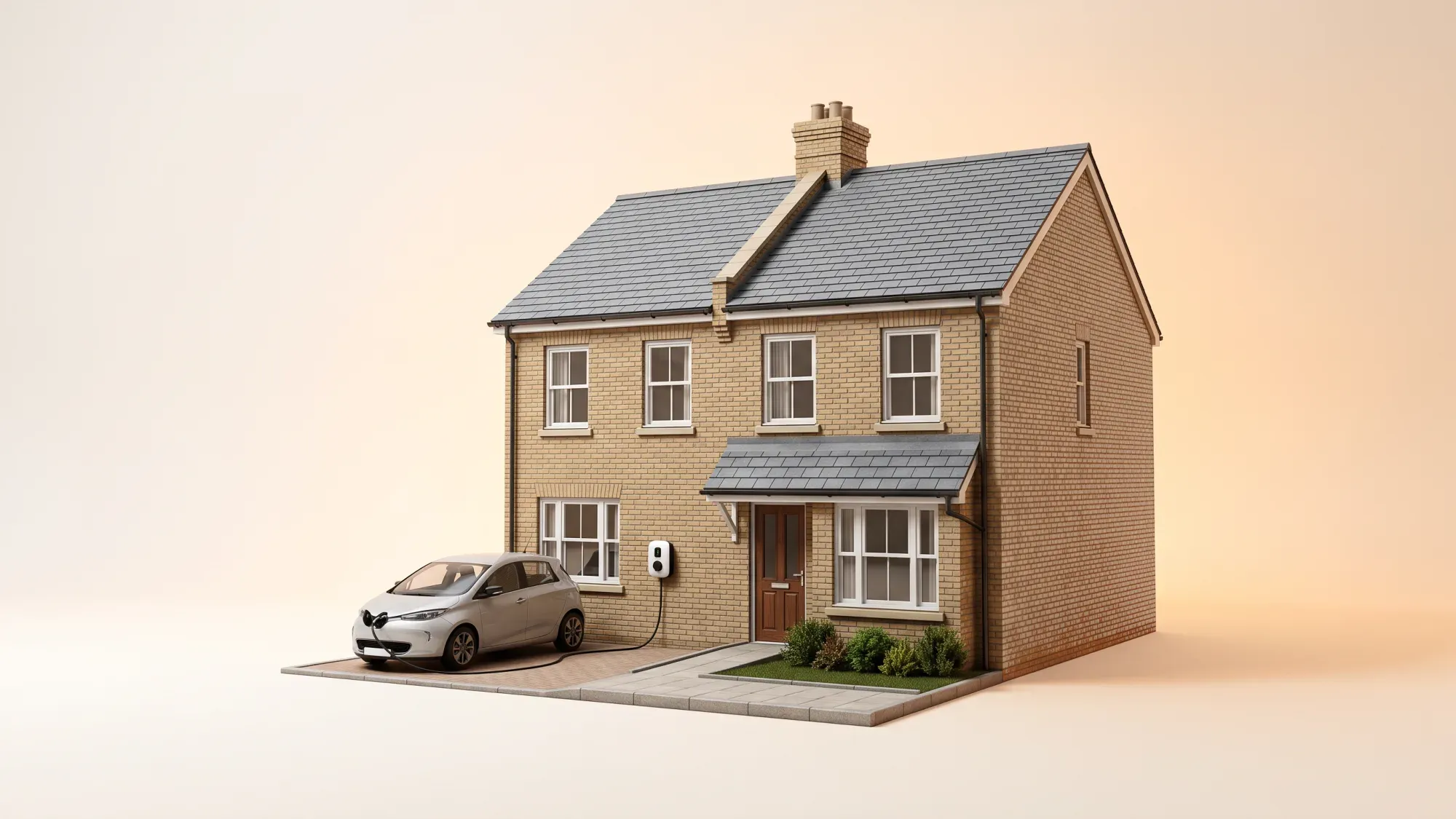
Installing an electric vehicle (EV) charger in North London comes with its own set of considerations. The area's characteristic blend of Victorian and Edwardian terraced housing, often without off-street parking, presents unique challenges and opportunities for EV owners.
Why install an EV charger in North London?
Home EV charging offers unparalleled convenience, allowing you to power your vehicle overnight and wake up to a full battery. This eliminates the need for frequent trips to public charging stations, saving time and often money.
The convenience of home charging
A dedicated home chargepoint ensures your electric vehicle is always ready for your next journey. Charging at home is typically more cost-effective than using public rapid chargers, especially when you can take advantage of off-peak electricity tariffs. It integrates seamlessly into your daily routine, much like charging a mobile phone.
North London's unique charging landscape
North London's urban and suburban fabric, with its significant proportion of period properties, means that off-street parking is not a given for every resident. This impacts the feasibility of traditional home chargepoint installations, requiring residents to consider alternative solutions or specific installation approaches. Understanding these local nuances is key to a successful EV charging setup.
Understanding EV charger types and compatibility
Choosing the right EV charger involves considering various factors, from how it connects to your car to its charging speed and smart capabilities. For more detailed information on selecting the best option, you can explore guides on how to pick the right home EV charger.
Tethered vs untethered chargers
EV chargers come in two main types: tethered and untethered. A tethered charger has a cable permanently attached, which can be convenient as you do not need to retrieve your own cable from the car each time. However, the cable's connector type must match your vehicle (Type 1 or Type 2). Untethered chargers, on the other hand, require you to use your car's charging cable, offering more flexibility if you own multiple EVs with different connector types or upgrade your vehicle in the future.
Charging speeds and power ratings
Home chargers typically operate at 3.6kW or 7kW. A 7kW charger is the most common choice for homes, adding around 25 to 30 miles of range per hour of charging. While 22kW chargers offer faster charging, they usually require a three-phase electricity supply, which is rare in UK residential properties. A standard 3.6kW charger is slower, typically adding around 10 to 15 miles of range per hour, but can still fully charge most EVs overnight.
Smart charging capabilities
Smart chargers offer features that go beyond simply delivering power. They can be controlled via a smartphone app, allowing you to schedule charging sessions, monitor energy consumption, and even integrate with smart home systems. These capabilities are crucial for optimising charging costs and managing your home's energy use efficiently.
Navigating grants and local regulations
Understanding the available grants and local regulatory landscape is vital for any North London resident considering an EV charger installation. For a comprehensive overview of costs, you might want to read about how much an EV charger costs.
OZEV EV chargepoint grants
The UK Government's Office for Zero Emission Vehicles (OZEV) offers several EV chargepoint grants, which can significantly reduce the upfront cost of installation. For example, the EV Chargepoint Grant for renters and flat owners provides up to £500 towards the cost of purchasing and installing a home chargepoint. This grant is available for flat owner-occupiers and people living in rental accommodation across the UK. Another scheme, the EV Chargepoint Grant for households with on-street parking, also provides up to £500 for those installing a cross-pavement solution. Eligibility criteria apply, so it is important to check these before committing to a purchase or installer. The customer applies for these grants themselves via the GOV.UK website, and the installer's role begins after the application is approved.
North London's distribution network operator: UK Power Networks
For North London residents, the local Distribution Network Operator (DNO) is UK Power Networks. Any new home EV charger or solar/battery grid connection in the area must be notified to UK Power Networks (chargers via the ENA connect-and-notify route; solar or battery systems under G98/G99). This is a mandatory regulatory step, usually handled by your chosen installer, to ensure the local electricity grid can safely accommodate the new connection. If you experience a power cut in North London, you would dial the free national number 105, which routes directly to your local DNO.
What is a DNO?
A DNO is the company responsible for maintaining and upgrading the electricity network in a specific geographical area. For London, this is UK Power Networks. They ensure the safe and reliable distribution of electricity from the National Grid to homes and businesses.
On-street charging solutions for North London
For many North London properties, particularly terraced homes, off-street parking is simply not an option. In these cases, local councils can play a crucial role by installing on-street residential chargepoints. This is often facilitated through the government's on-street residential chargepoint scheme (LEVI). If you lack a driveway, it is worth contacting your local council to inquire about existing on-street charging infrastructure or plans for future installations in your area.
The EV charger installation process
Installing an EV charger is a qualified electrical job that follows a structured process to ensure safety and compliance. You can find more information about the overall process of EV charger installation.
Initial assessment and site survey
The first step is a thorough initial assessment and site survey by a qualified installer. They will evaluate your property for suitability, checking factors such as the location of your electricity meter, the route for cabling, and the available space for the chargepoint. They will also confirm you have adequate off-street parking if you are opting for a home chargepoint.
Electrical requirements and upgrades
Your home's existing electrical capacity is a critical factor. Most modern UK homes can support a 7kW charger without major upgrades, as they typically have a main fuse rated between 60 and 100 amps. However, older properties or those with limited electrical capacity may require an upgrade to the main fuse or consumer unit. Your installer will identify any necessary electrical work during the survey and include it in your quote.
Post-installation checks and certification
Once the physical installation is complete, the installer will conduct thorough testing to ensure the chargepoint operates safely and correctly. They will then provide you with all necessary documentation, including an electrical installation certificate and a notification to your local DNO, UK Power Networks. This certification confirms that the installation meets all relevant safety standards and regulations.
Optimising your EV charging for cost and efficiency
Beyond the installation, smart energy management can significantly enhance your EV charging experience, making it more affordable and environmentally friendly.
Smart tariffs and off-peak charging
Smart tariffs, often offered by energy suppliers, provide cheaper electricity rates during off-peak hours, typically overnight. By programming your smart EV charger to operate during these periods, you can drastically reduce your charging costs. This approach not only saves you money but also helps balance demand on the National Grid, aligning with a future of abundant energy. Fuse's app and smart tariffs, for example, are designed to help customers charge when energy is cheapest and cleanest, giving them greater control over their energy use.
Integrating with home energy management systems
For those looking to take control of their energy use, integrating EV charging with a broader home energy management system is the next step. This can involve linking your charger with solar panels, battery storage, or smart thermostats to create a cohesive system that optimises energy flow throughout your home. This approach supports a more efficient and future-proof energy system.
Understanding your electricity costs in London
North London falls within the 'London' electricity distribution region for Ofgem's price cap. This means that the unit rates and daily standing charges you pay for electricity are set specifically for this region and can differ from other parts of the UK. The cap is updated quarterly, on 1 January, 1 April, 1 July, and 1 October. Knowing this helps you understand the underlying structure of your electricity bills. The average UK home uses around 2,700 kWh of electricity per year, according to Ofgem's Typical Domestic Consumption Values.
Choosing a reputable EV charger installer in North London
Selecting the right installer is paramount for a safe, compliant, and efficient EV charger installation.
Accreditations and experience
Always choose an installer with the necessary accreditations, such as those from OZEV (for grant eligibility) and relevant electrical safety bodies. Look for installers with a proven track record and positive customer reviews. Their experience ensures they understand the technical requirements and regulatory landscape.
Local knowledge and support
An installer with local experience in North London will be familiar with the common housing types and any specific challenges they present, such as limited access or older electrical systems. They will also have established relationships with UK Power Networks, streamlining the DNO notification process. Local support can also mean quicker response times for any post-installation queries or maintenance.
Getting quotes and comparing services
Obtain detailed quotes from several accredited installers. Compare not just the price, but also the scope of work, the type of charger included, warranty periods, and their approach to DNO notification. A transparent quote will itemise all costs, including any potential electrical upgrades. When you choose Fuse, you get 24/7 human customer support, ready to assist with queries related to integrating EV charging into your home energy management.
Disclaimer
For the avoidance of doubt, this article is provided for informational purposes only and is not intended to constitute legal or financial advice. The author and/or Fuse Energy shall not be responsible for any losses arising out of any reliance on the information contained herein.