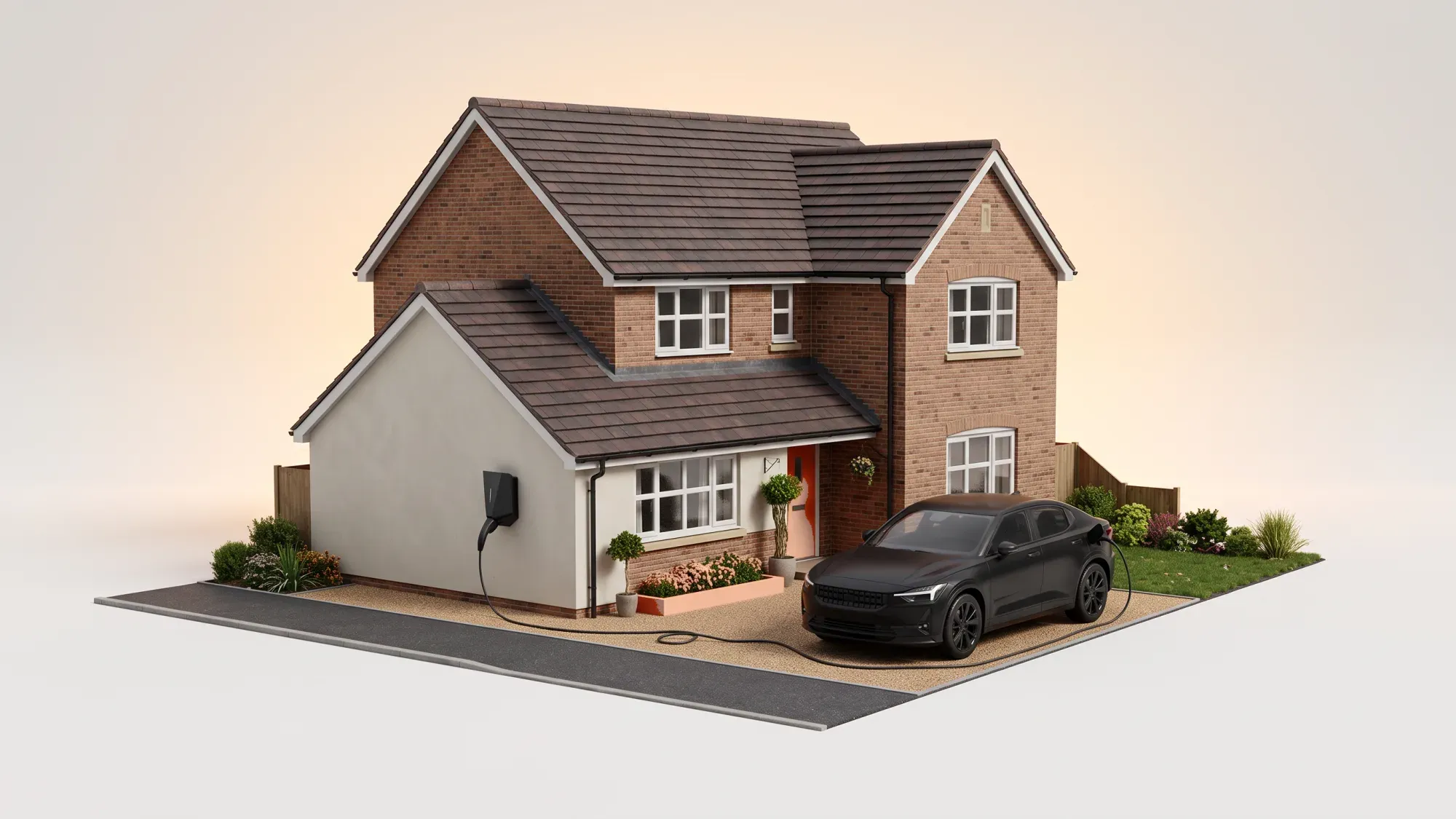
EV charger installation Newport: home charging explained
Installing an EV charger at your Newport home means convenient, cost-effective electric vehicle charging tailored to your schedule. For residents in Newport, this involves understanding local energy specifics, available grants, and choosing a qualified installer to ensure a safe and compliant setup.
Home EV charging in Newport: a local perspective
Newport, with its blend of historic terraced houses, modern developments, and proximity to the M4 corridor, presents a varied landscape for EV charger installation. Many homes, particularly older properties, require a thorough assessment of their existing electrical infrastructure before installation. The city's position on the River Usk also means varied property types, from urban dwellings to those in more suburban or semi-rural settings, each with unique charging considerations.
Newport's unique energy landscape
Newport sits within the "South Wales" electricity distribution region. While Ofgem's price cap, which limits how much suppliers can charge for each unit of electricity and the daily standing charge, is set nationally, regional variations in underlying network costs can lead to different unit rates and daily standing charges in Newport compared to other parts of the UK.
Understanding your local DNO: National Grid Electricity Distribution
The company responsible for maintaining the electricity network in Newport is National Grid Electricity Distribution. They manage the cables, power lines, and substations that bring electricity to your home. If you experience a power cut in Newport, you would dial the free national number 105, which routes directly to National Grid Electricity Distribution.
Any new home EV charger or solar/battery grid connection in Newport requires notification to National Grid Electricity Distribution (chargers via the ENA connect-and-notify route; solar or battery systems under G98/G99), a task typically handled by your chosen installer.
Why install an EV charger at home?
Convenience and cost savings
Charging your electric vehicle at home offers unparalleled convenience. You can simply plug in overnight and wake up to a full battery, avoiding queues at public charging stations. Home charging is often significantly cheaper than using public rapid chargers, especially when paired with smart energy tariffs.
Enhancing your property value
An EV charger can be an attractive feature for potential buyers, particularly as electric vehicle ownership continues to grow. It signals that your property is future-ready and equipped for modern living, potentially adding to its market appeal.
Choosing the right EV charger for your Newport home
Types of home EV chargers
Home EV chargers typically come in two main power ratings: 7.4kW and 22kW. A 7.4kW charger is a common choice for domestic properties, providing a full charge overnight for most EVs. It usually requires a dedicated 32-amp circuit and runs on the standard single-phase electricity supply found in most UK homes.
A 22kW charger, while much faster, typically requires a three-phase electricity supply, which is rare in standard UK homes and more common in commercial or industrial sites. For the vast majority of residential properties in Newport, a 7.4kW charger will be sufficient and more straightforward to install. To learn more about selecting the right charger for your needs, you can read our guide on how to pick the right home EV charger.
Smart charger features and benefits
Smart EV chargers offer more than just power. They connect to your home Wi-Fi, allowing you to schedule charging sessions, monitor energy consumption, and even integrate with smart energy tariffs. This means you can set your car to charge when electricity is cheapest, often overnight, leading to significant savings on your energy bills. Many smart chargers also come with companion apps for remote control and data insights.
The EV charger installation process in Newport
Initial site survey and requirements
The first step for any EV charger installation is a site survey by a qualified electrician. They will assess your home's electrical capacity, check your consumer unit (fuse box), and evaluate your parking arrangements to determine the best location for the charger. This survey ensures your home's electrical system can safely support the new load.
Installation and safety standards
All EV charger installations must comply with the IET Wiring Regulations (BS 7671), the national standard for electrical safety in the UK. Installers must be approved by the Office for Zero Emission Vehicles (OZEV) to offer grant-funded installations. This ensures the work is carried out to the highest safety and quality standards.
DNO notification and grid connection
Your installer is responsible for notifying National Grid Electricity Distribution, Newport's local Distribution Network Operator (DNO), of the new EV charger installation. This notification, known as the ENA connect-and-notify process, ensures the local electricity grid can handle the additional demand without issues. For most standard 7.4kW single-phase home chargers, a connect-and-notify submission is submitted after installation, while higher-powered systems may requires an apply-to-connect application to the DNO and DNO approval before work begins. A reputable installer will manage this crucial step on your behalf.
What is the ENA connect-and-notify process for EV chargers?
The connect-and-notify process is a regulatory requirement for notifying your local DNO about new electrical installations like EV chargers. It ensures the DNO, such as National Grid Electricity Distribution in Newport, is aware of changes to the grid and can manage electricity supply effectively. Your installer typically handles this notification.
Grants and funding for EV charger installation in Wales
The EV Chargepoint Grant for flats and rental properties
The UK government offers the EV Chargepoint Grant for flats and rental properties1, which can cover up to £500 towards the cost of purchasing and installing a home charging point. This grant is specifically available for flat owner-occupiers and people living in rental accommodation across the UK, including Newport, who have private off-street parking. Eligibility depends on several factors, including the property type and the installer being OZEV-approved. The customer applies for this grant themselves via the GOV.UK website; the installer's role begins after the application is approved.
On-street charging solutions: the LEVI scheme
For Newport residents without a driveway or off-street parking, local councils can apply for funding through the government's Local Electric Vehicle Infrastructure (LEVI) fund. This scheme supports the installation of public chargepoints in residential areas, providing a solution for those who cannot install a private charger at home. Newport City Council may utilise this scheme to expand public charging infrastructure.
Finding a qualified EV charger installer in Newport
Key considerations when selecting an installer
When choosing an EV charger installer in Newport, look for OZEV approval, which confirms they meet government standards and can process grant applications. Ensure they are qualified electricians with experience in EV charger installations and are familiar with the DNO notification process for National Grid Electricity Distribution. Always obtain a detailed quote that includes the cost of the charger, installation, and any necessary electrical upgrades. You can also find out more about how much an EV charger costs in our dedicated guide.
Local Newport installers and their services
A good local installer will offer a comprehensive service, from the initial site survey and advice on charger types to the actual installation and DNO notification. They should provide clear information on warranties, aftercare, and how to claim any available grants. Prioritise installers with strong local reputations and transparent pricing.
Maximising your EV charging with smart energy management
Integrating your charger with smart tariffs
Once your EV charger is installed, integrating it with a smart energy tariff can unlock significant savings. These tariffs, especially dual-rate options, offer cheaper electricity during off-peak hours, typically overnight. By scheduling your EV to charge during these periods, you can drastically reduce the cost per mile of your electric vehicle, making the most of your home charging setup.
Monitoring and optimising usage with the Fuse Energy app
The Fuse Energy app provides control and monitoring for your home energy, including smart charging. It turns your EV charger into a powerful tool for energy management. With data-backed insights, the app helps you optimise your EV charging, ensuring you charge when electricity is cheapest and most abundant. This allows Newport residents to make informed decisions for cost-effective and efficient energy use, aligning with Fuse's goal of making energy abundant and manageable for homeowners.
For the avoidance of doubt, this article is provided for informational purposes only and is not intended to constitute legal or financial advice. The author and/or Fuse Energy shall not be responsible for any losses arising out of any reliance on the information contained herein.
EV charger installation Newport: home charging explained