Home EV charger installation in Luton
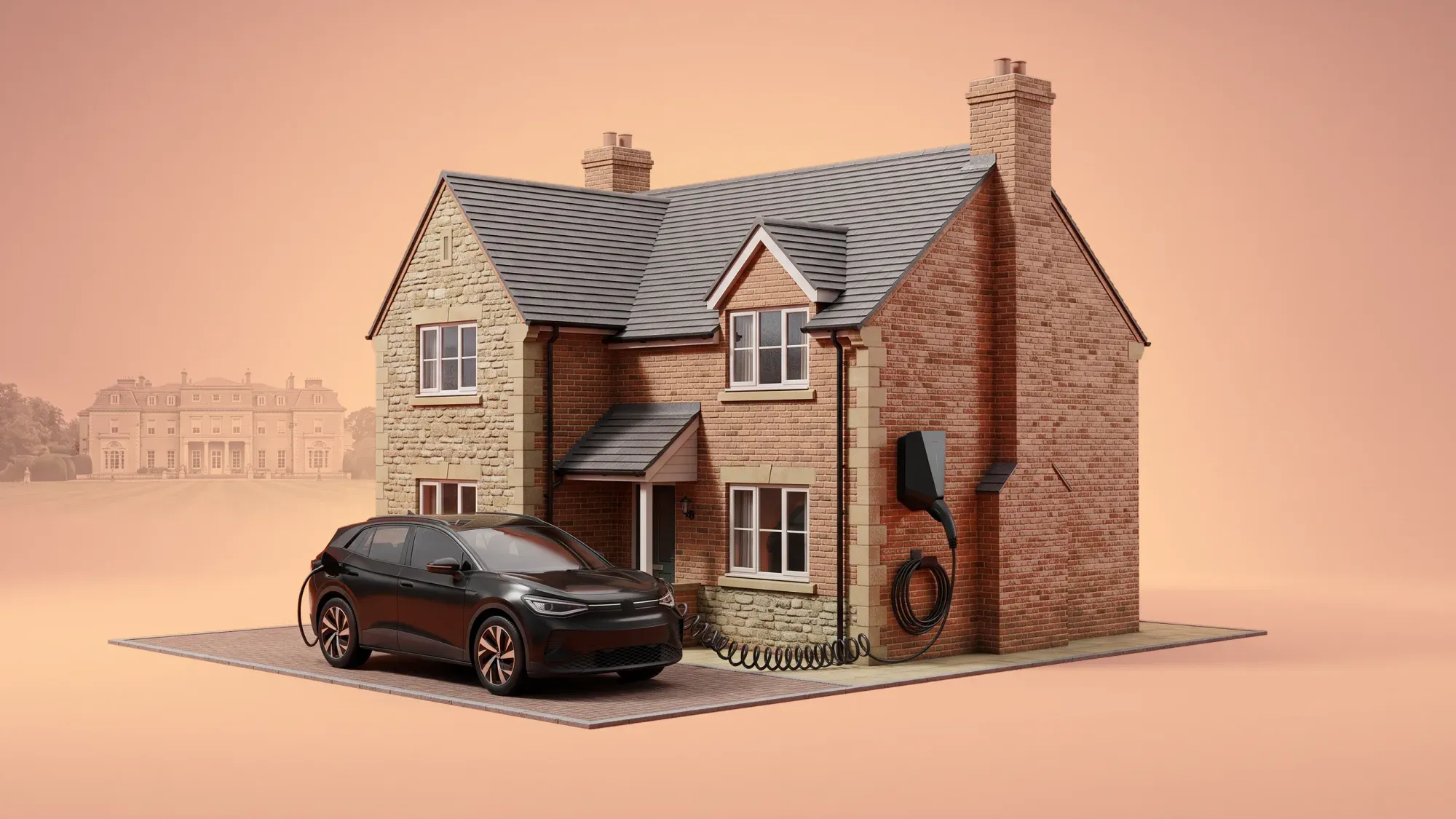
Installing an electric vehicle (EV) charger at home in Luton involves understanding the town's diverse housing and its specific energy network. Knowing these local details is key to a smooth and compliant installation, helping you power your electric future efficiently.
Understanding EV charging in Luton
Luton's housing stock and charging needs
Luton's varied housing stock presents both challenges and opportunities for home EV charger installation. Older properties, such as Victorian terraces, may require electrical system upgrades1 to safely accommodate a new charger, while newer estates often have more modern wiring. For residents in flats or terraced homes without off-street parking, the government's Local Electric Vehicle Infrastructure (LEVI) fund can support local councils in installing on-street residential chargepoints, providing a crucial alternative to private home installations. This scheme aims to improve access to charging for people without driveways or private parking.
Local energy network: UK Power Networks
Luton falls within the 'Eastern England' electricity distribution region. The local Distribution Network Operator (DNO) for Luton is UK Power Networks, responsible for managing the local electricity grid. Any new home EV charger installation in Luton requires notification to UK Power Networks under the ENA connect-and-notify or apply-to-connect process, a step typically handled by your installer to ensure the grid can safely accommodate the new load. If you experience a power cut in Luton, you would dial the free national number 105, which routes directly to UK Power Networks.
Types of home EV chargers
Choosing the right EV charger involves understanding the different types and their capabilities. Home chargers typically come in 3.6kW, 7kW, or 22kW options, suitable for overnight charging, with 7kW being the most common for home installation in the UK.
Tethered versus untethered chargers
- Tethered chargers come with a cable permanently attached. This offers convenience as you do not need to get your car's cable out every time you charge. However, the cable type (Type 1 or Type 2) must match your vehicle, and if you change your EV, the cable might not be compatible.
- Untethered chargers have a socket, allowing you to use your car's own charging cable. This provides flexibility for different EV models and cable lengths, but means you need to connect the cable each time.
Smart charging features
Modern EV chargers often include smart features that enhance convenience and can help reduce running costs. These can include:
- Scheduled charging: Set your charger to operate during off-peak electricity hours when rates are lower.
- Remote control: Start, stop, or monitor charging from a smartphone app.
- Load balancing: Prevent overloading your home's electrical supply by adjusting charging speed based on household electricity demand.
- Integration with energy tariffs: Some smart chargers can automatically optimise charging based on real-time electricity prices, ensuring you charge when it is cheapest.
Power ratings (7kw, 22kw)
The power rating of an EV charger determines how quickly it can charge your vehicle.
- 7kW chargers: These are the most common type for home installation in the UK. A 7kW charger can typically add around 25-30 miles of range per hour of charging^[2,3]4, making it ideal for overnight top-ups. Most homes have single-phase electricity, which supports up to 7kW (or 7.4kW) without significant upgrades.
- 22kW chargers: These chargers offer much faster charging, potentially adding around 75-90 miles of range per hour5. However, they require a three-phase electricity supply, which is rare in residential properties. If your home does not have three-phase power, installing a 22kW charger would involve a significant and costly electrical upgrade, potentially ranging from £3,000 to £15,0006. It is also worth noting that many EVs have onboard chargers that limit AC charging to 11kW, meaning they would not utilise the full 22kW even if available. Choosing the right home EV charger depends on your home's supply and your vehicle's capabilities.
Costs and grants for EV charger installation in Luton
The total cost of installing an EV charger in Luton can vary widely depending on several factors, including the type of charger, the complexity of the installation, and any necessary electrical upgrades to your property. For more information on how much an EV charger costs, you can explore detailed guides.
What influences installation costs?
Key factors affecting the final price include:
- Charger unit cost: Prices vary by brand, power rating, and smart features.
- Installation complexity: Longer cable runs, trenching for cables, or difficult access can increase labour costs.
- Electrical panel upgrades: Older properties might need an upgrade to their consumer unit (fuse box) to safely handle the charger's load.
- Earthing arrangements: Specific earthing solutions might be required to meet safety regulations.
- DNO requirements: In some cases, UK Power Networks might require specific grid upgrades, though this is less common for standard home installations.
OZEV EV chargepoint grant eligibility
The government offers the EV Chargepoint Grant7 to help with the cost of installing a home EV charger. The EV Chargepoint Grant for renters and flat owners provides up to £500 towards installing a chargepoint at the property. To qualify, you must own and live in a flat, or rent any residential property, and have private off-street parking. There is also the EV Chargepoint Grant for households with on-street parking, which provides up to £500 for those installing a cross-pavement solution. The customer applies for the grant themselves via the GOV.UK eligibility/application page; the OZEV-authorised installer's role begins only after the customer's application is approved.
Who is eligible for the OZEV EV chargepoint grant?
The EV Chargepoint Grant for renters and flat owners is available to flat owner-occupiers and people in rental accommodation across the UK who have dedicated off-street parking. The EV Chargepoint Grant for households with on-street parking is for those installing a cross-pavement solution. Both provide up to £500 towards installation costs.
On-street residential chargepoint scheme (LEVI)
For Luton residents without off-street parking, the LEVI fund supports local authorities in England to plan and deliver public EV charging infrastructure. This scheme is crucial for expanding access to charging beyond private driveways, making EV ownership more viable for a broader segment of the population. Luton Council, like other local authorities, can apply for LEVI funding to install chargepoints in residential areas, addressing a key barrier for many potential EV owners.
The EV charger installation process
Installing an EV charger is a multi-step process that begins before any physical work starts.
Assessing your home's suitability
Before installation, a qualified electrician will assess your property's electrical system and parking arrangements. This includes checking the capacity of your main fuse and consumer unit, ensuring there is a suitable location for the charger, and verifying that the earthing system meets current regulations. They will also confirm the best route for the cabling and discuss any potential challenges.
DNO notification
A critical step for any new home EV charger installation in Luton is the notification to UK Power Networks, your local DNO. This is done under the ENA connect-and-notify process.
- connect-and-notify submissions applies to smaller installations, typically up to 3.68kW per phase, and involves notifying the DNO after installation.
- G99 application is required for larger systems, above 3.68kW per phase, and needs DNO approval before installation can begin. Most domestic 7kW chargers fall under the apply-to-connect category, requiring pre-approval from the DNO. This process is more complex and can take longer.
Your chosen installer should manage this notification process entirely, ensuring compliance with UK Power Networks' requirements.
What to expect on installation day
On the day of installation, the electrician will typically:
- Mount the chargepoint: Secure the unit to an external wall or post in the agreed location.
- Run cabling: Install the dedicated electrical cable from your consumer unit to the chargepoint.
- Connect to the mains: Safely connect the new circuit to your home's electricity supply, often with a dedicated RCD (Residual Current Device) for protection.
- Install earthing: Ensure the earthing system is compliant.
- Test the unit: Commission and test the charger to ensure it is working correctly and safely.
- Demonstrate usage: Show you how to use the charger and its smart features.
- Complete paperwork: Provide all necessary documentation, including the electrical installation certificate and any grant-related forms.
Choosing a qualified EV charger installer in Luton
Selecting the right installer is paramount for a safe, compliant, and efficient EV charger installation.
Key questions to ask potential installers
When obtaining quotes from local installers in Luton, consider asking:
- Are you OZEV-authorised? (Essential for grant eligibility)
- Do you have experience with properties similar to mine in Luton?
- What is included in the quote, and are there any potential additional costs?
- How do you handle the DNO notification process with UK Power Networks?
- What warranty do you offer on the charger and the installation work?
- Can you provide references or examples of previous installations?
Ensuring certifications and warranties
Always choose an installer who is qualified and certified. Look for electricians registered with schemes such as NICEIC or MCS, which demonstrate their competence and adherence to safety standards. A reputable installer will provide an Electrical Installation Certificate upon completion. They should also offer a warranty on both the chargepoint itself and their workmanship, giving you peace of mind.
Maximising your EV charging savings
Beyond the initial installation, smart charging practices can significantly reduce the running costs of your EV.
Smart tariffs and off-peak charging
Many energy suppliers offer smart tariffs designed for EV owners. These tariffs typically provide cheaper electricity rates during off-peak hours, often overnight. By using your smart charger's scheduling features, you can set your car to charge exclusively during these cheaper periods, leading to substantial savings compared to charging at peak times. Fuse Energy offers smart tariffs and an app-based approach to energy management that complements smart EV charging, offering customers transparency and control over their energy usage and costs.
Benefits of home charging versus public charging
Home charging offers several advantages over relying solely on public charging infrastructure:
- Cost-effectiveness: Electricity from your home supply, especially on a smart tariff, is generally much cheaper per kWh than public rapid chargers.
- Convenience: Charge your car overnight while you sleep, waking up to a full battery every morning. No detours or waiting in queues.
- Time-saving: Avoid trips to public charging stations, freeing up your time.
- Predictability: You control when and how your car charges, making it easier to manage your energy consumption.
By understanding the local context, choosing the right equipment, and adopting smart charging habits, Luton homeowners can make a confident and cost-effective transition to electric vehicle ownership.
References
- Electrical Testing London. Electrical System Upgrade Cost: UK Price Guide (2026)
- Rev Power. How Long Does It Take to Charge an EV with a 7kW Charger?
- The Full EV. How Fast Does a 7kW Charger Charge Your Electric Car?
- Rev Power. How fast is a 7kW charger?
- Heights Construction. 7kW vs 22kW EV Charger 2026 | Home Charging Speed, Cost & Suitability
- EcoFlow. How Much Does It Cost To Install Three-Phase Power in the UK?
- UK Government. Electric vehicle chargepoint grants
Disclaimer
For the avoidance of doubt, this article is provided for informational purposes only and is not intended to constitute legal or financial advice. The author and/or Fuse Energy shall not be responsible for any losses arising out of any reliance on the information contained herein.