EV charger installation in Lowestoft
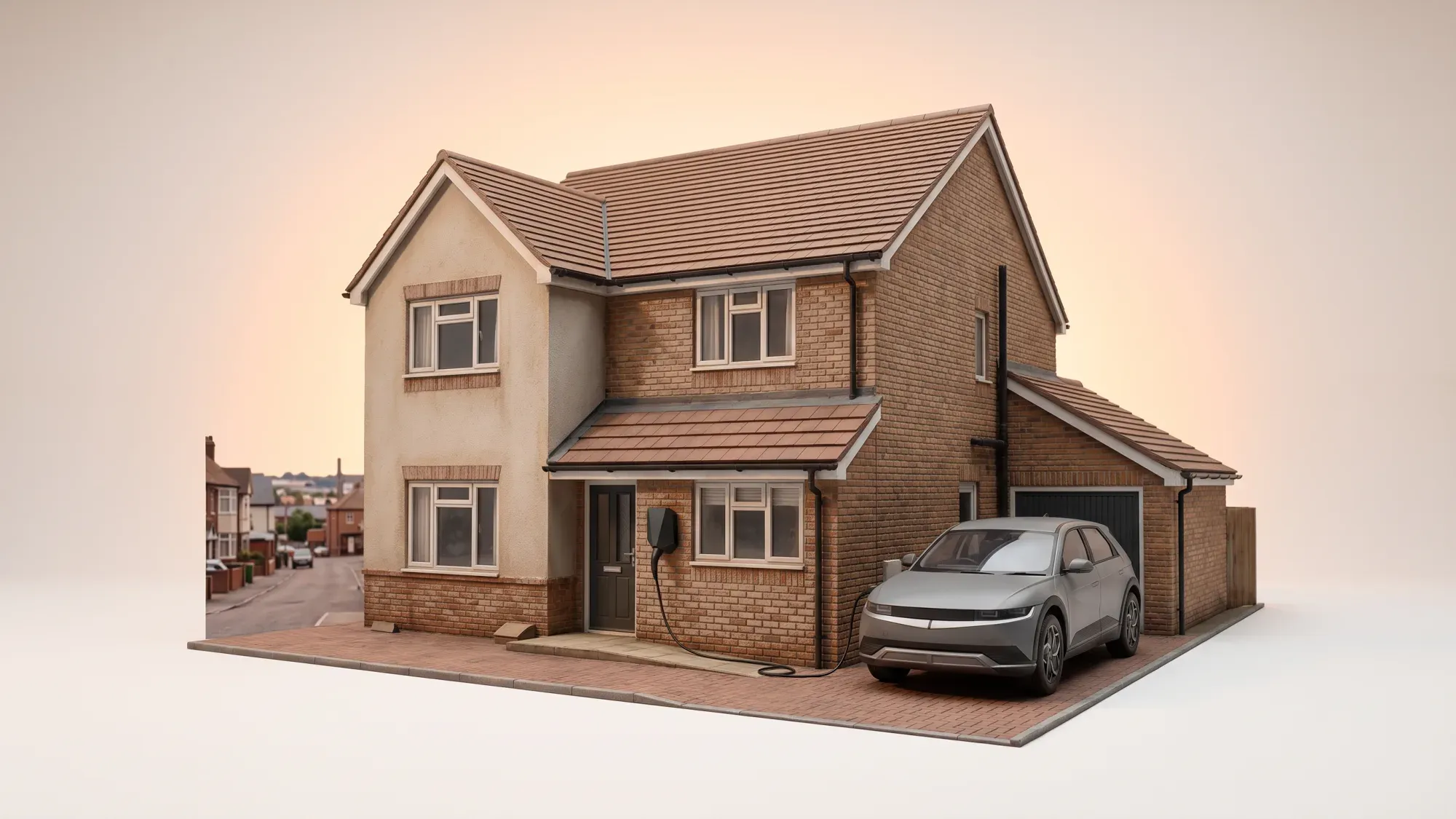
Installing an EV charger at home in Lowestoft means understanding how your property fits into the town's unique energy landscape. Lowestoft, with its mix of Victorian terraces, seaside flats, and newer developments, presents varied challenges and opportunities for residents looking to power their electric vehicles. This guide cuts through the complexity, offering practical advice tailored for those living in Suffolk's coastal gem.
Lowestoft's path to home EV charging
Why home charging matters for Lowestoft drivers
For Lowestoft drivers, home EV charging offers unmatched convenience and can significantly reduce running costs compared to relying solely on public chargepoints. Imagine waking up each day to a fully charged vehicle, ready for a commute along the A12 or a trip to the Suffolk coast. Home charging eliminates range anxiety and the need to search for available public chargers. While Lowestoft has seen new ultra-rapid charging hubs open, such as at the Gateway Retail Park, these are primarily for on-the-go top-ups, not daily charging. A home charger integrates seamlessly into your daily routine, offering a a more cost-effective and efficient way to keep your EV powered.
Lowestoft's unique energy landscape
Lowestoft falls within the "Eastern England" electricity distribution region, a detail that impacts your energy bills. Ofgem's price cap, which sets maximum unit rates and daily standing charges for standard variable tariffs, is regional, meaning your specific costs can differ from other parts of Great Britain. These rates are updated quarterly, so staying informed about your region's cap is crucial for managing charging costs.
The local Distribution Network Operator (DNO) for Lowestoft is UK Power Networks, which covers the East of England. They are responsible for the electricity cables and infrastructure that deliver power to your home. In the event of a power cut, Lowestoft residents should dial the free national number 105, which routes directly to their DNO for assistance. Understanding your DNO is vital because they play a key role in approving new connections, such as an EV charger.
Understanding EV charger types and costs
Choosing the right charger for your home
Home EV chargers typically come in two main types: 'tethered' and 'untethered'. A tethered charger has a cable permanently attached, which can be convenient if your EV uses that specific connector type. An untethered unit allows you to use your car's own charging cable, offering more flexibility if you have multiple EVs with different connectors or upgrade your vehicle in the future. Most home chargers are 'fast' chargers, often around 7kW, which can fully charge most EVs overnight. 'Smart' chargers are also widely available, offering features like scheduled charging to take advantage of off-peak electricity tariffs. Choosing the right home EV charger depends on your vehicle, property, and charging habits.
Typical installation costs
The cost of installing an EV charger at home in Lowestoft varies based on several factors. These include the type of charger you choose, the complexity of the installation (e.g., how far the cable needs to run from your fuse box, any necessary electrical upgrades), and the installer's rates. It's always wise to get a detailed quote that outlines everything included. For more information on how much an EV charger costs, consider the unit price, installation factors, and potential grants.
Navigating grants and local regulations
OZEV grants for Lowestoft residents
The UK government offers the Electric Vehicle Chargepoint Grant (OZEV grant) to help reduce the cost of installing a home EV charger. The EV Chargepoint Grant for renters and flat owners provides up to £500 towards the cost of installing a chargepoint at the property. To be eligible, you must own and live in a flat, or rent any residential property, and have private off-street parking. You must also own or lease an eligible EV and use an OZEV-approved installer.
On-street charging solutions: the LEVI scheme
For Lowestoft residents without a driveway or dedicated off-street parking, the government's Local Electric Vehicle Infrastructure (LEVI) scheme offers a solution. This scheme supports local councils, including Suffolk County Council, in providing public charging infrastructure. Suffolk County Council has received £5.3 million from the Department for Transport via the LEVI fund to roll out EV chargepoints across the county, specifically targeting residents who cannot charge at home. The aim is to ensure residents are within a 5-10 minute walk of a chargepoint, with many being bollard-style units suitable for overnight charging and offering discounted tariffs for local drivers.
Your local network: UK Power Networks and the DNO notification process
When installing a new home EV charger in Lowestoft, your installer will need to notify UK Power Networks, your local DNO, about the new connection. This is done under the ENA connect-and-notify process. This regulatory requirement ensures that new grid connections, such as an EV charger, do not negatively impact the stability of the local electricity network.
What is the ENA connect-and-notify process for EV charger installation?
The connect-and-notify process is a regulatory requirement for notifying your DNO, UK Power Networks in Lowestoft, about new grid connections like an EV charger. The connect-and-notify route applies where the property's total demand stays at or below 60amps, with the DNO notified after installation. Larger or more complex installations need DNO approval before work starts. Your installer usually handles this on your behalf.
For most domestic EV charger installations, particularly those up to 3.68kW per phase, the connect-and-notify route process is followed, where the DNO is informed after the installation is complete. For larger systems, an apply-to-connect application might be necessary, which requires approval from UK Power Networks before installation begins. Your chosen installer should manage this entire process, ensuring compliance with all local regulations.
The home EV charger installation process
From initial assessment to final connection
The journey to installing a home EV charger in Lowestoft typically follows a clear path. First, an approved installer will conduct an initial assessment of your home to determine its suitability for an EV charger. This includes checking your existing electrical system, fuse box capacity, and the proposed location for the chargepoint. They will also discuss your charging needs and recommend a suitable charger type.
Once the assessment is complete and you have selected your charger, the installer will provide a quote. After you accept, they will schedule the installation. On the day, the installer will carry out the electrical work, mount the charger, and connect it to your home's electricity supply. Finally, they will notify UK Power Networks of the new connection under the ENA connect-and-notify process, ensuring everything is compliant.
What to expect on installation day
On the day of installation, a qualified electrician will arrive at your Lowestoft home. They will typically spend several hours, often half a day, completing the work. This involves installing the charging unit, running the necessary cabling from your consumer unit, and testing the system to ensure it is safe and fully functional. The installer will also provide a demonstration of how to use your new charger and explain any smart features. It is important to ensure your chosen installer provides all necessary certification upon completion.
Optimising your EV charging with smart technology
The benefits of smart charging
Smart charging allows you to optimise when and how your electric vehicle charges, leading to potential cost savings and more efficient energy use. By connecting your smart charger to an app or energy management system, you can schedule charging sessions to coincide with off-peak electricity tariffs, when electricity is cheaper. This is particularly beneficial in the Eastern England region, where regional price caps influence unit rates. Smart charging can also pause charging during periods of high demand on the grid, or even prioritise charging when renewable energy generation is high, contributing to a greener energy system.
Integrating your charger with home energy management
Integrating your EV charger with a broader home energy management system, such as one controlled by an app, gives you greater control over your energy consumption. This aligns with the vision of having 'power to play with' your energy usage, making it seamless, efficient, and part of a modern home energy strategy. An app in your hand provides the control and insights needed to manage your EV charging, allowing you to monitor usage, track costs, and schedule charging to suit your lifestyle and energy tariff. This approach contributes to the vision of rebuilding the energy system from scratch, highlighting how smart EV charging integrates into an efficient home energy ecosystem.
Choosing a reliable EV charger installer in Lowestoft
Key considerations for local installers
When selecting an EV charger installation specialist in Lowestoft, prioritising local accreditation and experience is crucial. Look for installers who are OZEV-approved, as this is often a requirement for grant eligibility. Local electricians with a strong reputation in Lowestoft and the surrounding Suffolk area will have a better understanding of local electrical infrastructure and DNO requirements. Websites like Checkatrade can provide listings of local installers with customer reviews and ratings.
Ensuring quality and safety
Always ensure your chosen installer is fully qualified and registered with a recognised electrical body, such as NICEIC or MCS. They should provide a free, no-obligation survey and quotation, detailing all aspects of the installation. A reputable installer will also handle the necessary DNO notification (ENA connect-and-notify process) and provide you with all relevant certificates of compliance upon completion. Prioritising quality and safety ensures your home EV charger is installed correctly, efficiently, and in line with all UK regulations.
Making the switch to an electric vehicle is a smart move for the environment and your wallet. Fuse Energy is here to support your journey with transparent energy tariffs and smart tools to help you manage your EV charging efficiently. Our 24/7 human support team is always on hand to help. Discover how easy it is to take control of your home energy.
Disclaimer
For the avoidance of doubt, this article is provided for informational purposes only and is not intended to constitute legal or financial advice. The author and/or Fuse Energy shall not be responsible for any losses arising out of any reliance on the information contained herein.