EV charger installation in Leicestershire
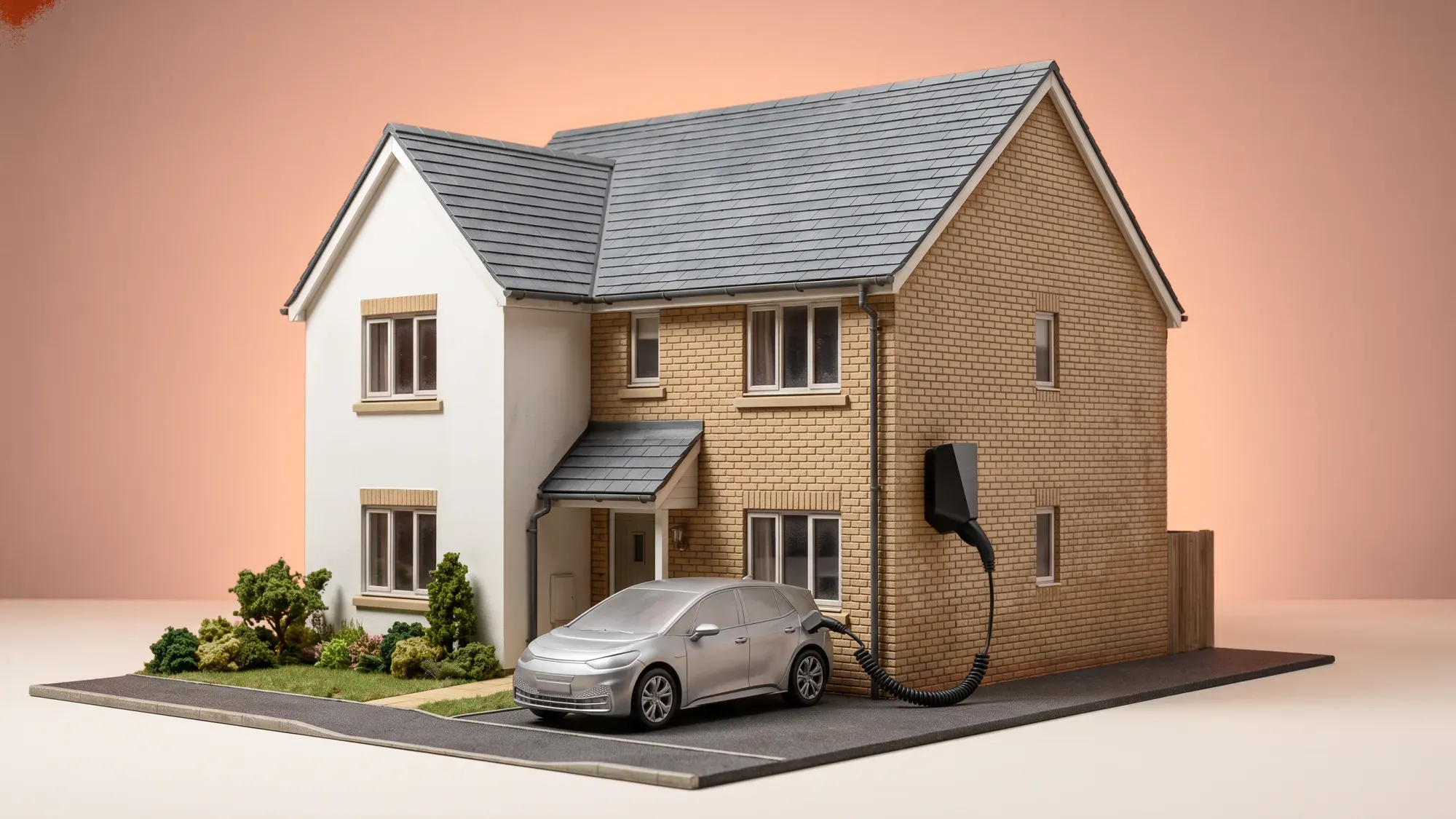
Installing an EV charger at home in Leicestershire offers convenience and potential cost savings, especially given the county's mix of historic market towns, rural villages, and modern new-build developments. Each property type presents unique considerations for charger placement and electrical infrastructure. This guide helps Leicestershire homeowners navigate the process, from understanding grants to local grid requirements.
Your guide to EV charger installation in Leicestershire
Why home EV charging matters for Leicestershire residents
For Leicestershire residents, home EV charging means waking up to a fully charged vehicle every day, eliminating trips to public charging stations. This convenience is particularly valuable across the county's varied landscape, from the bustling streets of Leicester city to the quieter, more spread-out villages. It also allows you to take advantage of cheaper overnight electricity tariffs, significantly reducing your running costs compared to public charging.
The benefits of installing an EV charger at home
Having a dedicated EV charger at home offers several clear advantages. It provides unparalleled convenience, ensuring your car is always ready for your next journey. It can also be more cost-effective than relying on public charging networks, especially when paired with smart charging features that optimise for off-peak electricity rates. Furthermore, a home charger can add value to your property, making it more attractive to future buyers as electric vehicles become increasingly common. Understanding the different types of home EV chargers and their features can help you pick the right home EV charger for your needs.
Understanding EV charger grants and funding
The EV Chargepoint Grant: eligibility for Leicestershire homes
The UK government offers grants1 to help with the cost of buying and installing chargepoints for electric vehicles. The EV Chargepoint Grant for renters and flat owners provides up to £500 towards the cost of installing a chargepoint at your property. Similarly, the EV Chargepoint Grant for households with on-street parking also provides up to £500 for those installing a cross-pavement solution. These grants are available until 31 March 2027.
Who is eligible for the EV Chargepoint Grant?
The EV Chargepoint Grant for renters and flat owners is primarily for those who own and live in a flat, or rent and live in any residential property, provided they have private off-street parking. You must own, lease, or have an eligible electric or plug-in hybrid vehicle on order and not have claimed previous grants like the EVHS.
To qualify for the domestic grants, you must live in a flat you own (including shared ownership) or rent a residential property, and have private, off-street parking that is always accessible to you. You also need to own, lease, or have on order an eligible electric or plug-in hybrid vehicle. The customer applies for the grant themselves via the GOV.UK eligibility and application page; the OZEV-authorised installer's role begins only after the customer's application is approved.
Exploring other potential support for EV charging
While the domestic EV Chargepoint Grants are the primary national schemes for home chargers, other support may exist. For example, the Workplace Charging Scheme (WCS) offers grants for businesses, charities, and public sector organisations to install chargepoints at workplaces.
Choosing the right EV charger for your Leicestershire home
Selecting the right EV charger involves considering several factors tailored to your needs and property. You can learn more about general EV charger options and installation basics.
Types of EV chargers: untethered vs tethered
Home EV chargers typically come in two main types: untethered and tethered. An untethered charger has a universal socket, allowing you to use your car's charging cable. This offers flexibility if you own multiple EVs with different connector types. A tethered charger has a cable permanently attached, which can be more convenient as you don't need to retrieve your car's cable every time you charge. The choice often comes down to personal preference and the specific EV models you'll be charging.
Power ratings and charging speeds
Common home chargers in the UK are 7kW, providing a good balance of charging speed and compatibility with typical domestic electricity supplies. A 7kW charger can provide significant charge overnight for many EVs. Higher power ratings, such as 22kW, are available but typically require a three-phase electricity supply, which is less common in residential properties. The overall how much is an EV charger cost can vary based on these factors.
Smart features and connectivity options
Modern EV chargers come with smart features that allow you to control and monitor your charging via a smartphone app. These features often include scheduling charging sessions to take advantage of cheaper off-peak electricity tariffs, tracking energy consumption, and even integrating with solar panels or home battery storage systems. Connectivity options, such as Wi-Fi or cellular, ensure your charger can receive updates and communicate with energy management platforms.
The EV charger installation process in Leicestershire
Initial site survey and assessment
Before any installation, a qualified installer will conduct a site survey to assess your home's electrical system and parking arrangements. This involves checking your consumer unit (fuse box), earthing arrangements, and the route for the cabling. They will also confirm the best location for the chargepoint, ensuring it's safe and convenient.
Navigating DNO notification with National Grid electricity Distribution
New EV charger installations in Leicestershire require a notification to the local Distribution Network Operator (DNO), which is National Grid Electricity Distribution. This is done under connect-and-notify or apply-to-connect regulations, depending on the charger's power output and its potential impact on the local electricity grid. For small-scale, low-impact chargers (typically up to 3.68kW single-phase), the installer can proceed with the installation and then notify the DNO within 28 days of commissioning. Larger systems, or those exceeding certain power thresholds (e.g., above 13.8kW single-phase), might require an apply-to-connect application, which needs DNO approval before installation can begin and can take longer. Your installer will manage this process, ensuring compliance with local grid requirements.
What to expect on installation day
On installation day, the electrician will typically install the chargepoint unit, run the necessary cabling, and connect it to your home's electricity supply. The process usually takes a few hours, depending on the complexity of the installation. Once fitted, the installer will test the unit, demonstrate how to use it, and help you set up any associated apps. They will also provide you with all the necessary documentation, including the DNO notification.
Local considerations for Leicestershire residents
Leicestershire's unique characteristics mean specific local factors can influence your EV charger installation.
Leicestershire's electricity price-cap region: East Midlands explained
Leicestershire falls within the East Midlands electricity price-cap region. This means that the unit rates and standing charges for electricity, as set by Ofgem's energy price cap, will differ slightly from other regions in Great Britain. While these differences are regional and not supplier-specific, they highlight the importance of understanding your local energy costs when planning your EV charging strategy. The East Midlands region has historically sat among the cheaper regions for electricity unit rates.
Addressing varied housing stock: from Victorian terraces to new-builds
Leicestershire's housing stock is diverse, ranging from Victorian terraces in urban centres to modern new-build estates and rural properties. This variety impacts EV charger installation. Terraced homes, for instance, may require careful planning for cable routing and may not always have off-street parking. New-builds, on the other hand, are often designed with EV charging infrastructure in mind. Rural properties might have older electrical systems that need upgrading, or they might be off-gas-grid, making electricity a more central energy source. Your installer will assess these specific challenges during the site survey.
Options for homes without off-street parking
For Leicestershire residents without a driveway or dedicated off-street parking, home EV charging can be a challenge. However, public charging infrastructure is continually expanding to address this. Local authorities and private companies are working to deploy more public chargepoints in residential areas, making EV ownership more feasible for those who cannot charge at home.
Making the power play with Fuse Energy
Fuse Energy empowers Leicestershire homeowners to take control of their EV charging, integrating it into a broader home energy strategy.
Integrated home energy solutions for your EV charger
Fuse offers integrated home energy upgrades, including EV chargers, as part of a seamless, modern energy ecosystem. This approach means your EV charger isn't just a standalone device; it's a component of your overall home energy management. This integration allows for a more holistic view of your energy consumption and generation, aligning with Fuse's mission to rebuild the energy system from scratch.
Smart charging for optimised costs and control
With Fuse, EV charging becomes a 'power play', giving you control and capability. Fuse aims to offer smart charging solutions that optimise for cheaper, cleaner energy times, enabling abundant and cost-effective EV charging. This means your vehicle charges when electricity prices are lower, reducing your running costs and contributing to a more efficient energy grid. You gain the ability to manage your energy use intelligently, turning your EV into an asset within your home energy system.
Reliable support for your EV charging journey
Fuse offers round-the-clock support, ensuring reliable assistance for EV charger users in Leicestershire. Our 24/7 human customer support team is always available to help, providing peace of mind that you'll have assistance whenever you need it. This commitment to support ensures your EV charging journey is smooth and hassle-free, transforming it from a mere installation into an empowering experience.
References
- UK Government. Electric vehicle chargepoint grants
Disclaimer
For the avoidance of doubt, this article is provided for informational purposes only and is not intended to constitute legal or financial advice. The author and/or Fuse Energy shall not be responsible for any losses arising out of any reliance on the information contained herein.