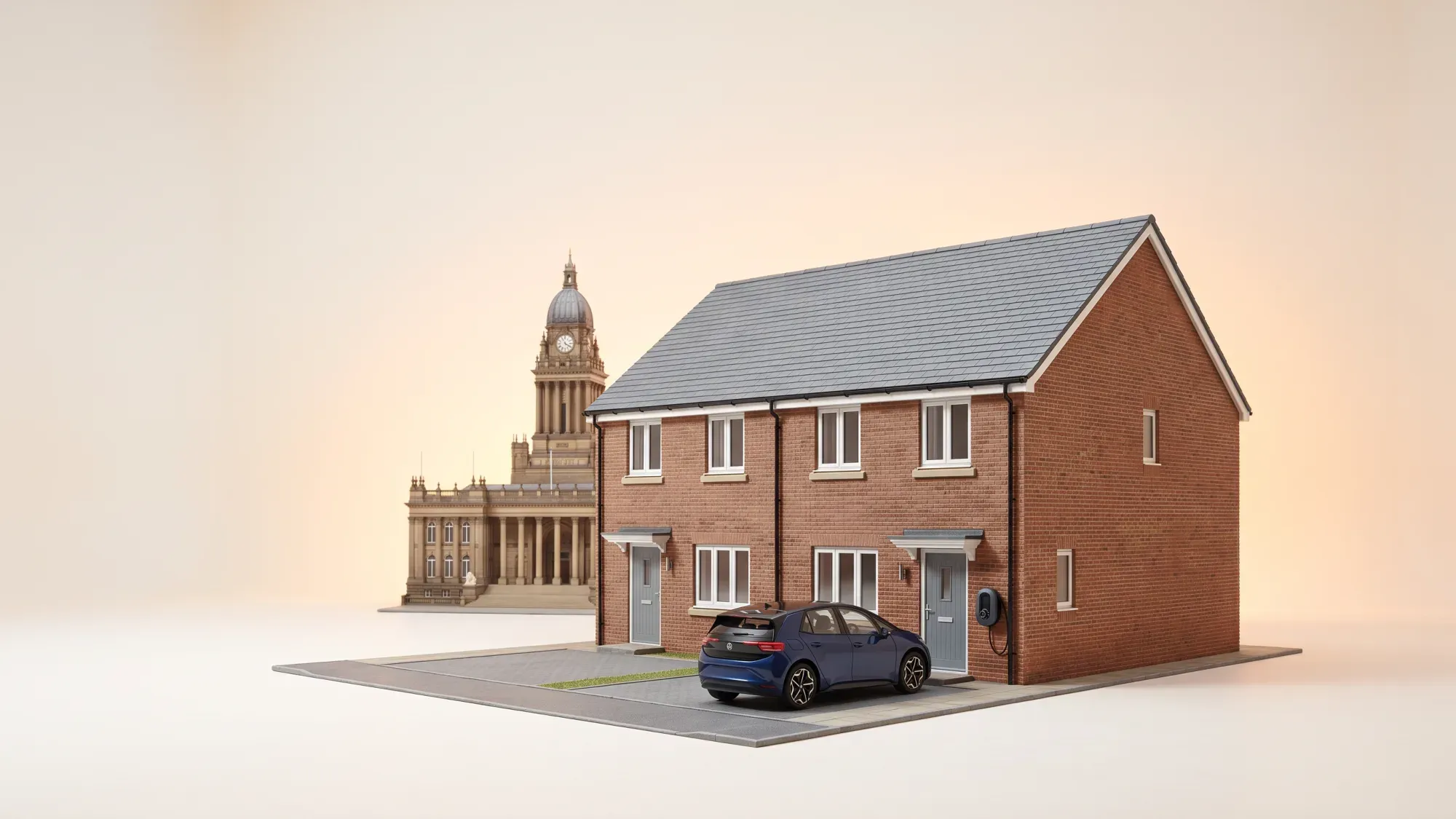
Installing an electric vehicle (EV) charger at your Leeds home offers significant convenience and potential long-term savings. However, understanding the local requirements, available grants, and choosing the right installer is crucial for a smooth process. Leeds, with its diverse housing stock and specific energy landscape, presents unique considerations for homeowners looking to electrify their transport.
Why install an EV charger at home in Leeds?
The convenience of home charging
Having a dedicated EV charger at your Leeds home means waking up to a fully charged vehicle every day. This eliminates the need to search for public charging stations, often a time-consuming task in a bustling city, and avoids potential queues. The convenience extends to integrating charging into your daily routine, much like plugging in a mobile phone overnight, offering unparalleled ease for Leeds residents.
Long-term savings and benefits
Beyond convenience, home EV charging can lead to significant long-term savings. Charging at home, especially during off-peak hours with a suitable energy tariff, is typically much cheaper than relying on public charging networks. Over time, these savings accumulate, making the initial investment in an EV charger a financially sound decision. Furthermore, an EV charger adds value to your property, making it more attractive to future buyers in an increasingly electric vehicle market.
Understanding EV charger installation in Leeds
Leeds's unique energy landscape: Northern Powergrid and the Yorkshire price cap
Leeds falls within the 'Yorkshire' electricity distribution region, which directly impacts your electricity unit rates and daily standing charges under Ofgem's price cap. The local Distribution Network Operator (DNO) for Leeds is Northern Powergrid. The DNO is responsible for maintaining the electricity network that delivers power to your home. Any new EV charger installation in Leeds requires notification to Northern Powergrid under the ENA connect-and-notify process, a step usually handled by your certified installer to ensure grid safety and compliance. Should you experience a power cut in Leeds, the free national number 105 will route you directly to Northern Powergrid for assistance.
The installation process: what to expect
The process of installing an EV charger typically begins with an assessment of your home's electrical system and parking arrangements. A qualified installer will evaluate your property, recommend a suitable charger, and provide a quote. Once you approve, they will handle the installation, including all necessary electrical work and the crucial notification to Northern Powergrid. After installation, they will commission the charger and provide guidance on its use.
Types of EV chargers for your Leeds home
Home EV chargers vary by charging speed and features. Many domestic installations use a 7.4 kilowatt (kW) charger, suitable for overnight charging. Faster charging options, such as those above 7.4 kW, often require a three-phase electricity supply, which is less common in residential properties but offers quicker charging times. Understanding the different types of EV charger available can help you choose the best fit for your needs. Smart chargers, which connect to your home's Wi-Fi, allow you to schedule charging during off-peak hours, monitor energy usage, and often integrate with smart home systems.
Grants and funding for EV charger installation in Leeds
The EV Chargepoint Grant for flats and rentals
The UK government offers grants to help reduce the cost of installing EV chargepoints. The EV Chargepoint Grant for renters and flat owners1 can provide up to £500 towards the cost of purchasing and installing a home charging point for eligible flat owner-occupiers and people in rental accommodation across the UK. To qualify, applicants must own and live in a flat, or rent any residential property, and have private off-street parking.
Who is eligible for the EV Chargepoint Grant for renters and flat owners?
The EV Chargepoint Grant for renters and flat owners is available to eligible flat owner-occupiers and renters across the UK. To qualify, you must have private off-street parking, own or lease an eligible EV, and not have claimed a previous grant for the same vehicle.
On-street charging solutions
For Leeds residents without private driveways, local councils may offer or participate in initiatives to install on-street residential chargepoints. These programmes aim to expand public charging infrastructure, ensuring more people can access convenient EV charging close to their homes, even if they rely on on-street parking. West Yorkshire, including Leeds, has seen investment in its public EV charging network.
Choosing a qualified EV charger installer in Leeds
Key considerations for selecting an installer
When considering EV charger installation in Leeds, it's vital to choose a qualified installer. Look for installers accredited by organisations like OZEV, ensuring they meet high standards for safety and quality. Checking reviews and asking for references from other Leeds residents can also provide valuable insight into their reliability and customer service. A good installer will offer a comprehensive service, from initial assessment to post-installation support.
Ensuring compliance and safety
A crucial aspect of EV charger installation is ensuring compliance with electrical safety regulations and notifying your DNO. Your chosen installer is responsible for submitting the necessary ENA connect-and-notify forms to Northern Powergrid, the DNO for Leeds, before or after installation, depending on the system size. This notification confirms that your new charger is safely connected to the local electricity network and prevents potential issues with your home's power supply or the wider grid.
Integrating your EV charger for smart home energy management
Optimising charging with smart meters
A smart meter is fundamental to optimising your EV charging costs. It provides real-time data on your energy consumption, allowing you to track how much electricity your EV uses. This data is essential for taking advantage of time-of-use tariffs, which offer cheaper electricity rates during off-peak hours. By scheduling your EV to charge when demand is low, typically overnight, you can significantly reduce your running costs.
Connecting your EV to a smarter home
Integrating your EV charger into a broader smart home energy management system can unlock even greater efficiencies. Imagine your EV charger communicating with your solar panels and home battery, prioritising charging when solar generation is high or drawing from your battery when grid electricity is expensive. This holistic approach aligns with Fuse's vision of empowering Leeds homeowners with more control and capability over their energy consumption, turning an EV charger into a key component of an abundant home energy system.
Maximising savings with time-of-use tariffs
Time-of-use (ToU) tariffs are designed for smart meters and reward you for shifting your electricity consumption to off-peak periods. For EV owners in Leeds, this means charging your car when electricity is cheapest, often late at night. By combining a smart EV charger with a ToU tariff, you can automate your charging to occur during these low-cost windows, maximising your savings and contributing to a more balanced energy grid. Fuse's app provides visibility and control over energy usage, including potential EV charging optimisation, empowering Leeds residents to make informed decisions.
For the avoidance of doubt, this article is provided for informational purposes only and is not intended to constitute legal or financial advice. The author and/or Fuse Energy shall not be responsible for any losses arising out of any reliance on the information contained herein.