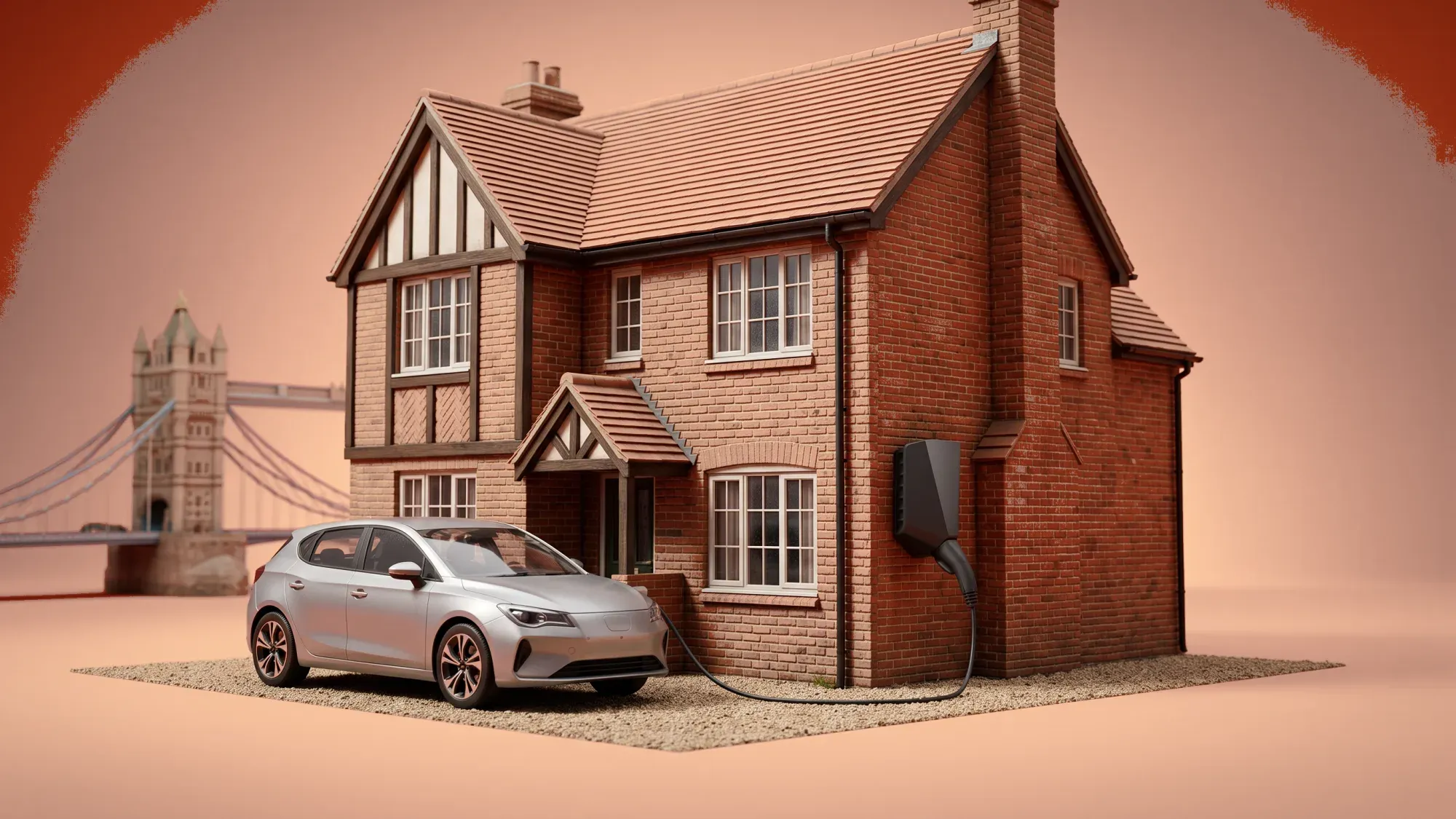
Installing an electric vehicle (EV) charger in Kingston upon Thames requires navigating a unique mix of housing types, from Victorian terraces and 1930s semis to modern riverside flats. Each presents distinct considerations for electrical capacity and parking. For residents, understanding the local energy landscape and available support is crucial for a smooth installation process.
Why install an EV charger in Kingston?
Bringing an EV charger to your Kingston home involves more than just selecting a unit; it requires careful consideration of your property's specifics and the local energy infrastructure. Understanding these local nuances is the first step towards convenient home charging.
Kingston's unique housing and charging needs
Kingston's diverse housing stock means that a one-size-fits-all approach to EV charger installation rarely works. Homes with off-street parking, such as those with driveways or garages, generally offer the most straightforward installation path. However, for the many Kingston residents in flats or those without dedicated off-street parking, solutions like the government's On-street Residential Chargepoint Scheme (LEVI) are becoming increasingly vital.
The convenience of home charging
Having a home EV charger offers unparalleled convenience, allowing you to charge your vehicle overnight and wake up to a full battery. This eliminates the need for frequent trips to public charging stations, integrating seamlessly into your daily routine and providing peace of mind for your journeys from Kingston and beyond.
Understanding Kingston's energy landscape
Navigating the specifics of Kingston's energy infrastructure is key to a successful EV charger installation. This includes understanding who manages the local grid and how pricing is regulated.
Kingston's electricity distribution region and price cap
Kingston sits within the "London" electricity distribution region for Ofgem's price cap. This means that the unit rates and daily standing charges for electricity in Kingston are subject to this regional cap, which is updated quarterly on 1 January, 1 April, 1 July, and 1 October. Understanding this regional pricing helps residents anticipate their charging costs.
UK Power Networks: your local DNO
The local Distribution Network Operator (DNO) for Kingston is UK Power Networks. They are responsible for maintaining and upgrading the electricity cables and infrastructure that bring power to your home. In the event of a power cut in Kingston, residents can dial the free national number 105, which will route them directly to UK Power Networks.
The DNO notification process
For any new home EV charger or solar/battery grid connection in Kingston, UK Power Networks (as the DNO) must be notified. This is done under the ENA connect-and-notify or apply-to-connect process, depending on the charger's power output. This ensures compliance and a smooth connection to the grid.
The home EV charger installation process in Kingston
Installing an EV charger at your Kingston property involves several key steps, from initial assessment to final setup.
Initial assessment and site survey
The first step is a thorough assessment of your property. This includes evaluating your electrical system's capacity, the location of your fuse box, and suitable placement for the charger. For older Kingston homes, an electrical upgrade might be necessary to support the new demand. Parking arrangements, whether a driveway or a designated space, will also influence the installation plan.
Choosing your charger type
EV chargers come in various types, primarily differing in charging speed. Choosing the right home EV charger involves considering its charging speed. Considerations for Kingston residents include charger features like smart charging capabilities, which can optimise charging times to take advantage of off-peak electricity rates, and compatibility with your specific EV model.
Installation and safety standards
Once the charger type is selected, a certified electrician will carry out the installation. This involves wiring the charger to your home's electricity supply and mounting it securely. All installations must comply with strict safety standards and electrical regulations, ensuring the system is safe and efficient.
Grants and funding for Kingston residents
Several government initiatives can help reduce the cost of installing an EV charger, making the switch to electric more accessible for Kingston residents.
The OZEV EV Chargepoint Grant
The EV Chargepoint Grant for renters and flat owners offers financial support towards the cost of purchasing and installing a home EV charger. This grant covers up to £500 and is available for eligible flat owner-occupiers and people in rental accommodation across the UK1.
On-street charging: the LEVI scheme
For Kingston residents without a driveway or dedicated off-street parking, the government's EV charger installation support through the On-street Residential Chargepoint Scheme (LEVI) is particularly relevant. This scheme supports local authorities in providing public charging infrastructure, including on-street residential chargepoints. Kingston Council can utilise this scheme to install chargepoints in areas where private home charging isn't feasible.
Exploring other local initiatives
Beyond national grants, it's worth exploring if Kingston Council or local community groups offer any additional schemes or incentives for EV adoption or charging infrastructure. These can sometimes provide further financial assistance or support for specific local needs.
Selecting an EV charger and installer in Kingston
Choosing the right charger and a reputable installer is crucial for a reliable and safe home charging experience.
Key considerations for your charger
When selecting an EV charger, consider its power output, smart features (such as app control and scheduling), and future compatibility with potential vehicle upgrades. A smart charger can help you manage your energy consumption and potentially save money by charging during off-peak hours.
Finding a certified local installer
Opt for an installer with proven experience in the Kingston area. They should be certified, fully insured, and knowledgeable about local housing types and electrical systems. A good installer will also assist with the necessary DNO notification to UK Power Networks (the ENA connect-and-notify process).
What is the DNO notification process for EV chargers?
A new home EV charger is registered with your DNO under the ENA connect-and-notify process: for most installations the installer fits the charger first and notifies the DNO within 28 days, while higher-load installations need approval before work starts. The separate G98/G99 process covers connecting generation equipment, such as solar panels or home batteries, to the grid. It ensures that your new installation is safely integrated with the local electricity network, with your certified installer notifying UK Power Networks for Kingston residents.
Ensuring future-proofing and support
Consider the warranty offered on both the charger and the installation work. A reputable installer will provide comprehensive after-sales support, ensuring any issues are promptly addressed. Future-proofing your setup means choosing a charger that can adapt to evolving EV technology and your household's energy needs.
Making the switch to electric in Kingston
Making the switch to an electric vehicle and installing a home charger in Kingston is a significant step towards a more sustainable and convenient lifestyle. By understanding the local energy landscape, available grants, and the installation process, Kingston residents can confidently navigate their journey towards home EV charging.
We believe in making energy simple and transparent for everyone. To learn more about our mission to build a cleaner, more efficient energy future, click here.
For the avoidance of doubt, this article is provided for informational purposes only and is not intended to constitute legal or financial advice. The author and/or Fuse Energy shall not be responsible for any losses arising out of any reliance on the information contained herein.