Installing an EV charger in Huddersfield
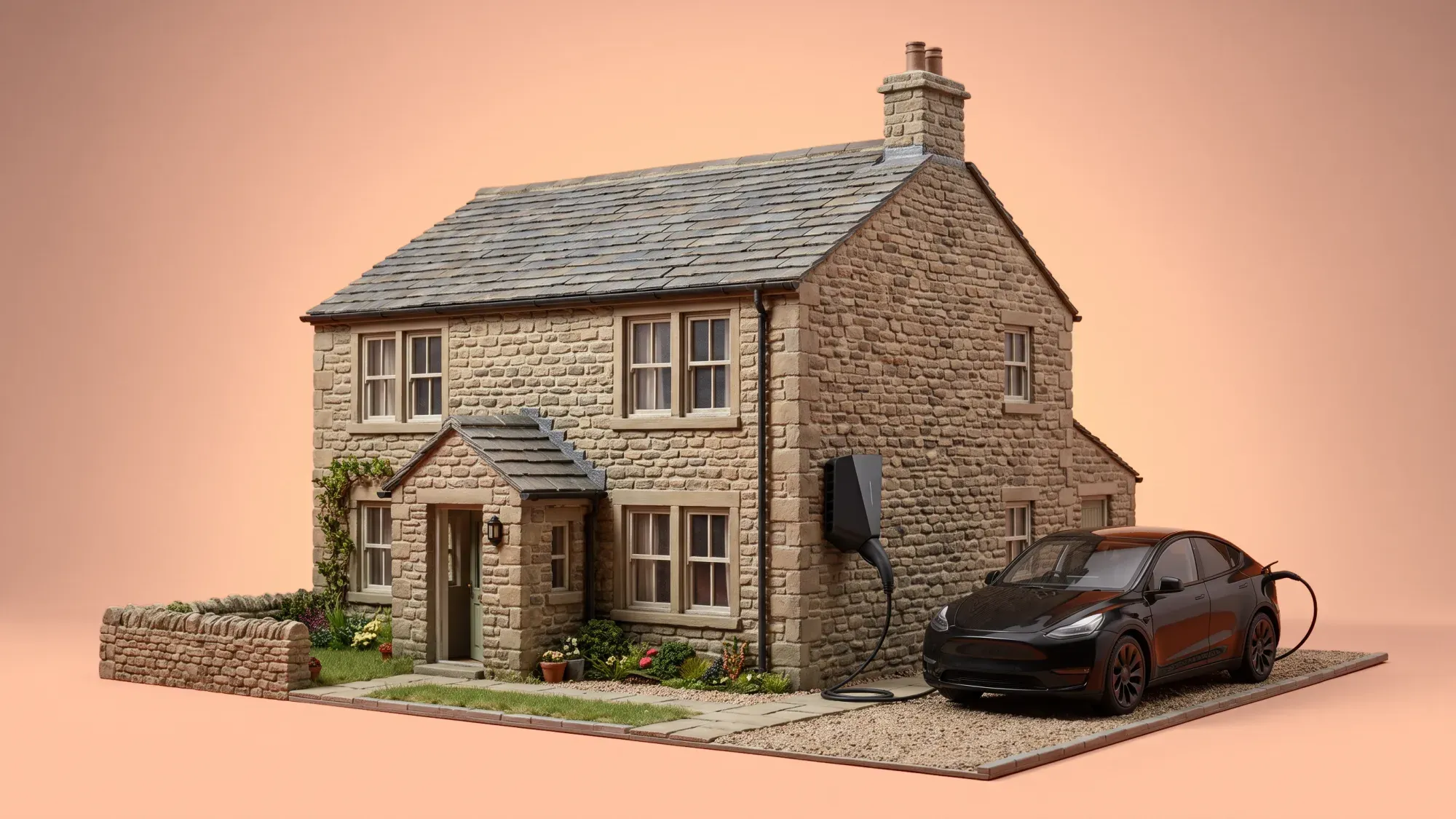
Installing an electric vehicle (EV charger) in Huddersfield involves understanding local property types and energy regulations. Nestled in the Pennine foothills, Huddersfield features a diverse housing landscape, from traditional Victorian terraces and stone-built properties to modern new-build estates. These distinct home types, alongside the local energy infrastructure, influence the feasibility and cost of installing an EV charger at your residence.
Why install an EV charger at your Huddersfield home?
Convenience and cost savings
Charging your EV at home offers unparalleled convenience; you can simply plug in overnight and wake up to a full battery. This eliminates the need to seek out public charging stations, saving you time and reducing range anxiety. Home charging can also be significantly more cost-effective than relying on public infrastructure, especially when paired with smart tariffs designed for EV owners.
Supporting a greener future
By installing an EV charger, you are not just making your daily commute easier; you are also contributing to a greener future. Electric vehicles produce zero tailpipe emissions, helping to improve local air quality in Huddersfield and reduce your carbon footprint. It is a tangible step towards a more sustainable lifestyle, aligning with a vision of a future where abundant energy supports modern living.
Is your Huddersfield home suitable for an EV charger?
Assessing your home's suitability is the first step in the EV charger installation process. Huddersfield's varied housing stock means that what works for one property might not for another.
Assessing your property type
Huddersfield is known for its traditional terraced houses and substantial Victorian and Edwardian properties, alongside modern developments. For homes with off-street parking, such as a driveway or garage, installation is typically straightforward. However, many properties, particularly older terraces, may lack dedicated off-street parking. In such cases, solutions like on-street charging initiatives supported by local councils become crucial.
Electrical supply and parking considerations
Your home's electrical capacity is a key factor. Most modern homes can support an EV charger, but older properties might require an electrical upgrade to safely accommodate the increased demand. An approved installer will conduct a survey to assess your current electrical setup. Dedicated off-street parking is generally a prerequisite for home charger installation. If you live in a flat or a rented property, you will also need permission from your landlord or property management. Understanding how much an EV charger costs can help you budget for potential upgrades.
Grants and funding for EV charger installation in Huddersfield
Government support can significantly reduce the upfront cost of installing an EV charger.
Domestic EV chargepoint grants
The UK government offers grants to help with the cost of buying and installing chargepoints for electric vehicles1. The EV Chargepoint Grant for renters and flat owners provides up to £500 towards the cost of installing a chargepoint at your property. You can apply for this grant if you own and live in a flat, or rent and live in any residential property, provided you have private off-street parking.
Another scheme, the EV Chargepoint Grant for households with on-street parking, also provides up to £500 towards installation costs. This grant is for those who own or rent a property, only have on-street parking, and are installing a cross-pavement solution, such as a charging gully.
Who is eligible for domestic EV chargepoint grants?
The EV Chargepoint Grant for renters and flat owners is available to flat owner-occupiers and those in rented accommodation with dedicated off-street parking. The EV Chargepoint Grant for households with on-street parking is for those with only on-street parking who are installing a cross-pavement solution. Both grants provide up to £500 towards installation costs.
Exploring local Council initiatives (LEVI)
For Huddersfield residents without off-street parking, the government's on-street residential chargepoint scheme (LEVI) can provide a solution. This scheme supports local councils, including Kirklees Council, in installing public chargepoints in residential areas. The LEVI fund aims to increase the deployment of local, primarily low-power, on-street charging infrastructure across England, particularly for those who rely on street parking. This initiative helps ensure that EV ownership remains accessible to a broader range of Huddersfield homeowners.
Navigating Huddersfield's energy network: Northern Powergrid and DNO notifications
Understanding the local energy network is crucial for a smooth EV charger installation.
Understanding Northern Powergrid's role
Northern Powergrid is the Distribution Network Operator (DNO) responsible for the electricity network in Huddersfield and the wider Yorkshire region. They manage the local grid that delivers electricity to your home. Any new connection that draws significant power, such as an EV charger, needs to be registered with them to ensure grid safety and capacity. If you experience a power cut in Huddersfield, dialling the free national number 105 will route you directly to Northern Powergrid.
The DNO notification process
Installation of a new home EV charger in Huddersfield requires a DNO notification to Northern Powergrid. This process is typically managed by your chosen installer. The connect-and-notify route applies where the property's total demand stays at or below 60amps, with the DNO notified after installation. Larger or more complex installations need DNO approval before work starts. Your installer will determine which notification is necessary and handle the paperwork, ensuring compliance with local regulations.
Regional electricity costs in Yorkshire
Huddersfield is located within the "Yorkshire" electricity distribution region. This regional classification influences the unit rates and daily standing charges set by Ofgem's price cap, which is updated quarterly. While the national average price cap is often quoted, your actual electricity costs in Huddersfield will reflect the specific rates for the Yorkshire region. This regional variation means that your ongoing charging costs can differ from other parts of the UK.
Choosing the right EV charger and installer in Huddersfield
Selecting the appropriate charger and a qualified installer are critical steps.
Types of home EV chargers
Home EV chargers typically come in two main types: 3.6kW (slow) and 7kW (fast). A 7kW charger is generally recommended for most homeowners as it offers a good balance of charging speed and cost-effectiveness2. Some advanced chargers also offer smart features, allowing you to schedule charging during off-peak hours or integrate with solar panels. For more details, you can explore guides on how to pick the right home EV charger.
Finding a qualified local electrician
It is essential to choose an installer who is qualified, experienced, and OZEV-approved if you intend to claim a grant. Look for electricians with specific expertise in EV charger installations in the Huddersfield area. A local installer will be familiar with Northern Powergrid's requirements and the types of electrical systems common in Huddersfield homes.
Key questions to ask your installer
Before committing, ask potential installers about their OZEV accreditation, their experience with properties similar to yours, and how they handle the DNO notification process. Clarify the total cost, including any potential electrical upgrades, and inquire about warranties for both the charger and the installation work. You can also find more information on EV charger installation in general.
Integrating your EV charger into a smart home energy strategy
An EV charger can be more than just a plug for your car; it can be a key component of a modern, efficient home energy strategy.
Optimising charging with smart tariffs
Pairing your EV charger with a smart energy tariff can significantly reduce your running costs. These tariffs often offer cheaper electricity rates during off-peak hours, typically overnight. By scheduling your EV to charge during these periods, you can take advantage of lower prices and reduce demand on the grid during peak times.
Future-proofing your home energy
As technology advances, your EV charger can potentially work in conjunction with solar panels, home battery storage, and smart home systems to further optimise energy use and savings. This approach puts control over your home energy into your hands, empowering you to make smart choices for both your wallet and the environment.
Fuse Energy offers 24/7 human customer support for general enquiries and assistance with your Fuse-installed EV charger. We focus on straightforward pricing and smart solutions to help you manage your home energy effectively. Switching to Fuse is quick and easy, allowing you to take control of your energy bills.
References
- UK Government. Electric vehicle chargepoint grants.
- Quantum Electrical. What Determines How Fast an Electric Vehicle Can Charge at Home?.
Disclaimer
For the avoidance of doubt, this article is provided for informational purposes only and is not intended to constitute legal or financial advice. The author and/or Fuse Energy shall not be responsible for any losses arising out of any reliance on the information contained herein.