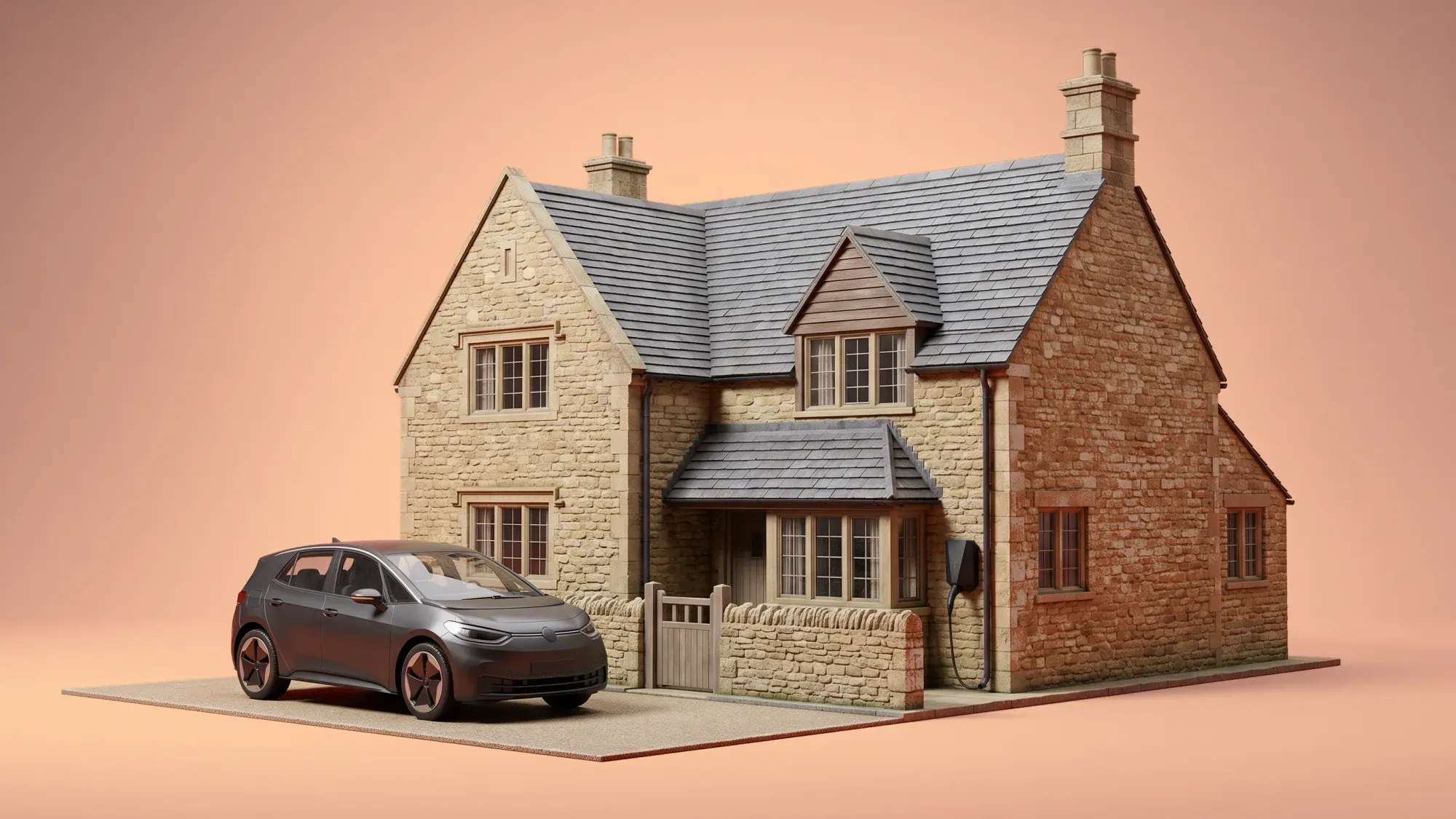
Installing an electric vehicle (EV) charger at home involves understanding the local infrastructure, available grants, and choosing the right accredited professionals. For residents in Gloucestershire, from the Cotswolds to Gloucester and Cheltenham, property variations significantly impact parking availability and electrical supply. This guide will help you navigate the practicalities of setting up a home EV charging solution.
Understanding EV charging in Gloucestershire
The local context: Gloucestershire's unique landscape
Gloucestershire's diverse landscape, with its historic market towns, rural villages, and bustling urban areas, presents unique considerations for EV charger installation. While many rural properties may have ample off-street parking, homes in more densely populated areas like Cheltenham or Gloucester might face challenges with on-street parking or shared access. These local characteristics directly influence the type of charger suitable for your home and the installation process.
Why home charging matters for EV owners
Home EV charging offers unparalleled convenience, allowing you to top up your vehicle overnight and start each day with a full "tank." It eliminates the need for frequent trips to public charging stations and often proves more cost-effective in the long run. For many EV owners, a home chargepoint transforms the electric vehicle experience into a seamless part of daily life.
Choosing the right EV charger for your home
Types of home EV chargers explained
Home EV chargers typically fall into two main categories:
Slow chargers: These include standard 3-pin plug chargers, which offer the slowest charging speed, typically around 3kW. They are suitable for overnight charging for plug-in hybrids or those with low daily mileage. Dedicated slow chargers might offer around 3.6kW.
Fast chargers: These commonly deliver between 7kW and 22kW. A 7.4kW charger is one of the most common home installations in the UK, balancing speed, convenience, and affordability, and can fully charge most EVs overnight. A 22kW charger requires a three-phase electricity supply, which is rare in UK residential properties but offers significantly faster charging.
Key features to consider
When selecting an EV charger, consider its power output, whether it is tethered (with a cable permanently attached) or untethered (requiring you to use your car's charging cable), and its smart features. Smart chargers allow you to schedule charging during off-peak hours, track energy consumption, and often integrate with home energy management systems. Compatibility with your vehicle and your home's electrical supply are paramount. For more information on choosing the right home EV charger, you can explore our guide on how to pick the right home EV charger.
Grants and local regulations for Gloucestershire residents
OZEV EV chargepoint grants: eligibility and how to apply
The Office for Zero Emission Vehicles (OZEV) offers grants to help with the cost of buying and installing chargepoints for electric vehicles.1 The EV Chargepoint Grant for renters and flat owners provides up to £500 towards the cost of installing a chargepoint at your property, confirmed until 31 March 2027. This grant is specifically available for flat owner-occupiers and people in rental accommodation who have dedicated off-street parking. To qualify, you must own, lease, or have on order an eligible electric or plug-in hybrid vehicle. The customer applies for the grant themselves via GOV.UK; the OZEV-authorised installer's role begins only after the application is approved.
On-street charging solutions: the LEVI scheme
For Gloucestershire residents without off-street parking, the government's Local Electric Vehicle Infrastructure (LEVI) Fund can provide a solution. This initiative supports local authorities in England, including those in Gloucestershire, to install public chargepoints in residential areas. The LEVI Fund aims to increase the availability of local, low-power on-street charging infrastructure, making EV ownership more viable for a broader population. If you rely on on-street parking, contacting your local council in Gloucestershire can provide information on planned or existing LEVI installations in your area.
Gloucestershire's energy landscape: DNO and price cap region
Gloucestershire falls within the "South West England" electricity distribution region for Ofgem's price cap. This means that the unit rates and standing charges for electricity in Gloucestershire may differ from other parts of the UK, as the cap is set regionally and updated quarterly.
The local Distribution Network Operator (DNO) for Gloucestershire is National Grid Electricity Distribution (NGED). The DNO is responsible for managing the local electricity infrastructure, ensuring grid stability, and approving new connections. In the event of a power cut, Gloucestershire residents can dial the free national number 105, which routes directly to their local DNO.
Finding an accredited EV charger installer in Gloucestershire
What to look for in an installer
Choosing the right installer is crucial for a safe and compliant EV charger installation. Look for installers with a strong local reputation, positive customer reviews, and comprehensive insurance. They should be able to advise on the best charger for your needs, assess your property's electrical capacity, and handle all necessary notifications. You can find more details on what to consider in our guide to EV charger installation.
The importance of OZEV accreditation
Always use an installer who is registered with OZEV as an authorised installer. Using a non-accredited installer will mean you are not eligible for any OZEV grant. OZEV-accredited installers ensure that the charger and its installation meet the government's safety and technical standards.
The EV charger installation process step-by-step
Initial assessment and site survey
The process begins with an initial assessment of your property and a detailed site survey by your chosen installer. This survey checks your home's electrical supply, identifies the best location for the charger, and confirms any potential challenges or additional requirements.
Electrical requirements and the DNO notification process
All EV charger installations must comply with the IET Wiring Regulations (BS 7671) and be formally notified to the local DNO. For new home EV charger grid connections in Gloucestershire, this notification is made to NGED under the ENA connect-and-notify process.
What is the ENA connect-and-notify process for EV chargers?
A new home EV charger is registered with your DNO under the ENA connect-and-notify process: for most installations the installer fits the charger first and notifies the DNO within 28 days, while higher-load installations need approval before work starts. The separate G98/G99 process covers connecting generation equipment, such as solar panels or home batteries, to the grid. It ensures grid safety and stability. For most domestic EV charger installations, the installer handles the notification to the DNO, which in Gloucestershire is NGED.
The connect-and-notify route applies where the property's total demand stays at or below 60amps, with the DNO notified after installation. Larger or more complex installations need DNO approval before work starts. Your installer will determine which process applies to your specific setup and manage the necessary paperwork with NGED.
Post-installation: getting started with your charger
Once installed, your charger will be tested, and your installer will provide a demonstration of its features. They should also issue you with all relevant documentation, including electrical safety certificates. With your new home EV charger, you will gain greater control over your energy use and enjoy the full convenience of electric vehicle ownership.
Fuse aims to be a definitive, trusted, and genuinely local informational hub for EV charger installation, providing comprehensive guidance. By understanding local grid connections and DNO processes, homeowners can integrate their EV charging seamlessly into the broader energy infrastructure, empowering them to make informed decisions and gain more control over their energy use.
For the avoidance of doubt, this article is provided for informational purposes only and is not intended to constitute legal or financial advice. The author and/or Fuse Energy shall not be responsible for any losses arising out of any reliance on the information contained herein.