EV charger installation in Durham
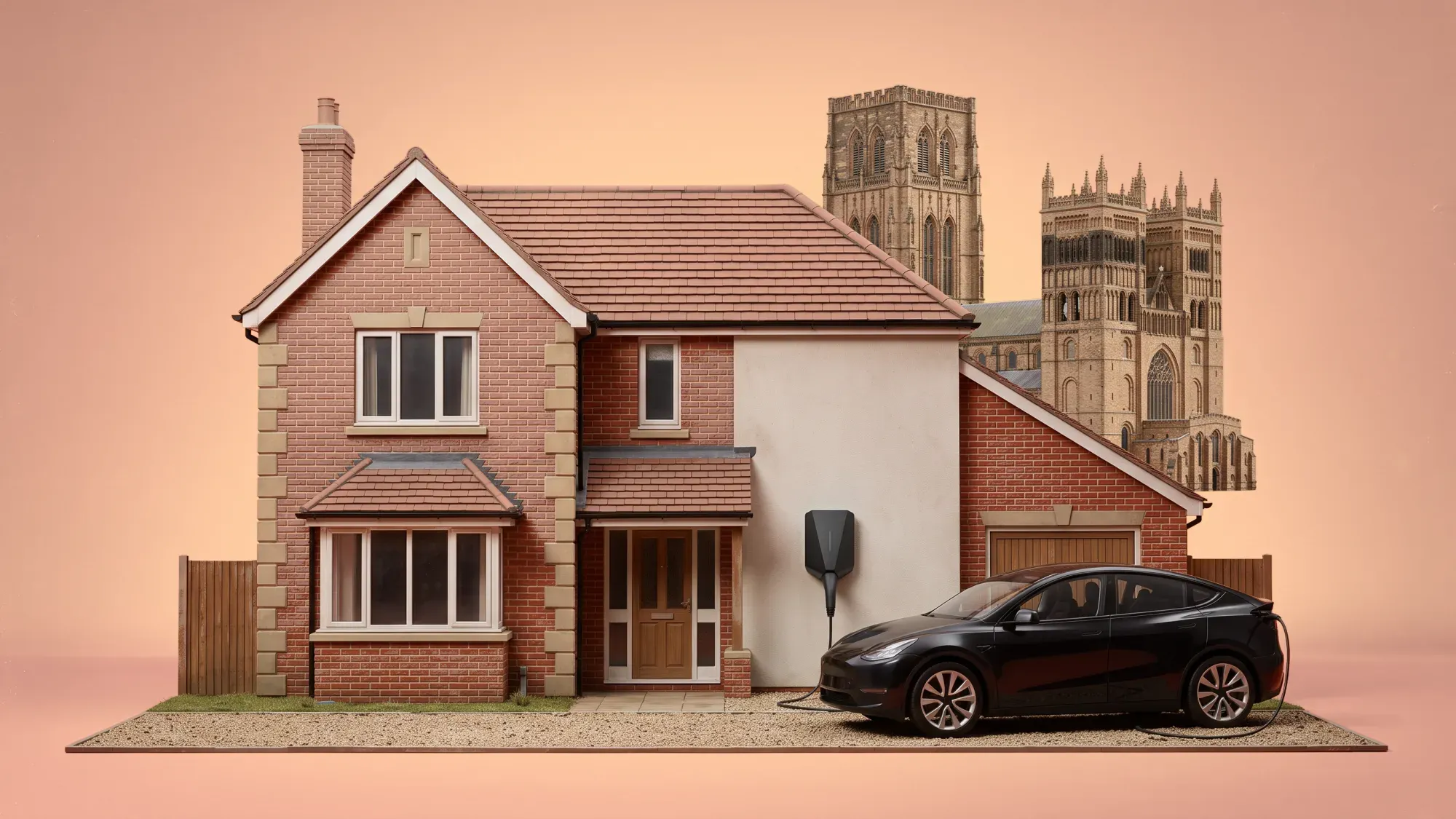
Installing an EV charger at home in Durham offers the convenience of waking up to a fully charged vehicle, ready for journeys across the city or further afield. For residents of Durham, understanding the local specifics of EV charger installation is key to a smooth process. This guide provides clear, localised information on everything from grants to grid connections for homeowners in the area.
Durham's unique EV charging landscape
Durham's position in the North East of England means its energy landscape has particular characteristics that impact home EV charger installation. Knowing these local details can help you navigate the process efficiently.
The North East England price cap region
Durham falls within the "North East England" electricity distribution region for Ofgem's price cap. This means that the unit rates and daily standing charges for electricity in Durham will differ from those in other regions of Great Britain. The energy price cap is updated quarterly, so understanding your regional pricing is important for budgeting your EV charging costs.
Navigating Northern Powergrid
The local Distribution Network Operator (DNO) for Durham is Northern Powergrid. They are responsible for maintaining and upgrading the electricity network that delivers power to your home. Any new connection to the grid, such as an EV charger, needs to be notified to Northern Powergrid. In the event of a power cut, Durham residents can dial the free national number 105, which will route directly to Northern Powergrid for assistance.
Housing types and installation considerations
Durham's varied housing stock presents unique considerations for EV charger installation. Many parts of the city feature traditional Victorian terraced houses, which may have limited or no off-street parking. Newer developments and detached properties, on the other hand, often come with driveways or garages, simplifying the installation of a dedicated home chargepoint. For homes without off-street parking, Durham County Council has trialled innovative solutions like the Kerbo Charge system in areas such as Sunniside, Crook, aiming to provide safe charging solutions for residents.
Understanding home EV chargers
Choosing the right EV charger for your home is about more than just picking a brand; it involves understanding the different types available, their compatibility with your vehicle, and the smart features that can enhance your charging experience. For more detailed information, explore our guide on Home EV chargers.
Types of EV chargers for your home
Home EV chargers typically come in two main types:
- Slow chargers (2.3kW-3kW): These are the slowest option, often using a standard 3-pin plug. They are suitable for overnight charging but can take 6-12+ hours to fully charge most EVs.
- Fast chargers (7kW): This is the most common type for home installation in the UK. A 7kW charger can typically charge an EV in 6-8 hours, making it ideal for overnight charging. Some properties with a three-phase electricity supply can accommodate 22kW fast chargers, offering even quicker charging times.
Compatibility with your electric vehicle
Most modern electric vehicles in the UK use a Type 2 connector, which is the standard for home chargepoints. Ensure the charger you choose is compatible with your EV's connector type. While some chargers come with a tethered cable (permanently attached), others offer a socket for you to plug in your vehicle's charging cable.
Smart charging features
Smart chargers offer a range of benefits beyond simply delivering electricity. They can be controlled via a smartphone app, allowing you to schedule charging sessions to take advantage of cheaper off-peak electricity tariffs. Many also include dynamic load balancing, which prevents your home's electrical supply from being overloaded by adjusting the charging rate based on your household's energy consumption. This ensures safe and efficient charging without impacting other appliances. To help you decide, read our guide on how to pick the right home EV charger.
The EV charger installation process in Durham
Installing an EV charger in Durham involves several steps, from an initial assessment of your property to the final testing and certification.
Initial assessment and site survey
The process begins with a qualified installer conducting an initial assessment or site survey of your property. This involves checking your home's electrical capacity, the location of your consumer unit (fuse box), and the proposed chargepoint location. They will identify any potential challenges, such as the need for electrical upgrades or long cable runs, which can affect the overall cost and complexity of the installation.
The DNO notification process
A crucial step in Durham is the notification process with Northern Powergrid, your local DNO. For most standard 7kW single-phase EV charger installations, your installer will submit a connect-and-notify submission to Northern Powergrid. This allows them to proceed with the installation and then notify the DNO within 28 days of commissioning. If your total prospective load with the EV charger exceeds 16amps per phase, or if you're installing a three-phase charger, an apply-to-connect application is required, which mandates DNO approval before installation can commence.
What is the ENA connect-and-notify process for EV chargers?
The connect-and-notify process is a regulatory requirement for notifying your DNO, such as Northern Powergrid in Durham, about new connections to the electricity grid like EV chargers. It ensures your installation won't overload the local network, with connect-and-notify for smaller connections and apply-to-connect for larger or more complex setups requiring prior approval.
Typical installation timeline
A standard home EV charger installation typically takes a few hours to a full day, depending on the complexity of the wiring and any necessary electrical upgrades. The DNO notification process, particularly for G99 applications, can add several weeks to the overall timeline as it requires their assessment and approval before work can begin. Your chosen installer will manage this process for you, keeping you informed of the expected schedule. For a comprehensive overview, see our guide on EV charger installation.
Costs and grants for Durham EV charger installation
Understanding the financial aspects of EV charger installation, including average costs and available grants, is essential for Durham residents.
Average installation costs
The cost of installing a home EV charger in the UK generally ranges from £800 to £1,200 for a standard 7kW unit, including the hardware and basic installation. However, this can vary based on factors like the specific charger model, the length of the cable run from your consumer unit to the chargepoint, and whether your home's electrical system requires an upgrade. For instance, upgrading an older consumer unit can add £350-£800 to the cost. To understand the full picture, read our article on how much is an EV charger.
OZEV EV chargepoint grant eligibility
The UK government provides the EV Chargepoint Grant for renters and flat owners, and the EV Chargepoint Grant for households with on-street parking, to support the installation of home chargepoints across the UK. These grants cover up to £500 towards the purchase and installation costs. They are confirmed until 31 March 2027.
Eligibility is specific: the EV Chargepoint Grant for renters and flat owners is primarily available to flat owner-occupiers and people living in rental accommodation who have dedicated off-street parking. You must also own, lease, or have on order an eligible electric or plug-in hybrid vehicle and use an OZEV-authorised installer. If you have previously claimed under the Electric Vehicle Homecharge Scheme (EVHS) or Domestic Recharge Scheme, you cannot claim the current grant.
Who is eligible for the OZEV EV chargepoint grant?
The EV Chargepoint Grant for renters and flat owners is available to flat owner-occupiers and those in rental accommodation across the UK. You must have dedicated off-street parking, an eligible EV, and use an OZEV-authorised installer. The grant covers up to £500.
Exploring local on-street charging initiatives
For Durham residents without off-street parking, the Local Electric Vehicle Infrastructure (LEVI) fund is highly relevant. This UK government initiative supports local authorities, including Durham County Council, in rolling out public EV charging infrastructure, particularly in residential areas where home charging isn't feasible. Durham County Council has trialled innovative solutions like the Kerbo Charge system, which allows for safe cable routing across pavements. These local initiatives are crucial for expanding EV adoption across Durham's diverse housing types.
Choosing an approved EV charger installer in Durham
Selecting the right installer is paramount for a safe, efficient, and grant-eligible EV charger installation in Durham.
What to look for in an installer
When choosing an installer, look for companies with a strong local reputation and experience working with the specific challenges presented by Durham's housing stock. They should be able to provide clear, transparent quotes that detail all costs, including any potential electrical upgrades. Excellent customer service and clear communication throughout the process are also key indicators of a reliable installer.
Ensuring OZEV approval
To be eligible for the OZEV EV chargepoint grants, you must use an installer registered with OZEV as an authorised installer. Using an unauthorised installer will mean you are not eligible for the grant. You can verify an installer's OZEV approval status on the GOV.UK website.
Getting quotes and comparing services
It is always advisable to obtain multiple quotes from different OZEV-approved installers operating in the Durham area. This allows you to compare not only the price but also the scope of work, the types of chargers offered, and the level of service. A good installer will explain the DNO notification process and handle all the necessary paperwork with Northern Powergrid on your behalf, ensuring a hassle-free installation.
Disclaimer
For the avoidance of doubt, this article is provided for informational purposes only and is not intended to constitute legal or financial advice. The author and/or Fuse Energy shall not be responsible for any losses arising out of any reliance on the information contained herein.