Home EV charger installation in Carlisle
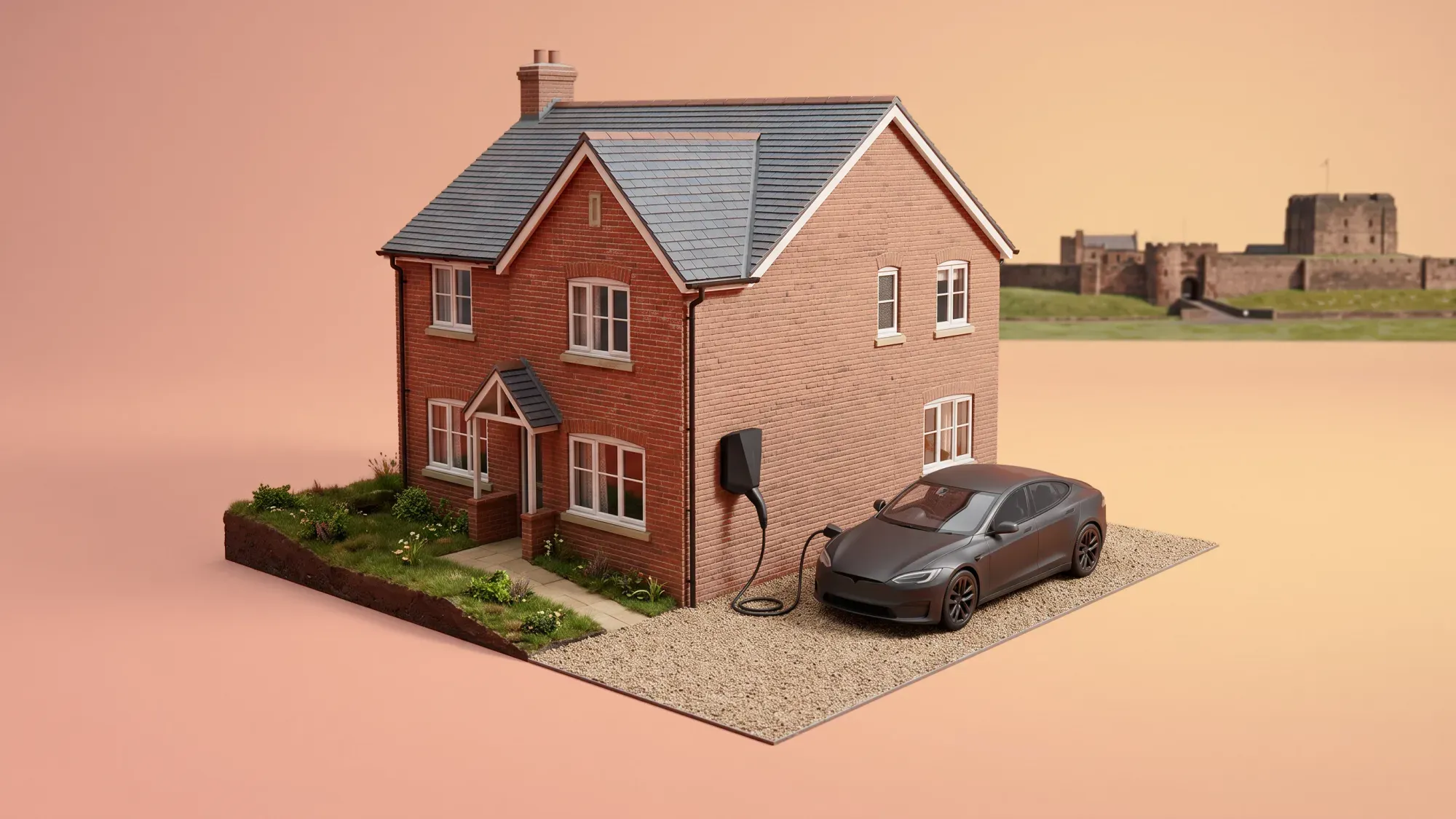
Installing an electric vehicle (EV) charger at home in Carlisle offers unparalleled convenience, transforming the daily routine for EV owners. For residents across the Border City, from the Victorian terraces of Botcherby and Harraby to the more established family homes in Stanwix or the village settings of Wetheral, understanding the local specifics is key to a smooth installation. This guide provides Carlisle residents with practical, localised information on everything from grants and costs to regulatory requirements and integrating your charger with home energy management.
Understanding EV charging in Carlisle
Switching to an electric vehicle is a forward-looking decision, and having a home charging point makes the experience significantly more practical. It means waking up to a fully charged car, ready for commutes, school runs, or exploring the stunning Cumbrian landscape, without relying on public charging infrastructure.
Why home charging matters for Carlisle residents
Home EV charging offers convenience and often cost savings compared to public charging. You can charge overnight when electricity rates might be lower, and avoid queues or out-of-the-way detours. For Carlisle residents, whose homes range from City-centre flats to properties with off-street parking in surrounding villages, a dedicated home charger provides peace of mind and maximises the benefits of EV ownership.
Carlisle's local energy landscape: DNO and price cap
Carlisle is located within the 'North West England' electricity distribution region. This regional classification influences the unit rates and standing charges that apply under Ofgem's energy price cap, which is updated quarterly.
The Distribution Network Operator (DNO) responsible for managing the electricity grid in Carlisle is Electricity North West. They are crucial for ensuring the local network can safely accommodate new electrical connections, including EV chargers. In the event of a power cut, Carlisle residents should dial the free national number 105, which routes directly to Electricity North West.
The EV charger installation process in Carlisle
Installing an EV charger is a regulated process that requires professional expertise to ensure safety and compliance with national and local requirements. For more general information on EV charger installation, you can refer to our detailed guide.
Assessing your home's suitability
Before any installation, a qualified electrician will assess your home's electrical capacity and the physical space available for the charger. This involves checking your consumer unit (fuse box) to ensure it can handle the additional load and identifying the best location for the chargepoint, considering proximity to your parking space and the main electricity supply.
The DNO notification process for Carlisle
New home EV charger installations in Carlisle require notification to Electricity North West under the ENA connect-and-notify or apply-to-connect process. This is a regulatory requirement to ensure the stability and safety of the local electricity grid.
What is the ENA connect-and-notify process for EV chargers?
A new home EV charger is registered with your DNO under the ENA connect-and-notify process: where the property's total demand stays at or below 60amps, the installer fits the charger first and notifies the DNO within 28 days, while higher-load installations need approval before work starts. The separate G98/G99 process covers connecting generation equipment, such as solar panels or home batteries, to the grid.1
Your chosen installer is responsible for managing this notification process with Electricity North West. For most domestic EV charger installations, where the property's total demand stays at or below 60amps, the simpler connect-and-notify route applies and the DNO is notified after the installation is complete. Larger installations, or those with export capabilities such as vehicle-to-grid systems, need DNO approval before work starts.
What to expect on installation day
On the day of installation, the electrician will typically:
- Prepare the site: This includes routing cables from your consumer unit to the chargepoint location.
- Mount the charger: The unit will be securely fixed to a wall or a dedicated post.
- Connect to the electricity supply: The charger is wired into your home's electrical system, often with a dedicated circuit breaker for safety.
- Test the unit: The installer will thoroughly test the charger to ensure it is functioning correctly and safely.
- Provide a demonstration: You will receive instructions on how to use your new charger and any associated apps.
- Issue certification: You will be provided with an Electrical Installation Certificate, confirming compliance with BS 7671 (IET Wiring Regulations) and building regulations.
Costs, grants, and local support for Carlisle EV owners
Understanding the financial aspects of EV charger installation is crucial, including typical costs, available grants, and local initiatives. If you are wondering how much is an EV charger, several factors can influence the total price.
Typical installation costs
The cost of installing a home EV charger in Carlisle can vary significantly. Factors influencing the price include the type of charger, the complexity of the electrical work required (e.g., long cable runs, consumer unit upgrades), and the installer's rates. Most installations typically range from £800 to £1,200 before any grants are applied.
OZEV EV chargepoint grants
The UK government offers several OZEV (Office for Zero Emission Vehicles) EV chargepoint grants to help reduce the upfront cost of installing a home EV charger2. These grants are available until 31 March 2027.
It is important to note that eligibility for these grants is specific:
- The Electric Vehicle Chargepoint Grant for renters and flat owners provides up to £500 towards the cost of buying and installing a chargepoint, covering 75% of the total cost, capped at £500. To be eligible, you must own and live in a flat, or rent and live in any residential property, and have private off-street parking.
- The Electric Vehicle Chargepoint Grant for households with on-street parking also provides up to £500 towards the cost of installing a chargepoint. Eligibility requires you to own or rent the property, only have on-street parking, and be installing a cross-pavement solution (e.g., a charging gully).
Standard homeowners (those living in detached, semi-detached, or terraced houses with private off-street parking) are generally no longer eligible for domestic chargepoint grants. Your installer must be OZEV-authorised, and the charger must be on the approved product list. The customer applies for the grant themselves via the GOV.UK website; the installer's role begins after the application is approved.
On-street charging options in Carlisle (LEVI)
For Carlisle residents without off-street parking, the prospect of home charging might seem challenging. However, local councils can facilitate the installation of on-street residential chargepoints through government schemes like the Local Electric Vehicle Infrastructure (LEVI) fund.
Cumberland Council, which covers Carlisle, has secured significant LEVI funding to expand public EV charging infrastructure, particularly for residents without driveways and in rural communities. This initiative aims to make charging more accessible by installing chargepoints in on-street locations, council car parks, and community sites. If you lack off-street parking, it is worth checking with Cumberland Council for updates on their LEVI rollout and to suggest potential locations for new chargepoints.
Choosing the right EV charger and installer
Making informed decisions about your EV charger and who installs it is crucial for a safe and efficient home charging experience. Our guide on picking the right home EV charger can help you navigate the options.
Types of home EV chargers
Types of home EV chargers typically come in two main types:
- Untethered: These chargers have a socket, and you use the charging cable that came with your EV (or a separate one you purchase). This offers flexibility if you have different EVs with varying connector types.
- Tethered: These chargers have a cable permanently attached, which can be more convenient as you do not need to retrieve your car's cable each time. Ensure the connector type matches your vehicle.
Most home chargers are "smart chargers," meaning they can connect to the internet, allowing for features like scheduled charging, remote control via an app, and usage tracking. This connectivity is often a requirement for OZEV grant eligibility.
Finding a qualified installer in Carlisle
Professional installation by a qualified electrician is mandatory for home EV chargers. When selecting an installer in Carlisle, look for:
- OZEV authorisation: If you plan to apply for an OZEV grant, your installer must be authorised by OZEV.
- Accreditation: Ensure they are registered with a government-approved competent person scheme like NICEIC or NAPIT. This confirms they meet Part P of the Building Regulations for electrical safety.
- Experience with DNO notifications: A reputable installer will handle all necessary DNO notifications with Electricity North West on your behalf.
- Local reputation: Check reviews and ask for local references.
Integrating your EV charger with home energy management
Beyond the installation, optimising how you use your EV charger can lead to greater savings and a more efficient home energy system.
Smart charging and energy tariffs
Smart chargers, often a requirement for grants, allow you to schedule charging sessions. This capability is invaluable for taking advantage of time-of-use electricity tariffs, which offer cheaper rates during off-peak hours (e.g., overnight). By scheduling your EV to charge when demand on the grid is low and electricity is cheaper, you can significantly reduce your running costs.
Fuse's smart meter capabilities and intuitive app can help EV owners in Carlisle optimise their charging times to take advantage of cheaper rates, integrating seamlessly with broader home energy management.
Future-proofing your home energy system
Installing an EV charger is a foundational step towards achieving greater energy independence. As technology evolves, integrating your EV charging with other home energy upgrades, such as solar panels and battery storage, can further enhance efficiency and resilience. This approach aligns with a vision of abundant energy, where you have "power to play with" - controlling your energy usage and costs.
Fuse offers 24/7 human customer support, ensuring a smooth and supported experience for EV owners managing their home energy and charging needs.
References
- UK Government. How to register energy devices in homes or small businesses
- UK Government. Electric vehicle chargepoint grants
Disclaimer
For the avoidance of doubt, this article is provided for informational purposes only and is not intended to constitute legal or financial advice. The author and/or Fuse Energy shall not be responsible for any losses arising out of any reliance on the information contained herein.