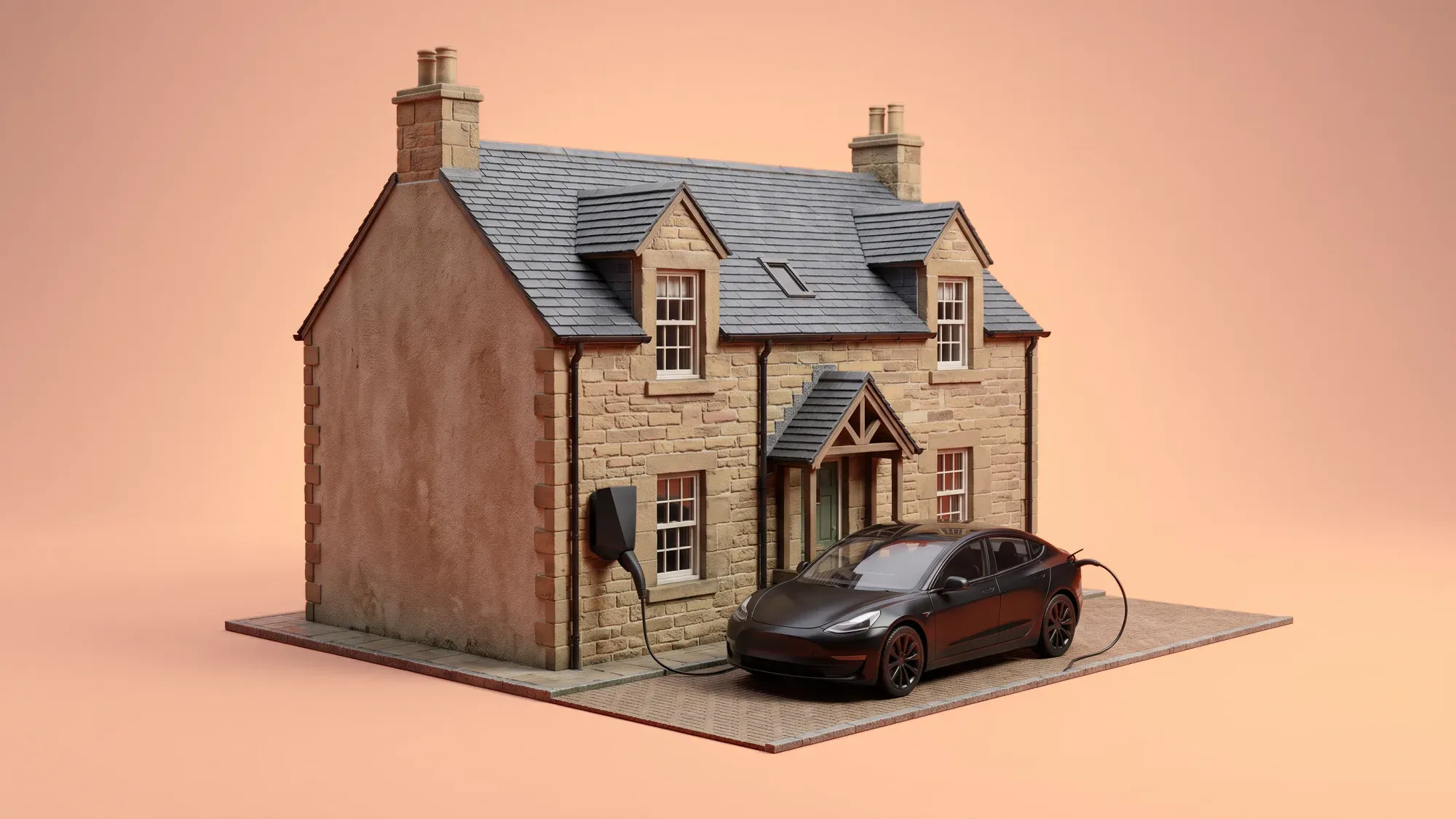
From the rugged coastline of the Firth of Clyde to the rolling hills of inland Ayrshire, electric vehicles (EVs) are becoming an increasingly popular choice for homeowners. Whether you live in a traditional sandstone villa in Ayr, a modern new-build in Kilmarnock, or a charming rural cottage, installing a home EV charger offers unparalleled convenience and potential cost savings.
Why install an EV charger at home in Ayrshire?
Installing an EV charger at home transforms your electric vehicle ownership experience. It moves beyond the occasional public charging stop, offering a dedicated power source right where you need it most.
Convenience and cost savings
The primary advantage of a home EV charger is convenience. You can simply plug in your vehicle overnight, waking up each morning to a fully charged battery. This eliminates the need to seek out public charging stations, saving you time and reducing range anxiety. Furthermore, charging at home, especially during off-peak hours, can significantly reduce your running costs compared to public charging networks.
Boosting your property value
An EV charger is increasingly seen as a desirable feature for modern homes. As electric vehicles become more common, a dedicated charging point can enhance your property's appeal and potentially increase its market value, particularly in areas like Ayrshire where sustainable living is gaining traction.
Understanding Ayrshire's energy landscape
Installing an EV charger means connecting to the local electricity grid. Understanding Ayrshire's specific energy infrastructure is crucial for a smooth installation process.
The Southern Scotland price cap region
Ayrshire sits in the "Southern Scotland" electricity distribution region for Ofgem's price cap. This means that your unit rates and daily standing charges for electricity will differ from other regions across Great Britain, as the cap is set per region and updated quarterly on 1 January, 1 April, 1 July, and 1 October.
Your local distribution network operator
Your local Distribution Network Operator (DNO) manages the local electricity grid infrastructure, ensuring power is delivered to your home. To find your specific DNO, you can use the Energy Networks Association (ENA) 'Find my network operator' tool. In the event of a power cut, residents should dial the free national number 105, which routes directly to your local DNO.
Grid connections and the DNO notification process
Connecting a new home EV charger or a solar/battery system to the grid requires notification to your DNO (chargers via the ENA connect-and-notify route; solar or battery systems under G98/G99). This regulatory requirement ensures that new connections do not negatively impact the stability of the local grid. Your qualified EV charger installer will assist with this notification process, but the customer is ultimately responsible for compliance.
What is the ENA connect-and-notify process for EV chargers?
A new home EV charger is registered with your DNO under the ENA connect-and-notify process: for most installations the installer fits the charger first and notifies the DNO within 28 days, while higher-load installations need approval before work starts. The separate G98/G99 process covers connecting generation equipment, such as solar panels or home batteries, to the grid. It ensures your installation is safe and doesn't overload the local network. Your installer will typically handle the notification to your DNO, but the customer is ultimately responsible for compliance. For more details on the installation process, you can read our guide on EV charger installation.
The Office for Zero Emission Vehicles (OZEV) offers the EV Chargepoint Grant for renters and flat owners, providing up to £500 towards the cost of installing a chargepoint. This grant is available to those who own and live in a flat, or rent any residential property, provided they have private off-street parking. There is also the EV Chargepoint Grant for households with on-street parking, which offers up to £500 for those installing a cross-pavement solution. Customers must apply for these grants directly via the GOV.UK website after purchasing their charger.
Support from Home Energy Scotland
In Scotland, grants for home energy improvements, including some related to charging infrastructure, are often managed by Home Energy Scotland. They provide free, impartial advice and can help you explore various funding options that might be available for your specific circumstances.
On-street charging options (LEVI scheme)
For residents without a driveway or off-street parking, local authorities can be supported by the Local Electric Vehicle Infrastructure (LEVI) fund to roll out public on-street residential chargepoints. This scheme aims to improve access to charging for people who cannot charge at home.
Choosing the right EV charger for your Ayrshire home
Selecting the appropriate EV charger involves considering your vehicle, home's electrical capacity, and future needs.
Charger types and speeds
Home EV chargers typically offer various speeds. Common options include 3.6 kW and 7.4 kW units. A 7.4 kW charger is a popular choice for many homeowners, as it can often fully charge a typical EV overnight. Higher-power chargers, such as those rated at 22 kW, usually require a three-phase electrical supply, which is more common in commercial settings, making them less typical for home installation. To help you decide, consider our guide on how to pick the right home EV charger.
Smart features and future-proofing
Consider chargers with smart features that allow you to schedule charging during off-peak hours and monitor energy consumption. Future-proofing your choice means selecting a charger that can adapt to evolving EV technology and potentially integrate with broader home energy management systems.
The EV charger installation process in Ayrshire
Once you've chosen your charger, the installation process involves several key steps to ensure safety and compliance.
Finding a qualified installer
It is crucial to use a qualified and certified EV charger installer in Ayrshire. They will ensure the installation complies with IET Wiring Regulations (BS 7671) and handle the necessary notifications to your DNO. Always seek out installers with relevant accreditations and positive local reviews.
What to expect during installation
The installation process typically begins with an assessment of your home's electrical supply to ensure it can support the new charger. The installer will then mount the chargepoint, run the necessary cabling, and connect it to your consumer unit. After installation, they will test the charger, demonstrate its operation, and provide you with all relevant documentation, including a certificate of electrical safety.
Powering your home and EV with Fuse Energy
Integrating an EV charger into your home is a significant step towards a more sustainable and efficient energy future. Fuse Energy aims to simplify this journey, empowering homeowners with greater control over their energy usage.
Integrating EV charging with smart home energy
The Fuse app can help manage home energy upgrades, including EV charging, offering transparency and control. The app connects EV chargers and supports eligible dual-rate variable tariff usage patterns, allowing you to potentially optimise when you charge your EV using cheaper off-peak electricity.
Control and convenience through the Fuse app
The Fuse app provides a centralised platform to monitor and manage your home's energy consumption, including your EV charging. This control and convenience align with Fuse's vision of providing "power to play with," making home EV charging accessible and efficient. Fuse also provides 24/7 human customer support to assist with energy-related queries, including those related to home charging.
For the avoidance of doubt, this article is provided for informational purposes only and is not intended to constitute legal or financial advice. The author and/or Fuse Energy shall not be responsible for any losses arising out of any reliance on the information contained herein.