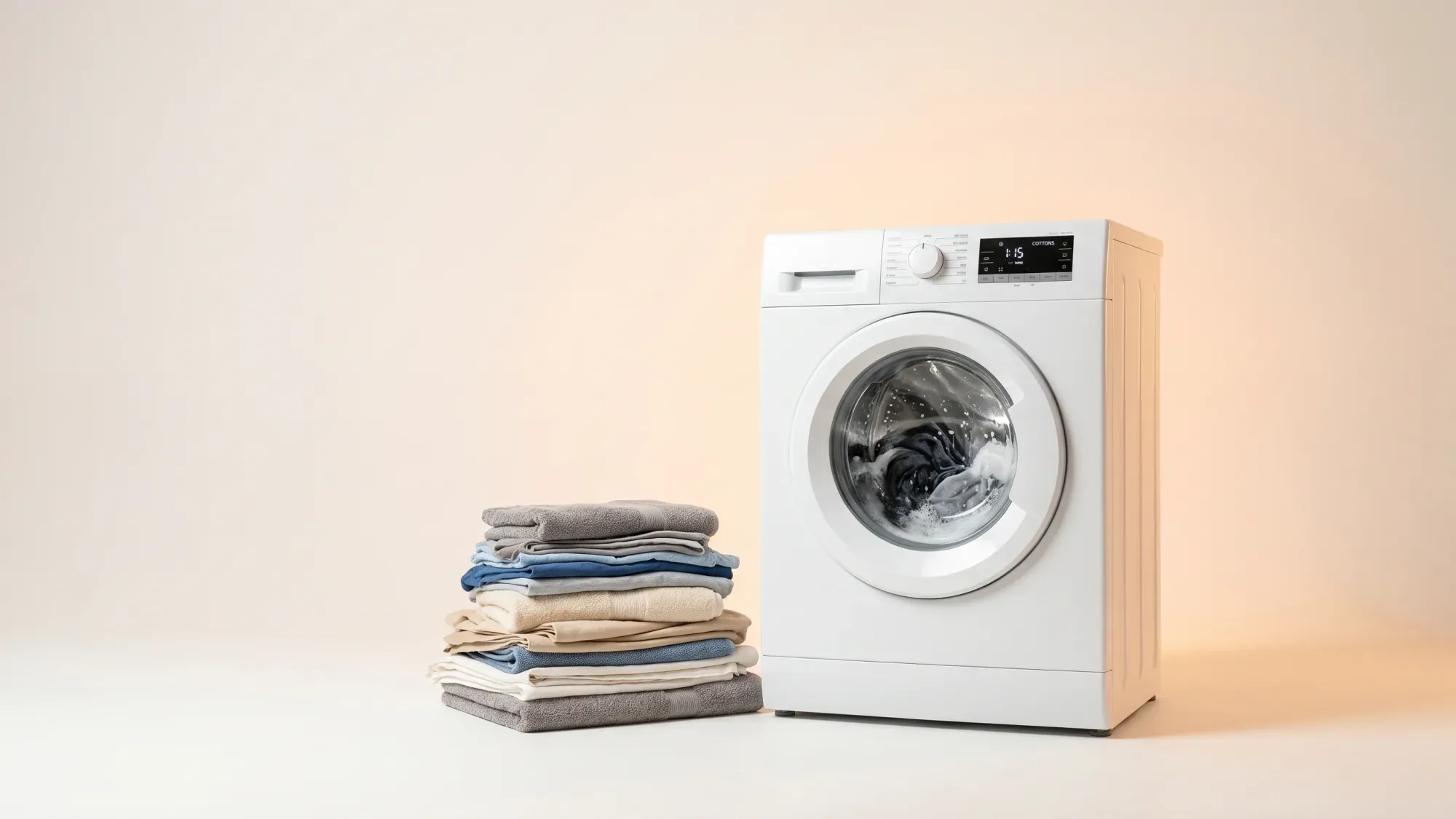
Reducing the energy consumption and cost of doing laundry is achievable with a few practical adjustments to your routine and understanding of your appliance. By making informed choices about when and how you wash, UK households can significantly cut down on their electricity bills.
Your washing machine is a frequent user of electricity, and understanding its energy demands is the first step towards saving money.
How much does laundry cost?
The average UK home uses around 2,500 kWh of electricity per year. Under the Ofgem Price Cap for July-September 2026, the electricity unit rate is 26.11p per kWh. While washing machines account for approximately 3% of a typical household's energy bill, this can still add up over time, especially with frequent use. A single wash can cost anywhere from 13p to 50p, depending on the machine's efficiency, the cycle chosen, and the temperature. For instance, a 1400W washing machine used three times a week could cost around £57.02 per year to run.
Decoding energy ratings and modified energy factor
Modern washing machines in the UK come with an energy rating system from A to G, where A signifies the most efficient appliances. This system replaced the older A+++ scale in March 2021 to provide a clearer differentiation between models, as most machines had clustered at the top of the old scale. The energy label also details energy consumption in kWh per 100 wash cycles, water usage, spin efficiency, and noise levels, allowing for a comprehensive comparison.
Small changes in how you do laundry can lead to noticeable savings on your energy bills.
Wash at lower temperatures
Heating water accounts for a significant portion of a washing machine's energy consumption. Washing at 30°C instead of 40°C can reduce energy use by up to 38-40%. Modern detergents are formulated to be effective at lower temperatures, ensuring your clothes still come out clean. Opting for a 20°C wash can save even more, with some tests showing a 62% reduction in running costs compared to 40°C.
Optimise load sizes
Running half-empty loads wastes both water and electricity. Always wait until you have a full load before starting your washing machine. This ensures you're making the most of the energy and water used for each cycle.
Embrace air drying
Tumble dryers are among the most energy-intensive appliances in a home. Whenever possible, air dry your clothes outdoors or on an indoor airer. This simple habit can drastically reduce your electricity consumption, especially compared to condenser tumble dryers, which can cost around £139 a year to run. Heat pump tumble dryers are more efficient, costing about £54 a year, but air drying remains the cheapest option.
Maintain your machine
Regular maintenance helps your washing machine operate at peak efficiency. This includes cleaning the detergent drawer, filter, and drum, and running a maintenance wash to prevent mould and limescale build-up. A well-maintained machine functions more efficiently and lasts longer.
Understanding your energy usage patterns and tariff structure can unlock further savings.
Finding the cheapest time to wash
For many households, electricity prices fluctuate throughout the day. If you are on a time-of-use tariff, such as Economy 7 or certain smart tariffs, running your washing machine during off-peak hours can significantly reduce costs. These cheaper periods are typically late at night or in the early morning, often between midnight and 7am, when national demand on the grid is lowest. Peak hours to avoid are generally between 4pm and 7pm, when demand and prices are highest.
Using your smart meter to track usage
Smart meters provide real-time data on your household's overall energy consumption, helping you identify when your washing machine contributes to energy spikes. While Fuse's app provides visibility into overall household energy use, it helps you understand the impact of your laundry cycles and optimise timing for cost savings. This operational evidence from your smart meter data can provide concrete evidence of savings from energy-efficient laundry practices.
The benefits of off-peak washing
Shifting your laundry to off-peak hours not only saves you money but also contributes to a more balanced energy grid. By using electricity when demand is lower, you help optimise the energy system and reduce strain on infrastructure. Fuse empowers UK households to understand and control their laundry energy costs through smart meter data and optimised tariff usage, turning energy-saving into concrete cost reductions.
When it's time for a new appliance, making an energy-conscious choice can lead to long-term savings.
What to look for in a new appliance
Prioritise models with an A energy rating, as these are the most efficient. Beyond the letter grade, check the kWh per 100 cycles figure on the energy label, as this provides a more precise measure of energy consumption. Consider the capacity of the machine; choosing the right size for your household's needs prevents both under-filling and over-filling, which can reduce efficiency.
Considering washer-dryers
Washer-dryers offer convenience by combining two appliances into one. However, they typically use more water for washing and even for drying, and can be more expensive to run than separate washing machines and heat pump tumble dryers. If space is a concern, an energy-efficient washer-dryer can still be a good option, but be mindful of its combined energy and water consumption.
By adopting smart laundry habits, leveraging smart meter data, and choosing energy-efficient appliances, you can significantly reduce the cost and environmental impact of your laundry.