Economy 7 meter explained
An Economy 7 meter allows for a dual-rate electricity tariff, providing cheaper rates for 7 hours, typically overnight. This system is designed for households looking to manage their energy costs by shifting high-usage activities to off-peak times.
Optimising your Economy 7 tariff means moving beyond simply "using less" and embracing smart energy management. Fuse Energy offers flexible dual-rate variable tariffs and a free smart meter upgrade to help you truly make the most of your Economy 7 setup. Click here to switch to Fuse Energy today.
Enter your address to get a quote and see how much you could save
What is an Economy 7 meter?
An Economy 7 meter records your electricity consumption at two different rates: a cheaper off-peak rate and a standard peak rate. This dual-rate system encourages energy usage during periods of lower demand on the National Grid, usually overnight. A typical Economy 7 tariff offers cheaper off-peak electricity rates for 7 hours.
How Economy 7 tariffs work
Economy 7 tariffs operate on a simple principle: you pay less for electricity during a specific off-peak window, and more during peak hours. This requires a multi-register meter to record your consumption separately for each period. The exact 7-hour window varies by region and supplier. By understanding and utilising these cheaper hours, you can significantly reduce your electricity bills.
Identifying your Economy 7 meter type
To make the most of Economy 7, you first need to identify your meter type. You might have a traditional mechanical meter with two sets of dials, a digital meter with a display that cycles through different readings, or a modern smart meter. Dual-rate tariffs require either a smart meter or a multi-register (dual-rate) dumb meter. Each type records your peak and off-peak usage differently, which affects how you read it and how easily you can track your consumption.
How to read your Economy 7 meter
Understanding how to read your Economy 7 meter is crucial for tracking your energy use and ensuring accurate billing. The process varies slightly depending on whether you have a mechanical, digital, or smart meter.
Reading mechanical Economy 7 meters
Mechanical Economy 7 meters typically have two rows of dials, or two separate displays, clearly labelled for 'low' (off-peak) and 'normal' (peak) rates. To read it, note down the numbers from left to right on each row, ignoring any red dials or those marked '1/10'. Record both the off-peak and peak readings, as your supplier will need both for billing.
Reading digital Economy 7 meters
Digital Economy 7 meters usually display readings by cycling through different screens. You might need to press a button to scroll through the displays until you see the readings for 'Rate 1' (peak) and 'Rate 2' (off-peak), or sometimes labelled 'Day' and 'Night'. Make a note of both sets of numbers, ensuring you record which reading corresponds to which rate.
Smart meters for Economy 7
Smart meters simplify Economy 7 management significantly. They automatically send your peak and off-peak readings directly to your supplier, eliminating the need for manual submissions. This means more accurate bills and real-time data on your energy consumption, often accessible through an in-home display or your supplier's app. This real-time information is invaluable for understanding your usage patterns and optimising your savings.
Is Economy 7 being phased out? The RTS meter switch-off
While Economy 7 tariffs are still available, a specific type of meter associated with them, the Radio Teleswitch Service (RTS) meter, is being phased out across the UK.
Understanding the radio Teleswitch service (RTS)
RTS meters are a legacy meter type that uses a longwave radio signal to switch between peak and off-peak rates. These meters have been in use for decades, primarily for Economy 7 and similar multi-rate tariffs, by receiving signals that tell them when to switch between the different charging periods.
Why RTS meters are being replaced
The RTS signal is being switched off in an industry-wide phase-out that began on 30 June 2025. This means RTS meters will no longer be able to switch between peak and off-peak rates automatically, making them obsolete. Energy suppliers are responsible for replacing RTS meters with smart meters for their customers. If you have an RTS meter, your current supplier will contact you to arrange a free upgrade to a smart meter.
Your free smart meter upgrade
If you currently have a manual (non-smart) meter, including an RTS meter, your energy supplier is responsible for upgrading it to a smart meter. Once you have a smart meter installed by your current supplier, you can then switch to Fuse Energy. Customers joining Fuse with a manual (non-smart) meter are eligible for a free smart meter upgrade once their supply has switched in. This upgrade provides precise billing and real-time usage data, which is essential for effective Economy 7 management.
Maximising savings with Economy 7
Making the most of an Economy 7 tariff isn't just about having the right meter; it's about strategically managing your energy consumption.
Shifting high-usage appliances off-peak
The key to significant savings with Economy 7 is to shift as much of your electricity usage as possible to the cheaper off-peak hours. This includes appliances that consume a lot of energy, such as:
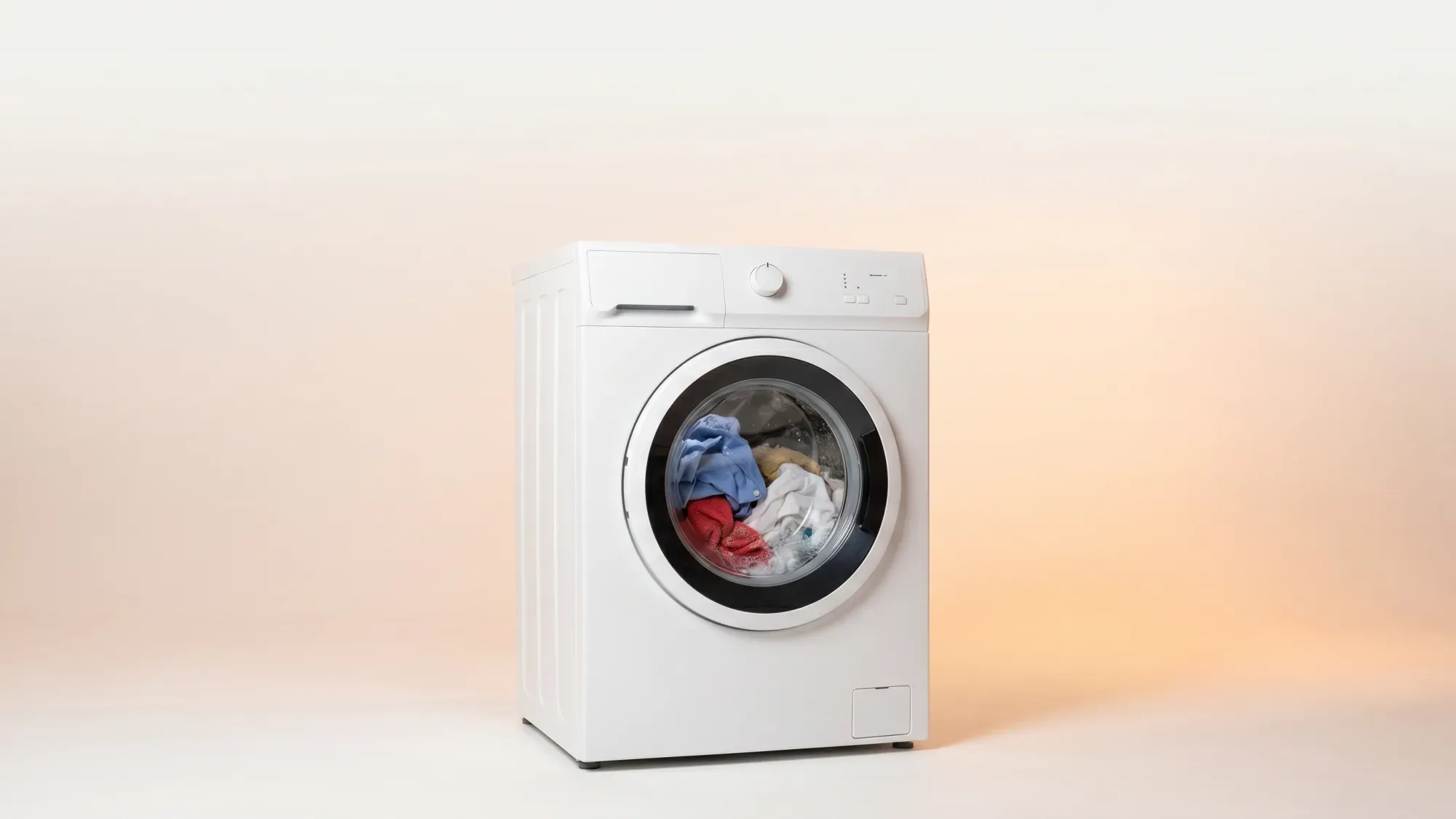
- Washing machines and tumble dryers: Use timers to run these overnight.
- Dishwashers: Schedule cycles for off-peak times.
- Electric storage heaters: These are specifically designed to charge up during off-peak hours and release heat throughout the day.
- Electric vehicle charging: If you have an EV, charging it overnight during the off-peak window can lead to substantial savings.
- Immersion heaters: Heat your water during the cheaper period.
By making these small adjustments to your routine, you can ensure you're paying the lower rate for the majority of your energy consumption. The average UK home uses around 2,500 kWh of electricity per year, so optimising this usage can lead to noticeable savings.
Benefits of smart meters for optimisation
Smart meters are a game-changer for Economy 7 users. They provide real-time data on your energy consumption, broken down into peak and off-peak usage. This transparency allows you to:
- Monitor your usage: See exactly how much electricity you're using and when.
- Identify saving opportunities: Pinpoint where you can shift more consumption to off-peak hours.
- Receive accurate bills: No more estimated bills, as your readings are sent automatically.
How do smart meters help with Economy 7?
Smart meters automatically send your peak and off-peak readings to your supplier, ensuring accurate billing. They also provide real-time data, often via an in-home display or app, allowing you to monitor your energy usage patterns and identify opportunities to shift consumption to cheaper off-peak hours for greater savings.
This level of detail empowers you to make informed decisions about your energy use, turning Economy 7 from a basic dual-rate tariff into a powerful tool for managing your household budget.
When Economy 7 is right for you
Economy 7 isn't for everyone, but it can be highly cost-effective if your lifestyle allows you to shift a significant portion of your electricity use to off-peak hours. It's particularly beneficial for households with:
- Electric storage heaters.
- Electric vehicles that can be charged overnight.
- High energy-consuming appliances that can be programmed to run during off-peak times.
- A willingness to adapt daily routines to maximise off-peak usage.
If you primarily use electricity during the day, a single-rate tariff might be more suitable. Regularly reviewing your energy usage and tariff ensures Economy 7 remains cost-effective for your specific needs.
Modern energy management with dual-rate tariffs
The energy landscape is evolving, and so too is the approach to managing tariffs like Economy 7.
Beyond 'use less': the Fuse approach
For too long, the narrative around energy consumption has been about scarcity and the need to 'use less'. Fuse Energy challenges this by positioning Economy 7 as an opportunity for proactive optimisation with modern tools, rather than just rationing. Fuse's dual-rate variable tariffs are designed to maximise savings for Economy 7 households, encouraging strategic energy use rather than just cutting back. We believe in a future with power to play with, where energy is abundant and accessible.
Making your energy work harder
Fuse empowers homeowners to take control of their energy costs by optimising their Economy 7 tariff with modern tools. Our free smart meter upgrade for manual meter users enables precise billing and real-time usage data, essential for effective Economy 7 management. By combining flexible dual-rate variable tariffs with the transparency and control offered by smart meters, Fuse helps you make your energy work harder for you, transforming your Economy 7 tariff into a powerful tool for managing your home's energy consumption.
Managing your energy bills should be clear and easy to understand. Fuse Energy focuses on straightforward pricing, so you can see exactly what you're paying without unnecessary complexity. If you have a smart meter, you can view detailed usage data through the app or website, helping you understand how you can lower your bills. If you don't have a smart meter, Fuse Energy can upgrade your non-smart meter, completely for free. This can make it easier to track spending and make informed decisions about your energy use. Our 24/7 human support team is always on hand with fast response times whenever you need help. Click here to switch to Fuse Energy today. Find out about our mission by clicking here.
Disclaimer
For the avoidance of doubt, this article is provided for informational purposes only and is not intended to constitute legal or financial advice. The author and/or Fuse Energy shall not be responsible for any losses arising out of any reliance on the information contained herein.