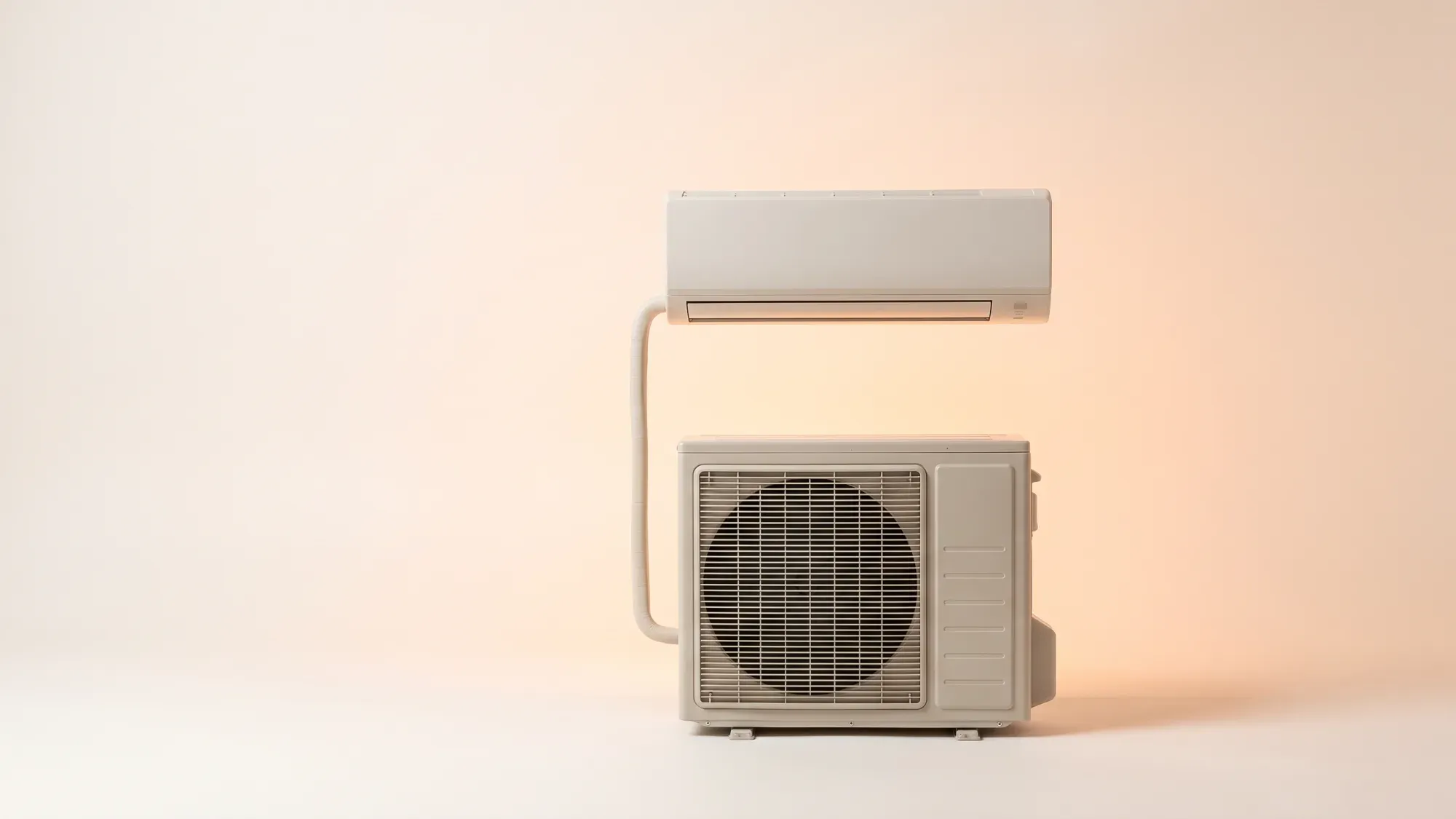
Air conditioning (AC) units cool homes by transferring heat from inside to outside, rather than simply generating cold air. This fundamental principle underpins how these systems provide comfort, offering an effective solution for home cooling. Understanding how an AC unit works, its types, and energy efficiency is key to making an informed choice for your property.
Considering an AC unit for your home? Understanding its energy use is key. Fuse Energy helps you stay on top of your energy consumption with clear insights into your usage. Click here to switch to Fuse Energy today.
An air conditioning unit operates on a cycle of heat transfer, moving thermal energy from one place to another. This process is similar to how a refrigerator works, extracting heat from inside and releasing it elsewhere. AC units cool by transferring heat using a refrigerant cycle, not by generating cold air.
Beyond 'cold air': the science of heat transfer
The core function of an AC unit is to absorb heat from the indoor air and release it outside. This is achieved through a refrigerant, a special fluid that cycles between liquid and gas states. As the refrigerant evaporates indoors, it absorbs heat from the air, cooling your home. It then travels to an outdoor unit where it condenses, releasing the absorbed heat to the outside environment. This continuous cycle ensures that heat is efficiently moved out of your home, leaving the indoor air cooler and more comfortable.
Key components of an AC system
An AC system typically consists of several main components:
- Evaporator coil: Located indoors, this is where the liquid refrigerant absorbs heat from the indoor air and turns into a gas.
- Compressor: Situated in the outdoor unit, the compressor increases the pressure and temperature of the refrigerant gas.
- Condenser coil: Also in the outdoor unit, this is where the high-pressure refrigerant gas releases its heat to the outside air and condenses back into a liquid.
- Expansion valve: This component reduces the pressure of the liquid refrigerant before it returns to the evaporator coil, allowing it to absorb heat again.
- Fans: Indoor and outdoor fans circulate air over the coils to facilitate heat exchange.
UK homeowners have several options when considering an AC unit, each with varying levels of cooling capacity, efficiency, and installation complexity.
Portable air conditioners
Portable AC units are self-contained systems that can be moved from room to room. They are generally less efficient and more expensive to run than fixed split-system units. While they offer flexibility and require no permanent installation, they typically need to vent hot air out of a window, which can reduce their overall effectiveness.
Split-system air conditioners
Split-system AC units consist of an indoor unit and an outdoor unit connected by refrigerant lines. They are a popular choice for homes due to their efficiency and quiet operation. The indoor unit delivers cool air, while the outdoor unit houses the compressor and condenser, releasing heat outside. These systems require professional installation.
Multi-split systems
Multi-split systems are similar to split systems but allow multiple indoor units to connect to a single outdoor unit. This is ideal for cooling several rooms or an entire home with individual temperature control for each zone. Like split systems, they offer high efficiency and quiet operation but involve more complex installation.
Energy efficiency is a crucial factor for UK homeowners, impacting both running costs and environmental footprint.
What are SEER and SCOP ratings?
The energy efficiency of AC units is measured by specific ratings:
- SEER (seasonal energy efficiency ratio): This rating measures the cooling efficiency of an AC unit over an entire cooling season. A higher SEER rating indicates greater efficiency, meaning the unit uses less electricity to produce the same amount of cooling.
- SCOP (seasonal coefficient of performance): For heat pump AC units that can also provide heating, SCOP measures their heating efficiency over an entire heating season. Again, a higher SCOP rating signifies better heating efficiency.
Why efficiency matters for UK homeowners
For UK homeowners, understanding SEER and SCOP ratings is vital because they directly correlate with energy consumption and running costs. A more efficient unit, despite a potentially higher upfront cost, will lead to lower electricity bills over its lifespan. This is particularly important given fluctuating energy prices.
The running cost of an AC unit depends on its power consumption (kW), the electricity unit rate, and hours of use. Understanding these factors helps homeowners anticipate their energy expenditure.
Factors influencing electricity consumption
Several elements determine how much electricity an AC unit consumes:
- Unit's power consumption (kW): This is the amount of electricity the unit uses when operating. It varies significantly between models and types.
- Energy efficiency ratings (SEER/SCOP): As discussed, higher ratings mean lower power consumption for the same output.
- Electricity unit rate: The cost per kilowatt-hour (kWh) charged by your energy supplier.
- Hours of use: How long the AC unit runs each day or season.
- Room size and insulation: A unit working harder to cool a large, poorly insulated room will use more energy.
- Desired temperature: Setting a lower temperature requires more energy.
Calculating typical daily and hourly costs
To estimate running costs, you can use a simple formula:
Power consumption (kW) × Electricity unit rate (£/kWh) × Hours of use = Cost
For illustrative purposes, if an AC unit consumes 1.5 kW, your electricity rate is £0.26/kWh, and you run it for 4 hours a day:
1.5 kW × £0.26/kWh × 4 hours = £1.56 per day
According to Ofgem, the average UK home uses around 2,500 kWh of electricity per year. An inefficient AC unit can significantly add to this, making the choice of an energy-efficient model crucial for managing household bills. By calculating