Cheaper public EV charging could boost UK demand by 50%
Making public electric vehicle (EV) charging more affordable than petrol could significantly accelerate EV adoption in the UK. New research indicates that if public charging costs were reduced, the proportion of people likely to buy an EV could rise by almost 50%1. This finding challenges arguments for weakening the Zero Emission Vehicle (ZEV) Mandate targets, suggesting the UK Government possesses a "significant policy lever" to influence public EV charging prices.
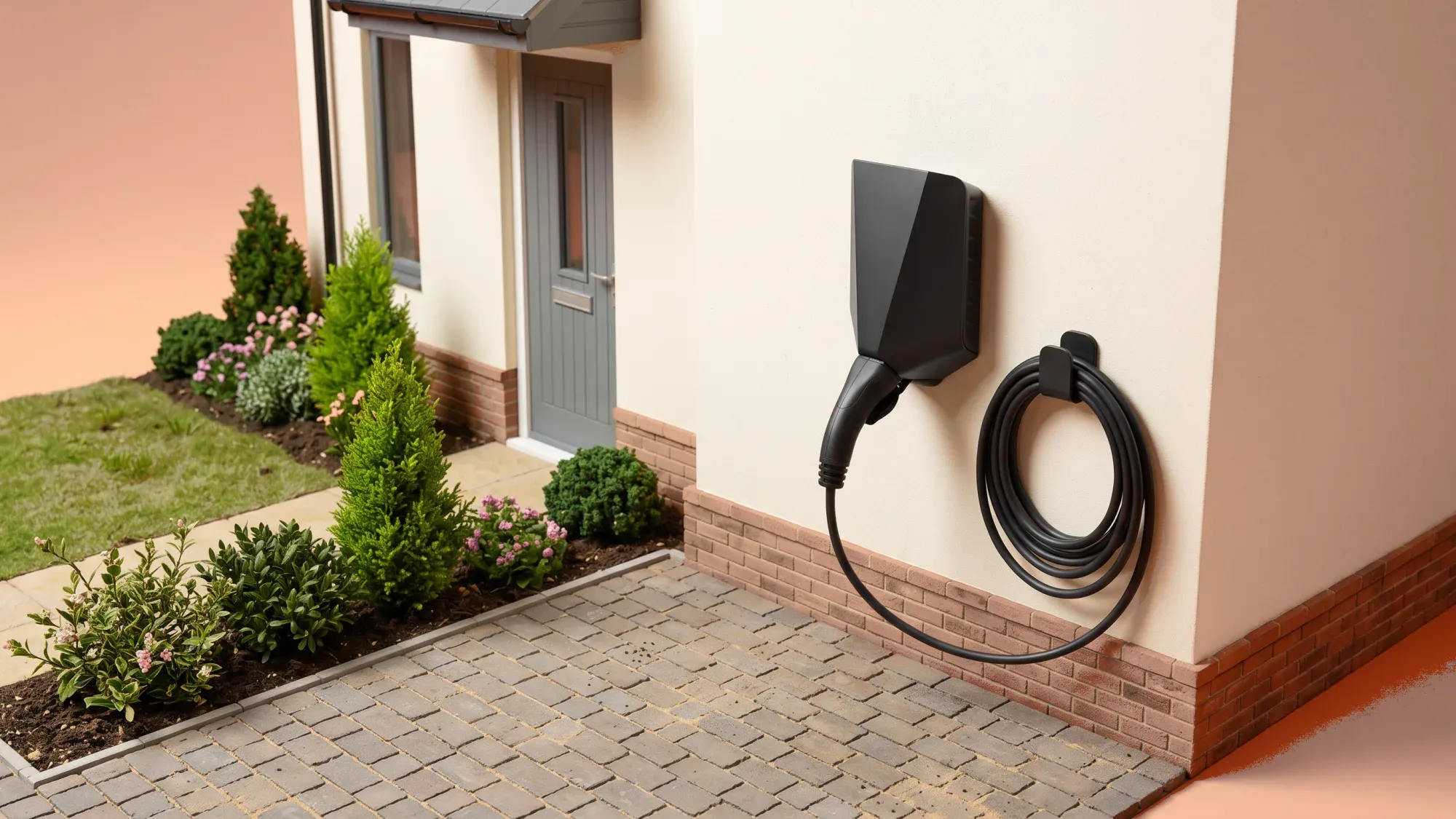
Looking to upgrade your home setup? Fuse Energy installs the Easee One smart home EV charger for a flat £899 including full installation, up to 15m of cabling, surge protection, and a 3-year warranty. Tap the quote button below to get started.
Understanding EV charging costs in the UK
The financial implications of owning an electric vehicle are a key consideration for many drivers. While EVs generally offer lower running costs than petrol or diesel cars, the cost of charging can vary dramatically depending on where and how you power up. Understanding these differences is crucial for managing your EV expenditure effectively.
The cost disparity: home versus public charging
A significant "inbuilt inequality" exists in EV charging costs between those who can charge at home and those who rely on public infrastructure. Home EV charging, particularly with smart tariffs, typically ranges from 7p to 12p per kilowatt-hour (kWh). In contrast, public rapid charging can exceed 70p per kWh, with some ultra-rapid chargers reaching as high as 89p/kWh on certain networks. This disparity means that a full charge for a typical family EV could cost around £4-£7 at home on an off-peak tariff, but closer to £45 on a rapid public charger.
Factors influencing your charging bill
Several factors contribute to the overall cost of charging an electric vehicle in the UK. Your electricity tariff is paramount; standard home tariffs might be around 26.11p/kWh (as per the July-September 2026 price cap). While dedicated dual-rate variable tariffs offer significantly lower rates during off-peak hours. The size of your EV's battery also plays a role, as larger batteries require more kWh to fully charge. Furthermore, the type and speed of the charging point, whether it is a slow, fast, rapid, or ultra-rapid public charger, directly impacts the per-kWh price.
Home charging: your power play for affordability
For most EV owners, home charging represents the most cost-effective and convenient way to power their vehicle. Optimising your home charging setup can transform your property into a personal, cost-optimised charging hub, giving you control over one of your largest EV running costs.
The benefits of dual-rate variable tariffs and off-peak charging
Dual-rate variable tariffs and off-peak rates are game-changers for home EV charging. These tariffs offer significantly cheaper electricity during specific hours, typically overnight when energy demand is lower and renewable generation might be higher. By scheduling your EV to charge during these periods, you can drastically reduce your running costs. For example, some off-peak tariffs offer rates as low as 7p per kWh. This means a full charge for a 60kWh EV battery could cost as little as £4.20, a substantial saving compared to standard tariffs or public charging.
Smart chargers and home energy upgrades
Investing in a smart home EV charger allows you to fully capitalise on off-peak tariffs. These chargers can be programmed to automatically begin charging when electricity is cheapest, ensuring your vehicle is ready when you need it without you having to monitor prices manually. Integrating your EV charger with a broader home energy system, including a smart meter installation, can further enhance efficiency and cost savings. This approach aligns with a vision of abundant, affordable energy, empowering EV owners to manage their energy consumption strategically. Home solar can further reduce reliance on grid electricity.
Public charging: navigating the price landscape
While home charging is often the preferred method, public charging networks are essential for longer journeys, for those without off-street parking, or when a quick top-up is needed. However, the costs associated with public charging are generally higher and can vary widely.
Rapid, fast, and slow charging costs explained
Public charging speeds are categorised as slow, fast, rapid, and ultra-rapid, with prices typically increasing with speed. Slow and fast chargers, often found on residential streets or in supermarket car parks, had a weighted average pay-as-you-go (PAYG) price of around 54p/kWh in early 2026. Rapid and ultra-rapid chargers, common at motorway services and dedicated charging hubs, averaged about 76p/kWh for PAYG in the same period. These faster options provide convenience but come at a premium, with prices ranging from approximately 57p/kWh to 89p/kWh.
The impact of VAT on public charging
A significant factor contributing to the higher cost of public EV charging is the Value Added Tax (VAT) rate. Electricity used for home EV charging is subject to a reduced VAT rate of 5%, consistent with domestic energy supply. In stark contrast, electricity supplied through most public charging networks is treated as a commercial service and is therefore subject to the standard 20% VAT rate. This 15 percentage point difference creates a clear imbalance, disproportionately affecting drivers who rely solely on public charging.
Why is VAT higher for public EV charging?
VAT on public EV charging is 20% because it is classified as a commercial supply of electricity, unlike home charging which benefits from the reduced 5% domestic energy VAT rate. This distinction creates a significant cost difference for drivers, particularly those without access to home charging.
Government policy and the future of EV charging
Government policy plays a crucial role in shaping the EV market and influencing charging costs. The ZEV Mandate and ongoing reviews of charging prices highlight the government's levers to ensure a fair and accessible transition to electric vehicles.
The ZEV Mandate and policy levers
The UK's ZEV Mandate requires car manufacturers to sell an increasing percentage of Zero-Emission vehicles each year. For cars, the mandate sets targets such as 33% of new car sales in 2026 and 38% for 2027. However, calls to weaken these targets have emerged. Research commissioned by ChargeUK, an EV charging industry association, found that making public EV charging cheaper than petrol could boost EV demand by almost 50%, challenging the notion that drivers are unwilling to buy electric cars. Jarrod Birch, head of policy and public affairs at ChargeUK, stated that these results "blow a hole" in the argument for weakening sales targets.
Addressing the "inbuilt inequality"
The disparity in charging costs, particularly the VAT difference, creates an "inbuilt inequality" for EV drivers. Ian Plummer of Autotrader has highlighted this issue, noting that those with access to cheaper home motoring benefit significantly more than those relying on public charging. ChargeUK is actively urging the government to address policies that inflate public charging prices through its ongoing review. According to ChargeUK, this review aims to examine the impact of energy prices and wider cost contributors, seeking options to lower costs for consumers.
"Soon, our society will face an inbuilt inequality between those who have access to cheaper motoring, because they have at-home electricity tariffs, and those who do not." — Ian Plummer, Chief Customer Officer at Auto Trader
Strategies for reducing your EV charging costs
Managing your EV charging costs effectively involves a combination of smart choices and leveraging available technology. By understanding your charging habits and the options available, you can significantly reduce your expenditure.
Optimising your home charging setup
For those with off-street parking, optimising home charging is the most impactful strategy. This includes switching to a dual-rate variable tariff that offers lower rates during off-peak hours. Installing a smart charger allows you to automate charging during these cheaper periods, ensuring you always benefit from the lowest possible rates. Consider your daily mileage and charge only what you need, rather than always topping up to 100%, to further manage costs.
Smart habits for public charging
When public charging is necessary, adopting smart habits can help mitigate higher costs. Plan your journeys to minimise reliance on the most expensive rapid and ultra-rapid chargers, especially those at motorway service stations. Utilise slower, cheaper public chargers at destinations where you will be parked for an extended period, such as supermarkets or hotels. Some public charging networks also offer subscription models or membership discounts that can reduce per-kWh costs compared to pay-as-you-go rates.
Leveraging technology for cost control
Modern EV apps and smart charging platforms provide valuable tools for cost control. These applications can help you locate the cheapest public charging points, compare prices across different networks, and track your charging expenditure. By actively monitoring your usage and costs, you can identify areas for savings and make informed decisions about where and when to charge your EV.
Looking to upgrade your home setup? Fuse Energy installs the Easee One smart home EV charger for a flat £899 including full installation, up to 15m of cabling, surge protection, and a 3-year warranty. Tap the quote button below to get started.
References
- Transport and Energy. EV demand could rise by 50% if public charging cheaper.
Disclaimer
For the avoidance of doubt, this article is provided for informational purposes only and is not intended to constitute legal or financial advice. The author and/or Fuse Energy shall not be responsible for any losses arising out of any reliance on the information contained herein.