29MW Lower Wyke solar Park wins appeal
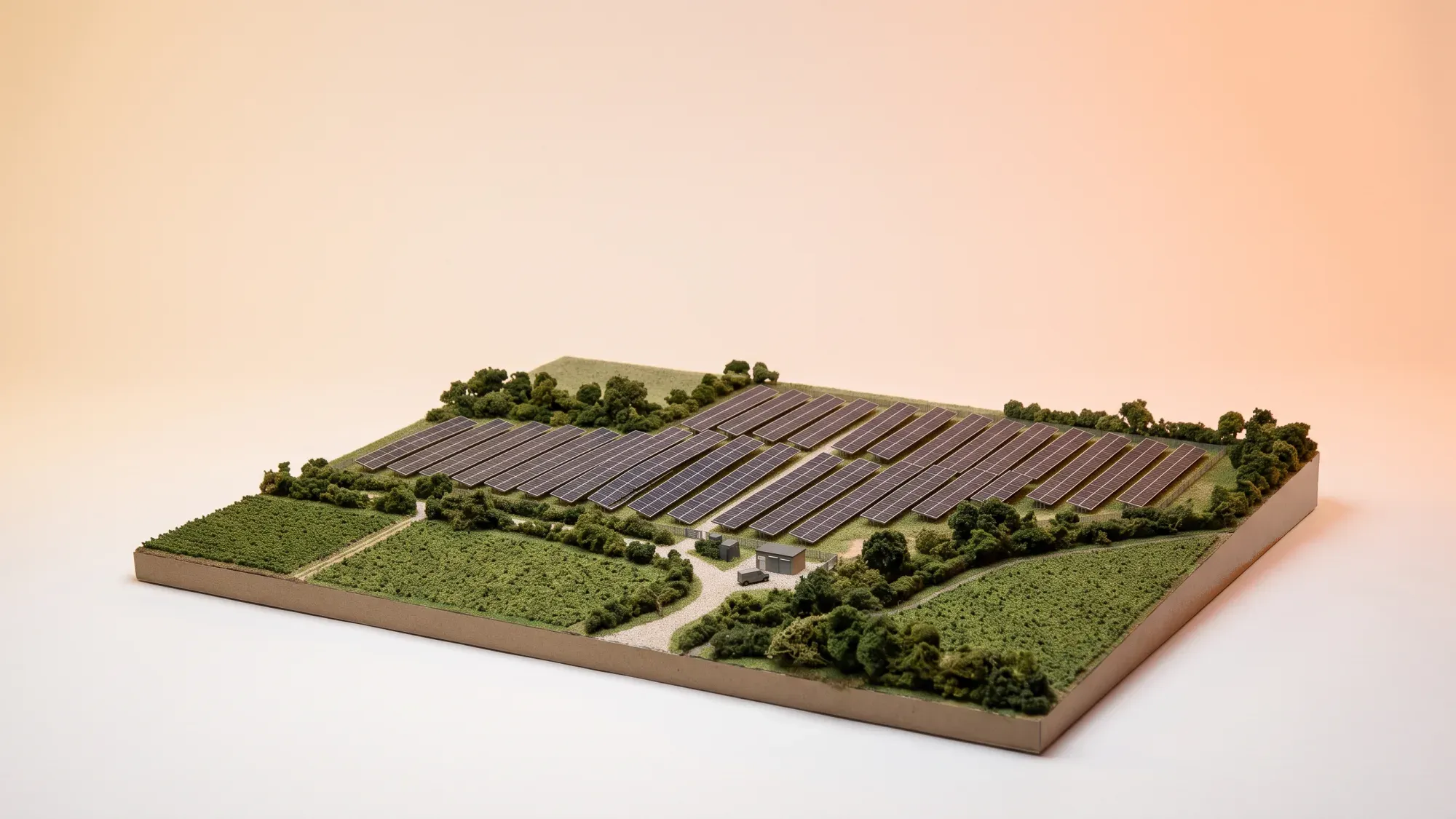
British Solar Renewables (BSR) has successfully secured planning permission for its 29MW Lower Wyke Solar Park in Hampshire following an appeal1. This decision marks a significant step for UK renewable energy, highlighting the growing importance of utility-scale solar projects in strengthening energy security and achieving net zero targets. It also demonstrates how such developments can deliver environmental benefits. For homeowners in Hampshire, this news underscores a broader shift towards a more sustainable energy landscape, creating a context where personal energy independence through residential solar is increasingly viable.
Considering solar for your home? Fuse Energy can help you explore options for generating your own clean electricity, reducing your reliance on the grid and potentially lowering your bills. Click here to get started.
Enter your address to get a quote and see how much you could save
The lower Wyke solar Park decision explained
The planning appeal and its significance
The 86-acre Lower Wyke Solar Park project was initially refused by Basingstoke and Deane Borough Council in June last year, despite planning officers recommending its approval. The council's primary concern was that the "scale, layout and design of the site would “have an unacceptable adverse impact on the landscape character and visual amenity of the area”". However, BSR appealed this decision, leading to a hearing in May this year.
The Planning Inspector overturned the council's refusal, determining that "the project's renewable energy, biodiversity and wider public benefits outweighed the identified harms". This decision highlights the increasing weight given to renewable energy generation and environmental benefits in planning decisions, even when balanced against local landscape concerns.
Biodiversity net gain: a key factor
A crucial element in the Planning Inspector's decision was BSR's commitment to Biodiversity Net Gain (BNG). The project has pledged a 217% BNG in habitats and hedgerows. This significantly exceeds the mandatory minimum of 10% BNG required for most new developments in England under the Environment Act 2021.
What is BNG?
BNG is a legal requirement in England for most new developments, introduced by the Environment Act 2021. It ensures that development leaves biodiversity in a measurably better state than before, requiring at least a 10% increase in biodiversity, which must be secured for a minimum of 30 years.
This commitment demonstrates how well-designed solar developments can integrate environmental enhancements, creating new habitats and strengthening existing vegetation alongside energy generation.
Broader implications for UK renewable energy and Hampshire
Strengthening energy security and net zero
The approval of projects like Lower Wyke Solar Park is vital for the UK's energy future. Marcus Camm, Project Manager at BSR, stated that the decision "demonstrates how well-designed solar developments can play a vital role in strengthening energy security, supporting the UK's transition to net zero and delivering lasting benefits for both local communities and the natural environment".
The UK government has a legally binding target to reach net zero greenhouse gas emissions by 2050. Achieving this goal requires a significant expansion of renewable energy capacity, with solar power playing a crucial role in meeting these national commitments. These large-scale projects contribute directly to reducing reliance on fossil fuels and mitigating climate change.
The role of utility-scale solar in the UK
Utility-scale solar farms, such as the 29MW Lower Wyke project, are central to the UK's energy transition. They provide clean electricity to thousands of homes, contributing to the National Grid's decarbonisation efforts. These developments are guided by frameworks like the National Planning Policy Framework (NPPF), which emphasises the importance of renewable energy.
Fuse Energy also contributes to the UK's renewable energy infrastructure with its own solar sites, including Netley North in Hampshire. This commitment to large-scale solar projects complements local efforts and reinforces the vision of a future where energy is abundant and clean.
Residential solar for Hampshire homes
Why homeowners in Hampshire are choosing solar
The success of large-scale solar projects in Hampshire reflects a wider shift towards renewable energy, a shift that homeowners can actively participate in. Installing solar panels offers a tangible way to gain energy independence, reduce electricity bills, and lower your carbon footprint. With an average UK home using around 2,500 kWh of electricity per year, generating your own power can significantly impact your household's energy consumption.
Homeowners are increasingly taking a personal step by taking control of their energy supply. This means less reliance on fluctuating energy prices and a greater contribution to a sustainable future. Many homeowners also consider the solar panel installation cost as a key factor in their decision-making.
Financial benefits and available support
Investing in residential solar panels in the UK is currently more attractive due to financial incentives. Residential solar panel installations benefit from a 0% VAT rate, making the initial outlay significantly cheaper. This zero-rate VAT applies to the supply and installation of solar PV panels, battery storage systems, inverters, and associated labour, and is set to continue until 31 March 2027.
While specific grants can vary, this VAT relief provides a substantial saving for homeowners looking to install solar and battery storage systems. It's a clear signal from the government to encourage the adoption of clean energy technologies. Pairing solar with a smart meter installation can further enhance energy management.
Getting started with solar panels in Hampshire
Finding the right local installer
For Hampshire homeowners considering solar, the first step is to assess your home's suitability and then research reputable local installers. Look for companies with a strong track record, positive customer reviews, and relevant accreditations. Obtaining multiple quotes allows you to compare costs and services effectively.
Consider asking installers about:
- Their experience: with similar installations in Hampshire.
- Recommendations: The types of panels and inverters they recommend.
- Warranty periods: for equipment and workmanship.
- Process: Their process for handling planning permissions (if required) and grid connection.
Maximising your energy independence with battery storage
To truly maximise energy independence, integrating battery storage with your solar panel system is a smart move. Batteries allow you to store excess electricity generated during the day and use it during the evening or when solar generation is low. This reduces your reliance on grid electricity, further lowering bills and providing a backup during power outages.
Fuse Energy empowers Hampshire homeowners to participate in the renewable energy transition by offering guidance and solutions for residential solar and battery storage, making personal energy upgrades accessible.
Ready to switch? Explore how Fuse Energy can support your journey to energy independence with home solar and battery solutions. Click here to switch to Fuse Energy today. Find out about our mission by clicking here.
References
- Solar Power Portal. British Solar Renewables wins appeal for 29MW solar plant in Hampshire
Disclaimer
For the avoidance of doubt, this article is provided for informational purposes only and is not intended to constitute legal or financial advice. The author and/or Fuse Energy shall not be responsible for any losses arising out of any reliance on the information contained herein.