Worcester boiler: how to choose and maintain
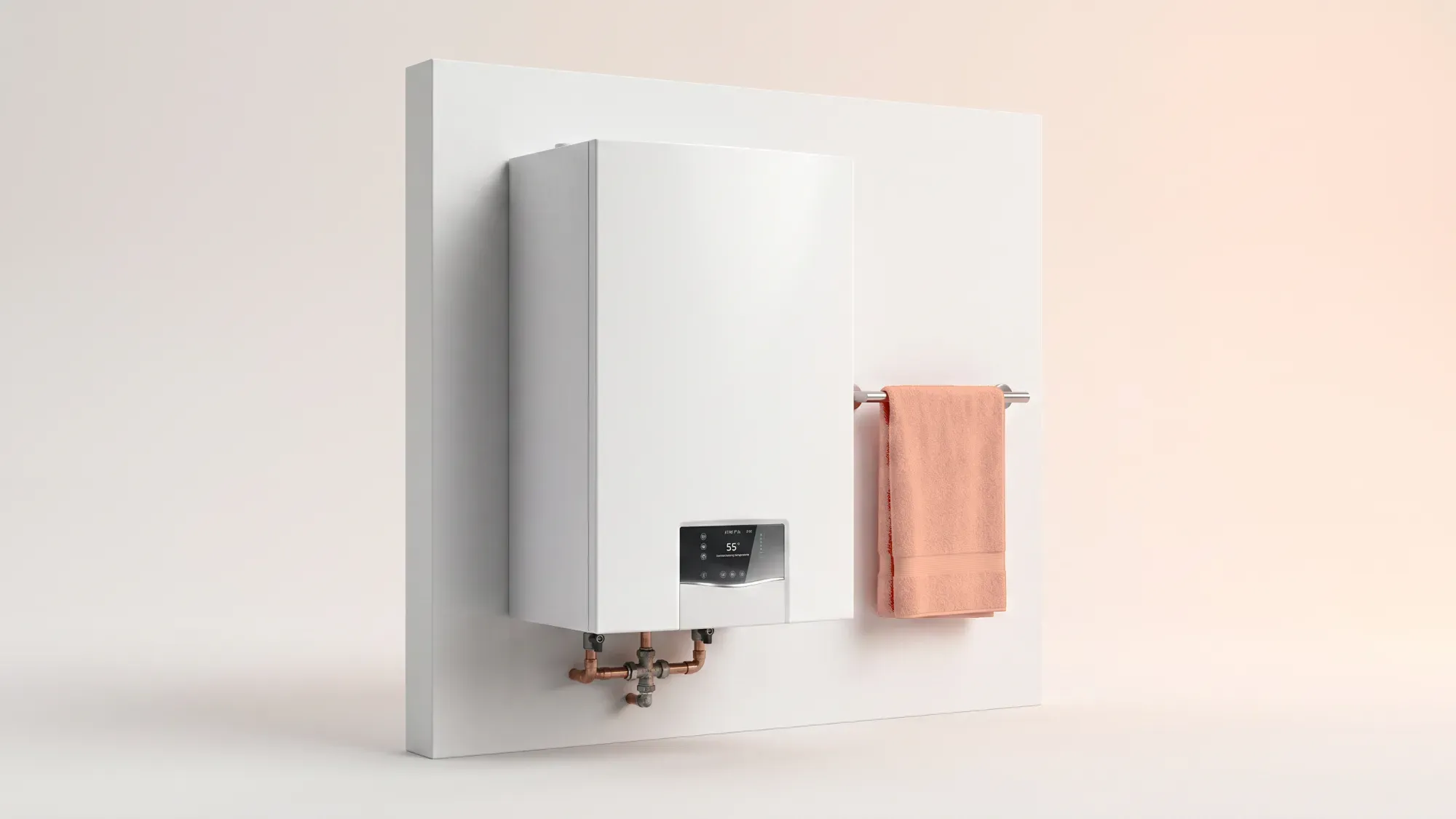
Worcester Bosch boilers are a popular choice for UK homeowners, known for their reliability and efficiency. This guide aims to provide comprehensive, unbiased information to help you make informed decisions about selecting, purchasing, installing, and maintaining a Worcester boiler, balancing upfront cost with long-term efficiency and reliability.
Fuse Energy exclusively installs Vaillant ecoTEC Plus boilers, offering a premium alternative designed for optimal performance and efficiency as part of a modern energy system. While this article focuses on Worcester Bosch, Fuse's commitment to efficient home heating extends to providing a modern, customer-centric experience for managing home energy, regardless of boiler brand, including 24/7 human customer support.
Understanding Worcester Bosch boiler types
Worcester Bosch manufactures three main types of boilers: combi, system, and regular (also known as conventional or heat-only) boilers, each suited to different home heating and hot water demands. Their Greenstar range is particularly well-known for its efficiency and environmental performance.
Combi boilers
Combi (combination) boilers are the most popular choice in the UK, providing both heating and hot water on demand from a single compact unit. They eliminate the need for separate hot water cylinders or cold water storage tanks, making them ideal for smaller homes with one bathroom where space is limited. Popular gas-powered models include the Greenstar 2000 and Greenstar 8000+ Style.
System boilers
System boilers are designed for larger homes with multiple bathrooms and a higher demand for hot water. They work with a hot water cylinder to store heated water, ensuring a constant supply to several taps simultaneously. Worcester Bosch system boilers, such as the Greenstar i System and Greenstar 4000 System, are gas-powered, while the Greenstar Danesmoor System Utility is an oil-fired option.
Regular boilers
Regular boilers, also called conventional or heat-only boilers, are suitable for large homes with traditional heating systems that require a hot water cylinder and a cold water storage tank. They are designed to manage high hot water demands, particularly when a lot of hot water is needed at the same time, for example, in homes with two or more bathrooms. The Greenstar Ri (gas) and Greenstar Danesmoor Utility (oil-fired) are examples of Worcester Bosch regular boilers.
Costs and efficiency of Worcester Bosch boilers
The total cost of a Worcester Bosch boiler includes the unit price, installation by a Gas Safe registered engineer, and ongoing maintenance. Modern Worcester Bosch boilers are highly efficient, often achieving an ErP (Energy-related Products) A rating.
Boiler unit costs
The price of a Worcester Bosch boiler unit varies significantly based on the type, model, and output capacity. For the boiler unit alone, combi boilers can range from approximately £750 to £3,100, system boilers from £800 to £3,500, and regular boilers from £700 to £2,000. More premium models, like the Greenstar 8000+ range, can have unit costs between £1,400 and £2,700.
Installation costs
Installation costs are a major component of the total price. The typical installed cost for a new Worcester Bosch combi boiler in the UK can range from £2,250 to £6,000, depending on the model and installation complexity. This can vary based on factors such as:
- Boiler type change: Switching from one boiler type to another (e.g., regular to combi) often incurs higher costs due to changes in pipework and system requirements.
- Relocation: Moving the boiler to a different location in the home will increase costs.
- Geographical location: Labour costs are generally higher in London and the South East.
- Time of year: Engineers may charge more during busier periods like winter.
- Accessibility: If the boiler is in a difficult-to-reach spot, additional time or equipment may be needed, increasing costs.
- Additional work: Upgrades to pipework, flues, or controls will add to the overall expense.
Some providers offer installation packages for Worcester Bosch boilers, with prices starting from around £2,299 for models like the Worcester 4000 and £2,349 for the 2000. For the 8000 range, prices can start from £3,350.
Running costs and ErP ratings
Modern Worcester Bosch boilers often achieve an ErP (Energy-related Products) rating of A, indicating over 90% efficiency. Many Greenstar models boast seasonal space heating efficiency of up to 94%. This means that for every pound spent on gas, only a small percentage is lost through the flue, with the majority converted into heat for the home. Pairing a Worcester Bosch boiler with smart controls, such as their Bosch EasyControl or a weather-compensating thermostat, can further elevate system efficiency to A+ or even 98%. Upgrading from an older, less efficient boiler to a modern A-rated condensing model can significantly reduce energy waste and lower heating bills. For more tips on reducing your energy consumption, explore our guide on how to save energy at home.
Long-term ownership costs
Beyond the initial purchase and installation, long-term ownership costs include annual servicing and potential repairs. While Worcester Bosch boilers are known for their reliability, regular maintenance is crucial. The Boiler Upgrade Scheme (BUS) provides grants of £7,500 for air source and ground source heat pumps, but it does not apply to gas boilers.
Installation and smart home integration
Proper installation by a Gas Safe registered engineer is a legal requirement and crucial for safety, efficiency, and warranty validity.
Choosing a gas safe registered installer
All new gas boiler installations in the UK must be carried out by a Gas Safe registered engineer. This is a legal requirement to ensure safety and compliance with regulations. Using an unqualified tradesperson will immediately void your boiler's warranty. Many Worcester Bosch accredited installers can offer extended guarantees, sometimes up to 12 years, compared to the standard 5-year guarantee.
The installation process
The installation process typically involves removing the old boiler, fitting the new Worcester Bosch unit, connecting it to the existing pipework and flue, and commissioning the system. Installation usually takes 1-2 days, depending on the complexity. After installation, homeowners should receive a Gas Safety Certificate (Building Regulations Compliance Certificate).
Integrating with smart thermostats
Modern Worcester Bosch boilers are often compatible with smart thermostats, enhancing efficiency and control. Their own EasyControl is designed specifically for Worcester boilers, offering app-based scheduling and geofencing. It can also be used with other manufacturers' products via an adapter. Many Greenstar combi boilers, including the 2000 and 4000 series, are smart-ready and can work with third-party smart thermostats like Hive and Nest, though full modulation might require specific adapters or wiring checks. Smart thermostats can help reduce energy usage and improve comfort by optimising heating based on occupancy and external weather conditions. Considering a smart meter to complement your smart thermostat? Read about smart meter installation.
Maintaining your Worcester Bosch boiler
Regular maintenance is key to ensuring your Worcester Bosch boiler operates efficiently, prolongs its lifespan, and keeps its warranty valid.
Annual servicing
Annual servicing by a Gas Safe registered engineer is recommended to maintain warranty validity and optimal performance. Missing an annual service can void the manufacturer's guarantee. A standard annual service for a Worcester Bosch boiler typically costs between £80 and £120 in 2026, varying by region and service provider. This service includes a full internal inspection, combustion analysis, safety control testing, and an update to the Benchmark Checklist. For more information on protecting your boiler, consider reading our article on boiler cover explained.
DIY maintenance tips
While professional servicing is essential, homeowners can perform some basic checks to keep their boiler running smoothly:
- Check boiler pressure: Low boiler pressure is a common issue that can prevent heating or hot water. You can repressurise your boiler by following the instructions in your manual.
- Inspect the pilot light: If your boiler has a pilot light, ensure it is blue and lit. An orange or unlit pilot light can indicate an an issue.
- Clear the condensate pipe: In colder weather, the condensate pipe can freeze, blocking the system. You can often thaw a frozen pipe yourself.
- Check thermostat settings: Ensure your thermostat is set correctly and the timer is accurate.
- Reset the boiler: Sometimes, a simple reset can resolve minor issues.
Warranty considerations
Worcester Bosch boilers typically come with a guarantee ranging from 2 to 12 years, depending on the model and whether it is installed by an accredited installer. For example, the Greenstar 8000 range can offer up to a 12-year guarantee when installed by an accredited professional with a system filter. Other ranges, like the Greenstar 4000, may offer a 10-year guarantee under similar conditions. To keep the warranty valid, the boiler must be registered within 30 days of installation, and serviced annually by a Gas Safe registered engineer.
How long does a Worcester Bosch boiler warranty last?
Worcester Bosch boiler warranties, often called guarantees, typically range from 2 to 12 years. The exact length depends on the boiler model and whether it is installed by a Worcester Bosch accredited installer, often requiring a system filter for extended cover. Annual servicing by a Gas Safe registered engineer is mandatory to keep the warranty valid.
Common issues and troubleshooting
Even reliable boilers can encounter issues. Understanding common faults and basic troubleshooting can help you identify problems and know when to call a professional.
Identifying common faults
Common problems with Worcester Bosch boilers include:
- No heating or hot water: This can be due to low boiler pressure, thermostat issues, or a faulty diverter valve.
- Low or high boiler pressure: Pressure outside the recommended range (typically 1-1.5 bar) can affect performance. Low pressure can be caused by leaks or recently bled radiators, while high pressure might indicate a faulty pressure relief valve.
- Frozen or blocked condensate pipe: This pipe removes waste water and can freeze in cold weather, causing a blockage.
- Boiler leaking water: Leaks can result from corroded pipes, worn seals, or excessive pressure.
- Radiators not heating up properly: This could be due to airlocks, sludge build-up, or a faulty pump.
- Strange noises (kettling, banging): Unusual sounds can signal issues like limescale build-up in the heat exchanger.
- Boiler keeps turning off / locking out: This can be caused by low gas supply, ignition failures, or internal errors, often indicated by a fault code.
When to call an engineer
While some minor issues can be resolved with basic troubleshooting, it is crucial to call a Gas Safe registered engineer for persistent or complex problems. Never attempt to open or tamper with your boiler yourself, as this can be dangerous and void your warranty. An engineer can diagnose the exact cause of the fault, such as a faulty heat exchanger, diverter valve, or circuit board, and carry out safe repairs. If your boiler displays a fault code, note it down as it can help the engineer with diagnosis.
Disclaimer
For the avoidance of doubt, this article is provided for informational purposes only and is not intended to constitute legal or financial advice. The author and/or Fuse Energy shall not be responsible for any losses arising out of any reliance on the information contained herein.