Underfloor heating cost explained
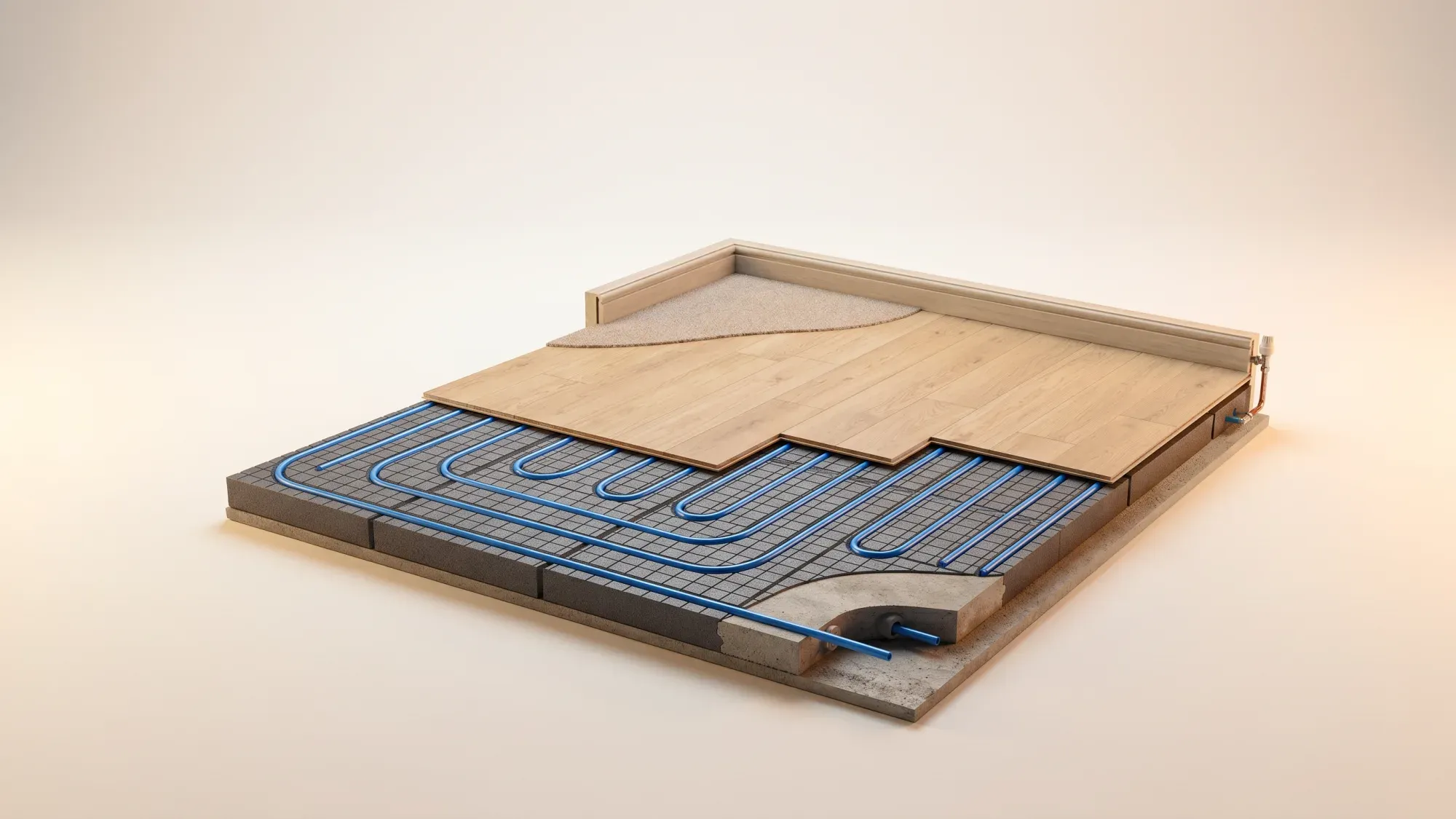
For homeowners across the UK, understanding the financial outlay for underfloor heating (UFH) involves more than just the initial purchase; it requires a clear picture of both installation and ongoing running costs. Underfloor heating offers a comfortable, radiant warmth often considered more efficient than traditional radiators. Fuse Energy can empower homeowners to understand and manage their underfloor heating running costs effectively, aligning comfort with energy efficiency through smart controls and transparent energy data. This guide breaks down the costs, influencing factors, and strategies for optimising your investment.
Considering underfloor heating for your home? Understanding the costs involved is key to making an informed decision. Fuse Energy provides transparent energy data to help you manage your home's heating efficiently. Click here to switch to Fuse Energy today.
Enter your address to get a quote and see how much you could save
Understanding underfloor heating costs
Deciding on underfloor heating means looking at two distinct financial aspects: the upfront cost to get it installed and the continuous cost of running it day-to-day. Both figures can vary significantly based on your property and chosen system.
Initial investment: installation costs
The cost of installing underfloor heating in a UK home varies depending on the system type and complexity. For electric UFH, expect to pay between £40 and £100 per square metre, including materials and labour. Wet UFH systems are typically more expensive to install, ranging from £85 to £190 per square metre. These figures often cover the core heating components but may not include associated works like screeding, insulation upgrades, or new flooring, which are crucial for a successful installation.
Ongoing expenses: running costs
Running costs are the energy bills you will pay to heat your home with UFH. These are influenced by several factors, including the type of system (wet or electric), your home's insulation levels, the energy source, and how effectively you control the system. Neglecting to consider these long-term expenses can lead to unexpected outlays down the line.
Types of underfloor heating and their costs
Underfloor heating systems primarily come in two forms: wet (hydronic) and electric. Each has different installation requirements and, crucially, different running cost implications.
Wet underfloor heating systems
Wet underfloor heating systems circulate warm water through pipes laid beneath your floor. These systems are typically connected to your main heating system, such as a boiler or a heat pump. While the installation cost can be higher due to the plumbing work and the need for a heat source, wet systems are generally more economical to run, especially when paired with efficient boilers or low-temperature heat sources like heat pumps. They operate at lower flow temperatures, typically between 35°C and 55°C, making them highly efficient.
Electric underfloor heating systems
Electric underfloor heating systems use a series of electric wires or mats installed directly under the flooring. They are often simpler and quicker to install, making them a popular choice for smaller areas like bathrooms or for renovation projects where raising floor levels significantly is not feasible. However, their running costs are generally higher because they use electricity directly for heating.
Cost comparison: wet vs electric underfloor heating
Electric underfloor heating typically costs more to run than wet underfloor heating, often three to six times higher per kWh of heat generated. This difference is largely due to the unit cost of electricity compared to gas or other fuels used by wet systems. For instance, the Ofgem Price Cap for electricity is 26.11p per kWh for a typical Direct Debit customer from 1 July to 30 September 2026. This makes electric UFH a more expensive option for heating large areas continuously.
Key factors influencing underfloor heating costs
Beyond the basic system type, several other elements play a significant role in the overall cost of your underfloor heating project.
Property size and insulation levels
The larger the area you wish to heat, the higher the installation cost will be. More importantly, your home's insulation is paramount. Poor insulation means more heat loss, forcing your UFH system to work harder and increasing running costs. Investing in good insulation, including floors, walls, and ceilings, is critical for maximising UFH efficiency. Building Regulations Part L (Conservation of Fuel and Power) sets standards for energy performance, impacting insulation requirements for new and existing buildings.
System components and controls
The choice of thermostats, zoning controls, and manifold systems can impact both installation complexity and running efficiency. Smart thermostats and multi-zone controls allow you to heat different areas of your home to different temperatures at different times, preventing energy waste and reducing bills. While these add to the initial cost, they offer significant long-term savings.
Installation complexity: new build vs retrofit
Installing UFH in a new build is generally more straightforward and less expensive, as the system can be integrated into the design from the outset. Retrofitting UFH into an existing property can be more complex, often requiring the lifting of existing floors, potential floor level adjustments, and additional labour for preparation work. This increased complexity can drive up installation costs.
Flooring type and heat loss
The type of flooring you choose will affect how efficiently heat transfers from the UFH system into your room. Materials like tiles and concrete are excellent conductors of heat, allowing the system to operate more efficiently. Carpets and some wooden floors can act as insulators, potentially requiring the system to run at higher temperatures or for longer periods, thus increasing running costs.
Optimising underfloor heating efficiency and savings
Once installed, there are several ways to ensure your underfloor heating system runs as efficiently as possible, keeping your energy bills in check.
Smart thermostats and zoning
Smart thermostats learn your heating preferences and can be controlled remotely, allowing you to adjust temperatures from anywhere. Zoning allows you to divide your home into different heating areas, each with its own thermostat. This means you only heat the rooms you are using, when you are using them, significantly reducing wasted energy. Many homeowners find that a smart meter installation can further enhance their ability to monitor and control energy usage.
Pairing with low-carbon heat sources
Underfloor heating is particularly efficient when paired with low-temperature heat sources like air source or ground source heat pumps. These systems produce heat at lower temperatures more efficiently than traditional boilers, which aligns perfectly with the lower flow temperatures required by UFH, maximising overall system efficiency. You can explore the air source heat pump cost to see if this option is right for your home.
Understanding your energy tariff
Knowing your energy tariff is crucial for managing running costs. Time-of-use tariffs, for example, offer cheaper electricity during off-peak hours. If you have electric UFH, or a wet system with an electric heat pump, scheduling your heating to run during these cheaper periods can lead to substantial savings. Fuse Energy's app can provide insights into overall home energy use, helping homeowners understand and manage the impact of their underfloor heating on their total energy consumption. Understanding your energy bill can help you identify these savings.
Calculating your underfloor heating running costs
Estimating your running costs involves understanding your energy consumption and how external factors affect it.
Estimating energy consumption
The average UK home uses around 2,500 kWh of electricity per year, according to Ofgem's medium typical domestic consumption value, effective from 1 July 2026. While this is a general figure, your UFH system's consumption will depend on its power output, how many hours it runs, and the area it heats. For electric UFH, multiplying the system's wattage by its operating hours and the electricity unit rate will give you a good estimate. For wet systems, the efficiency of your boiler or heat pump, combined with the cost of gas or electricity, will determine the running cost.
How much does underfloor heating cost per hour?
The hourly cost of underfloor heating varies significantly. For electric systems, it depends on the wattage and your electricity tariff. A 100W/m² mat covering 10m² costs around 26.11p per hour to run at the current electricity price cap. Wet systems are generally cheaper per hour, especially with a heat pump, but depend on fuel costs and system efficiency.
Impact of insulation and usage habits
Excellent insulation is the single most effective way to reduce UFH running costs. It minimises heat loss, meaning your system does not have to work as hard to maintain a comfortable temperature. Your usage habits also play a big part; consistently leaving the heating on high or heating unoccupied rooms will lead to higher bills. Effective use of controls and zoning can mitigate this.
Is underfloor heating a worthwhile investment?
Considering the initial outlay and ongoing costs, many homeowners question whether underfloor heating is truly worth the investment.
Long-term comfort and property value
Underfloor heating provides a consistent, comfortable warmth throughout a room, eliminating cold spots often associated with radiators. This enhanced comfort is a significant benefit. Furthermore, UFH can be an attractive feature for potential buyers, potentially increasing your property's value and appeal, especially in modernised homes.
Comparing underfloor heating with traditional radiators
While traditional radiators have lower installation costs, underfloor heating can be more efficient in the long run, particularly wet systems paired with low-carbon heat sources. UFH also offers aesthetic advantages, freeing up wall space and allowing for greater design flexibility. The decision often comes down to balancing upfront investment against long-term running costs, comfort, and property value enhancement.
Fuse Energy is committed to helping homeowners make informed decisions about their energy consumption. By providing transparent data and smart control options, we empower you to manage your home's heating efficiently, ensuring comfort without the worry of excessive costs. Click here to switch to Fuse Energy today and take control of your energy bills. You can also learn more about our mission to power a cleaner, more abundant future here.
Disclaimer
For the avoidance of doubt, this article is provided for informational purposes only and is not intended to constitute legal or financial advice. The author and/or Fuse Energy shall not be responsible for any losses arising out of any reliance on the information contained herein.