Type 2 EV charger explained
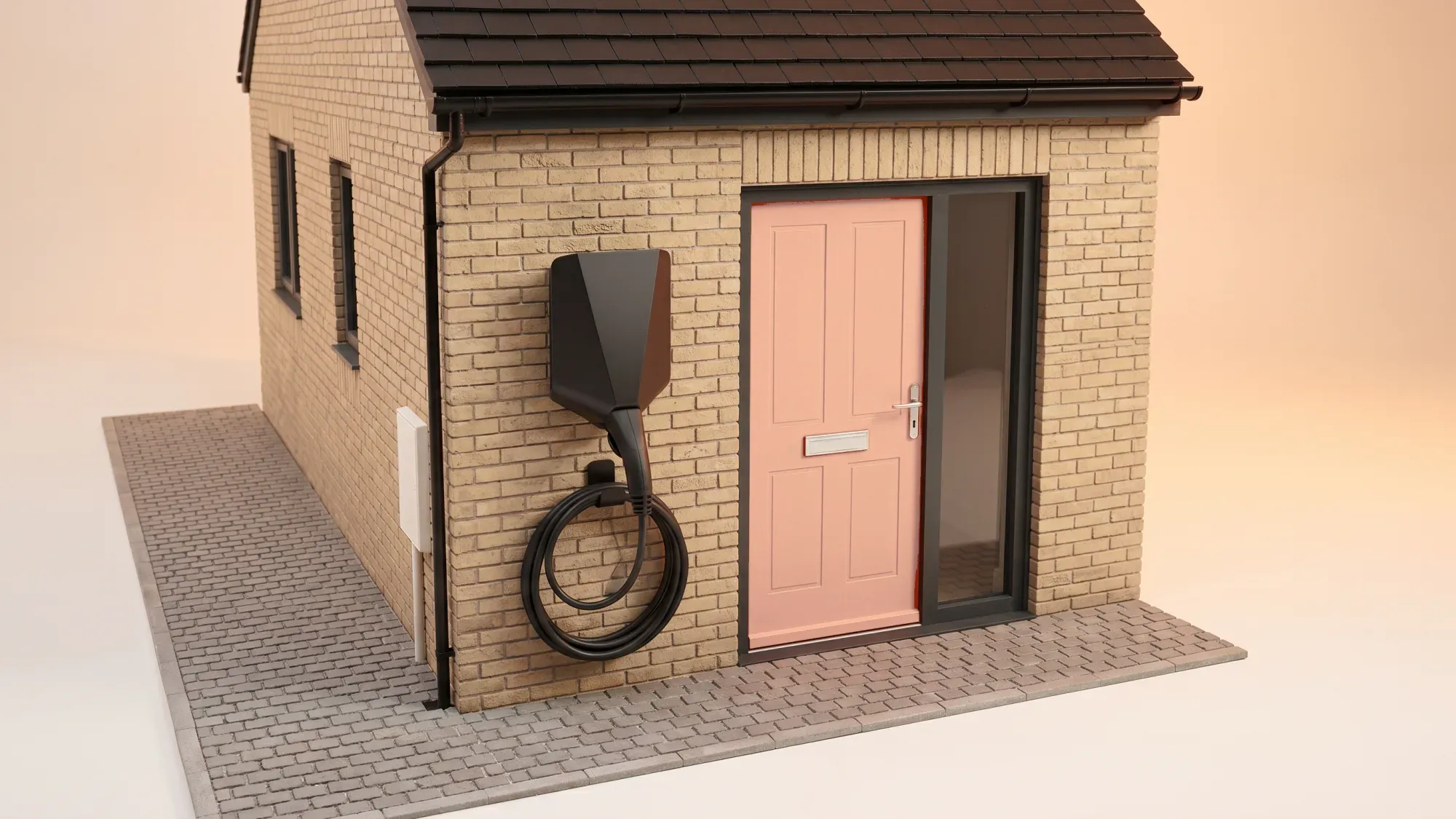
Getting an electric vehicle (EV) means rethinking how you fuel up. For most drivers, a home Type 2 EV charger is the most convenient and cost-effective solution, turning a daily chore into an effortless routine. This guide explains how Type 2 chargers work, their benefits, and what you need to know for home installation.
If you're considering an EV charger for your home, Fuse Energy can help. We offer the Easee One EV charger, including installation, to help you power your electric vehicle efficiently.
Understanding the type 2 EV charger
A Type 2 EV charger is the standard connector for alternating current (AC) charging of electric vehicles in the UK and Europe. This makes it widely compatible with modern EVs, simplifying the charging process for drivers across the continent.
What makes type 2 standard in the UK?
The Type 2 connector, often referred to as a Mennekes connector, became the required standard for all public charging stations in Europe in 2014 through the Alternative Fuels Infrastructure Directive. This standardisation has made it the dominant choice for both home and public AC charging in the UK. Its seven-pin design supports safe AC charging and fits the vast majority of electric vehicles sold in Europe today. While older or imported models might use a Type 1 connector, Type 2 is now the widely adopted standard for AC charging in modern EVs sold in the UK.
How type 2 connectors work
Type 2 connectors facilitate AC charging, where the power is converted by the car's onboard charger to direct current (DC) for the battery. This is ideal for slower, overnight charging at home or at destinations, making it perfect for daily use. The charger itself is typically a wall-mounted unit, often called a wallbox, which connects to your home's electricity supply and then to your vehicle via a Type 2 cable.
Type 2 versus other EV charging connectors
While Type 2 is the standard for AC charging, other connectors exist. Type 1 connectors are found on some older or imported EVs, mainly from Asia. For rapid DC charging, the Combined Charging System (CCS) is the standard in the UK and Europe, offering much faster charging speeds than AC alternatives. CHAdeMO is another DC rapid charging connector, primarily used by older Nissan Leaf models, though its availability is decreasing as networks prioritise CCS. For home charging, Type 2 is the practical choice, as CCS and CHAdeMO require significantly more power and infrastructure than most residential properties can support.
Benefits of home type 2 EV charging
Installing a Type 2 EV charger at home offers significant advantages that enhance the EV ownership experience.
Convenience and daily routine integration
Home charging allows you to plug in your EV overnight, much like you would a mobile phone. This eliminates the need to visit public charging stations regularly, saving time and integrating seamlessly into your daily routine. You wake up each morning with a fully charged vehicle, ready for the day ahead.
Cost savings and energy efficiency
Charging at home, especially during off-peak hours with a smart tariff, can be significantly cheaper than relying on public charging infrastructure. Smart charging allows you to optimise energy usage, reducing costs and supporting grid stability by charging when electricity is cheapest and cleanest. Understanding EV tariffs can help you make the most of these savings.
Faster charging than a standard socket
A dedicated 7kW Type 2 home charger is significantly faster than charging from a standard 3-pin domestic socket. While a 3-pin socket, typically delivering around 2.3kW, might take over 24 hours to fully charge a large EV battery, a 7kW unit can typically provide a full charge overnight for many electric vehicles, adding around 20-30 miles of range per hour. This makes overnight charging practical and convenient.
Installation considerations for your home
Installing an EV charger requires careful planning to ensure safety and efficiency.
Assessing your home's electrical supply
Most UK homes are wired for single-phase electricity, which typically caps charging at around 7kW or 7.4kW. A 7kW charger works with standard UK domestic electrical systems without major upgrades. However, it is crucial to assess your home's existing electrical capacity to ensure it can support the additional load. A qualified electrician will check your consumer unit (Fuse box) and earthing arrangements to confirm suitability.
Professional installation requirements
EV charger installation is not a DIY task. It must be carried out by a qualified and certified electrician. They will install a dedicated circuit for the charger and securely mount the unit. The process can take a few hours and may require additional work if your home's electrical system needs upgrading.
Safety standards and regulations
All electric vehicle chargepoint installations in the UK must comply with the latest IET Wiring Regulations (BS 7671) and specific EV charging regulations. These regulations cover aspects like protection against electric shock, earthing arrangements, and the need for dedicated circuits. The IET Code of Practice for Electric Vehicle Charging Equipment Installation provides detailed guidance on how to apply these requirements safely.
Smart charging with your type 2 charger
Smart charging is a key feature of modern Type 2 EV chargers, offering significant benefits beyond simply topping up your battery.
Optimising charging times for cost and grid stability
Smart charging allows electric vehicle owners to schedule charging sessions, typically via an app, to take advantage of off-peak electricity tariffs when prices are lower. This can lead to substantial cost savings. Beyond individual savings, smart charging also benefits the wider energy grid by shifting demand away from peak hours, contributing to greater grid stability and helping to integrate more renewable energy sources.
Integrating with home energy management systems
Many smart Type 2 chargers can integrate with broader home energy management systems. This allows for a holistic approach to energy consumption, where your EV charging can be coordinated with other high-demand appliances, solar panel generation, or home battery storage. This integration ensures your home uses energy as efficiently and cost-effectively as possible.
The Fuse approach to smart EV charging
A Type 2 EV charger, when integrated with Fuse's smart tariffs, offers homeowners the 'power to play with' their energy. This transforms home charging from a simple necessity into a strategic advantage, giving you greater control over your energy usage and costs. The Fuse app provides clear visibility of your EV charging, helping you to optimise usage during off-peak hours for maximum efficiency. By enabling smart, optimised EV charging, Fuse helps homeowners contribute to a more stable and abundant energy grid, moving beyond the scarcity mindset. Many homeowners also opt for a smart meter installation to get the most out of smart charging.
Choosing the right type 2 charger
Selecting the right Type 2 charger involves considering several factors to match your needs and vehicle.
Power output and charging speed (7kw focus)
For Most UK homeowners, a 7kW charger is the optimal choice. This power output matches the standard single-phase electricity supply found in nearly every UK home. While 22kW chargers exist, they require a three-phase electricity supply, which is rare in residential properties and typically involves expensive upgrades. A 7kW unit will fully charge most EVs overnight, making faster speeds largely unnecessary for daily use.
Key features to look for
When choosing a Type 2 charger, consider features such as smart charging capabilities for scheduling and optimisation, tethered or untethered cable options (a tethered charger has a permanently attached cable, while untethered requires you to use your car's cable), and connectivity options like Wi-Fi or Bluetooth for app control. Look for chargers from reputable brands that are OZEV-approved if you plan to apply for a grant.
Compatibility with your electric vehicle
Ensure the charger you choose is compatible with your specific electric vehicle. While Type 2 is the widely adopted standard for AC charging in the UK, always double-check your car's charging port type.
Grants and financial support
Government grants can significantly reduce the cost of installing a home EV charger.
OZEV EV Chargepoint Grant eligibility
The Office for Zero Emission Vehicles (OZEV) provides grants to help with the cost of installing EV chargepoints. The EV Chargepoint Grant for renters and flat owners can provide up to £500 towards installing a chargepoint at the property^[installs.md]. To be eligible, you must own and live in a flat, or rent and live in any residential property, and have private off-street parking^[installs.md]. Similarly, the EV Chargepoint Grant for households with on-street parking can provide up to £500 for those installing a cross-pavement solution and who only have on-street parking^[installs.md]. Homeowners in houses with private off-street parking are generally no longer eligible for domestic grants^[installs.md]. You must also have an eligible electric or plug-in hybrid vehicle and use an OZEV-approved installer.
Application process and requirements
For all current domestic OZEV chargepoint grants, the customer applies for the grant themselves via the gov.UK eligibility and application page^[installs.md]. The OZEV-authorised installer's role begins only after the customer's application is approved^[installs.md]. It is crucial to ensure all criteria are met before installation, as the grant application can take time to be approved.
Other potential incentives
While the OZEV grant for homeowners is now more restricted, other incentives may be available. Landlords and those in rented properties might have different eligibility criteria for grants. Always check the latest government guidance or consult with an approved installer for the most up-to-date information on available support.
Make the most of your EV with Fuse Energy. Our smart tariffs and app integration help you optimise your charging, saving you money and supporting a greener grid. Switching to Fuse is quick and easy, giving you control over your energy usage and costs.
Disclaimer
For the avoidance of doubt, this article is provided for informational purposes only and is not intended to constitute legal or financial advice. The author and/or Fuse Energy shall not be responsible for any losses arising out of any reliance on the information contained herein.