Solar tree: garden energy explained
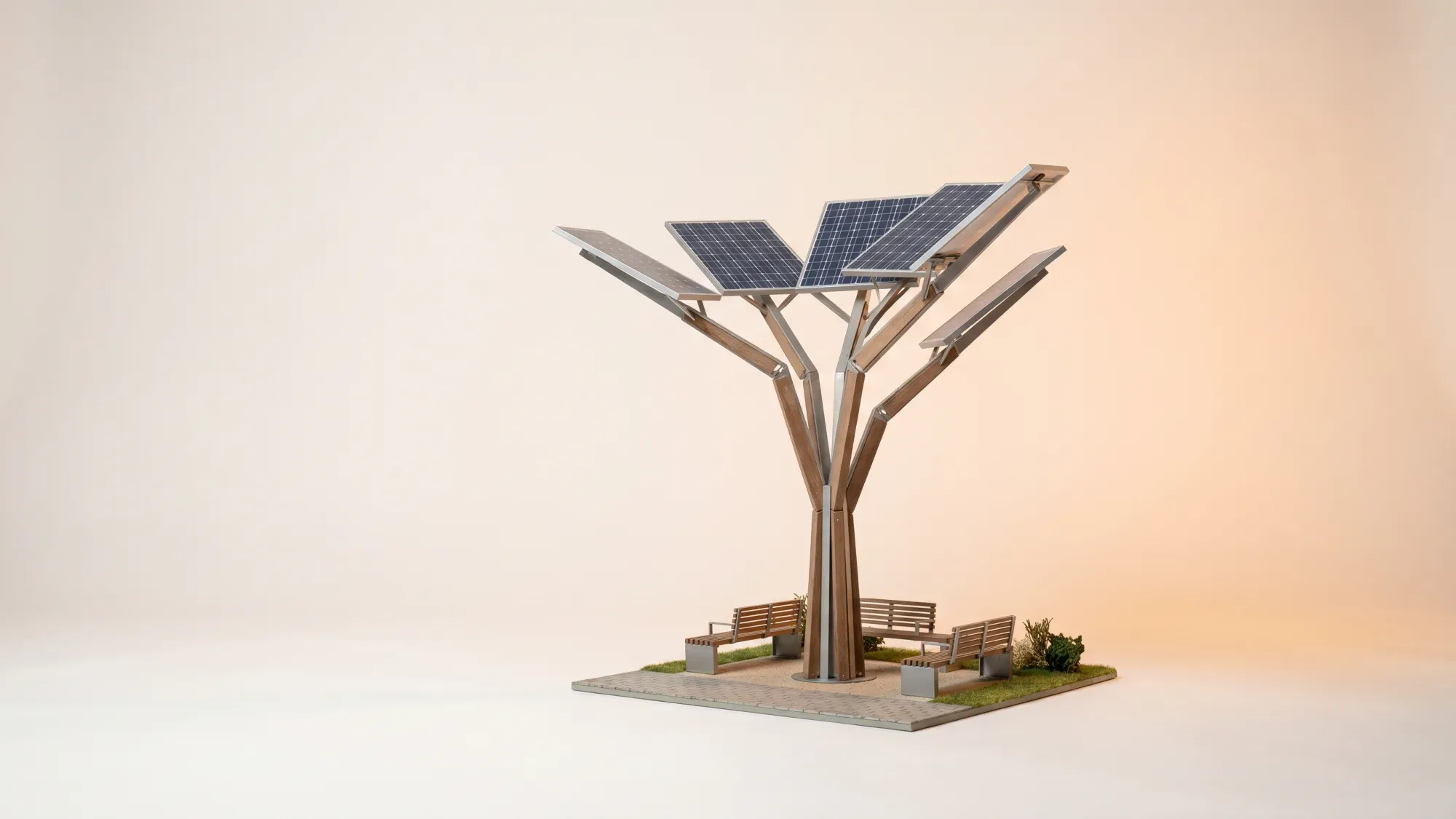
Solar trees integrate photovoltaic (PV) technology into aesthetic, tree-like structures, offering a sustainable energy solution for UK homes and gardens. These innovative designs provide decentralised power generation, enhancing outdoor spaces while contributing to sustainable development by generating clean energy within a small footprint. Fuse Energy champions innovative solutions that align with a future where energy is abundant and not a constraint.
For homeowners looking to generate their own clean energy, Fuse Energy provides clear pricing and real-time usage data to help you manage your home's energy. Click here to switch to Fuse Energy today.
Enter your address to get a quote and see how much you could save
What is a solar tree?
Solar trees are innovative structures that combine solar power generation with artistic, tree-inspired designs. They are suitable for environments where traditional solar panels might face aesthetic or spatial challenges, offering an alternative to conventional rooftop or ground-mounted solar arrays, particularly in space-constrained areas.
Defining the technology and its purpose
At their core, solar trees harness solar energy through photovoltaic panels, much like traditional solar installations. Their defining characteristic, however, is their sculptural form, which mimics natural trees. These structures are designed not only to generate electricity but also to serve as visually appealing features in gardens, parks, or public spaces. Their purpose extends beyond mere energy production; they aim to blend technology with nature, offering both sustainability and aesthetic value.
How solar trees differ from traditional solar panels
Unlike conventional rooftop solar panels, which are typically flat and mounted on existing structures, solar trees are freestanding units. Their panels are often arranged in a way that maximises sunlight capture throughout the day, sometimes rotating or tilting to follow the sun's path. This design allows for efficient energy capture while occupying a smaller footprint than traditional ground-mounted systems. They also offer greater flexibility in placement, making them suitable for gardens where roof space is limited or where homeowners prefer not to alter their roofline.
Types and designs for UK gardens
Solar trees come in various forms, from purely decorative lights to functional energy generators. Homeowners can choose options that best suit their garden size, aesthetic preferences, and energy needs.
Decorative and functional solar tree options
For decorative purposes, smaller solar lights with stakes or LED blossom trees can add ambient lighting to a garden, charging during the day and illuminating at night. These are typically low-power and focus on aesthetic appeal. On the functional side, larger solar trees are designed to generate a significant amount of electricity. These can range from structures resembling willow trees with integrated solar cells to more abstract designs that still evoke a natural form. Some models, like a solar canopy, can even provide shade while generating power.
Considerations for aesthetic integration
Integrating a solar tree into a garden requires careful thought about its visual impact. The design should complement the existing landscape and architectural style of your home. Materials, colours, and the overall form factor play a crucial role. For instance, a sleek, modern design might suit a contemporary garden, while a more organic, branch-like structure could blend into a traditional or naturalistic setting. The goal is for the solar tree to enhance the garden's beauty, not detract from it.
Smaller-scale solar trees for residential use
While some solar trees are large-scale commercial installations, many smaller, garden-friendly options are available for homeowners. These can include compact "powertree solar" designs or garden solar light trees that are easier to install and manage. Even artificial trees with integrated LED lights, such as light-up blossom trees or solar-powered outdoor Christmas trees, fall into this category, offering a blend of decoration and minor energy use. The variety ensures that even those with limited space can find a suitable solar tree.
Benefits of solar trees for homeowners
Solar trees offer several advantages for UK homeowners looking to embrace sustainable living and gain more control over their energy.
Sustainable energy generation and reduced carbon footprint
By converting sunlight into electricity, solar trees provide a clean, renewable energy source. This reduces reliance on fossil fuels and lowers your home's carbon footprint, contributing to environmental protection. Generating your own power means less demand on the National Grid, which often relies on non-renewable sources.
Space efficiency and aesthetic appeal
One of the primary benefits of solar trees is their ability to generate energy without requiring extensive ground area or rooftop modifications. Their vertical design makes them space-efficient, ideal for urban gardens or properties with limited space. Beyond functionality, their unique designs can act as striking garden features, adding a modern and eco-conscious touch to your outdoor living space.
Potential for energy independence and cost savings
Generating your own electricity can reduce your energy bills and offer a degree of energy independence, protecting you from fluctuating energy prices. While the initial investment varies, offsetting a portion of your electricity consumption can lead to long-term savings. The average UK home uses around 2,500 kWh of electricity per year, according to Ofgem's medium typical domestic consumption value, effective from 1 July 2026. With the illustrative Direct Debit electricity unit rate at 26.11p per kWh (inclusive of 5% VAT) from 1 July to 30 September 2026 under the Ofgem Price Cap, any self-generated power directly reduces your outgoings.
Practical considerations for UK installation
Before installing a solar tree, UK homeowners need to consider several practical aspects, from siting to regulatory requirements.
Siting and sunlight exposure
Optimal energy generation depends on positioning your solar tree in a location that receives maximum unobstructed sunlight throughout the day. Factors like shading from buildings or large trees, as well as the orientation of the panels, will impact efficiency. It is crucial to evaluate potential locations in your garden for consistent solar exposure.
Regulatory requirements and planning permission
Microgeneration installations, including solar trees, require notification to the Distribution Network Operator (DNO) under G98 rules within 28 days of installation. This notification ensures the DNO is aware of new generation sources connected to the grid. For larger solar tree installations, planning permission may be required, depending on their size, height, and location, especially if your property is in a conservation area or has specific covenants. Always check with your local planning authority.
What is the G98 notification?
The G98 notification is a requirement for microgeneration installations, including solar trees, to inform your DNO about your system. This must be done within 28 days of installation, either by you or your installer, to ensure safe and compliant connection to the electricity grid.
Cost factors and return on investment
The cost of a solar tree for homeowners varies widely based on size, design complexity, materials, and installation. Smaller decorative models are significantly less expensive than larger functional systems. While specific costs are not grounded, it is important to consider the upfront investment against the potential long-term savings on electricity bills and the environmental benefits. The return on investment will depend on your system's generation capacity, your household's energy consumption patterns, and the prevailing electricity unit rates.
Integrating solar trees with your home energy
A solar tree can be a valuable addition to your home's energy ecosystem, especially when integrated effectively with your overall energy management strategy.
Connecting to your home's electricity supply
Functional solar trees connect to your home's electrical system, feeding generated electricity directly into your property. This reduces the amount of power you draw from the grid. The connection process should be carried out by a qualified electrician to ensure safety and compliance with UK electrical standards.
Monitoring generation and consumption
To maximise the benefits of a solar tree, monitoring its energy generation and your home's consumption is essential. Smart energy management systems and apps can provide real-time data, allowing you to see how much electricity your solar tree is producing and how much your home is using. This insight helps you understand your energy patterns and make informed decisions.
Maximising self-consumption with smart energy management
The key to maximising savings from a solar tree is to use the electricity it generates as much as possible within your home (self-consumption). Smart energy management systems can help by automatically shifting high-demand appliance usage to times when your solar tree is producing the most power. This reduces the amount of electricity you need to buy from the grid and minimises any unused generation that might be exported.
Conclusion and Fuse Energy's role
Solar trees represent an exciting step towards a more sustainable and aesthetically pleasing energy future for UK homeowners. They offer an innovative way to generate clean electricity, reduce carbon footprints, and enhance garden spaces. While Fuse Energy does not sell, install, or directly advise on specific solar tree products or installations, we empower you to manage the energy generated from such systems.
Fuse Energy's all-in-one app provides clear pricing and real-time data, helping you maximise the benefits of any home energy generation, including from a solar tree. Our 24/7 human customer support is also available to help you understand and manage your energy, making the most of innovative solutions within your overall energy strategy. By putting more control and capability into your hands, Fuse helps you navigate the evolving energy landscape.
Click here to switch to Fuse Energy today and take control of your home's energy. You can also learn more about our mission to make energy abundant by clicking here.
Disclaimer
For the avoidance of doubt, this article is provided for informational purposes only and is not intended to constitute legal or financial advice. The author and/or Fuse Energy shall not be responsible for any losses arising out of any reliance on the information contained herein.