Solar panel installation West Wales
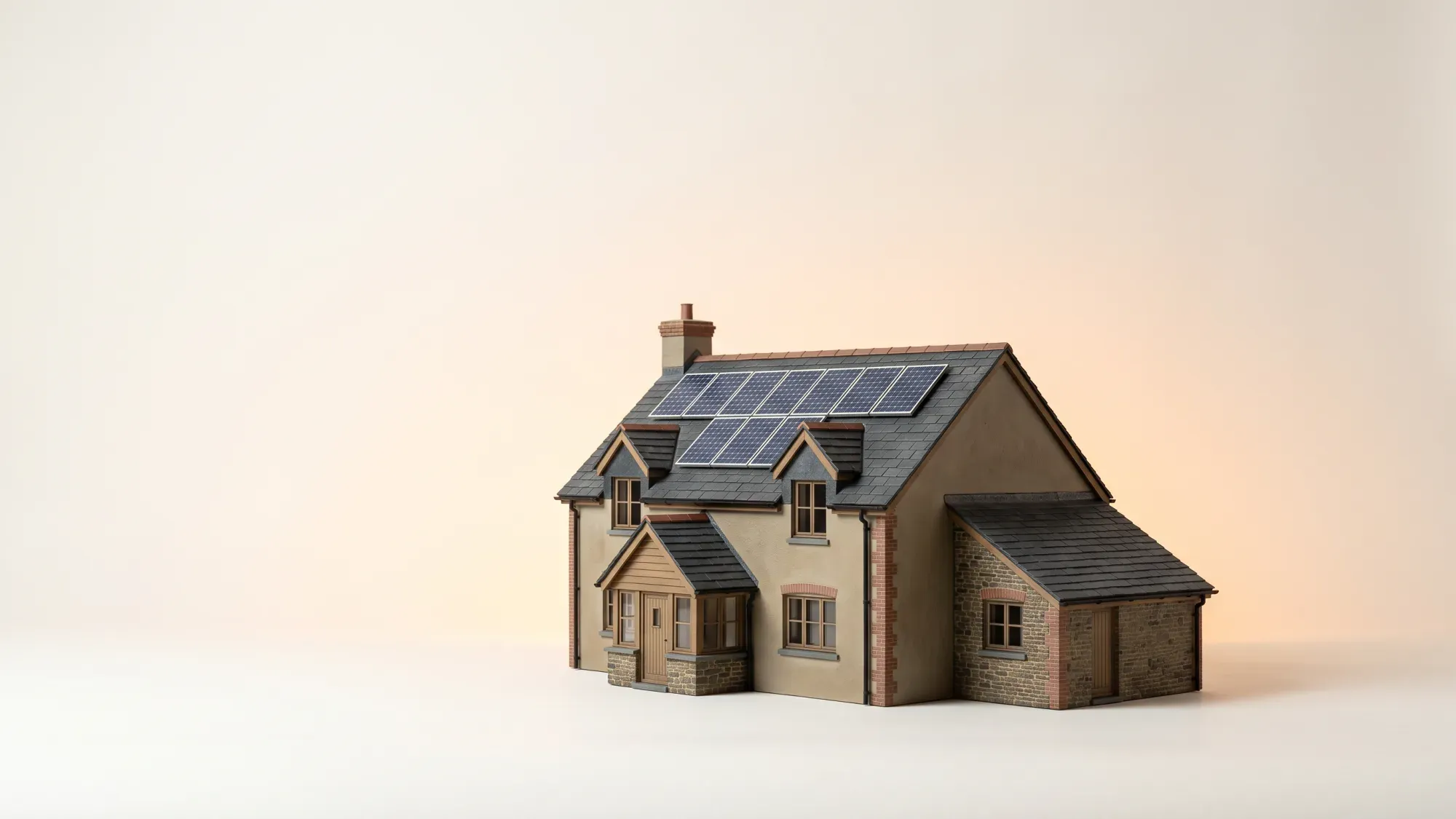
Investing in solar panels for your West Wales home is a smart move towards reducing energy bills and boosting your property's sustainability. Generating your own power with solar panels can help insulate you from fluctuating costs, offering greater financial predictability. This guide will walk you through the benefits, costs, and installation process, empowering you to make informed decisions for your home's energy future.
Why consider solar panels in West Wales?
The Welsh energy context and your bills
The energy market in Great Britain is divided into 14 electricity distribution regions. Each has distinct unit rates and standing charges set by Ofgem's price cap. For homeowners in West Wales, this regional variation directly impacts your electricity bills. Generating your own power with solar panels can help insulate you from these fluctuating costs, offering greater financial predictability. Should you ever experience a power cut, the free national number 105 is available to report it to your local Distribution Network Operator (DNO) in England, Scotland, or Wales. You can find your DNO by postcode using the Energy Networks Association's online tool.
Harnessing diffuse daylight: solar in the UK climate
A common misconception is that solar panels only work effectively under constant direct sunlight. However, modern photovoltaic (PV) panels are highly efficient at generating electricity from diffuse daylight, meaning they produce power year-round, even on cloudy days typical of the UK climate(do solar panels work on cloudy days)[/a]. The UK receives ample daylight for solar panels to be a valuable investment, with generation occurring whenever light is available. While output is highest in summer, panels continue to contribute significantly to your energy needs during spring, autumn, and winter.
The power of solar and battery storage
Solar panels offer a path to energy abundance and control over your household energy. By converting daylight into electricity, you can power your home with clean, renewable energy. Integrating battery storage with your solar PV system maximises its benefits. Batteries store excess electricity generated during the day, allowing you to use it during the evenings or when generation is low, rather than drawing from the grid. This not only increases your self-consumption but also drives the overall payback of your solar investment by reducing reliance on purchased electricity. Orientation, shading, and the presence of a battery are key factors influencing the financial returns of solar installations.
Understanding the costs and savings
Average solar panel installation costs
The cost of solar panel installation in West Wales can vary depending on system size, panel efficiency, and the complexity of the installation. While the initial outlay might seem significant, the long-term savings on electricity bills and potential earnings from exporting surplus energy can make it a sound investment. The average UK home uses around 2,500 kWh of electricity per year^[1,2]. A standard residential solar panel setup can generate a substantial portion of this, reducing your dependence on grid electricity. For more detailed information on potential expenses, you can explore the solar panel installation cost in the UK.
What is the average UK household electricity consumption?
The average UK home uses approximately 2,500 kilowatt-hours (kWh) of electricity per year. This figure represents the median usage for a typical household and is a useful benchmark for understanding potential savings from solar panel installations.
The value of the Smart Export Guarantee (SEG)
The Smart Export Guarantee (SEG) is a UK-wide scheme that requires larger licensed electricity suppliers to pay homeowners for any surplus solar electricity they export back to the grid3. This means that if your solar panels generate more electricity than your home consumes, you can earn money for the excess energy. To qualify for SEG payments, your solar PV system must be installed by an MCS-certified installer, and you will typically need a smart meter capable of providing half-hourly export readings. While suppliers set their own rates, they must be above zero pence per kWh.
0% VAT on solar and battery installations
A significant financial incentive for solar panel installation in Great Britain is the 0% VAT rate applied to solar panels and battery storage systems. This relief is currently in effect until 31 March 2027. From 1 April 2027, the VAT rate is scheduled to revert to 5% for qualifying installations. This temporary zero-rate VAT reduces the upfront cost of going solar, making it a particularly opportune time for West Wales homeowners to invest.
Choosing the right solar panel installer in West Wales
Selecting a reliable solar panel installer in West Wales is crucial for a successful and long-lasting system. It ensures professional installation, optimal performance, and eligibility for financial incentives.
The importance of MCS certification
MCS (Microgeneration Certification Scheme) certification is a mark of quality and competence for installers of renewable energy technologies. It signifies that an installer meets strict industry standards for product quality, installation practices, and customer service. Crucially, MCS certification is required for your solar panel installation to qualify for the SEG. Without it, you would not be able to receive payments for the electricity you export to the grid. Always verify that any potential solar panel installer in West Wales holds valid MCS certification. You can learn more about the process in our guide to solar panel installation.
Questions to ask potential installers
When evaluating solar panel installers, consider asking about their experience, their approach to system design (including battery integration), warranty terms, and after-sales support. Inquire about their MCS certification and ask for references from previous customers in West Wales. A reputable installer will provide a detailed quote, outlining system specifications, estimated generation, and projected savings.
Local expertise vs national providers
You might consider both local West Wales solar panel installers and larger national providers. Local companies often have a deep understanding of regional planning regulations and weather patterns, potentially offering a more personalised service. National providers might offer competitive pricing due to economies of scale. Weigh the benefits of both to find the best fit for your specific needs.
The solar panel installation process
Installing solar panels and battery storage is a multi-step process designed to ensure your system is efficient, safe, and compliant with all regulations.
Initial assessment and quote
The process begins with an initial assessment of your property. A solar panel installer will evaluate your roof's suitability, orientation, shading, and structural integrity. They will also consider your household's energy consumption to design a system that meets your needs. Following this, you will receive a detailed quote outlining the proposed system, its estimated performance, and the overall cost.
Planning permissions and regulations
Most domestic solar panel installations in England and Wales are considered "permitted development" and do not require full planning permission, provided certain conditions are met. However, it's always wise to check with your local authority in West Wales, especially if your property is listed or in a conservation area. Your chosen installer should be able to guide you through any necessary approvals.
Installation and commissioning
Once all approvals are in place, the physical installation of the solar panels and battery storage system can begin. This typically involves mounting the panels on your roof, installing the inverter, and connecting the battery. After installation, the system will be commissioned, tested, and connected to the grid. Your installer will provide you with all necessary documentation, including your MCS certificate.
Making your West Wales home a power play
With solar panels and battery storage, your West Wales home becomes a hub of energy independence. You gain the capability to generate your own clean electricity, reduce your reliance on fluctuating grid prices, and contribute to a more sustainable future. This integrated home energy upgrade allows you to take control of your energy consumption, turning your home into a true power play.
Fuse Energy is committed to building a future with power to play with, offering integrated home energy upgrades and 24/7 human customer support to help homeowners like you achieve energy abundance and control. Our straightforward pricing and in-app usage data make managing your energy simple and transparent. Switch to Fuse Energy today and take the first step towards a smarter, more sustainable home.
References
Disclaimer
For the avoidance of doubt, this article is provided for informational purposes only and is not intended to constitute legal or financial advice. The author and/or Fuse Energy shall not be responsible for any losses arising out of any reliance on the information contained herein.